

Home mechanics adjusting stems, handlebars, seatposts, brakes, or derailleurs need a wrench that covers the torque values specified for their components. A suitable bike torque wrench helps apply a measured setting, while the wrong range or bit can make a tool unsuitable for the job.
We compared 6 options in November 2026, including tools from Park Tool, PRO BIKE TOOL, LEXIVON and more. Compare each wrench’s full range, drive, and included bits with your component instructions, and see our bike tool kit guide for broader workshop equipment.
At a Glance: Which One Fits You
- Best overall: LEXIVON Bike Torque Wrench 1/4-Inch Dr. 15-Piece covers 2 to 26 Nm and includes hex and Torx bits, an extension, and an adapter.
- Best value: Bike Torque Wrench, 2-14Nm Lightweight Bicycle offers a 2 to 14 Nm range, 12 bits, and a portable case.
- Best for broad bit coverage: YIYEIE 50Pcs Master Bike Torque Wrench Set combines a 1 to 26 Nm range with varied bits and adapters.
- Best for higher torque jobs: Park Tool TW-6.2 Ratcheting Torque Wrench 10-60Nm has a 3/8-inch drive and a 10 to 60 Nm range.

Pros
- Hex and Torx bits included
- 0.2 Nm adjustments
- Dual-direction torque measurement
- Calibration certificate included
- 72-tooth ratchet head
Cons
- 1.3 lb kit weight
- Torque range tops out at 26 Nm

Pros
- Wide 10-230 in-lb range
- Stated ±3% accuracy
- Broad selection of bits
- 72-tooth reversible ratchet
- Protective storage case
Cons
- Clicks may be faint below 44.25 in-lb
- Weighs 3.6 lb
- Torque range may not suit higher-torque fasteners

Pros
- Dual Nm and inch-pound scale
- Audible and tactile click
- Calibration certificate included
- Hex and Torx bits included
- Molded storage case included
Cons
- Maximum torque is 16.9 Nm
- Accuracy specification applies clockwise

Pros
- 2-14 Nm torque range
- 12 hex and Torx bits
- Click feedback
- Locking torque adjustment
- Compact case included
Cons
- No calibration details provided
- Limited to 14 Nm maximum
- Who should skip it: riders needing torque above 14 Nm
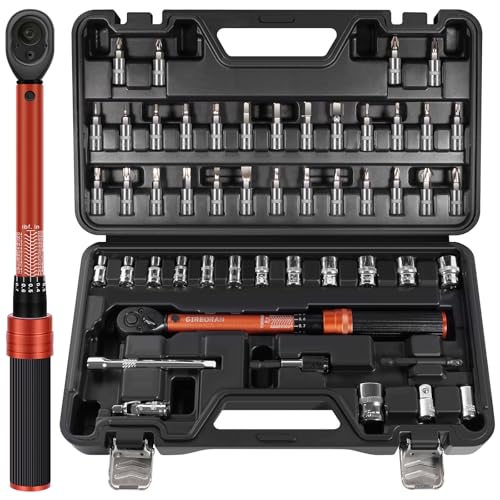
Pros
- 1 to 25 Nm torque range
- Click and tactile torque feedback
- Hex and Torx bits included
- 72-tooth ratchet, 5-degree swing arc
- Storage case included
Cons
- Calibration accuracy not stated
- 3.6 lb kit weight
- Who should skip it: riders needing documented accuracy
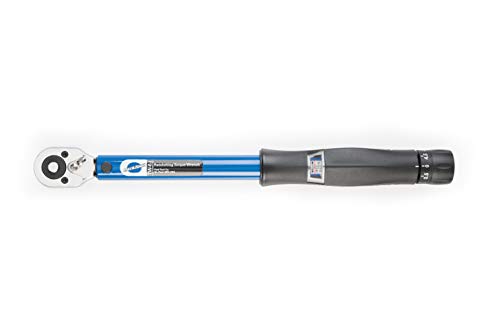
Pros
- Dial-adjust click system
- Preset torque setting
- 10 to 60 Nm range
- Ratcheting 3/8-inch drive
Cons
- Limited to 10 to 60 Nm
- Requires compatible 3/8-inch fitting
- Who should skip it: riders needing settings outside its range
Side-by-Side Comparison
| Product | Drive | Torque range | Stated accuracy | Bits and accessories |
|---|---|---|---|---|
| LEXIVON Bike Torque Wrench 1/4-Inch Dr. 15-Piece | 1/4 inch | 2 to 26 Nm | ±4% clockwise, ±6% counterclockwise | Hex and Torx bits, extension, adapter |
| YIYEIE 50Pcs Master Bike Torque Wrench Set | 1/4 inch | 1 to 26 Nm | ±3% | Varied bits, adapters, universal joint, extension |
| PRO BIKE TOOL Bike Torque Wrench Set | 1/4 inch | 2.2 to 16.9 Nm | ±4% clockwise | Hex and Torx bits, extension, case |
| Bike Torque Wrench, 2-14Nm Lightweight Bicycle | Not listed | 2 to 14 Nm | Not listed | 12 hex and Torx bits, case |
| GIREORAN Bike Torque Wrench Set | 1/4 inch | 1 to 25 Nm | Not listed | Hex and Torx bits, extension, case |
| Park Tool TW-6.2 Ratcheting Torque Wrench 10-60Nm | 3/8 inch | 10 to 60 Nm | Not listed | Not listed |
Torque range matters most because every required component value must fall within the wrench’s working limits. The Park Tool covers higher settings than the bicycle-focused 1/4-inch options, while several kits include more bits for varied fasteners.
Common Mistakes to Avoid
Choosing by maximum torque alone can leave low settings outside the wrench’s range. Check both minimum and maximum values against component instructions, and confirm each intended fastener setting falls within those limits.
Assuming every kit includes the right bit can lead to poor fit at the fastener. Compare the required hex, Torx, or socket size with the included assortment, and check whether an adapter is needed for the wrench’s drive.
Reading a scale in the wrong unit can result in an incorrect setting. Some tools display Newton-meters (Nm) and inch-pounds (in-lb), while the YIYEIE set also lists lbf.in, an alternate notation for in-lb; match the component’s unit before tightening.
Continuing to apply force after a click can exceed the selected setting. Follow the maker’s instructions, learn how the wrench signals its preset value, and pay close attention at low settings because YIYEIE says its click is faint below 5 Nm.
Best Bike Torque Wrench Buying Guide
Torque Range and Adjustment
Torque range determines whether a wrench can cover the values your bicycle components specify. Compare both ends of the range with the component maker’s instructions, since a high maximum does not guarantee suitable low-torque coverage.
The LEXIVON range is 2 to 26 Nm, while the PRO BIKE TOOL range is 2.2 to 16.9 Nm. The Park Tool covers 10 to 60 Nm, so its lower limit may not suit smaller fasteners that need a lower setting.
Adjustment increments show how finely a tool can be set, but they do not replace the specified component value. LEXIVON lists 0.2 Nm adjustments, and YIYEIE lists 0.1 Nm micro-adjustments. Check the scale’s readability and units before choosing.
Drive Size and Fastener Compatibility
Drive size determines which sockets and adapters fit the wrench, so it affects compatibility with both your bits and existing tools. Most bicycle-focused options here use 1/4-inch drives, while the Park Tool uses a 3/8-inch drive.
Check whether bits attach directly or need an adapter, then compare the interface with the fasteners you plan to service. A larger drive does not automatically suit bicycle work better if its range or accessories do not match the job.
Fastener profile matters alongside drive size. LEXIVON and PRO BIKE TOOL list hex and Torx bits, while the YIYEIE kit includes several other profiles and socket sizes. Our Tools & Maintenance category covers related workshop gear.
Accuracy and Calibration Information
Accuracy describes the stated tolerance around a selected torque value. Compare the published figure and note whether it applies clockwise, counterclockwise, or both, because direction-specific claims do not describe identical operation.
LEXIVON lists ±4% clockwise and ±6% counterclockwise accuracy. PRO BIKE TOOL states ±4% clockwise, while YIYEIE lists ±3%. The other products in this comparison do not list an accuracy figure in their specifications.
LEXIVON, YIYEIE, and PRO BIKE TOOL include calibration certificates, according to their product specifications. Keep any documentation with the wrench and follow the maker’s maintenance guidance; a certificate does not establish a universal service schedule.
Click Signal and Setting Controls
A click mechanism signals that the wrench has reached its preset torque, giving the user a cue to stop applying force. Product descriptions may mention audible or tactile feedback, so consider which signal you can notice while working.
Setting controls affect how easily you select and secure a value. LEXIVON uses a slide-to-lock mechanism, and PRO BIKE TOOL describes a spring-loaded adjustment collar that locks into place. Park Tool uses a dial-adjust click system.
Signal strength can change at low settings. YIYEIE says its click is distinct above 5 Nm and faint below that level, so users working near the lower end should follow the instructions and listen or feel carefully.
Included Bits, Adapters, and Storage
Included bits determine which fasteners a kit can serve without extra accessories. Compare listed profiles and sizes with your bicycle, then check whether adapters and an extension can help reach the fasteners you need to access.
The YIYEIE set includes hex, Torx, six-point, Phillips, slotted, and Robertson bits, plus adapters, a universal joint, and an extension. LEXIVON supplies hex and Torx bits, an extension, and an adapter, while PRO BIKE TOOL includes selected bits and a case.
A large assortment helps only when its pieces fit your work. Check the size and profile of each bit, and consider whether a storage case will keep the wrench and accessories organized between repairs.
Tool Format and Intended Jobs
Wrench format shapes how a tool fits your repair routine and fasteners. The six products include compact bicycle-focused ranges and a 3/8-inch Park Tool with a higher stated range, so compare the format with your component requirements.
The COTOUXKER wrench covers 2 to 14 Nm and includes 12 bits and a case. GIREORAN lists a 1 to 25 Nm range, a 72-tooth ratchet, and a 50-piece kit. Check each listing for drive details and accuracy information when those specifications affect your choice.
For broader workshop planning, compare this guide with our cycling gloves guide for another riding essential. Use a torque wrench only when its range, fittings, and instructions suit the fastener at hand.
How We Chose
We score products with the Haiku Ride Score: core performance counts for 30%, build and weather resistance for 20%, ease of use for 20%, compatibility and fit for 15%, and value for 15%. For torque wrenches, compatibility and fit means drive size, bit selection, adapters, and suitability for the specified fastener values.
We evaluate manufacturer specifications, compatibility information, and long-term owner feedback, then compare how each tool suits different maintenance needs. We research and draft our guides with software tools, including AI, then run automated checks on product fit, sourcing, and our editorial rules. Our editor spot-checks guides rather than reading each one before publication. Read our how we review methodology.
Price and Value: What Each Budget Gets You
Budget
At the budget end, riders can find a focused torque range, common bits, and compact storage. The Bike Torque Wrench, 2-14Nm Lightweight Bicycle includes 12 hex and Torx bits and a case, making it suited to routine adjustments. Buyers may give up published accuracy figures or detailed drive information, so check those details when they matter for a particular repair.
Mid-Range
Mid-range kits often combine a broad bicycle-appropriate range with more bit choices, adapters, and documented accuracy. The YIYEIE 50Pcs Master Bike Torque Wrench Set lists a 1 to 26 Nm range, ±3% accuracy, and varied accessories. The larger assortment can cover more fastener types, though riders who only need common hex and Torx bits may not use every piece.
Premium
At the upper end, riders may prioritize a distinct drive format, a specialized range, or adjustment controls suited to workshop use. The Park Tool TW-6.2 Ratcheting Torque Wrench 10-60Nm uses a 3/8-inch drive and dial-adjust click system. Its higher minimum and drive may not suit low-torque bicycle fasteners or a mechanic whose sockets use another interface.
Choosing Something Else
A basic hex-key set can suit riders whose planned adjustments do not call for a measured torque value. Hex keys do not indicate when a specified torque is reached, so they are not a substitute when component instructions require controlled tightening. Choose a suitable torque wrench for those jobs, and follow the component maker’s guidance rather than estimating by feel.
Final Thoughts
Home mechanics seeking a broad bicycle-focused range can consider the LEXIVON Bike Torque Wrench 1/4-Inch Dr. 15-Piece. Its 2 to 26 Nm range, fine adjustments, and included hex and Torx bits suit varied fasteners. Its stated clockwise and counterclockwise accuracy figures differ, so account for direction when comparing specifications.
Riders who value a large accessory assortment can compare the YIYEIE 50Pcs Master Bike Torque Wrench Set, which lists a 1 to 26 Nm range and ±3% accuracy. For a more focused range and selected bicycle bits, the PRO BIKE TOOL Bike Torque Wrench Set covers 2.2 to 16.9 Nm, but it does not reach the higher settings of some alternatives.
Riders wanting a compact kit can consider the Bike Torque Wrench, 2-14Nm Lightweight Bicycle, while mechanics needing a higher range can compare the Park Tool TW-6.2 Ratcheting Torque Wrench 10-60Nm. The GIREORAN Bike Torque Wrench Set offers a 1 to 25 Nm range and broad bit kit, though its accuracy figure is not listed.
Skip these options when their torque ranges or fittings do not match your components, or when you need a specification the maker does not list. Browse our bike tool kit category for other workshop tools, and follow component instructions for every fastener.
FAQs
What torque range should a bike torque wrench cover?
A bike torque wrench should cover every torque value specified for the fasteners you plan to adjust. Check component instructions first, then confirm those values fall between the wrench’s minimum and maximum settings. A high maximum alone does not ensure useful low-range coverage. Choose a different tool if a required value falls outside its stated range.
Is a 1/4-inch drive suitable for bike maintenance?
A 1/4-inch drive is common among bicycle-focused torque wrench kits and can suit compatible bits and adapters. Suitability still depends on the component’s torque requirement and fastener profile. Check the included accessories and component instructions rather than choosing by drive size alone. A 3/8-inch drive may suit a different socket setup or higher-range job.
Can I use a bike torque wrench on carbon components?
A bike torque wrench can help apply a specified setting to carbon components when used according to the component maker’s instructions. Confirm the required value falls within the wrench’s range, use the correct bit, and stop when the tool signals its preset value. A wrench cannot guarantee that a component is undamaged or correctly installed.
What is the difference between Nm and in-lb?
Newton-meters (Nm) and inch-pounds (in-lb) are different units for measuring torque. Some bicycle wrenches show both scales, while other tools may emphasize one unit. Match the component’s specified unit to the wrench scale, or use a reliable conversion when needed. Check the unit before setting the tool to avoid selecting the wrong value.
How do I know when a click torque wrench has reached its setting?
A click torque wrench signals that it has reached its selected setting through an audible click, a tactile cue, or both, depending on its design. Stop applying force when you receive the signal. YIYEIE says its click is faint below 5 Nm, so read the instructions and pay close attention when working at lower settings.
Do bike torque wrenches need calibration?
Bike torque wrenches should be maintained according to their makers’ instructions, including any guidance on calibration or service. Some products in this guide include calibration certificates, but that does not establish one schedule for every wrench. Keep documentation with the tool and contact its maker if you have questions about accuracy, storage, or maintenance.
Can I use a bike torque wrench for other repairs?
A bike torque wrench may suit other repairs when its range, drive, and bits match the other equipment’s requirements. Do not assume compatibility based on appearance or a general-purpose description. Compare both makers’ instructions before use. Our Tools & Maintenance category covers additional workshop equipment and maintenance guides.
Write Your Review
No reviews yet. Be the first to share your experience!