

When weather or early darkness keeps you off the road, a wheel-on smart trainer lets you ride your own bike indoors without removing its rear wheel. The best wheel-on smart trainer for your setup depends on resistance control, app compatibility, tire noise, and whether the included axle hardware fits your bike.
We compared 4 indoor trainers in November 2026, including options from ELITE, Saris, VEVOR and more. Follow each manufacturer’s instructions and applicable local laws, and see our smart trainer setup guide for help planning an indoor riding space.
At a Glance: Which One Fits You
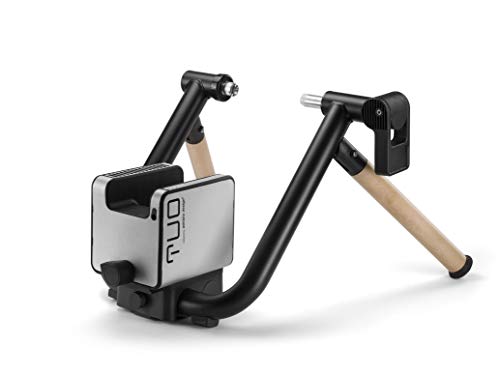
- Best overall: Elite Tuo Interactive Wheel-On Trainer combines automatic resistance with ANT+ and Bluetooth connectivity and simulates gradients up to 10%.
- Best value: Smart Bike Trainer – Fluid Bike Trainer Stand supports popular training apps over Bluetooth or ANT+ and folds for storage, though thru-axle adapters are separate.
- Best for measured training: Saris M2 Smart Indoor Bike Trainer lists power accuracy of plus or minus 5% and electromagnetic resistance, but uses a wheel-on setup.
- Best for resistance levels: VEVOR Bike Trainer, 1-13 Level offers remote-selected virtual resistance levels and broad listed wheel fit, but requires a compatible cassette that is not included.

Pros
- Wheel-on mounting
- Bluetooth BLE 4.0 and ANT+
- Zwift and TrainerRoad compatibility
- Folds for storage
- Fits 26- to 29-inch and 700c wheels
Cons
- Thru-axle adapter sold separately
- Knobby tires make more noise
- Quick-release skewer included
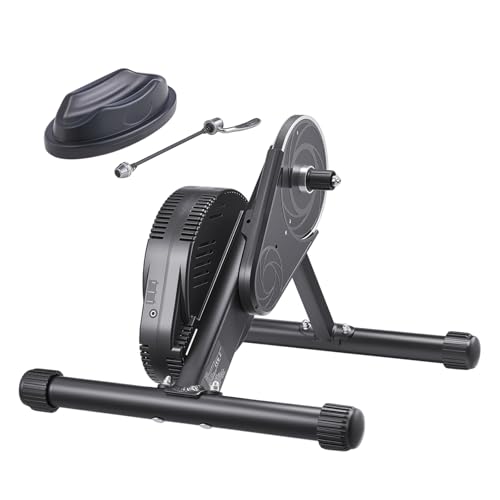
Pros
- Bluetooth 4.0 and ANT+ connectivity
- Compatible with five named training apps
- Thirteen resistance levels
- Fits 26 to 29 inch and 700c wheels
- Front wheel riser block included
Cons
- Cassette not included
- Heavy at 36.38 lb
- Who should skip it: riders without a compatible cassette

Pros
- Zwift certified
- ANT+ FE-C and Bluetooth
- Wheel-on setup
- Electromagnetic resistance
- Steel quick-release skewer included
Cons
- Power accuracy rated at ±5%
- Noise rated at 69 dB at 20 mph
Side-by-Side Comparison
| Trainer | Resistance | Connectivity | Listed wheel fit | Setup notes |
|---|---|---|---|---|
| Elite Tuo Interactive Wheel-On Trainer | Automatic; simulates gradients up to 10% | ANT+ and Bluetooth | Not listed | Not listed |
| Saris M2 Smart Indoor Bike Trainer | Electromagnetic | ANT+ FE-C and Bluetooth | Not listed | Steel quick-release skewer included |
| Smart Bike Trainer – Fluid Bike Trainer Stand | Fluid | Bluetooth BLE4.0 and ANT+ | 26 to 29 inches and 700c | Thru-axle adapter sold separately |
| VEVOR Bike Trainer, 1-13 Level | 13 virtual resistance levels | Bluetooth 4.0 and ANT+ | 26 to 29 inches and 700C | 8 to 11 speed cassette not included |
Resistance control and bike setup make the biggest practical differences here. The Elite Tuo and Saris M2 offer controlled resistance, while the CXWXC uses fluid resistance and VEVOR provides remote-selected levels; check axle and cassette fit before choosing.
Common Mistakes to Avoid
Wheel size alone does not confirm that a wheel-on trainer fits your bike. The CXWXC and VEVOR list wheel ranges, but axle type and included hardware also matter; CXWXC includes a quick-release skewer and says thru-axle adapters are separate.
App compatibility does not always mean automatic resistance control. The Saris M2 specifies electromagnetic resistance and app connectivity, while VEVOR describes resistance levels selected with a remote. Check the maker’s description for control features instead of assuming an app connection changes resistance.
Tire tread can affect sound on wheel-on trainers because the rear tire contacts the resistance unit. CXWXC notes that knobby tread can be louder and recommends road tires; riders using a mountain bike should consider tire noise and confirm the manufacturer’s guidance.
The VEVOR trainer requires a cassette that matches the bike’s gearing, and the cassette is not included. Check drivetrain compatibility and budget for the needed cassette before ordering. A trainer’s broad wheel-size range does not establish compatibility with every drivetrain.
Best Wheel-On Smart Trainer Buying Guide
Resistance Control and Training Feel
Resistance control determines whether your effort changes through an app, a remote, or your pedaling speed. The Elite Tuo lists automatic resistance adjustment and gradient simulation up to 10%, while the Saris M2 uses electromagnetic resistance.
Fluid trainers such as the CXWXC rely on fluid resistance, while VEVOR describes 13 virtual levels selected by remote. Compare how each trainer changes effort with the workouts you plan to follow. App support alone does not confirm that software controls resistance.
Bike, Axle, and Drivetrain Fit
Bike fit depends on wheel size, axle hardware, and the trainer’s mounting design. CXWXC and VEVOR list compatibility with 26- to 29-inch wheels and 700c wheels, but their setup requirements differ.
CXWXC includes a quick-release skewer and requires a separate adapter for thru-axle bikes. VEVOR lists compatibility with 8- to 11-speed cassettes and states that its cassette is not included. Confirm your axle and drivetrain against the maker’s current instructions before buying.
Power Data and Workout Accuracy
Power accuracy matters when you use measured output to set workout targets or compare efforts. Saris lists the M2 at plus or minus 5% accuracy, while the other trainers in this guide do not have a stated accuracy figure.
Connectivity and power measurement are separate features. A trainer may send speed or cadence data to an app without providing measured power, so check the specifications for the exact ride metrics you need. Avoid treating a compatible app list as evidence of a power meter.
Wireless Standards and App Support
Wireless standards determine how a trainer shares information with compatible phones, computers, and cycling apps. Elite lists ANT+ and Bluetooth support, Saris lists ANT+ FE-C and Bluetooth, and CXWXC lists Bluetooth BLE4.0 and ANT+.
VEVOR lists Bluetooth 4.0 and ANT+ and names Zwift, TrainerRoad, BKOOL, MyWhoosh, and Onelap. Confirm that your device supports the connection standard and that your chosen app supports the trainer’s functions. For another app-focused comparison, see our smart trainer guide for MyWhoosh and ROUVY.
Noise, Tire Contact, and Stability
Wheel-on trainer noise comes partly from contact between the rear tire and resistance unit. CXWXC says tire tread affects noise and warns that rough mountain bike tread can be louder, making road tires a more suitable choice for quieter indoor riding.
Saris lists the M2 at 69 decibels at 20 mph. That figure describes a specific stated speed, not every room or riding condition. CXWXC describes a stable pyramid-style frame, while VEVOR lists a carbon steel frame, front wheel riser block, and non-slip foot pads.
Setup, Storage, and Maintenance
Setup and storage affect how easily a trainer fits into a regular indoor routine. CXWXC describes a foldable design, which may help riders who need to store the trainer after riding. VEVOR includes a front wheel riser block, and its cassette must be installed separately.
Before each ride, follow the manufacturer’s instructions for securing the bike and positioning the trainer. Keep the bike stable and check that the rear tire sits correctly against the resistance unit. Consult the maker for care and adjustment guidance rather than assuming every model uses the same procedure.
How We Chose
We score options with the Haiku Ride Score: core performance counts for 30%, build and weather resistance for 20%, ease of use for 20%, compatibility and fit for 15%, and value for 15%. For smart trainers, compatibility and fit cover app and sensor support, axle hardware, wheel size, and drivetrain requirements.
We compare manufacturer specifications, compatibility information, and long-term owner feedback where available. We research and draft our guides with software tools, including AI, then run automated checks on product fit, sourcing, and our editorial rules. Our editor spot-checks guides rather than reading each one before publication. Our how we review page explains our approach.
Price and Value: What Each Budget Gets You
Budget
At the lower end of this group, wheel-on trainers can provide basic indoor riding and app connections without the broadest resistance features. The CXWXC pairs fluid resistance with listed Bluetooth and ANT+ support and a foldable frame. Riders give up a published power-accuracy figure and must buy a thru-axle adapter separately when their bike needs one.
Mid-Range
Mid-range smart trainers add more defined resistance control and training data while keeping the rear wheel installed. The Elite Tuo lists automatic resistance and gradient simulation, while the Saris M2 specifies electromagnetic resistance and power accuracy. Riders should still check wheel and axle fit, since published feature sets do not replace bike-specific compatibility checks.
Premium
At the upper end of this group, VEVOR adds remote-selected resistance levels, a front wheel riser block, and a frame designed for stability. Its listed cassette compatibility can suit riders seeking a more specific drivetrain setup, but the cassette is not included. Buyers give up some out-of-box simplicity and should verify gearing before choosing it.
Choosing Something Else
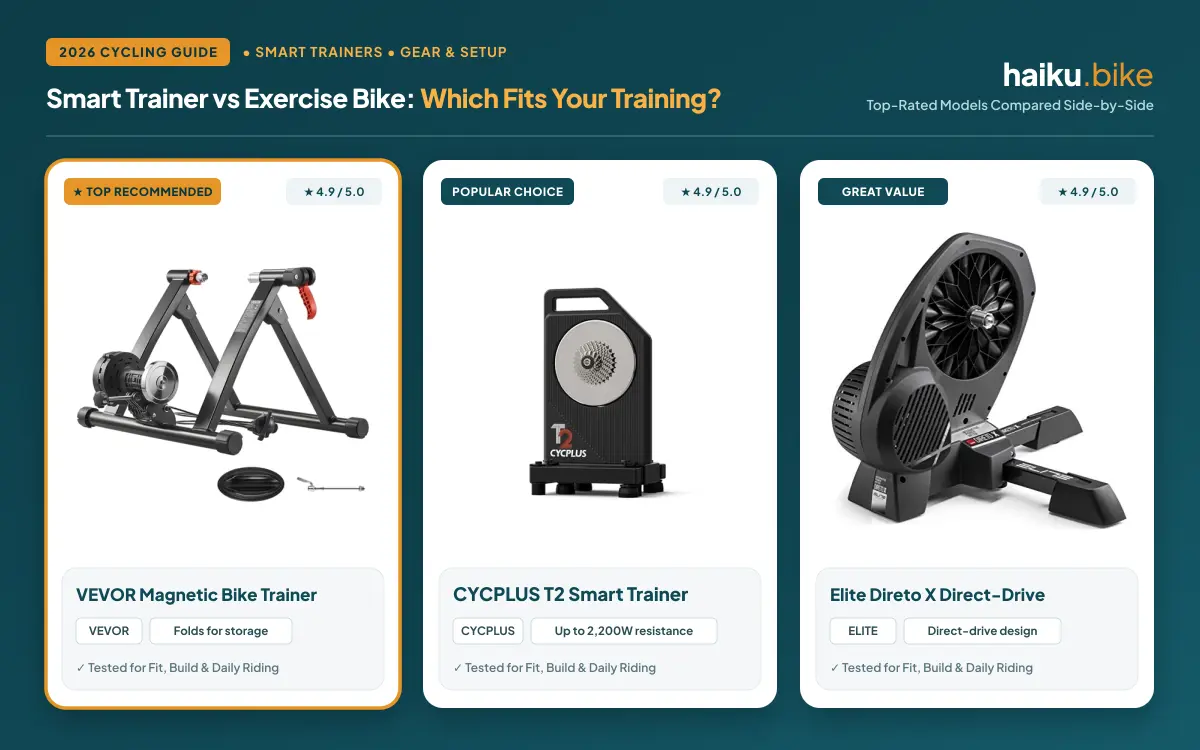
A basic bike trainer can suit riders who want indoor pedaling without app connections or smart resistance features. A stationary exercise bike may fit people who do not want to mount their own bicycle. Each alternative changes the riding setup, so compare the convenience of a dedicated machine with the fit of your own bike. Our smart trainer versus exercise bike guide explains that choice.
Final Thoughts
The Elite Tuo Interactive Wheel-On Trainer suits riders who want automatic resistance and listed ANT+ and Bluetooth connections. Its stated gradient simulation reaches up to 10%, but its wheel fit and axle details are not listed here, so confirm compatibility before choosing it.
The Saris M2 Smart Indoor Bike Trainer is a stronger fit for riders who prioritize electromagnetic resistance, app connectivity, and a stated power-accuracy figure. Its wheel-on format keeps the rear wheel installed, but tire contact remains part of the setup. Riders who need a published wheel range should verify fit with Saris.
The Smart Bike Trainer – Fluid Bike Trainer Stand suits riders who want fluid resistance, listed app support, and foldable storage. The VEVOR Bike Trainer, 1-13 Level may suit riders who want remote-selected resistance and whose bike matches its cassette requirements. Both have setup trade-offs, including axle-adapter needs for CXWXC and a separately purchased cassette for VEVOR.
Skip these wheel-on options if your bike does not match the trainer’s axle or drivetrain requirements, or if you specifically want a different indoor riding format. Compare our basic bike trainer category for simpler alternatives, and review the smart trainer category for related models.
FAQs
What is a wheel-on smart trainer?
A wheel-on smart trainer holds a bicycle by its rear wheel and applies resistance through contact with the tire. Smart models connect to compatible devices or cycling apps to share ride data, and some can adjust resistance through software. Check the maker’s specifications, because a wireless connection alone does not confirm automatic resistance control.
Will a wheel-on trainer fit my bike?
A wheel-on trainer fits only when its wheel range, axle hardware, and mounting system match your bicycle. CXWXC and VEVOR list compatibility with 26- to 29-inch and 700c wheels, but this does not establish axle fit. Check your bike’s axle type and the manufacturer’s adapter requirements before ordering.
Do wheel-on smart trainers control resistance automatically?
Some wheel-on smart trainers adjust resistance through compatible software, but app support does not guarantee that function. Elite lists automatic resistance adjustment, and Saris describes electromagnetic resistance on the M2. VEVOR instead describes remote-selected resistance levels. Confirm the specific control method and app support with the manufacturer.
Can I use a mountain bike on a wheel-on trainer?
A mountain bike may fit a wheel-on trainer if its wheel size and axle hardware match the maker’s requirements. Tire tread also matters because CXWXC says rough, knobby tread can create more noise than road tires. Check tire guidance and axle compatibility before using a mountain bike indoors.
Do wheel-on smart trainers work with Zwift?
Some wheel-on trainers list compatibility with Zwift, but supported features vary by model. Saris identifies the M2 as Zwift certified, while VEVOR lists Zwift among compatible apps. Check whether your phone, tablet, or computer supports the trainer’s wireless standard and whether the app controls resistance or only receives ride data.
Are wheel-on smart trainers noisy indoors?
Wheel-on trainer noise depends on the trainer, tire tread, riding speed, and room. Saris lists the M2 at 69 decibels at 20 mph, while CXWXC says knobby tires can be louder than road tires. Treat a manufacturer’s noise figure as context rather than a guarantee for your home.
Does the VEVOR trainer include a cassette?
The VEVOR Bike Trainer, 1-13 Level does not include a cassette, according to its product details. VEVOR lists compatibility with 8- to 11-speed cassettes, so riders must choose one that matches their bike’s gearing. Confirm compatibility and installation requirements with the manufacturer before buying or assembling the trainer.
Where can I learn to set up a smart trainer?
Our smart trainer setup guide covers planning a setup for indoor riding. Follow the specific trainer maker’s instructions for mounting your bicycle, connecting compatible devices, and positioning the unit. Check axle and wheel requirements first, because setup steps differ between models and bike configurations.

Write Your Review
No reviews yet. Be the first to share your experience!