

When rain, early darkness, or a busy week pushes outdoor rides off your calendar, a smart trainer can bring structured cycling indoors. The options here range from wheel-on stands with manual resistance to connected direct-drive trainers that adjust resistance through compatible apps.
We compare 9 models from brands including Sportneer, Garmin, Saris and more for resistance, connectivity, noise, and bike fit. Before choosing, check your axle and drivetrain requirements, then explore our indoor training category for more ways to build a home riding setup.
At a Glance: Which One Fits You
- Best overall: ThinkRider XXPRO Smart Bike Trainer,2500W,25% earns this spot because its maker lists ±1% accuracy, power up to 2500 W, and simulated gradients up to 25%.
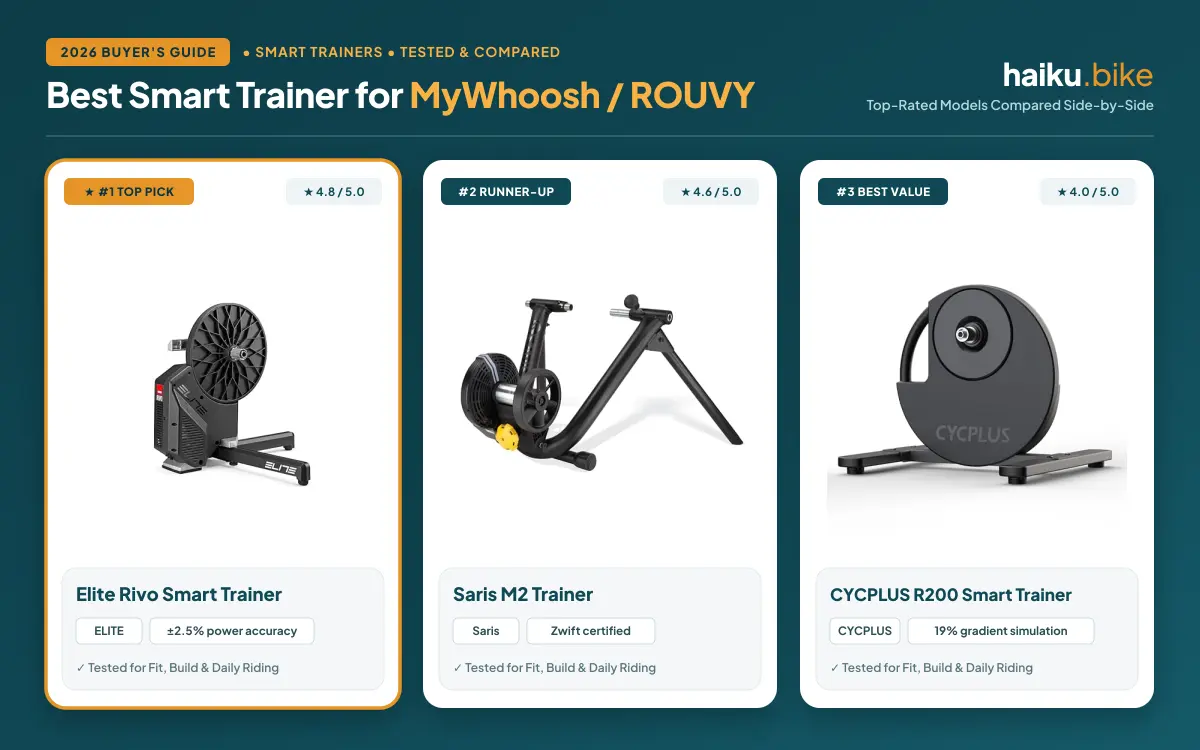
- Best value: Saris M2 Smart Indoor Bike Trainer earns this spot because it pairs electromagnetic resistance with ANT+ FE-C, Bluetooth, and Zwift certification.
- Best for stated noise data: ThinkRider X2Max Smart Bike earns this spot because ThinkRider lists about 58 dB at 30 km/h.
- Best for simple wheel-on training: Sportneer Bike Trainer – Magnetic Indoor Cycling earns this spot because its handlebar remote controls six magnetic resistance levels.

Pros
- ANT+ and BLE connectivity
- Zwift compatibility
- Up to 2,000 watts
- Grade simulation up to 18%
- Maker-rated power error of ±2%
Cons
- Drivetrain compatibility not specified
- Cassette details not specified
- Heavy at 35.2 lb

Pros
- Smooth, road-like resistance
- Built for hard efforts
- Supports structured training
- Integrated WiFi
Cons
- Connectivity details not specified
- Resistance range not listed
- Noise level not listed

Pros
- No calibration required
- Self-generates electricity
- Downhill simulation
- ANT+ and Bluetooth
- Zwift app compatibility
Cons
- Drivetrain compatibility unlisted
- Trainer weight unlisted

Pros
- Zwift certified
- ANT+ FE-C and Bluetooth
- Wheel-on setup
- Electromagnetic resistance
- Steel quick-release skewer included
Cons
- Power accuracy rated at ±5%
- Noise rated at 69 dB at 20 mph

Pros
- Wheel-on mounting
- Bluetooth BLE 4.0 and ANT+
- Zwift and TrainerRoad compatibility
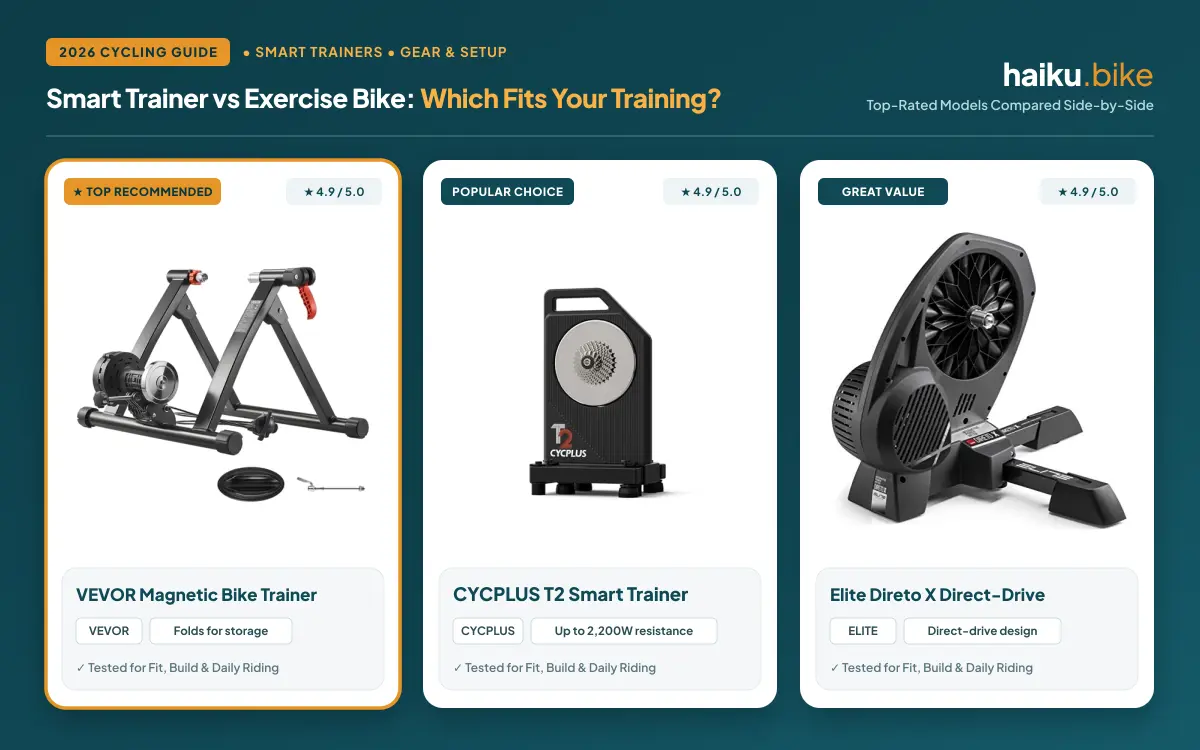
- Folds for storage
- Fits 26- to 29-inch and 700c wheels
Cons
- Thru-axle adapter sold separately
- Knobby tires make more noise
- Quick-release skewer included
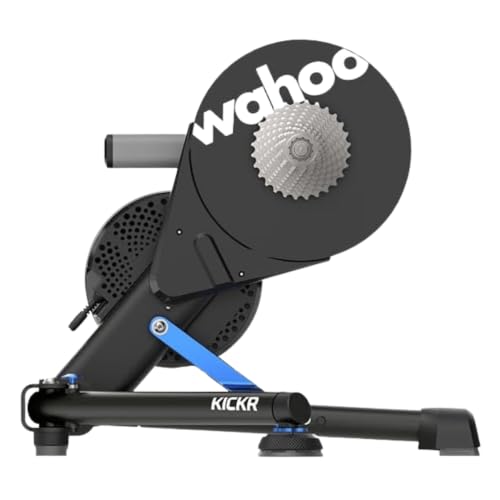
Pros
- Power accuracy within ±1%
- Over 2,200 watts of resistance
- Automatic calibration
- 2.4 GHz Wi-Fi connectivity
- Side-to-side movement from AXIS feet
Cons
- Weighs about 48.5 lb
- High price for indoor training

Pros
- Six handlebar-controlled resistance levels
- Quick-release skewer included
- Front wheel riser block included
- Five adjustable anti-slip feet
Cons
- Standard version is for quick-release axles
- Noise varies with tire material and tread
- Thru-axle adapter requires non-standard version

Pros
- BLE and ANT+ connectivity
- Zwift and MyWhoosh support
- 19% gradient simulation
- Up to 2,200W peak power
- Built-in cooling fan
Cons
- BC2 shifter sold separately
- Virtual shifting unavailable in ERG mode

Pros
- ANT+ and Bluetooth connectivity
- Foldable frame
- Multiple axle adapters included
- Front wheel block included
- Tacx Premium month included
Cons
- Cassette not included
- 47.4 lb weight
Side-by-Side Comparison
| Trainer | Design | Connectivity | Power or resistance details | Fit or noise details |
|---|---|---|---|---|
| Sportneer Bike Trainer – Magnetic Indoor Cycling | Wheel-on, magnetic | Not listed | Six resistance levels | 26 to 28-inch or 700c wheels; noise varies with tire |
| Saris M2 Smart Indoor Bike Trainer | Wheel-on, electromagnetic | ANT+ FE-C, Bluetooth | ±5% accuracy | 69 dB at 20 mph |
| Garmin TacX Neo 2T Smart Trainer | Direct drive | ANT+, Bluetooth | Not listed | Multiple axle adapters included |
| Smart Bike Trainer – Fluid Bike Trainer Stand | Wheel-on, fluid | Bluetooth BLE 4.0, ANT+ | Not listed | 26 to 29-inch or 700c wheels; thru-axle adapter sold separately |
| ThinkRider X2Max Smart Bike | Direct drive | BLE, ANT+ | Up to 2000 W; ±2%; gradients up to 18% | About 58 dB at 30 km/h |
| Wahoo KICKR V6 Smart Indoor Trainer | Direct drive | 2.4 GHz Wi-Fi | Over 2200 W; ±1% | Not listed |
| Wahoo Fitness KICKR CORE 2 ZWIFT COG and Click | Direct drive with Zwift Cog and Click | Integrated Wi-Fi | Maximum figures not listed | Not listed |
| ThinkRider XXPRO Smart Bike Trainer,2500W,25% | Direct motor drive | Bluetooth, ANT+ | Up to 2500 W; ±1%; gradients up to 25% | Self-power generation listed |
| CYCPLUS Smart Bike Trainer R200, 2200W | Direct drive, brushless motor | BLE, ANT+ | Up to 2200 W; ±1%; gradients up to 19% | Virtual shifting requires separate BC2 Shifter |
Trainer attachment and bike fit are the first differences to resolve because wheel-on and direct-drive designs require different setup steps. Power accuracy, incline range, and app connections matter more to riders following structured workouts or virtual routes.
Common Mistakes to Avoid
Axle mismatch can prevent a bike from mounting securely, particularly when a trainer includes quick-release hardware but a bike uses a thru axle. Sportneer offers a separate version with a thru-axle adapter, while the CXWXC fluid trainer says its adapter must be purchased separately.
App compatibility should be checked against both trainer connections and the rider’s devices before purchase. Saris lists ANT+ FE-C and Bluetooth, and CYCPLUS lists BLE and ANT+ support for apps including Zwift and MyWhoosh.
Wheel-on noise depends partly on the tire, so a manufacturer’s figure cannot describe every household setup. Sportneer and CXWXC note that tire tread affects sound, while Saris gives a decibel figure tied to a stated riding speed.
Buyers can also assume a trainer publishes power or incline limits when its specifications do not say so. Wahoo does not list maximum power or incline figures for the KICKR CORE 2, so riders with firm requirements should confirm those details with the maker.
Best Smart Bike Trainer Buying Guide
Direct Drive or Wheel-On Design
Wheel-on trainers hold the rear tire against a resistance unit, while direct-drive trainers replace the rear wheel at the drivetrain. The design changes setup time, tire contact, and which bike parts you need to check.
The Saris M2, Sportneer, and CXWXC are wheel-on choices, while the Garmin TacX Neo 2T and ThinkRider X2Max are direct drive. Wheel-on designs keep the rear wheel installed, but tire type and pressure can affect noise and feel.
Direct-drive trainers remove rear-tire contact, but drivetrain and axle compatibility become central. Before ordering, check whether the trainer requires a cassette, whether one is included, and whether your axle standard matches the maker’s fit instructions.
Bike Fit, Axles, and Drivetrain
Bike fit determines whether a trainer can mount safely and work with your wheel or drivetrain. Check wheel size, axle type, and any included adapters against your bicycle before comparing advanced features.
Sportneer lists compatibility with 26 to 28-inch or 700c wheels and specifies a rear-axle range. The CXWXC fluid trainer lists 26 to 29-inch or 700c wheels, includes a quick-release skewer, and requires a separate thru-axle adapter.
Garmin includes adapters for listed quick-release and thru-axle standards, including 12 x 142 mm configurations. Check the exact adapter names and cassette requirements with the maker, because similar-looking standards are not interchangeable by assumption.
Power Accuracy, Resistance, and Incline
Power accuracy and resistance range matter most when you follow structured workouts or ride simulated climbs. Compare each maker’s stated accuracy, maximum power, and incline rather than treating one specification as a substitute for another.
Saris lists ±5% accuracy, ThinkRider lists ±2% for the X2Max, and the XXPRO and CYCPLUS R200 list ±1%. Published figures help distinguish models, but they do not guarantee identical measurements or ride feel across brands.
Among listed power ceilings, ThinkRider states up to 2000 W for the X2Max, while the XXPRO lists up to 2500 W. Incline figures also differ: the X2Max lists up to 18%, the R200 up to 19%, and the XXPRO up to 25%.
App and Device Connectivity
Connectivity matters because a trainer needs to communicate with your cycling app and the device running it. Check which protocols the maker lists and whether your preferred app supports that trainer and connection method.
ANT+ and Bluetooth appear across several models, while Wahoo highlights Wi-Fi on both KICKR options. Saris identifies Zwift certification, and ThinkRider lists compatibility with mainstream cycling software such as Zwift.
CYCPLUS lists BLE and ANT+ support and names Zwift and MyWhoosh among compatible apps. Wahoo says integrated Wi-Fi on the CORE 2 supports faster pairing and automatic updates when connected to an active network.
Noise and Household Setup
Noise affects when and where indoor rides fit into a shared home. Compare decibel figures only when their conditions match, because different speeds and measurement setups make direct comparisons unreliable.
Saris lists 69 dB at 20 mph, while ThinkRider lists about 58 dB at 30 km/h for the X2Max. These figures describe different stated conditions, so they do not establish which trainer will sound quieter in your room.
Wheel-on trainers can transmit tire noise, and both Sportneer and CXWXC say tread affects sound. Sportneer recommends slick or road tires, while CXWXC cautions that rough mountain-bike tires can be louder.
Setup, Calibration, and Special Features
Setup features shape how much adjustment you need before a ride and which equipment you may need to buy separately. Check calibration requirements, included adapters, power needs, and any feature-specific limitations.
Wahoo says the KICKR V6 calibrates automatically, while the XXPRO lists no calibration requirement and can generate its own electricity. Those features may simplify some setups, but they do not replace checking your bike’s fit and connection needs.
CYCPLUS says virtual shifting requires its separately sold BC2 Shifter and is not compatible with ERG mode. The Garmin TacX Neo 2T includes a front wheel block and axle hardware, but bundles differ, so confirm what arrives with your chosen version.
How We Chose
We assess each option with the Haiku Ride Score: core performance counts for 30%, build and weather resistance for 20%, ease of use for 20%, compatibility and battery for 15%, and value for 15%. For smart trainers, we compare resistance, stated accuracy, bike fit, connectivity, and setup details.
Our evaluation draws on maker specifications, compatibility information, and long-term owner feedback where available. We research and draft our guides with software tools, including AI, then run automated checks on product fit, sourcing, and our editorial rules. Our editor spot-checks guides rather than reading each one before publication. Our how we review page explains the method.
Price and Value: What Each Budget Gets You
Budget
Budget choices tend to prioritize basic indoor riding over connected resistance control and detailed performance specifications. The Sportneer uses magnetic resistance with six handlebar-controlled levels, giving riders a straightforward way to vary effort while keeping the rear wheel installed. Buyers give up listed app connectivity and smart resistance adjustment, and should check wheel and axle fit before choosing a version.
Mid-Range
Mid-range options can add app connections, stated power accuracy, or direct-drive operation without requiring every premium feature. The Saris M2 offers electromagnetic resistance and ANT+ FE-C and Bluetooth, while ThinkRider and CYCPLUS list direct-drive designs with power and incline figures. Riders may give up broader included accessories or higher stated performance ceilings, so prioritize features that match actual workouts.
Premium
Premium trainers can emphasize higher stated power capacity, refined connectivity, or additional ride features. The Garmin TacX Neo 2T includes several axle adapters, and Wahoo lists Wi-Fi and automatic calibration for the KICKR V6. Those details may suit riders with demanding training routines, but added capability brings more setup decisions and does not remove the need to confirm bike compatibility.
Choosing Something Else
A conventional wheel-on trainer can suit riders who want steady indoor pedaling without app-controlled resistance or virtual routes. Sportneer provides manually selected magnetic resistance, while outdoor riding remains an option when conditions and routes work. Riders who want connected workouts should compare smart-trainer features instead, and those without a compatible bike may prefer a self-contained indoor cycling machine.
Final Thoughts
Riders who want substantial stated power and steep simulated gradients should consider the ThinkRider XXPRO Smart Bike Trainer,2500W,25%. ThinkRider lists ±1% accuracy, power up to 2500 W, and gradients up to 25%, but buyers should verify axle fit and app setup before ordering.
The Saris M2 Smart Indoor Bike Trainer suits riders who prefer a wheel-on design with app connections. It supports ANT+ FE-C and Bluetooth, carries Zwift certification, and has listed ±5% accuracy; riders seeking tighter stated accuracy or a direct-drive setup should compare other options.
For a direct-drive trainer with stated noise data, the ThinkRider X2Max Smart Bike lists about 58 dB at 30 km/h and supports BLE and ANT+. Riders seeking straightforward manual resistance may prefer the Sportneer Bike Trainer – Magnetic Indoor Cycling, though it does not list app connectivity.
Skip these options if your bike’s axle or drivetrain compatibility remains uncertain, or if you need a complete indoor bike rather than a trainer stand. Compare the broader indoor training category and the smart trainers category, then confirm fit details with the maker.
FAQs
What should I check before buying a smart bike trainer?
Before buying a smart bike trainer, compare your bike’s axle, wheel, and drivetrain requirements with the maker’s fit guidance. Then confirm that the trainer connects to your preferred app and device, and check whether adapters or a cassette are included. Ask the manufacturer about any unclear compatibility detail before ordering, because the wrong hardware can prevent proper setup.
Can a smart bike trainer work with Zwift?
Several smart bike trainers in this guide list Zwift compatibility, including the Saris M2 and ThinkRider models. CYCPLUS also names Zwift among compatible apps and lists BLE and ANT+ connections. App support and device requirements can change, so confirm current compatibility with the trainer maker and check that your phone, tablet, or computer supports the connection.
Are wheel-on smart trainers compatible with thru-axle bikes?
Wheel-on smart trainer compatibility with a thru-axle bike depends on the trainer’s hardware and the bike’s axle standard. The CXWXC fluid trainer includes a quick-release skewer and says its thru-axle adapter is sold separately. Sportneer offers a version with a thru-axle adapter, so check the correct version and fit instructions before mounting your bike.
Which Best Smart Bike Trainer models list incline simulation?
ThinkRider lists gradients up to 18% for the X2Max and up to 25% for the XXPRO, while CYCPLUS lists up to 19% for the R200. These manufacturer figures describe stated simulation ranges, not identical ride sensations across trainers. If a particular incline range matters to your workouts, verify the current specification and software support before buying.
Do smart bike trainers need Wi-Fi?
Smart bike trainers do not all need Wi-Fi, because several models connect through Bluetooth or ANT+. Wahoo highlights integrated Wi-Fi on its KICKR options, and says the CORE 2 uses an active network for faster pairing and automatic updates. Check the maker’s connection requirements and your chosen app’s device support before choosing a trainer.
How can I reduce noise from a smart bike trainer?
You can manage smart bike trainer noise by following the maker’s tire guidance and considering how your room is set up. Sportneer says tire material and tread affect sound and recommends slick or road tires, while CXWXC warns that rough mountain-bike tires can be louder. Compare noise figures only when their stated speeds and conditions are similar.
Can I use a regular trainer instead of a smart bike trainer?
A regular trainer can work for riders who want indoor pedaling without app-controlled resistance or virtual terrain. The Sportneer magnetic stand offers six resistance levels through a handlebar remote, while smart trainers add connected features that vary by model. Browse the indoor training category to compare equipment for a simpler setup.
Write Your Review
No reviews yet. Be the first to share your experience!