

Indoor rides feel more engaging when a trainer connects reliably to Zwift and responds to the workout you want to ride. Your choice also affects bike fit, resistance control, setup, and how much equipment you need to add.
This guide compares 8 options from Garmin, Saris, Wahoo Fitness and more, from a basic wheel-on trainer to connected smart trainers. Compare the options in November 2026, and see our indoor training category for more equipment guides.
At a Glance: Which One Fits You
- Best overall: Wahoo KICKR V6 Zwift Click and Cog Smart Cycling earns this spot because Wahoo lists resistance over 2,200 watts, accuracy within ±1%, WiFi, and automatic calibration.
- Best value: ThinkRider X2Max Smart Bike earns this label with Zwift compatibility, ANT+ and BLE, and stated 18% incline simulation.
- Best for steep virtual climbs: ThinkRider XXPRO Smart Bike Trainer,2500W,25% earns this label with stated 25% incline simulation and downhill simulation.
- Best for simple indoor spinning: Saris Fluid2 Indoor Bike Trainer earns this label with wheel-on installation and foldable storage, though app use needs a separate speed or cadence sensor.

Pros
- Wi-Fi connectivity
- Power accuracy within ±1%
- Over 2,200 watts of resistance
- Automatic calibration
- AXIS feet allow side-to-side movement
Cons
- Weighs about 39.7 lb
- App and drivetrain compatibility not specified

Pros
- ANT+ and BLE connectivity
- Zwift compatibility
- Up to 2,000 watts
- Grade simulation up to 18%
- Maker-rated power error of ±2%
Cons
- Drivetrain compatibility not specified
- Cassette details not specified
- Heavy at 35.2 lb

Pros
- No calibration required
- Self-generates electricity
- Downhill simulation
- ANT+ and Bluetooth
- Zwift app compatibility
Cons
- Drivetrain compatibility unlisted
- Trainer weight unlisted
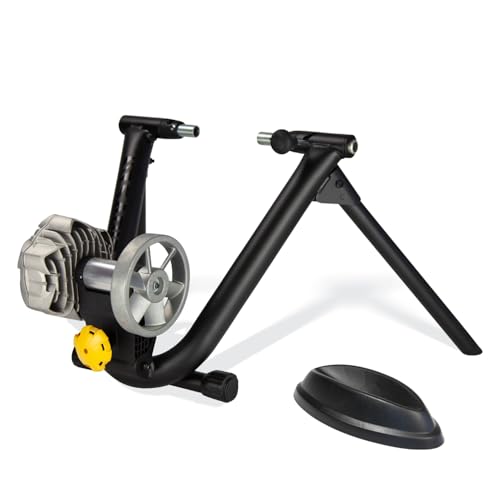
Pros
- Progressive fluid resistance
- Fits road and mountain bikes
- Foldable frame
- Works with Zwift and Rouvy with sensor
- 7.3 lb
Cons
- Speed or cadence sensor sold separately
- Wheel-on setup
- No stated tire-size compatibility

Pros
- ANT+ and Bluetooth connectivity
- Foldable frame
- Multiple axle adapters included
- Front wheel block included
- Tacx Premium month included
Cons
- Cassette not included
- 47.4 lb weight
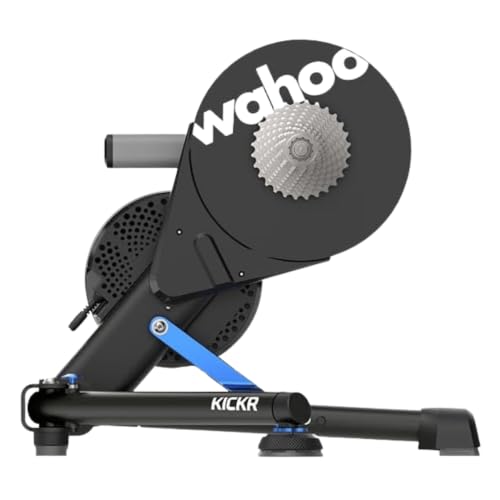
Pros
- Power accuracy within ±1%
- Over 2,200 watts of resistance
- Automatic calibration
- 2.4 GHz Wi-Fi connectivity
- Side-to-side movement from AXIS feet
Cons
- Weighs about 48.5 lb
- High price for indoor training

Pros
- BLE and ANT+ connectivity
- Zwift and MyWhoosh support
- 19% gradient simulation
- Up to 2,200W peak power
- Built-in cooling fan
Cons
- BC2 shifter sold separately
- Virtual shifting unavailable in ERG mode

Pros
- Smooth, road-like resistance
- Built for hard efforts
- Supports structured training
- Integrated WiFi
Cons
- Connectivity details not specified
- Resistance range not listed
- Noise level not listed
Side-by-Side Comparison
| Trainer | Connectivity | Power and accuracy | Incline simulation | Notable detail |
|---|---|---|---|---|
| Wahoo KICKR V6 Zwift Click and Cog Smart Cycling | 2.4 GHz WiFi | Over 2,200W; ±1% | Not listed | Automatic calibration; KICKR AXIS feet |
| Garmin TacX Neo 2T Smart Trainer | ANT+, Bluetooth | Not listed | Not listed | Foldable; axle adapters included |
| ThinkRider X2Max Smart Bike | ANT+, BLE | Up to 2,000W; ±2% | 18% | About 58 dB at 30 km/h, per ThinkRider |
| Wahoo KICKR V6 Smart Indoor Trainer | 2.4 GHz WiFi | Over 2,200W; ±1% | Not listed | Automatic calibration; KICKR AXIS feet |
| Wahoo Fitness KICKR CORE 2 ZWIFT COG and Click | Integrated WiFi | Not listed | Not listed | Automatic updates on active WiFi |
| ThinkRider XXPRO Smart Bike Trainer,2500W,25% | Bluetooth, ANT+ | Up to 2,500W; ±1% | 25% | Self-powered; downhill simulation |
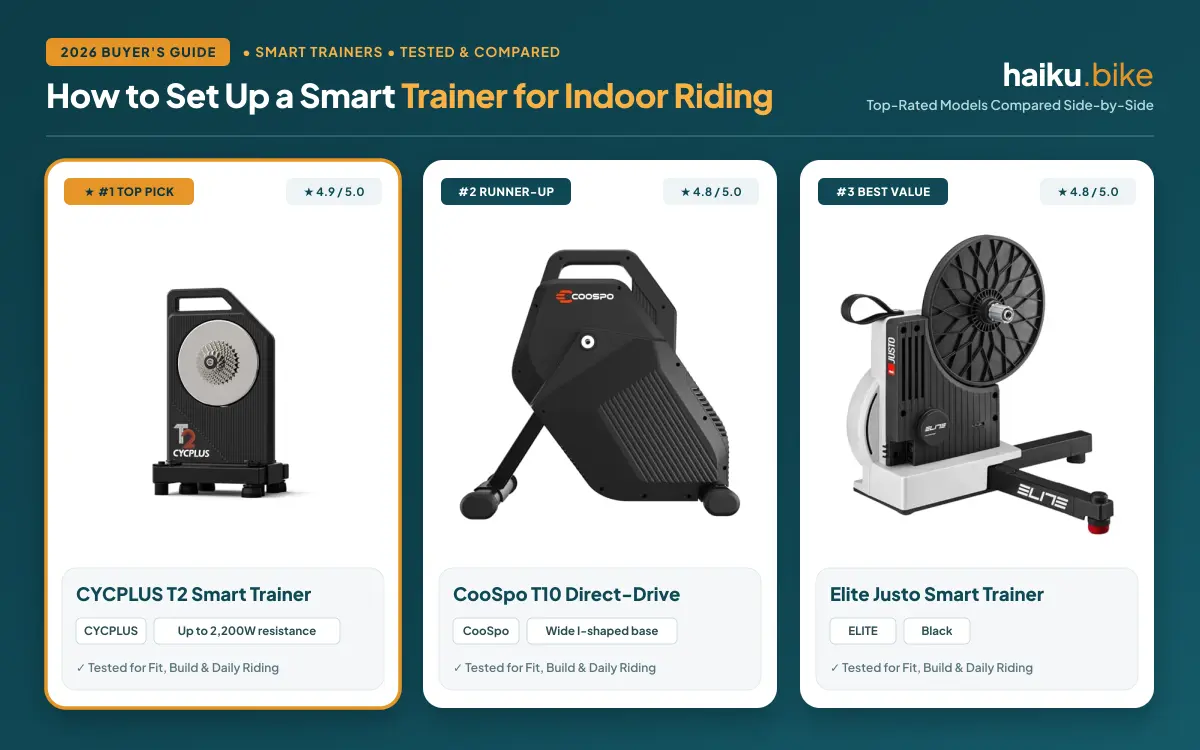
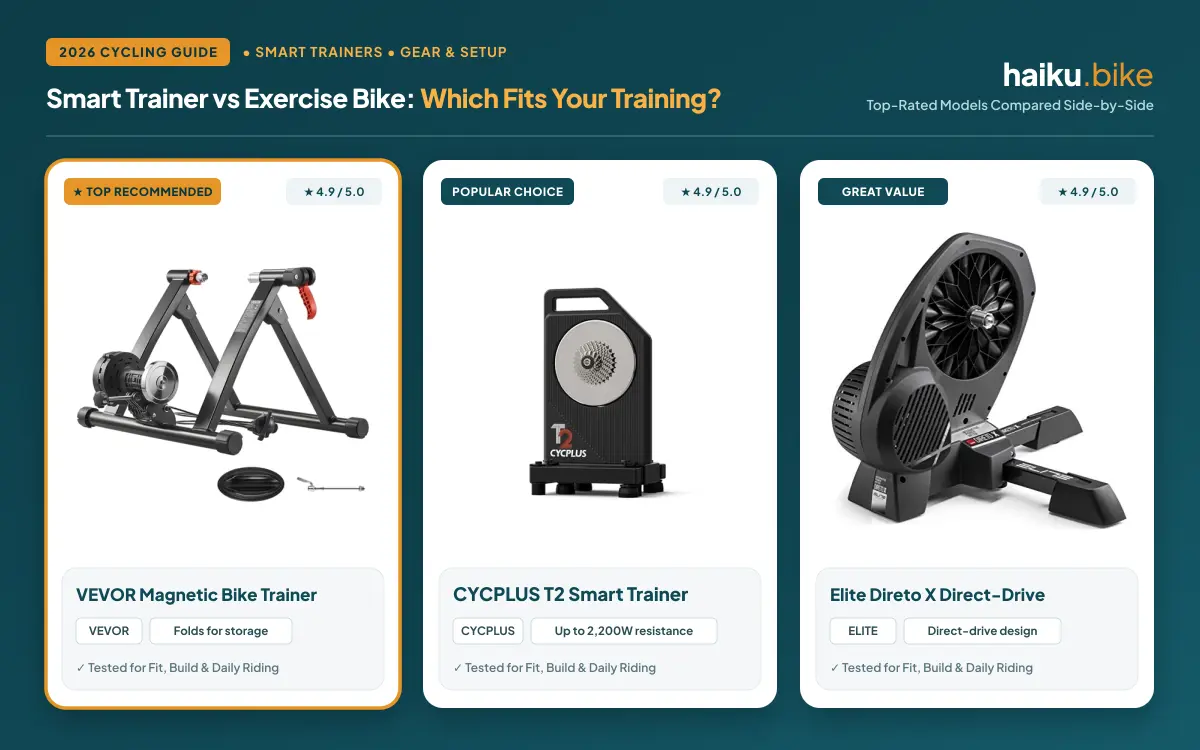
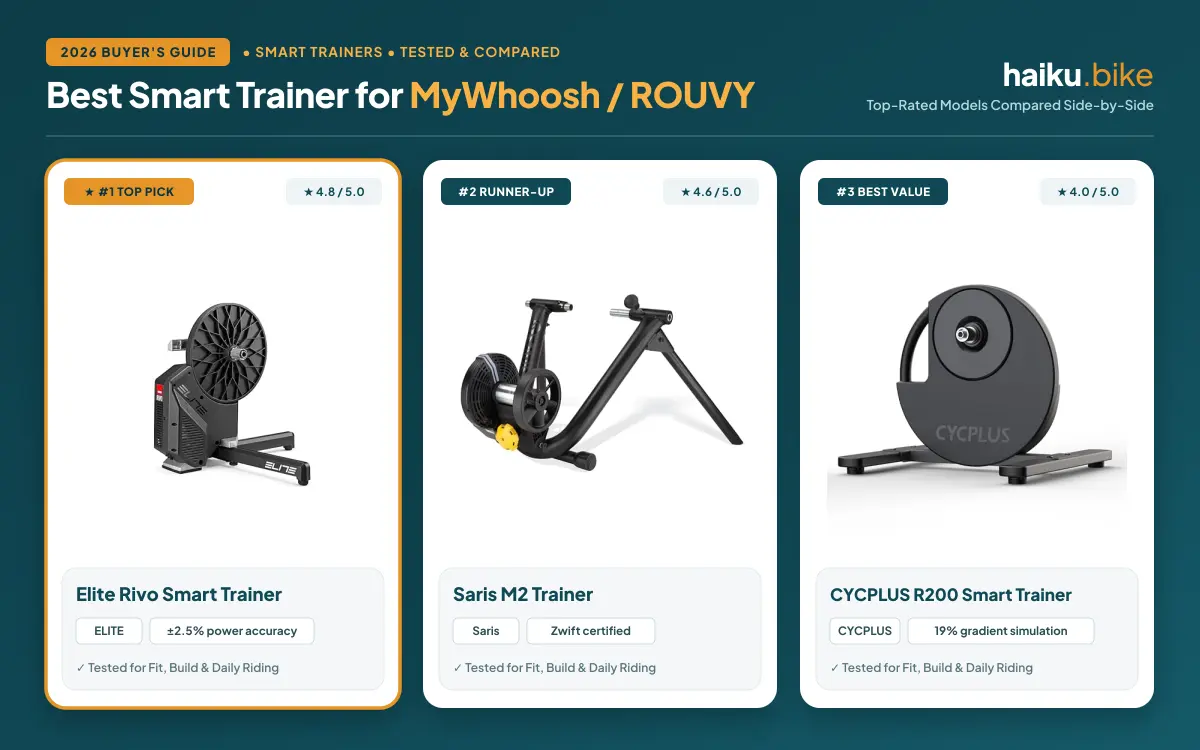
| CYCPLUS Smart Bike Trainer R200, 2200W | BLE, ANT+ | Up to 2,200W; ±1% | 19% | Virtual shifting requires separate BC2 Shifter |
| Saris Fluid2 Indoor Bike Trainer | Separate speed or cadence sensor for app use | Not listed | Not listed | Wheel-on fluid resistance; foldable |
The main distinction is automatic, app-controlled resistance versus progressive resistance driven by your pedaling. Smart trainers can respond to virtual terrain, while Saris Fluid2 relies on fluid resistance and a separate sensor for app use.
Common Mistakes to Avoid
Bike compatibility is easy to miss when buying a smart trainer. Check rear axle type, frame spacing, drivetrain, and cassette requirements against the maker’s current fit information, because adapters and included parts differ.
App compatibility does not guarantee that your phone, tablet, or computer supports the trainer’s connection method. ThinkRider lists ANT+ and BLE, Garmin lists ANT+ and Bluetooth, and some Wahoo features use WiFi, so confirm your device can connect as intended.
Incline figures describe only one part of trainer performance. ThinkRider XXPRO lists 25%, CYCPLUS R200 lists 19%, and ThinkRider X2Max lists 18%, but those figures do not establish every resistance behavior or software feature.
Do not expect Saris Fluid2 to change resistance automatically with Zwift terrain. Its fluid resistance rises as you pedal harder, and using apps requires a separate speed or cadence sensor, sold separately.
Best Trainer for Zwift Buying Guide
Trainer Type and Bike Fit
Trainer type determines how your bike attaches and which parts you must check before purchase. Saris Fluid2 is wheel-on, while connected smart trainers provide app-linked resistance and may require specific axle or drivetrain arrangements.
Check rear axle type, frame spacing, drivetrain, and cassette compatibility in the maker’s current fit information. Garmin includes adapters for several quick-release and 12 x 142 mm thru-axle configurations, but that does not confirm fit for every bike.
If you plan to move one trainer between bikes, verify each bike separately instead of assuming one setup fits both. Our road bike equipment guide covers another purchase where component compatibility can matter.
Power Accuracy and Resistance
Power accuracy matters when you follow structured workouts or compare indoor efforts over time. Wahoo lists ±1% accuracy and resistance over 2,200 watts for both KICKR V6 entries; ThinkRider lists ±2% for X2Max and ±1% for XXPRO.
These figures are manufacturer specifications, not a promise of identical readings in every setup. Consider whether trainer power meets your training needs, or whether you plan to use a separate power meter for workout targets.
Maximum resistance and incline simulation describe different capabilities. ThinkRider XXPRO lists 2,500 watts and 25% incline simulation, while CYCPLUS R200 lists 2,200 watts and 19%; Garmin and Wahoo do not list incline figures here.
Zwift Connectivity and Devices
Connectivity determines how the trainer communicates with Zwift and the device running the app. ThinkRider lists ANT+ and BLE and names Zwift compatibility; Garmin lists ANT+ and Bluetooth, while CYCPLUS lists BLE and ANT+.
Wahoo lists 2.4 GHz WiFi for KICKR V6 data transfer, and KICKR CORE 2 uses integrated WiFi for pairing and updates on an active network. Confirm the trainer’s supported connection methods alongside your phone, tablet, or computer.
Saris Fluid2 works with virtual training platforms when paired with a speed or cadence sensor, sold separately. Check whether your chosen app needs extra sensors and whether your device can receive their signals alongside the trainer connection.
Noise, Stability, and Riding Space
Noise and stability matter when indoor rides happen near other people or shared walls. ThinkRider reports about 58 dB at 30 km/h for X2Max, while Saris describes Fluid2 as quiet without publishing a comparable figure.
A manufacturer’s sound description cannot predict noise in every room. Flooring, drivetrain condition, and room acoustics can affect what you hear, so consider the trainer’s location and whether vibration could travel through the floor.
ThinkRider describes an I-beam triangular structure designed to support balance and stability on X2Max. Wahoo says KICKR AXIS feet mimic side-to-side outdoor movement; follow setup instructions and place the trainer on a firm, level surface.
Setup, Calibration, and Added Equipment
Setup and calibration affect how quickly you can start riding and how much adjustment a trainer requires. Wahoo says KICKR V6 calibrates automatically, while ThinkRider XXPRO states that it needs no calibration.
Wahoo says KICKR CORE 2 offers faster, easier setup than the original CORE and automatic updates on active WiFi. CYCPLUS virtual shifting requires the BC2 Shifter, sold separately, and does not work with ERG mode.
Account for sensors, shifters, and any drivetrain parts that are not included in your chosen package. Product descriptions do not provide complete care schedules for every trainer, so follow maker instructions and check that your bike stays secure before riding.
How We Chose
We assess these trainers with the Haiku Ride Score: core performance 30%, build and weather resistance 20%, ease of use 20%, compatibility and battery 15%, and value 15%. Our comparison considers manufacturer specifications, compatibility information, and long-term owner feedback.
We research and draft our guides with software tools, including AI, then run automated checks on product fit, sourcing, and our editorial rules. Our editor spot-checks guides rather than reading each one before publication. Our how we review page explains the scoring and editorial process.
Price and Value: What Each Budget Gets You
Budget
Budget choices can provide indoor resistance without the complexity of a connected smart trainer. Saris Fluid2 uses wheel-on fluid resistance, a foldable frame, and simple installation, but app rides need a separate speed or cadence sensor. Riders give up electronically controlled resistance and published power accuracy, so this option suits basic spinning rather than terrain-responsive Zwift sessions.
Mid-Range
Mid-range smart trainers add app connectivity, stated power accuracy, and virtual incline simulation. ThinkRider X2Max lists ANT+, BLE, up to 2,000 watts, ±2% accuracy, and 18% incline simulation; XXPRO lists up to 2,500 watts and ±1% accuracy. Features and connection methods vary, so check device fit and setup needs rather than assuming every trainer offers the same package.
Premium
Premium options can emphasize broad resistance capability, automatic calibration, connected features, or included adapters. Wahoo KICKR V6 lists over 2,200 watts, ±1% accuracy, WiFi, and automatic calibration; Garmin TacX Neo 2T includes multiple axle adapters and supports ANT+ and Bluetooth. Compare those benefits with your bike and training needs, since a higher feature set may not improve every rider’s sessions.
Choosing Something Else
A basic wheel-on trainer can suit riders who want indoor exercise without automatic virtual-terrain changes or detailed power data. Saris Fluid2 offers progressive resistance and app compatibility with a separate sensor, but it does not provide the connected resistance behavior many Zwift riders expect. Choose a smart trainer instead when terrain-linked resistance or power accuracy matters to your workouts.
Final Thoughts
Riders who prioritize published power accuracy, WiFi, and automatic calibration should compare Wahoo KICKR V6 Zwift Click and Cog Smart Cycling with Wahoo KICKR V6 Smart Indoor Trainer. Both list over 2,200 watts and accuracy within ±1%, but confirm fit and package details before choosing between them.
For steep virtual terrain, ThinkRider XXPRO Smart Bike Trainer,2500W,25% lists 25% incline simulation, downhill simulation, and ±1% accuracy. ThinkRider X2Max Smart Bike lists Zwift compatibility and 18% incline simulation, with stated accuracy of ±2%.
Riders comparing other connected options can consider Garmin TacX Neo 2T Smart Trainer, which includes axle adapters, or Wahoo Fitness KICKR CORE 2 ZWIFT COG and Click, which offers integrated WiFi. CYCPLUS Smart Bike Trainer R200, 2200W lists 19% incline simulation; its separate shifter requirement is a trade-off. See our bike travel case guide if indoor and travel equipment both matter.
Choose another category if you only need simple indoor spinning, cannot confirm bike fit, or do not need connected resistance. A smart trainer may add cost and setup complexity without benefit for riders who want steady exercise and no app-controlled terrain changes.
FAQs
Can I use these trainers with Zwift?
Several trainers in this guide list compatibility with Zwift or cycling apps, including ThinkRider X2Max, ThinkRider XXPRO, CYCPLUS R200, and Saris Fluid2 with a separate sensor. Connection methods differ across ANT+, Bluetooth, BLE, and WiFi. Check your device and app requirements before choosing a trainer, especially if you plan to connect multiple sensors.
Do I need WiFi to ride Zwift on a smart trainer?
WiFi is not listed as a universal requirement for riding Zwift with these trainers. ThinkRider lists ANT+ and BLE, Garmin lists ANT+ and Bluetooth, and Wahoo describes WiFi features on specific models. Confirm the connection methods supported by your trainer and the device running Zwift before setting up your indoor riding space.
Which Best Trainers for Zwift in 2026 simulate steep climbs?
ThinkRider XXPRO lists 25% incline simulation, CYCPLUS R200 lists 19%, and ThinkRider X2Max lists 18%. These manufacturer-stated figures describe incline capability, not every aspect of resistance or ride feel. Compare current specifications and app compatibility if virtual climbs are central to your Zwift workouts.
How do I check whether my bike fits a smart trainer?
Bike fit depends on rear axle type, frame spacing, drivetrain, and cassette requirements. Compare those details with the trainer maker’s current compatibility information before ordering, particularly if you plan to use multiple bikes. Garmin includes several axle adapters, but their inclusion does not establish compatibility with every frame or drivetrain configuration.
Does Saris Fluid2 change resistance automatically in Zwift?
Saris Fluid2 uses progressive fluid resistance that rises as you pedal harder, and app use requires a separate speed or cadence sensor. The product details do not describe electronically controlled resistance changes based on Zwift terrain. Choose a smart trainer if automatic virtual-terrain resistance is essential to your indoor sessions.
Which Best Trainers for Zwift have published power accuracy?
Wahoo lists ±1% accuracy for both KICKR V6 models, ThinkRider lists ±1% for XXPRO and ±2% for X2Max, and CYCPLUS lists ±1% for R200. These are manufacturer specifications. Garmin and Saris do not list power accuracy here, so consult current maker information if this figure affects your purchase.
Does CYCPLUS R200 virtual shifting need extra equipment?
CYCPLUS R200 virtual shifting requires the CYCPLUS BC2 Shifter, which is sold separately, and the feature is not compatible with ERG mode. Confirm that this arrangement suits your apps and workout preferences before buying. Riders who do not need virtual shifting can compare other trainers by connectivity, power accuracy, and stated incline simulation.
How should I maintain a smart trainer?
Smart trainer care varies by design, so follow the manufacturer’s installation and maintenance instructions. Keep the trainer on a firm, level surface and confirm the bike is secured before every ride. For broader indoor setup ideas, browse our smart trainers category and contact the maker for product-specific support.
Write Your Review
No reviews yet. Be the first to share your experience!