
Road riders and commuters use bike radar to receive alerts when vehicles approach from behind, helping them stay informed without repeatedly turning away from the road. The Best Bike Radar Under $150 guide compares options from Garmin, Bryton, Magicshine, iGPSPORT, and Sigma, with different approaches to lighting, alerts, and device connections.
In November 2026, this guide covers 5 rear radar options within its budget. Radar is an awareness aid, not a substitute for looking and listening, so follow the manufacturer’s instructions and local laws. Riders who want to understand how alerts work can read our guide to bike radar.
At a Glance: Which One Fits You
- Best overall: Bryton GARDIA R300L Cycling/Bike Radar with Tail combines radar with a 73-lumen tail light, and Bryton lists up to 17 hours of use.
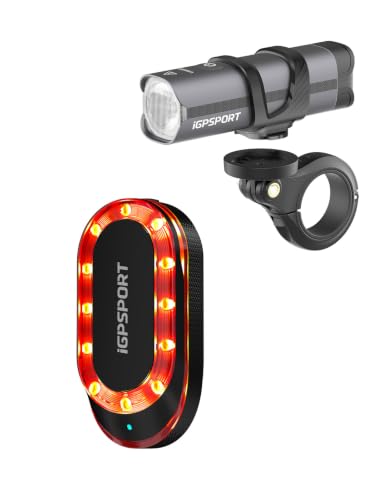
- Best value: iGPSPORT Radar Bike Taillight and 800 Lumens pairs radar alerts with a headlight and lists up to 25 hours in radar-only mode.
- Best for Garmin users: Garmin Varia RVR315, Cycling Rearview Radar pairs with compatible Edge computers, smartphones, select Garmin wearables, and a radar display unit.
- Best for multiple-vehicle alerts: SIGMA RECO 80 LINK Radar Rear Light with LED Brake can detect up to eight vehicles simultaneously, according to Sigma.

Pros
- Vehicle alerts up to 153 yards away
- Visual, tone, and vibration alerts
- Works with Ride with GPS
- Compact vertical design
- 0.11 lb weight
Cons
- Up to 8 hours of battery life
- Designed for road-use bicycles

Pros
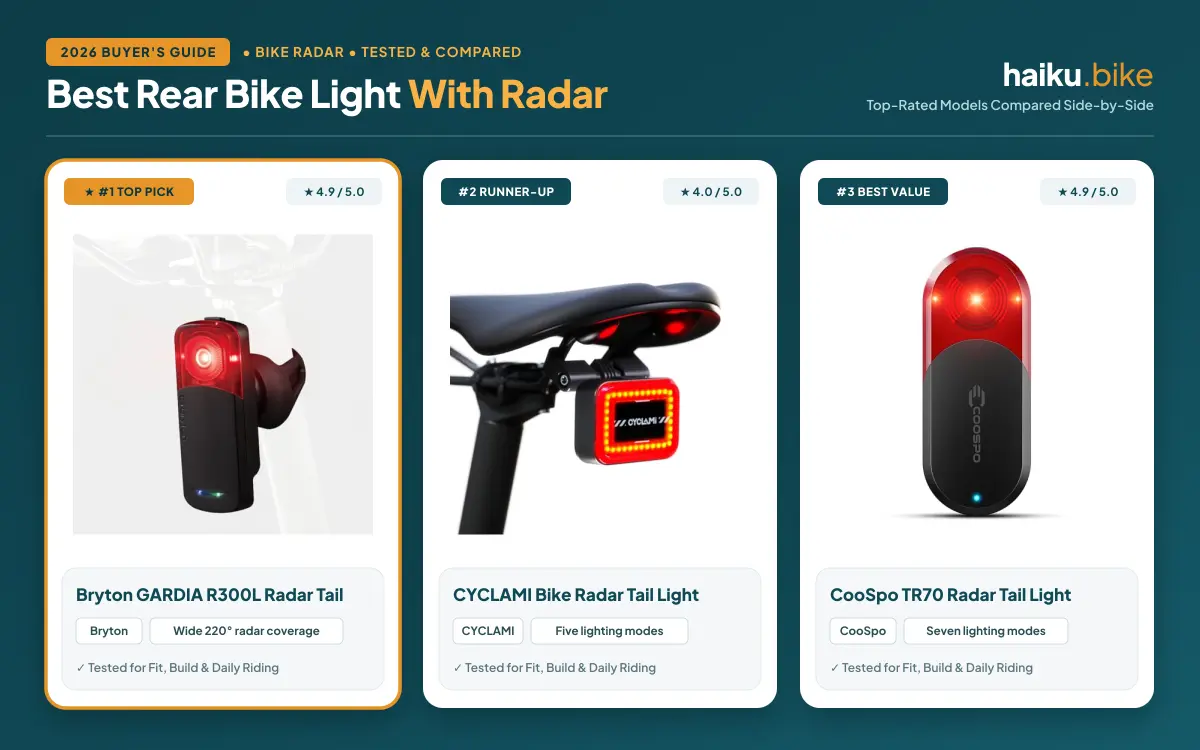
- Radar and tail light in one unit
- Wide 220° radar coverage
- Up to 17-hour maker-rated runtime
- USB-C charging
- Fits several seatpost shapes
Cons
- Alerts require paired phone or bike computer
- Seatpost mount, no handlebar mount listed

Pros
- 140 m rear vehicle detection
- ANT+ computer alerts
- 300-lumen output
- IPX6 water resistance
- Tool-free seatpost mount
Cons
- 100-hour runtime only with radar off
- Radar alerts require compatible ANT+ computer
- Who should skip it: riders seeking a basic light

Pros
- Radar detects up to eight vehicles
- Up to 15 hours of runtime
- USB-C charging
- IP67 dust and water protection
- Adapters for three seatpost styles
Cons
- Radar display alerts require compatible ANT+ computer
- SIGMA Ride app radar warnings arrive spring 2026
- Who should skip it: riders seeking standalone radar alerts
Pros
- Radar alerts for approaching vehicles
- 800-lumen headlight included
- Up to 25 hours in single radar mode
- USB-C charging
- Works with compatible computers and app
Cons
- Water-resistance rating not provided
- Compatibility depends on supported protocols
- Who should skip it: riders needing a stated water-resistance rating
Side-by-Side Comparison
| Product | Listed detection | Light | Listed runtime | Connections | Weather rating |
|---|---|---|---|---|---|
| Bryton GARDIA R300L Cycling/Bike Radar with Tail | Up to 207 yards; 220° viewing angle | 73 lumens | Up to 17 hours | ANT+ and Bluetooth; Gardia app | IPX7 |
| Magicshine SEEMEE R300 Bike Radar Tail | Up to 140 m; 35° detection | 300 lumens; 270° beam | Up to 100 hours in energy-saving flash mode with radar off | ANT+ compatible | IPX6 |
| iGPSPORT Radar Bike Taillight and 800 Lumens | Up to 160 m; 45° beam angle | Rear light; headlight named in product name | Up to 20 hours in light mode; 25 hours in radar-only mode | iGPSPORT devices, app, and standard protocols | Not listed |
| Garmin Varia RVR315, Cycling Rearview Radar | Up to 153 yards | Not listed | Up to 8 hours | Compatible Edge, smartphones, select Garmin wearables, display unit | Not listed |
| SIGMA RECO 80 LINK Radar Rear Light with LED Brake | Up to 160 m; detects up to eight objects | Rear light; 220° viewing angle | Up to 15 hours | ANT+; compatible SIGMA ROX computers | IP67 |
The central choice is whether you want a radar-only unit or radar combined with lighting. Bryton, Magicshine, iGPSPORT, and Sigma list rear lights, while Garmin’s product information does not list one. Check runtime by mode and device compatibility, because headline figures do not mean every feature runs for the same duration.
Common Mistakes to Avoid
Buyers can mistake a manufacturer’s maximum detection range for a guaranteed warning distance in every riding situation. Bryton lists up to 207 yards, while other makers state their ranges in meters; road bends, traffic, and mounting position affect how alerts apply. Treat range as a specification, not a promise of identical notice on every route.
Another common error is assuming every radar works with every computer, phone, or app. Garmin lists specific compatible device types, while Bryton names ANT+, Bluetooth, and its Gardia app; check the exact computer or phone you plan to use. Sigma’s listed computer connections include compatible ROX models, and iGPSPORT identifies its own devices and standard connection protocols.
Buyers may also overlook lighting modes, mount fit, and the distinction between light runtime and radar runtime. Magicshine’s maximum runtime applies to energy-saving flash mode with radar off, while Bryton lists several light modes without separate runtime figures. Check the mount against your seat post and confirm whether the included lighting suits your routes.
Best Bike Radar Under $150: Buying Guide
Detection Range and Alert Context
Detection range describes the distance at which a radar may identify a vehicle approaching from behind, but it does not guarantee a fixed warning time. Bryton lists up to 207 yards, Garmin lists up to 153 yards, and Sigma lists up to 160 meters. Compare the maker’s stated range and any viewing angle, while remembering that road layout changes what you can see.
Some devices also communicate the number or approach of vehicles, rather than only signaling a general alert. Sigma says its RECO 80 LINK can register up to eight vehicles and distinguish normal from fast approaches. Read how each computer or app presents alerts, then choose a display you can interpret without losing focus on traffic.
Computer, Phone, and App Compatibility
Compatibility determines where alerts appear and whether you need an additional display. Bryton supports ANT+ and Bluetooth and offers its Gardia app, while Garmin lists compatible Edge computers, smartphones, select wearables, and its radar display unit. Sigma names compatible ROX computers, and iGPSPORT lists its devices, its app, and other products that support standard connection protocols.
Before buying, confirm that your exact computer, phone, operating system, or wearable works with the radar’s connection method. A shared protocol does not by itself confirm that every alert feature appears on every device. Riders weighing radar with lighting options can also compare our rear bike light with radar guide.
Battery Runtime and Operating Modes
Battery runtime matters because a depleted unit cannot provide alerts or lighting for the rest of a ride. Bryton lists up to 17 hours, Garmin up to 8 hours, and Sigma up to 15 hours. iGPSPORT lists up to 25 hours in radar-only mode and up to 20 hours in light mode, while Magicshine’s 100-hour figure applies with radar off.
Compare the operating mode behind each runtime figure with your longest usual ride and the functions you plan to keep on. A light-and-radar combination may use power differently from radar-only operation. Check charging connections and maker instructions, then build a charging routine that leaves enough power for the full outing.
Integrated Lighting and Visibility
An integrated rear light combines visibility with radar alerts, but products differ in light output, beam spread, and available modes. Bryton lists a 73-lumen light, Magicshine lists 300 lumens and a 270° beam, and Sigma lists a 220° light viewing angle. iGPSPORT’s product name includes an 800-lumen headlight, alongside its radar taillight.
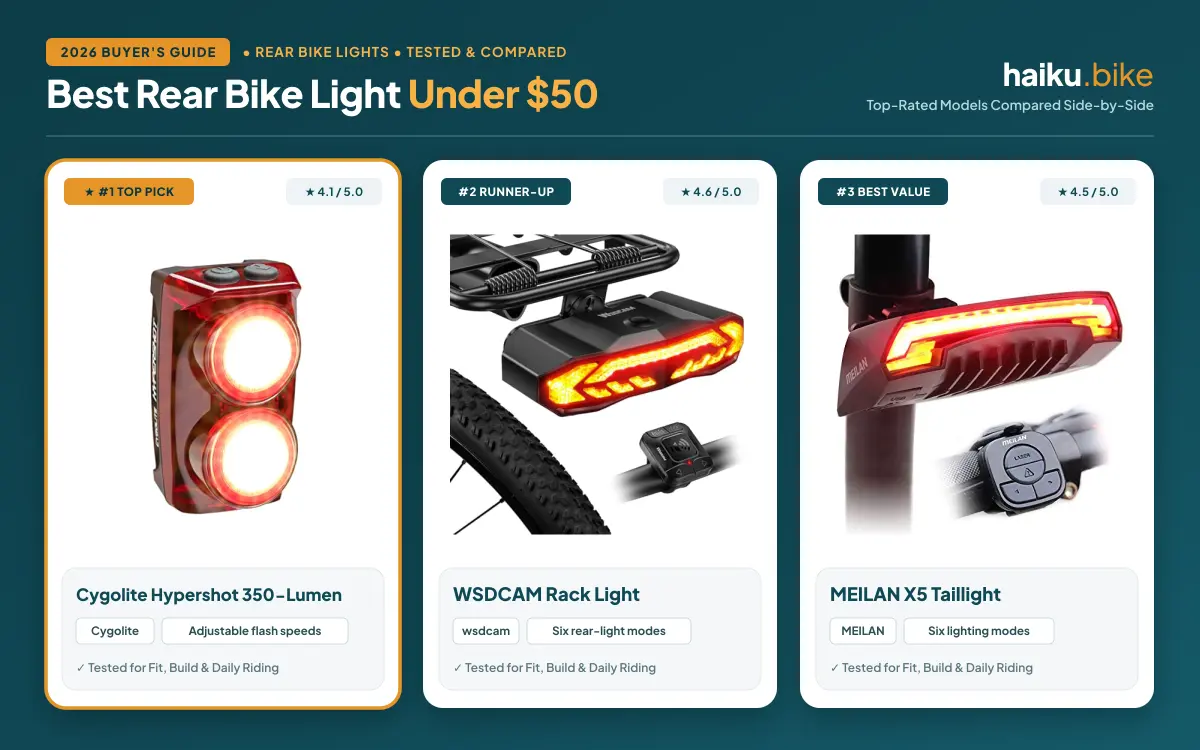
Choose lighting based on where and when you ride, and review the specific modes rather than comparing lumens alone. Garmin’s product information does not list a tail light, so riders choosing that unit should plan their rear lighting separately. For a broader view of rear-light features, see our rear bike light guide.
Mounting and Seat-Post Fit
A secure, compatible mount keeps the radar positioned as its maker specifies and prevents seat-post shape from becoming a buying problem. Bryton lists tool-free mounting for standard 27.2 mm, 30.9 mm, and 31.6 mm posts, plus D-shaped and aero posts. Sigma lists rubber adapters for D-shaped, aero, and round seat posts.
Magicshine describes a tool-free bracket for most seat posts, while Garmin describes a compact vertical design for most road-use bicycles. iGPSPORT does not state seat-post fit details here. Check your frame’s post shape and the maker’s mounting instructions before ordering, especially if your post has an aero or otherwise nonstandard profile.
Weather Resistance and Everyday Use
A published ingress protection rating gives a specific reference for dust or water resistance, but the ratings differ across this group. Sigma lists IP67, Bryton lists IPX7, and Magicshine lists IPX6. Garmin and iGPSPORT do not list ratings in their product details here, so check their current product instructions before deciding how to handle wet rides.
Follow the manufacturer’s guidance for charging, cleaning, storage, and mounting, and inspect the attachment before riding. Do not infer a protection rating from appearance or assume that every port tolerates water equally. A radar should add information to your ride, not distract you from watching traffic and making safe decisions.
How We Chose
We score products with the Haiku Ride Score: core performance counts for 30%, build and weather resistance for 20%, ease of use for 20%, compatibility and fit for 15%, and value for 15%. For bike radar, compatibility and fit cover alert connections, listed device support, charging, published runtime, and mount information.
We evaluate manufacturer specifications, compatibility information, and long-term owner feedback where available. We research and draft our guides with software tools, including AI, then run automated checks on product fit, sourcing, and our editorial rules. Our editor spot-checks guides rather than reading each one before publication. Our how we review page explains the methodology.
Price and Value: What Each Budget Gets You
Budget
At the lower end of this guide’s budget, riders can find radar combined with a rear light, and some units also add a headlight. The iGPSPORT option lists several operating modes and separate runtimes for light and radar-only use. Lower-cost choices may involve narrower device compatibility details or less complete mounting information, so confirm both before purchase.
Mid-Range
Mid-range options in this guide include radar-and-light combinations with stated weather ratings, app support, or multiple light modes. Bryton pairs a light with ANT+ and Bluetooth support, while Magicshine lists a wide-angle light and a long maximum runtime when radar is off. Riders give up little on basic functionality, but should compare mode-specific runtime and device support.
Premium
At the upper end of this guide’s budget, buyers can prioritize a known device ecosystem, a stated detection range, or a more detailed feature set rather than assume a higher cost guarantees better fit. Garmin suits riders with compatible Garmin devices, while Sigma lists multi-vehicle alerts, a brake light, and an IP67 rating. These options still require checking connections and mounting.
Choosing Something Else
A rear light and a mirror can suit riders who want a simpler setup without electronic alerts or charging another device. That combination does not send radar warnings to a computer or phone, and a mirror requires the rider to glance back at it. Choose radar when its alerts fit your routine, and choose simpler equipment when you prefer fewer connected devices.
Final Thoughts
Riders who want a single rear unit with a long listed runtime and wide stated detection range should consider Bryton GARDIA R300L Cycling/Bike Radar with Tail. Bryton lists a 73-lumen light, up to 207 yards of detection, and up to 17 hours of use. Its trade-off is that runtime may vary with light mode, and riders should confirm device and seat-post compatibility.
Riders already using compatible Garmin devices may prefer Garmin Varia RVR315, Cycling Rearview Radar, which offers alerts through specified Garmin devices and compatible smartphones. Its listed battery life is shorter than several combined radar lights, and Garmin does not list an integrated tail light. For a combined light and radar, Magicshine SEEMEE R300 Bike Radar Tail lists a 300-lumen light, but its maximum runtime applies with radar off.
Riders who want multiple vehicle alerts can consider SIGMA RECO 80 LINK Radar Rear Light with LED Brake, while those who want a listed headlight alongside a radar taillight can examine iGPSPORT Radar Bike Taillight and 800 Lumens. Each has trade-offs in compatibility or mode-specific information, so match its listed functions to your current devices and routes.
Skip electronic radar if you do not want to manage charging, alerts, or a seat-post mount that may not fit your bicycle. A separate rear light and mirror may better suit riders seeking a simpler arrangement, though neither provides radar alerts on a display. Riders comparing light-only choices can browse our rear bike lights category.
FAQs
Which bike radar has the longest listed detection range?
The Bryton GARDIA R300L Cycling/Bike Radar with Tail has the longest stated range among these products, with Bryton listing detection up to 207 yards. Sigma lists up to 160 meters, iGPSPORT up to 160 meters, and Garmin up to 153 yards. These manufacturer specifications do not guarantee identical alert distance on every road.
Can bike radar connect to any bike computer?
Bike radar does not necessarily connect to every bike computer, because each maker identifies supported protocols and devices. Bryton lists ANT+ and Bluetooth, while Sigma names compatible ROX computers and iGPSPORT lists its devices and standard connection protocols. Check the exact computer’s compatibility information before buying, including whether it displays the alerts you want.
How long does a bike radar battery last?
Bike radar battery life varies by product and operating mode. Garmin lists up to 8 hours, Bryton up to 17 hours, and Sigma up to 15 hours. iGPSPORT lists up to 25 hours in radar-only mode, while Magicshine’s up-to-100-hour figure applies in energy-saving flash mode with radar off. Compare the mode you will actually use.
Do bike radar units include a tail light?
Several bike radar units in this guide include a rear light, including products from Bryton, Magicshine, iGPSPORT, and Sigma. Garmin’s Varia RVR315 product information describes rearview radar but does not list a tail light. Riders choosing Garmin should plan for separate rear lighting if their routes or riding conditions call for it.
Will bike radar fit an aero seat post?
Some bike radar mounts explicitly support aero seat posts, but fit depends on the product and frame. Bryton lists aero, D-shaped, and standard post compatibility, while Sigma lists adapters for aero, D-shaped, and round posts. Check the manufacturer’s current fit details for your bicycle, particularly if its post shape is unusual.
Can I use bike radar in the rain?
Some bike radar products publish water-resistance ratings, including IPX7 for Bryton, IPX6 for Magicshine, and IP67 for Sigma. Garmin and iGPSPORT do not state a rating in the product details here. Consult each maker’s instructions for wet-weather use, cleaning, and charging, and do not assume an unlisted rating.
Does bike radar replace looking behind while riding?
Bike radar does not replace looking and listening or checking traffic before changing position or direction. Radar alerts provide additional information about approaching vehicles, but conditions and device placement affect what a rider receives. Follow the manufacturer’s instructions and local laws, and use alerts as one part of active road awareness rather than relying on a display alone.
What should I compare when choosing a bike radar?
When choosing a bike radar, compare detection information, device compatibility, battery runtime by mode, lighting, weather rating, and mount fit. The right balance depends on your computer or phone and whether you need an integrated rear light. Our commuter bike light guide can help if lighting matters more than radar alerts.



Write Your Review
No reviews yet. Be the first to share your experience!