
Road riders and commuters who share lanes with faster traffic can use bike radar alerts to notice vehicles approaching from behind. Radar units differ in how they display alerts, pair with cycling computers or phones, and combine detection with a rear light or camera.
Our Best Bike Radar guide compares 10 options from Garmin, Bryton, iGPSPORT and more for November 2026. Follow each manufacturer’s instructions and local traffic laws, and treat radar as an added source of awareness rather than a substitute for looking and listening. Riders comparing other visibility equipment can also browse our Lights & Radar category.
At a Glance: Which One Fits You
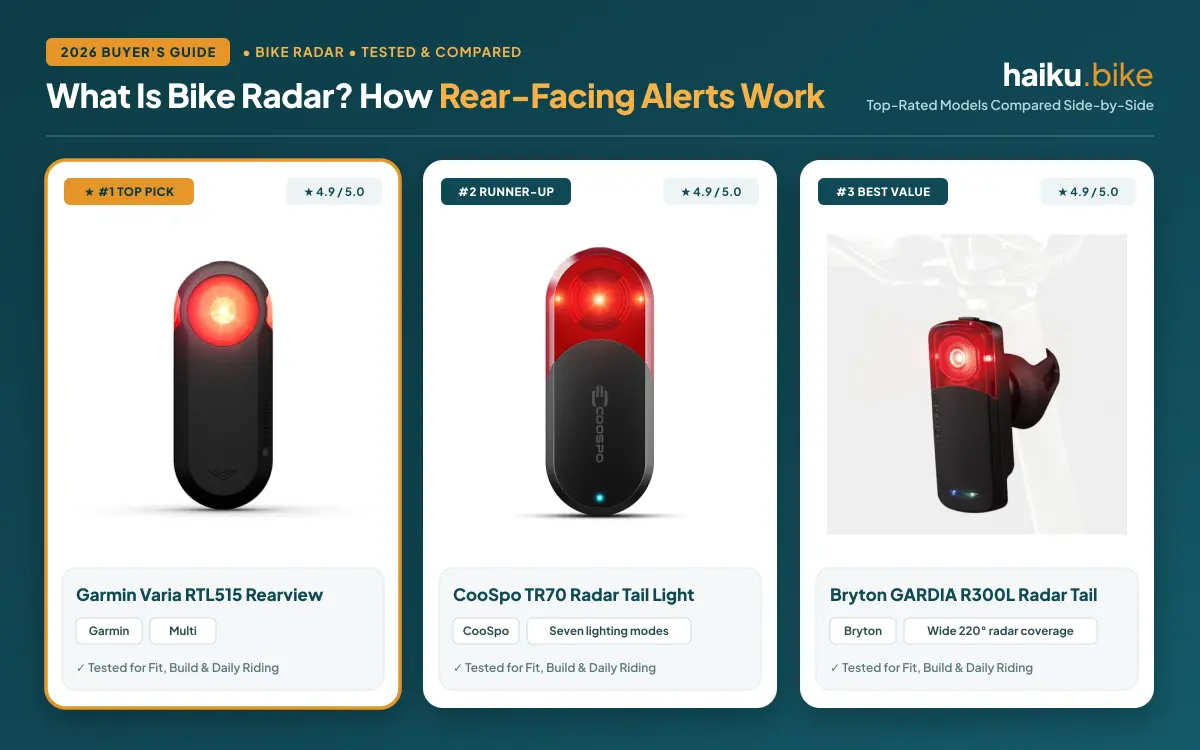
- Best overall: Garmin Varia RTL515, Cycling Rearview Radar earns this spot because it combines radar, a tail light, and phone or Edge computer alerts.
- Best value: Bike Radar Tail Light Alerts for Vehicle in 60M earns this spot because its compact light adds brake sensing and radar alerts.
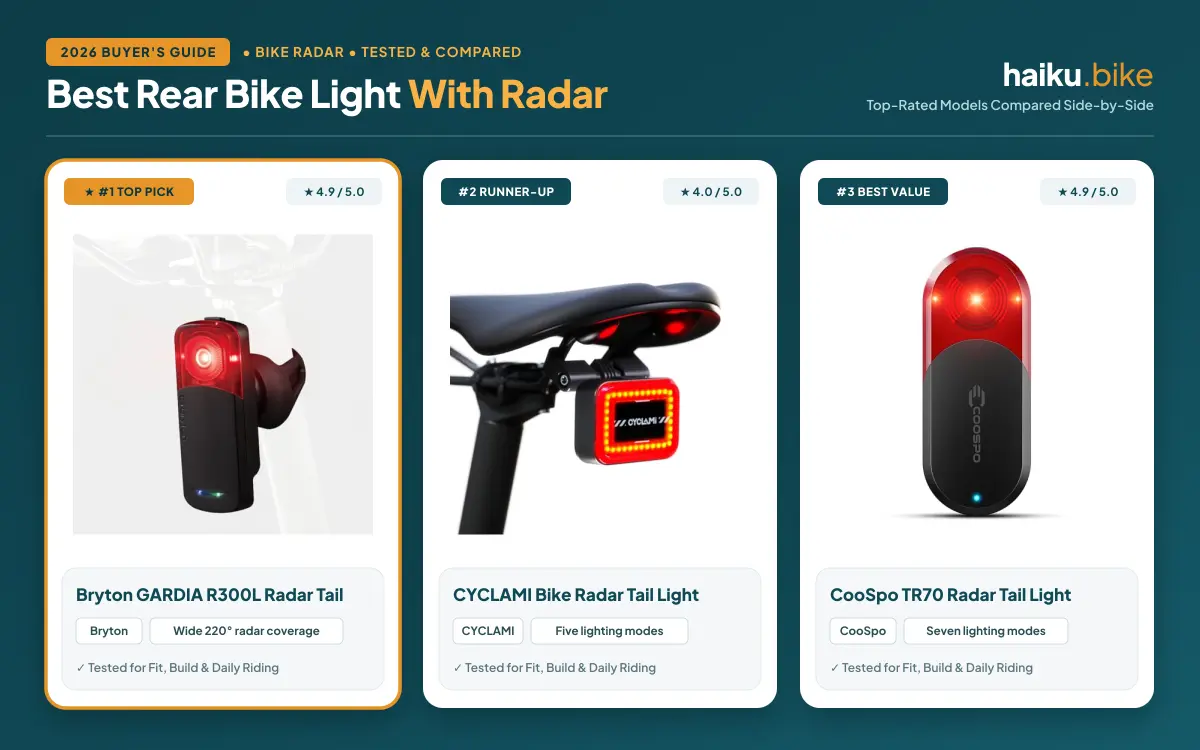
- Best for long listed detection range: Bryton GARDIA R300L Cycling/Bike Radar with Tail earns this spot because Bryton lists detection up to 190 meters.
- Best for riders who want a camera display: Xybervu VeloScope Bike Radar Camera earns this spot because it combines radar alerts with a live rear view on a handlebar display.

Pros
- Radar range up to 153 yards
- Visual, tone, and vibration alerts
- Ride with GPS integration
- Up to 16 hours in day flash mode
- Peloton mode for group rides
Cons
- Up to 6 hours in solid mode
- Radar alerts require a compatible device or display

Pros
- Radar and tail light combined
- Seven lighting modes
- USB-C charging
- Quick-release seatpost mount
- IPX7 water resistance
Cons
- Phone alerts require paid Cadence subscription
- First use requires charging for activation
- Fast charging not recommended

Pros
- Radar and tail light in one unit
- Tracks up to eight vehicles
- Automatic brake brightness increase
- USB-C charging
- Up to 25 hours in radar-only mode
Cons
- Alerts require compatible device pairing
- Mounting details not provided
- Water-resistance rating not provided

Pros
- Radar and tail light in one unit
- Detection range up to 164 yards
- Alerts across compatible computers and watches
- Brake-responsive light output
- ANT+ Smart Light Control
Cons
- Battery runtime not specified
- Mounting system details not specified
Pros
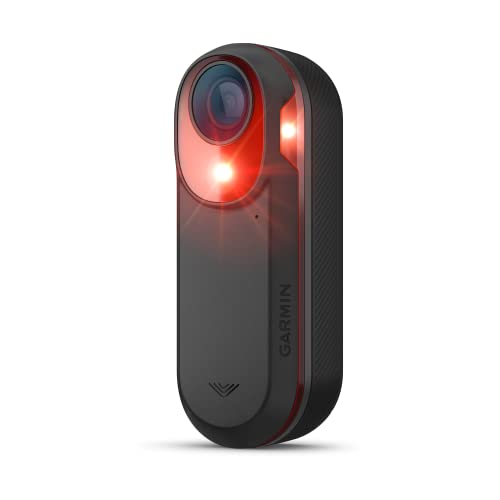
- Radar range up to 153 yards
- 1080p recording at 30 fps
- Automatic incident footage saving
- Three operating modes
- 16 GB SD card included
Cons
- Battery life tops out at 6 hours
- Camera use may be restricted by local laws
- Camera records at 720p or 1080p

Pros
- Radar and tail light in one unit
- Wide 220° radar coverage
- Up to 17-hour maker-rated runtime
- USB-C charging
- Fits several seatpost shapes
Cons
- Alerts require paired phone or bike computer
- Seatpost mount, no handlebar mount listed

Pros
- Live 1080P rear view
- Visual and audible vehicle alerts
- Smart tail light
- More than 10-hour rated battery life
- IP56 weather resistance
Cons
- 1.54 lb system weight
- No stated app or device compatibility
- No stated mounting details
Pros
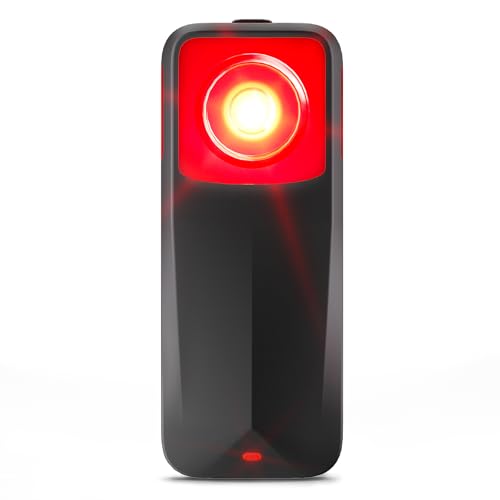
- 140-meter radar detection range
- 80-lumen output
- Brake-sensing light
- Up to 23-hour runtime
- Seatpost and saddle-rail mounts
Cons
- Radar alerts require compatible ANT+ computer
- Seatposts limited to 1.8 inches wide

Pros
- Vehicle alerts up to 153 yards away
- Visual, tone, and vibration alerts
- Works with Ride with GPS
- Compact vertical design
- 0.11 lb weight
Cons
- Up to 8 hours of battery life
- Designed for road-use bicycles

Pros
- Rear-vehicle radar alerts
- Brake-activated brightness increase
- Five lighting modes
- Seatpost and seatpost-rail mounting
- IP64 water-resistance rating
Cons
- Motorcycle detection range is shorter
- Longest stated runtime is 6 hours
- No app or wireless compatibility listed
Side-by-Side Comparison
| Product | Listed detection range | Listed runtime | Light or camera | Connection or fit |
|---|---|---|---|---|
| Garmin Varia RTL515 | 140 m | Up to 16 hours day flash; up to 6 hours solid | Tail light | Edge, compatible smartphones, select Garmin wearables |
| COOSPO TR70 | 140 m | Up to 40 hours | 70-lumen tail light | Garmin computers, COOSPO CS500/CS600, COOSPORIDE app |
| Bryton GARDIA R300L | 190 m | Up to 17 hours | 73-lumen tail light | ANT+ or Bluetooth; standard, D-shaped, and aero seatposts |
| iGPSPORT SR mini | 160 m | Up to 20 hours light mode; 25 hours radar-only | Tail light | Compatible iGPSPORT, Garmin, Wahoo, and Bryton devices |
| Xybervu VeloScope | 190 m | 10+ hours | Camera, display, and tail light | 4.3-inch display; mounting fit not listed |
| RAVEMEN NT201 | 140 m | Up to 23 hours slow flash | 80-lumen tail light | ANT+ computers; round or aero seatposts and saddle rails |
| Garmin Varia RVR315 | 140 m | Up to 8 hours | Radar; tail light not listed | Edge, compatible smartphones, select Garmin wearables |
| Wahoo Fitness TRACKR Radar for Cycling | 150 m | Not listed | Tail light | ELEMNT, compatible computers and fitness watches |
| Garmin Varia RCT715 | 140 m | Up to 4 to 6 hours, depending on mode | Tail light and camera | Edge, select Garmin wearables, Varia app |
| Bike Radar Tail Light Alerts for Vehicle in 60M | 60 m for cars; 30 m for motorcycles | Total runtime not listed | Tail light with brake sensing | Seatpost or seatpost rail mounting |
Detection range and device support separate these systems most clearly, but maker-listed range does not promise the same alert in every riding environment. Riders with a cycling computer should confirm its exact compatibility, while riders without one should check for a supported phone app or included display.
Common Mistakes to Avoid
Assuming every radar pairs with every computer or phone can leave riders without a useful alert display. Garmin lists Edge computers, compatible smartphones, and select wearables for its Varia units; iGPSPORT lists compatible devices from several brands for the SR mini. Confirm your exact model and connection requirements before choosing.
Ignoring seatpost shape can also lead to a poor mounting fit or an awkward rear-facing position. Bryton lists standard, D-shaped, and aero seatpost compatibility, while RAVEMEN also lists saddle rail mounting. Check your frame, available mounting space, and the manufacturer’s orientation instructions before ordering.
Comparing battery figures without matching operating modes gives an incomplete picture. Garmin lists different RTL515 runtimes for day flash and solid modes, while iGPSPORT gives separate figures for light and radar-only use. Choose using the mode you expect to run, and remember camera recording can affect runtime on camera-equipped systems.
Treating an alert as permission to change lanes without checking traffic is another avoidable mistake. Radar can add information about approaching vehicles, but it does not replace looking behind, listening, or making careful riding decisions. Read the maker’s setup guidance so alerts reach you through a display, app, or supported device you can use safely.
Best Bike Radar Buying Guide
Device Compatibility and Alert Display
Compatibility matters because a radar needs a supported device or display to show approaching-vehicle information. Check the exact computer, phone, or watch model against the manufacturer’s compatibility details before buying, rather than relying on brand names alone.
Garmin lists Edge computers, compatible smartphones, and select wearables for its Varia units. Bryton GARDIA R300L supports ANT+ or Bluetooth, while iGPSPORT says the SR mini works with compatible devices from Garmin, Wahoo, Bryton, and iGPSPORT. Phone-based alerts may suit riders who do not use a cycling computer, but confirm that your device and app support the radar.
Consider where alerts will appear and whether that setup fits your normal riding routine. Garmin’s Varia app provides graphics, tone, and vibration alerts on compatible smartphones, while the Xybervu VeloScope includes a handlebar display. Riders who want fewer screens and devices may prefer pairing a radar with a computer they already use.
Detection Range and Alert Behavior
Detection range describes the distance a manufacturer says its radar can detect approaching vehicles; it does not guarantee identical warning time on every route. Listed ranges in this guide vary, so compare figures alongside connection support and the way each product communicates alerts.
Bryton lists up to 190 meters, while the CYCLAMI light lists 60 meters for cars and 30 meters for motorcycles. iGPSPORT says its SR mini can track up to eight vehicles simultaneously. These differences can help narrow choices, but road curves, traffic, and riding conditions can affect what a rider notices.
Check whether a unit offers visual, audible, or vibration alerts through a device you can use without distraction. Garmin describes graphics, tone, and vibration through its compatible app. Treat every alert as additional awareness, not a command to move or a replacement for checking the road around you.
Mounting Fit and Position
Mounting fit determines whether a radar can attach securely at the rear of your bike and point as its maker intends. Compare the mount with your seatpost shape, saddle rails, and any accessories that occupy the same space.
Bryton lists compatibility with standard, D-shaped, and aero seatposts, while COOSPO lists a quick-release mount for round, D-shaped, and aero posts. RAVEMEN lists round and aero posts, plus saddle rail mounting. Those options do not establish fit for every frame, so check the manufacturer’s dimensions and instructions for your bike.
Removable mounts can matter for riders who take accessories off when parking, while a separate display adds another mounting decision. Xybervu lists a 4.3-inch display but does not list mounting fit details here. Check display placement and rear-unit mounting before committing to a camera system.
Battery Runtime and Operating Modes
Battery runtime matters because radar, lights, and camera recording can draw power differently across operating modes. Compare the manufacturer’s figure for the mode you expect to use, not only the longest runtime printed for a product.
Garmin lists up to 16 hours for the RTL515 in day flash mode and up to six hours in solid mode. Bryton lists up to 17 hours for the R300L, while iGPSPORT lists up to 20 hours in light mode and 25 hours in radar-only mode. These are maker-stated figures, not a guarantee of runtime in every setup.
Camera use adds a further trade-off. Garmin lists the RCT715 for up to four to six hours depending on lighting mode while recording at 1080p, and Xybervu lists 10+ hours. Consider how often you want recorded or live footage, then plan charging around the settings you intend to use.
Tail Light, Camera, and Weather Features
A radar with a built-in tail light combines rear visibility and vehicle detection, while camera systems add live viewing or recording. Check whether the product has the features you need rather than assuming all radar units include a light or camera.
Garmin Varia RVR315 is described as a radar without a listed tail light, while the RTL515 and Bryton R300L combine radar with a rear light. Garmin RCT715 adds incident-saving video, and Xybervu VeloScope adds a live rear view and continuous recording. Added camera functions bring more equipment and mode choices.
Weather resistance also varies. Bryton and COOSPO list IPX7 ratings, RAVEMEN lists IPX6, and Xybervu lists IP56. Check the maker’s instructions for charging covers and use conditions, especially if your rides include frequent rain. More category options appear in our bike radar category.
Setup and Everyday Controls
Setup affects how easily a radar fits into your regular ride routine. Before buying, check how the device pairs, where it displays alerts, and whether its light or camera modes match your needs.
COOSPO says the TR70 must be charged to activate on first use and advises avoiding fast charging. Wahoo TRACKR supports settings through the Wahoo app and integration with ELEMNT computers. Read the maker’s setup steps before your first ride, and confirm that you understand how to check battery status and change modes.
Riders who want to compare visibility equipment alongside radar can explore our guide to bike helmets with turn signals. A separate rear light may suit riders who do not need electronic alerts, while an integrated radar light can reduce the number of separate rear devices.
How We Chose
We score each option with the Haiku Ride Score: core performance at 30%, build and weather resistance at 20%, ease of use at 20%, compatibility and battery at 15%, and value at 15%. These criteria help us compare detection claims, alert support, lighting, mounting, and maker-listed runtime consistently.
Our evaluation draws on manufacturer specifications, compatibility information, and long-term owner feedback when available. We research and draft our guides with software tools, including AI, then run automated checks on product fit, sourcing, and our editorial rules. Our editor spot-checks guides rather than reading each one before publication. See our how we review page for more about our editorial method.
Price and Value: What Each Budget Gets You
Budget
Budget-oriented radar lights focus on core detection and rear visibility, often with fewer device integrations or shorter listed ranges. The Bike Radar Tail Light Alerts for Vehicle in 60M adds brake sensing and a compact light, but its stated detection distance is shorter than several alternatives in this guide. Consider it if basic alerts matter more than broader device support or camera features.
Mid-Range
Mid-range systems commonly combine radar with a tail light, several operating modes, and connection options for a phone or cycling computer. COOSPO TR70 and iGPSPORT SR mini add features such as brake sensing and multiple lighting modes, while Bryton GARDIA R300L lists a longer detection range. Riders in this tier give up integrated camera systems but can still get substantial alert and light functionality.
Premium
Premium systems can add camera recording, a live rear view, or deeper integration with a particular device ecosystem. Garmin Varia RCT715 records incident footage, and Xybervu VeloScope combines a camera with a handlebar display. Those additions suit riders who value video or a direct view, but they bring more equipment and can reduce runtime when recording is active.
Choosing Something Else
A conventional rear light can suit riders who want visibility without pairing, charging, or maintaining radar electronics. A mirror may give riders a direct view of traffic, but it does not provide electronic vehicle alerts. These alternatives fit casual routes or riders who prefer fewer devices; they still require active awareness and careful decisions around traffic.
Final Thoughts
Road riders who want an established radar-and-light combination can consider the Garmin Varia RTL515, Cycling Rearview Radar. Garmin lists phone and Edge computer support, app alerts, and different runtimes by light mode. Its ecosystem fit makes compatibility worth checking before purchase, particularly if you rely on a specific computer or watch.
Riders prioritizing listed detection range can compare the Bryton GARDIA R300L Cycling/Bike Radar with Tail, which lists up to 190 meters and several seatpost shapes. The iGPSPORT SR mini Bike Radar Tail Light may suit riders who want broad device support and separate runtime modes. Check exact compatibility and the settings you plan to use.
Riders who want footage as well as alerts can compare the Garmin Varia RCT715, Rearview Radar w Camera and Xybervu VeloScope Bike Radar Camera. Both add camera functions, but riders seeking a simpler setup may prefer a radar light without a camera or display. Explore our bike radar category to compare more formats.
Skip electronic radar if you do not want another device to charge, mount, pair, and maintain. A conventional rear light may fit riders who want visibility without alerts, while a mirror can suit riders who prefer a direct view. Neither alternative provides radar detection, so choose based on your route, riding habits, and comfort with added electronics.
FAQs
How does bike radar alert riders to traffic?
Bike radar detects approaching vehicles from behind and sends information to a compatible computer, phone, watch, or dedicated display. Depending on the unit and connected device, alerts may appear visually or use sound or vibration. Some systems also include a tail light. Radar adds awareness, but riders still need to look around, listen, and make careful decisions.
Will Best Bike Radar options work with my bike computer?
Best Bike Radar options do not all support the same computers, so check the exact model and connection requirements before buying. Garmin lists Edge support for its Varia units, while Bryton GARDIA R300L supports ANT+ or Bluetooth. iGPSPORT lists several compatible computer brands for the SR mini. Confirm compatibility directly with the manufacturer before ordering.
Can I use bike radar without a bike computer?
Bike radar can work without a bike computer when its manufacturer supports a phone app or includes a separate display. Garmin describes phone alerts through the Varia app, and Bryton offers a Gardia app. Check your phone’s compatibility and determine whether you can see or hear alerts safely before relying on a phone-based setup during rides.
How long does a bike radar battery last?
Bike radar battery life depends on the light, radar, and camera modes in use. Garmin lists up to 16 hours for the RTL515 in day flash mode and up to six hours in solid mode. iGPSPORT lists separate runtimes for light and radar-only modes. Compare figures for the settings you plan to use, since camera recording can affect runtime.
Can bike radar be used in rain?
Bike radar suitability for rain depends on the weather-resistance information stated by its manufacturer. Bryton and COOSPO list IPX7 ratings, RAVEMEN lists IPX6, and Xybervu lists IP56. Check the instructions for your exact unit, including guidance for charging-port covers. Do not assume that one product’s rating applies to every radar in this guide.
Where should I mount a bike radar?
Bike radar generally mounts at the rear of the bicycle, but supported positions and seatpost shapes vary by product. Check whether the unit fits your seatpost or offers saddle rail mounting, then follow its orientation instructions. Bryton lists standard, D-shaped, and aero seatpost compatibility. Compare more formats in our bike radar category.
Does bike radar replace looking behind me?
Bike radar does not replace looking behind you or checking traffic before changing position. The device can alert you to approaching vehicles, but alerts depend on the product, connection, and riding conditions. Use radar as an additional source of information, stay aware of your surroundings, and follow the manufacturer’s instructions and local traffic laws.


Write Your Review
No reviews yet. Be the first to share your experience!