

When rain, cold, or early darkness cuts an outdoor ride short, a wheel-on bike trainer lets you keep riding your own bike at home. These magnetic trainers hold the rear wheel against a resistance unit, offering a straightforward indoor setup without a dedicated exercise bike.
In November 2026, we compare 5 options from brands including Sportneer, CXWXC, Saris and more for fit, resistance adjustment, stability, and storage. Riders considering different indoor setups can explore our indoor training category before deciding which equipment suits their routine.
At a Glance: Which One Fits You
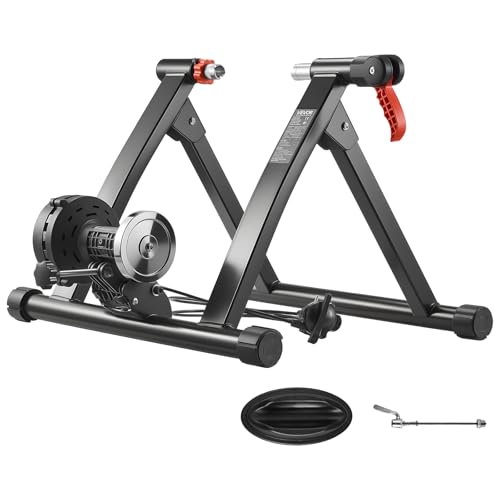
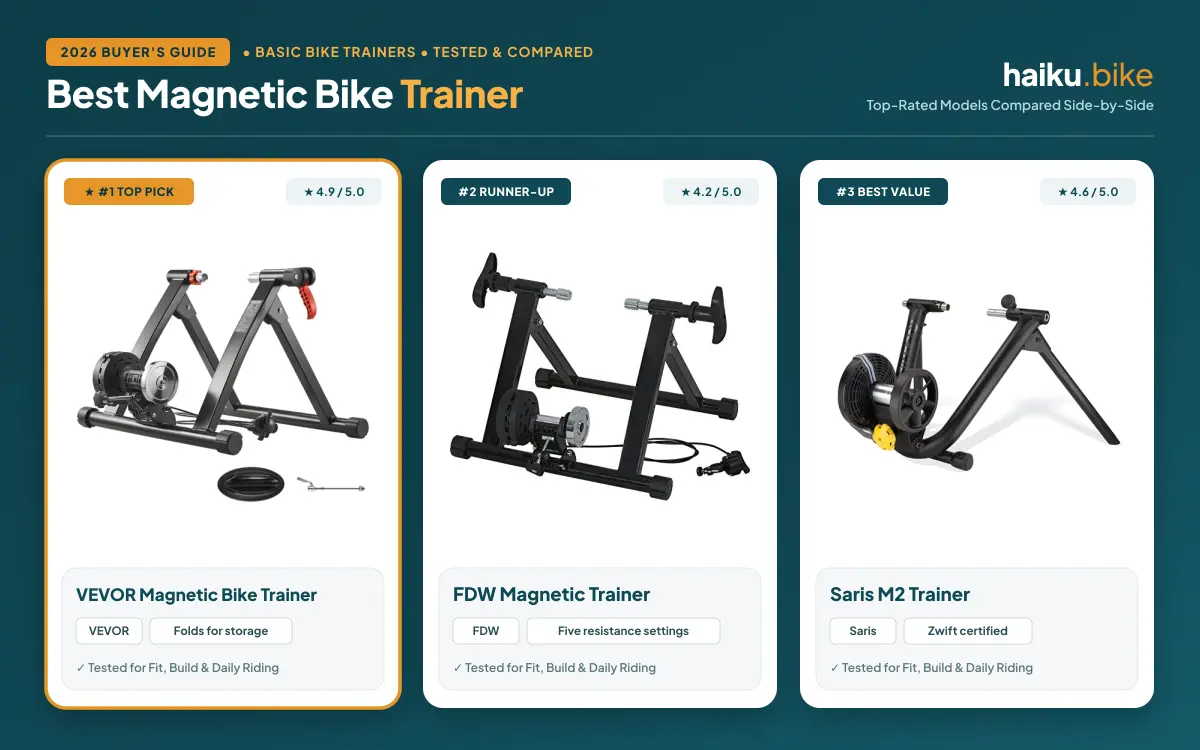
- Best overall: VEVOR Bike Trainer, 6 Level Resistance earns this spot because it combines six magnetic levels, a foldable frame, and a stated 330 lb capacity.
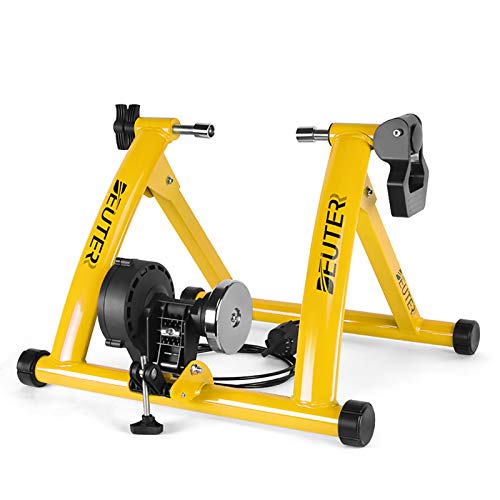
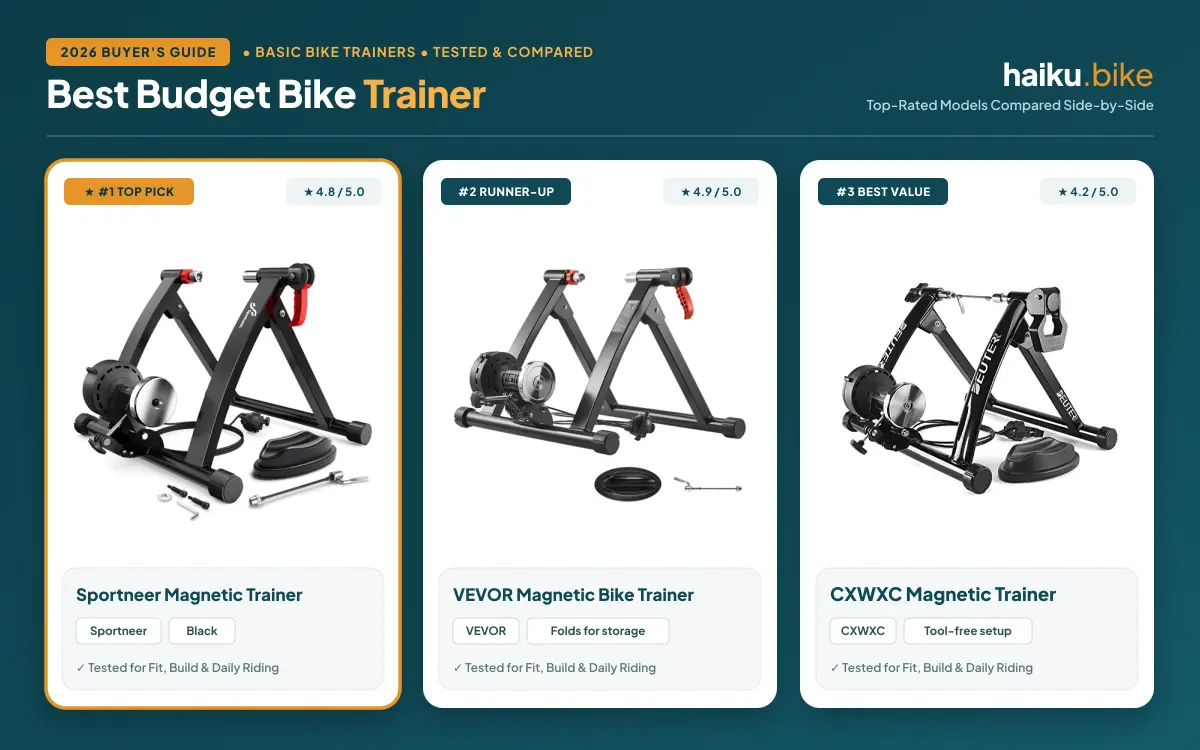
- Best value: Sportneer Bike Trainer – Magnetic Indoor Cycling earns this spot because its handlebar remote adjusts six resistance levels and its feet adjust for uneven floors.
- Best for compact storage: Bike Trainer, Magnetic Bicycle Stationary Stand earns this spot because its folding frame and handlebar control support convenient storage and adjustment.
- Best for app users: Saris Magnetic Indoor Bike Trainer earns this spot because Saris lists compatibility with Zwift and other indoor cycling apps.
Pros
- Six magnetic resistance levels
- Fits 26 to 29-inch and 700c wheels
- Folds for storage
- Quick-release lever included
- Front wheel riser block included
Cons
- No app connectivity listed
- Limited to listed wheel sizes
- 17.31 lb

Pros
- Six handlebar-controlled resistance levels
- Quick-release skewer included
- Front wheel riser block included
- Five adjustable anti-slip feet
Cons
- Standard version is for quick-release axles
- Noise varies with tire material and tread
- Thru-axle adapter requires non-standard version
Pros
- Six handlebar-adjustable resistance levels
- Folding frame
- Quick-release skewer included
- Front-wheel riser block included
- Fits 26 to 29-inch and 700c wheels
Cons
- Knobby MTB tires can be loud
- Roller contact may cause indoor vibration
- No app or connectivity details provided

Pros
- Five resistance levels
- Listed Zwift compatibility
- Fits 120 mm, 130 mm, and 135 mm spacing
- 7 lb weight
Cons
- Power measurement not listed
- Connectivity details not listed

Pros
- Eight magnetic resistance settings
- Handlebar-mounted resistance controller
- Quick-release rear-wheel clamp
- Rubber feet protect wood floors
- Fits 26- to 28-inch or 700c wheels
Cons
- Rough tires can make noticeable noise
- No app or wireless connectivity listed
Side-by-Side Comparison
| Product | Listed wheel fit | Resistance | Stated capacity | Notable feature |
|---|---|---|---|---|
| VEVOR Bike Trainer, 6 Level Resistance | 26 to 29 inches and 700C | 6 magnetic levels | 330 lb | Folding frame and front wheel riser block |
| Sportneer Bike Trainer – Magnetic Indoor Cycling | 26 to 28 inches and 700C | 6 magnetic levels | Not listed | Handlebar remote and adjustable feet |
| Bike Trainer, Magnetic Bicycle Stationary Stand | 26 to 29 inches and 700C | 6 magnetic levels | 330 lb | Folding frame and handlebar control |
| Saris Magnetic Indoor Bike Trainer | Common road and mountain bike frames; 120 mm, 130 mm, and 135 mm dropout spacing | 5 levels | Not listed | Listed Zwift and app compatibility |
| BalanceFrom Bike Trainer Stand Steel Bicycle | 26 to 28 inches and 700C | 8 magnetic levels | 330 lb | Handlebar controller |
Wheel and axle fit matter first because a trainer must secure your bike before resistance or storage features can help. Once compatibility checks out, choose between handlebar controls, additional resistance steps, folding frames, and listed app compatibility according to how you plan to ride.
Common Mistakes to Avoid
Wheel diameter alone does not confirm axle compatibility, so compare your bike’s rear axle with the trainer’s stated requirements before ordering. Sportneer describes a standard quick-release version and a separate non-standard version with a thru-axle adapter; check the exact configuration rather than assuming the adapter comes with every version.
Tire tread can make a wheel-on trainer louder, even when the resistance unit is described as quiet. Sportneer and CXWXC note that rough mountain-bike tires can produce more noise, while smoother tires can reduce it; a suitable mat or carpet may also help limit floor vibration.
Resistance levels do not make a basic magnetic trainer a smart trainer, and they do not establish measured power or electronic control. Saris lists app compatibility, but riders should confirm the connection method and supported features instead of assuming every trainer sends workout data to an app.
Installation and floor contact also affect a stable setup, so follow the manufacturer’s instructions and confirm the bike sits securely before riding. Check that the rear tire contacts the roller as directed and that the trainer’s feet rest firmly on your floor, especially if the surface is uneven.
Best Bike Trainer Under $100 Buying Guide
Wheel and Axle Compatibility
Wheel and axle compatibility determine whether your bike can mount securely to a wheel-on trainer. The listed wheel ranges differ: VEVOR and CXWXC specify 26 to 29 inches and 700C, while Sportneer and BalanceFrom specify 26 to 28 inches and 700C.
Confirm your wheel size and rear axle type before choosing a model, then compare both with the maker’s fit information. Sportneer lists rear axle dimensions for its standard configuration and describes an adapter with its non-standard version. Check the exact version and included hardware if your bike uses a thru-axle.
Dropout spacing can also matter when selecting a wheel-on trainer. Saris lists compatibility with common road and mountain bike frames and specifies 120 mm, 130 mm, and 135 mm dropout spacing. If your bike’s requirements are unclear, consult its manufacturer before buying rather than relying on wheel diameter alone.
Resistance Range and Control
Resistance settings change the effort required to pedal, while the control determines how easily you adjust that effort during a ride. VEVOR, Sportneer, and CXWXC list six magnetic levels, BalanceFrom lists eight, and Saris lists five.
Sportneer, CXWXC, and BalanceFrom describe handlebar controls, allowing riders to adjust resistance without reaching down to the trainer. Check how the control attaches and operates, and consider whether you want to change settings during a session or prefer a simpler setup.
More resistance settings offer additional adjustment steps, but they do not prove higher maximum resistance or measured power. If you need specific training data or electronically controlled resistance, confirm those features directly; a list of manual magnetic levels does not establish either capability.
Tire Noise and Riding Environment
Tire contact contributes to wheel-on trainer noise, so your tire and riding space affect how disruptive indoor sessions may be. Sportneer and CXWXC caution that rough mountain-bike tread can be loud and recommend smoother tires for indoor use.
Consider nearby household members, neighbors, and floor vibration when choosing a place to ride. A mat or carpet may help limit vibration through the floor, but it cannot guarantee quiet operation. Manufacturer descriptions of quiet or low-noise operation do not promise silence in every room.
Before using a mountain bike, check whether a smooth tire is practical for your indoor routine and compatible with your wheel. Tire choice changes the sound at the roller, while the trainer’s resistance unit and the room surface also contribute to the overall noise you hear.
Stability and Rider Capacity
Frame design, foot contact, and stated capacity help you assess whether a trainer suits your rider load and floor. VEVOR, CXWXC, and BalanceFrom state a maximum capacity of 330 lb, while Sportneer describes a wide base, low center of gravity, and adjustable anti-slip feet.
Compare a maker’s capacity statement with the instructions for the exact product, and make sure the trainer’s feet sit securely on your floor. VEVOR includes non-slip foot pads and a front wheel riser block; BalanceFrom describes rubber feet intended to help protect flooring.
A stated capacity does not replace correct installation or a stable surface. Follow the maker’s setup directions, confirm the bike is clamped securely, and check that the rear tire contacts the roller as instructed. If the trainer moves or rocks during setup, stop and review the installation before riding.
Setup, Storage, and Bike Release
Setup and storage features matter when a trainer shares space with everyday household activities. VEVOR and CXWXC describe folding frames, and VEVOR, Sportneer, and CXWXC list quick-release components for mounting or removing a bike.
Check whether the package includes the front wheel riser block and the skewer or adapter your bike requires. A folding frame can reduce storage bulk, but you still need clear floor space to mount the bike, ride safely, and move around the equipment.
Review the manufacturer’s instructions for clamping, roller contact, and folding before using or storing the trainer. Keep controls and other parts clear of moving joints while folding. If your bike requires a different axle setup, verify the correct hardware before relying on a quick-release feature.
App Compatibility and Training Goals
App compatibility matters if you want virtual routes or app-based indoor sessions, but compatibility alone does not mean electronic resistance control. Saris lists Zwift and other indoor cycling app compatibility; the other products describe magnetic resistance settings and controls.
Before choosing based on app support, check the product information for the connection method, supported functions, and any required sensors or accessories. Do not assume a trainer provides power data or responds automatically to an app unless the maker specifically describes those features.
If you mainly want to pedal indoors without digital interaction, manual magnetic resistance may suit your routine. Riders comparing other indoor equipment can browse our basic bike trainer category and consider whether app features justify a different setup.
How We Chose
We score these options with the Haiku Ride Score: core performance 30%, build and weather resistance 20%, ease of use 20%, compatibility and battery 15%, and value 15%. For indoor trainers, we focus on resistance controls, fit information, stability, and setup details that shape everyday riding.
We evaluate manufacturer specifications, compatibility information, and long-term owner feedback where available. We research and draft our guides with software tools, including AI, then run automated checks on product fit, sourcing, and our editorial rules. Our editor spot-checks guides rather than reading each one before publication. Our how we review page explains the method.
Price and Value: What Each Budget Gets You
Budget
At the lower end of this guide’s budget, expect a basic wheel-on design with manual magnetic resistance rather than electronic control or detailed performance measurement. VEVOR combines six resistance levels with a folding frame and front wheel riser block. Riders give up documented smart-trainer features, so this tier suits straightforward indoor pedaling more than data-focused workouts.
Mid-Range
Mid-budget options add practical conveniences without changing the basic wheel-on format. Sportneer offers a handlebar remote and adjustable feet, while CXWXC pairs a handlebar control with a folding frame. These features can simplify adjustment or storage, but buyers still need to check axle fit and should not expect electronically controlled resistance.
Premium
Near the top of this budget, the Saris trainer stands out for listed app compatibility, while BalanceFrom offers eight manual resistance settings. Those features serve different priorities: app users should confirm connection details, and riders seeking more adjustment steps can consider BalanceFrom. Neither description establishes automatic resistance control or measured power.
Choosing Something Else
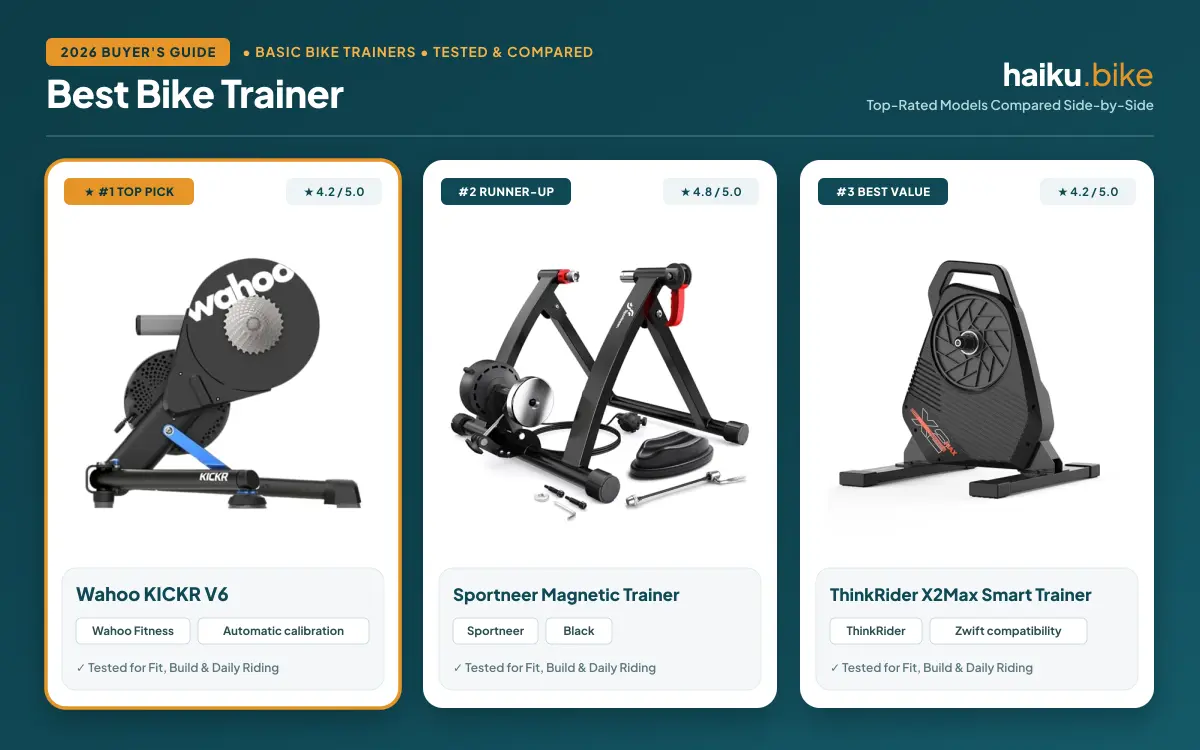
A smart trainer may suit riders who want electronically controlled resistance, connected workouts, or specified performance data, provided the chosen unit supports their bike. A stationary indoor cycle is another option for riders who want a dedicated setup rather than mounting an outdoor bike. Both alternatives can require different space, equipment, and spending priorities.
Final Thoughts
The VEVOR Bike Trainer, 6 Level Resistance suits riders seeking six manual levels, a folding frame, and a stated 330 lb capacity. Its listed wheel range covers 26 to 29 inches and 700C, but riders still need to confirm axle fit and installation requirements before ordering.
Choose the Sportneer Bike Trainer – Magnetic Indoor Cycling if a handlebar remote and adjustable feet matter for your setup. The Bike Trainer, Magnetic Bicycle Stationary Stand is a reasonable fit for riders who value folding storage and a handlebar control. Both remain wheel-on magnetic trainers, so tire noise and fit deserve attention.
The BalanceFrom Bike Trainer Stand Steel Bicycle offers eight magnetic settings for riders who want more manual adjustment steps. The Saris Magnetic Indoor Bike Trainer may suit app users because Saris lists Zwift compatibility, though riders should verify the connection method and features they need.
Skip these basic trainers if you need electronically controlled resistance, confirmed power measurement, or an indoor setup without tire contact. A smart trainer or dedicated indoor cycle may better match those priorities. Riders comparing related equipment can browse our indoor training guides before settling on a format.
FAQs
Which wheel sizes fit the Best Bike Trainer Under $100?
The Best Bike Trainer Under $100 options listed here support common 700C wheels, but their stated inch ranges vary. VEVOR and CXWXC list 26 to 29 inches, while Sportneer and BalanceFrom list 26 to 28 inches. Check your exact wheel size and rear axle requirements against the chosen trainer’s instructions before ordering.
Can a bike with a thru-axle fit these trainers?
Thru-axle compatibility depends on the trainer version and the hardware included, so a standard quick-release setup should not be assumed to fit. Sportneer describes a separate non-standard version with a thru-axle adapter. Check your bike’s axle dimensions and the exact product configuration before buying, and contact the manufacturer if fit details remain unclear.
Are magnetic bike trainers quiet enough for an apartment?
Magnetic bike trainers may support quieter indoor riding, but tire contact and floor vibration still affect noise. Sportneer and CXWXC warn that rough mountain-bike tires can be loud and recommend smoother tires. Consider nearby household members and your floor surface, and do not treat a manufacturer’s quiet-operation description as a promise of silence.
Do these bike trainers work with Zwift?
Saris lists Zwift and other indoor cycling app compatibility for its Magnetic Indoor Bike Trainer. That description does not establish that every trainer in this guide connects to apps or controls resistance electronically. Check the product information for connection requirements and supported functions, and confirm whether sensors or other accessories are needed for your intended workouts.
How much rider weight can these trainers support?
VEVOR, CXWXC, and BalanceFrom state a maximum capacity of 330 lb. Sportneer and Saris do not list a capacity in their product information here, so check their current product details or contact the manufacturer for clarification. Follow the maker’s setup instructions and confirm that the trainer sits securely before riding.
Can mountain bikes use a wheel-on trainer?
Some trainers in this guide list mountain-bike compatibility within specified wheel ranges, but fit also depends on rear axle requirements. Rough tire tread can make indoor riding louder; Sportneer and CXWXC both caution about this issue. Confirm the wheel and axle fit, and consider a smoother tire if noise matters in your home.
What should I check before folding a bike trainer for storage?
Before folding a bike trainer, follow its manufacturer’s storage instructions and remove the bike if those instructions require it. Keep controls and cables clear of moving joints, and store the frame where it cannot fall or block a walkway. Riders comparing other formats can browse the basic bike trainer category.
Write Your Review
No reviews yet. Be the first to share your experience!