

Rain, darkness, and crowded schedules can make outdoor rides difficult to fit in. A bike trainer lets you ride your own bicycle indoors, but trainer styles differ in resistance, setup, connectivity, and the way they fit your bike.
Our guide to the Best Bike Trainer options compares 8 models from brands including Sportneer, CXWXC, Alpcour and more for riders in the United States. Follow each manufacturer’s setup instructions, and check local rules if you plan to ride outdoors with any connected equipment. For related gear that supports everyday riding, see our road bike handlebar tape guide.
At a Glance: Which One Fits You
- Best overall: Wahoo KICKR V6 Smart Indoor Trainer earns this spot because it offers Wi-Fi connectivity, automatic calibration, and power accuracy within +/- 1%, according to Wahoo.
- Best value: Sportneer Bike Trainer – Magnetic Indoor Cycling earns this spot because its six magnetic resistance levels and handlebar remote give riders straightforward control.
- Best for app-based riding: ThinkRider X2Max Smart Bike earns this spot because it supports ANT+ and BLE connections and variable resistance for connected cycling software.
- Best for compact storage: Alpcour Bike Trainer Stand for Indoor Riding earns this spot because its foldable frame and included carry bag suit riders who need to put equipment away.

Pros
- Six handlebar-controlled resistance levels
- Quick-release skewer included
- Front wheel riser block included
- Five adjustable anti-slip feet
Cons
- Standard version is for quick-release axles
- Noise varies with tire material and tread
- Thru-axle adapter requires non-standard version
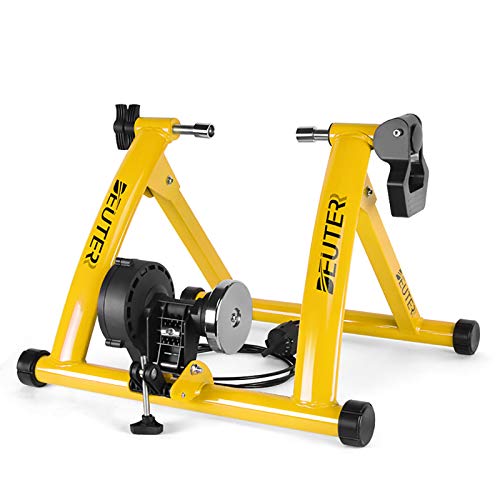
Pros
- Six handlebar-adjustable resistance levels
- Folding frame
- Quick-release skewer included
- Front-wheel riser block included
- Fits 26 to 29-inch and 700c wheels
Cons
- Knobby MTB tires can be loud
- Roller contact may cause indoor vibration
- No app or connectivity details provided

Pros
- Six fixed resistance settings
- Handlebar-mounted resistance control
- Foldable frame
- Carry bag included
- Quick, tool-free connection
Cons
- No app connectivity listed
- Compatibility listed for select wheel sizes
- Tire-driven design contacts rear tire
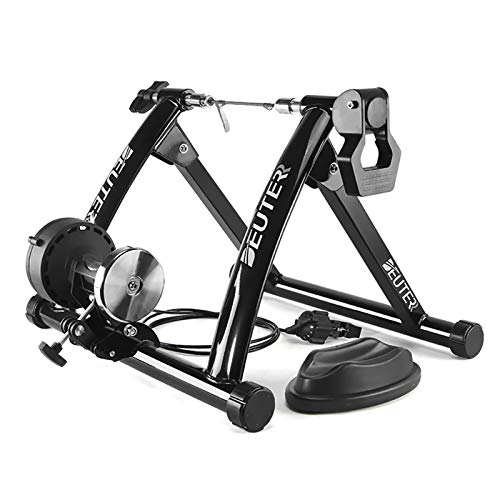
Pros
- Six handlebar-adjustable resistance levels
- Fits 26 to 29-inch wheels, including 700c
- Folding frame for storage
- Tool-free setup
- 330 lb stated load capacity
Cons
- Knobby MTB tires can be loud
- No app or wireless connectivity listed

Pros
- Progressive fluid resistance
- No resistance adjustment needed
- Folds for storage and transport
- Includes carrying bag
- Fits most 26 to 29 inch and 700c wheels
Cons
- No app connectivity listed
- No trainer weight listed
- Compatibility limited to listed wheel sizes

Pros
- ANT+ and BLE connectivity
- Zwift compatibility
- Up to 2,000 watts
- Grade simulation up to 18%
- Maker-rated power error of ±2%
Cons
- Drivetrain compatibility not specified
- Cassette details not specified
- Heavy at 35.2 lb
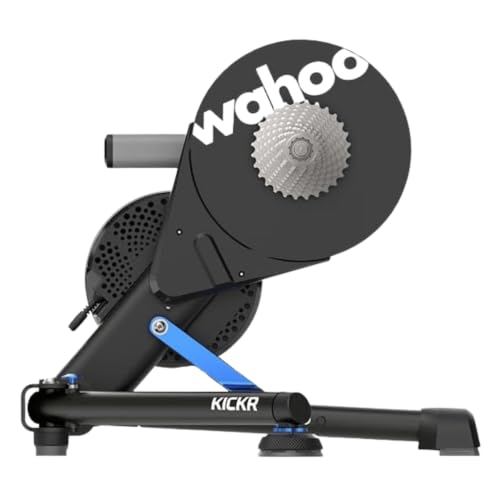
Pros
- Power accuracy within ±1%
- Over 2,200 watts of resistance
- Automatic calibration
- 2.4 GHz Wi-Fi connectivity
- Side-to-side movement from AXIS feet
Cons
- Weighs about 48.5 lb
- High price for indoor training

Pros
- Smooth, road-like resistance
- Built for hard efforts
- Supports structured training
- Integrated WiFi
Cons
- Connectivity details not specified
- Resistance range not listed
- Noise level not listed
Side-by-Side Comparison
| Trainer | Type | Fit or connection details | Resistance or power | Storage or ride features |
|---|---|---|---|---|
| Sportneer Bike Trainer – Magnetic Indoor Cycling | Wheel-on magnetic | 26 to 28-inch or 700c wheels; stated rear axle range 4.92 to 6.57 inches | Six levels, handlebar remote | Folding details not listed |
| Bike Trainer, Magnetic Bicycle Stationary Stand | Wheel-on magnetic | 26 to 29-inch or 700c wheels | Six levels, handlebar control | Folding frame |
| Alpcour Bike Trainer Stand for Indoor Riding | Wheel-on magnetic | Most 26 to 28-inch or 700c wheels | Six fixed levels | Folding frame and carry bag |
| Bike Trainer, Magnetic Bicycle Stationary Stand | Wheel-on magnetic | 26 to 29-inch or 700c wheels | Six levels, handlebar control | Folding frame |
| ThinkRider X2Max Smart Bike | Smart trainer | ANT+ and BLE; compatible with cycling software such as Zwift | Up to 2,000 W; stated accuracy ± 2%; simulates 18% slope | Automatic variable resistance with software |
| Wahoo KICKR V6 Smart Indoor Trainer | Smart trainer | 2.4 GHz Wi-Fi; connects to computer, tablet, or smartphone | Over 2,200 W; stated accuracy within +/- 1% | Automatic calibration; KICKR AXIS feet |
| Alpcour Fluid Bike Trainer Stand for Indoor Riding | Wheel-on fluid | Most 26 to 29-inch or 700c wheels | Progressive resistance as speed increases | Folding frame and carry bag |
| Wahoo Fitness KICKR CORE 2 ZWIFT COG and Click | Smart trainer | Integrated Wi-Fi; Zwift Cog and Click included | Not listed | Faster setup and KICKR ride feel |
The main distinction is whether you want a basic wheel-on stand or a connected smart trainer. Wheel-on models use your bike’s rear tire against a resistance unit, while smart options add app connectivity and automatic resistance changes. Check exact axle and wheel fit before ordering, since a trainer’s stated wheel range does not confirm compatibility with every bike.
Common Mistakes to Avoid
Wheel and axle compatibility deserves attention before purchase. The Sportneer trainer lists compatibility with 26 to 28-inch or 700c wheels and a specific rear axle range, while the CXWXC models list 26 to 29-inch or 700c wheels. Confirm your bike’s wheel size and axle type, and check whether the trainer version includes the adapter your bike needs.
Tire choice can affect noise on wheel-on trainers. CXWXC notes that rough mountain bike tires can make its magnetic trainer louder, while Sportneer recommends slick or road tires for quieter use. A trainer mat or carpet may help limit vibration and floor resonance, but it does not make every tire and room combination silent.
Buyers can also mistake manual resistance controls for app-controlled resistance. The six-level magnetic trainers use a handlebar remote, while smart models connect with compatible software for automatic changes. If your goal is structured virtual riding, confirm the connection protocol and software compatibility; if you want simple indoor exercise, manual resistance may be enough.
Best Bike Trainer Buying Guide
Trainer Type and Ride Feel
Trainer type determines how your bike connects to resistance and how much setup the indoor ride requires. Wheel-on magnetic and fluid trainers hold the rear wheel against a roller, while smart trainers use connected electronics to manage resistance and communicate with software.
Wheel-on stands make sense for riders who want to use an existing bike and prefer simple indoor sessions. Magnetic models such as the Sportneer and CXWXC offer fixed resistance steps. Alpcour’s fluid trainer instead increases resistance as you pedal faster, without a handlebar resistance selector listed.
Smart trainers suit riders who want software-controlled workouts or virtual routes. ThinkRider lists automatic resistance changes through connected riding software, while Wahoo’s models emphasize connected features and ride feel. Choose a trainer type around how you ride indoors, not around connectivity you will not use.
Bike Fit, Wheel Size, and Axle
Fit determines whether a trainer can secure your bicycle correctly. Wheel-on models in this guide list compatibility ranges spanning common wheel sizes, but those ranges differ by product. The Sportneer listing also gives a rear axle range and notes that a thru-axle version requires its corresponding adapter.
Before buying, identify your wheel size, rear axle type, and axle dimensions, then compare each detail with the trainer’s current manufacturer listing. Do not assume that a quick-release skewer works with a thru-axle bike. When a listing leaves fit details unclear, contact the maker before placing an order.
Direct-drive smart trainers need their own drivetrain and axle checks, even when a product page highlights app features. The supplied Wahoo descriptions do not specify all bike-fit details, so verify current compatibility with Wahoo. Riders comparing indoor and outdoor equipment can also browse our Indoor Training category.
Resistance and Power Information
Resistance determines how a trainer responds when you shift gears, pedal harder, or follow a simulated climb. The magnetic stands here offer six fixed settings controlled from the handlebar, while the Alpcour fluid stand uses progressive resistance that rises with pedaling speed.
Smart trainer specifications can help riders assess structured training needs. ThinkRider lists up to 2,000 watts, ± 2% power accuracy, and simulated slopes up to 18%. Wahoo lists over 2,200 watts and accuracy within +/- 1% for the KICKR V6. These maker-stated figures are not directly equivalent to a rider’s real-world workout needs.
Do not treat a larger maximum power figure as the only buying factor. Consider whether your training software requires automatic resistance, whether you need a stated power accuracy figure, and whether you will use simulated gradients. If you ride at a steady effort without apps, a basic resistance stand may better match your priorities.
Connectivity and Training Apps
Connectivity matters when you want an app to display ride data or control trainer resistance. ThinkRider lists ANT+ and BLE support and names Zwift among compatible software. Wahoo KICKR V6 lists 2.4 GHz Wi-Fi, while the KICKR CORE 2 description highlights integrated Wi-Fi and its Zwift Cog and Click setup.
Check the exact connection method required by your phone, tablet, computer, sensors, and chosen training app. A manual resistance remote does not provide the same function as automatic control from software. If you do not plan to ride with an app, paying attention to connectivity may matter less than stable setup and bike fit.
Software compatibility can change, so confirm current app support with both the trainer maker and software provider. Consider where you will place your screen and how you will keep devices powered during a session. Riders who want uncomplicated indoor miles can choose a non-connected trainer instead of adding extra setup.
Noise, Stability, and Storage
Noise and stability shape whether a trainer works well in a shared home or apartment. Sportneer describes a wide base, low center of gravity, and adjustable anti-slip feet. CXWXC describes a pyramid-shaped frame and advises that rough mountain bike tires can increase noise.
Room surfaces, tire tread, and setup can affect indoor sound. A smooth tire and a mat or carpet may reduce vibration, but no trainer description guarantees a quiet ride in every home. If noise is a concern, consider where the trainer will sit and whether neighbors or other household members share nearby rooms.
Storage matters when your training space serves other purposes. CXWXC and Alpcour describe folding frames, and Alpcour includes a carry bag with its magnetic and fluid stands. Confirm the folded dimensions with the maker if closet or car storage is tight, since those measurements are not listed here.
How We Chose
We score products with the Haiku Ride Score: core performance 30%, build and weather resistance 20%, ease of use 20%, compatibility and battery 15%, and value 15%. For indoor trainers, our comparison focuses on resistance behavior, bike fit, connectivity, stated power specifications, stability, and storage details.
We evaluate manufacturer specifications, compatibility information, and long-term owner feedback when those details are available. Our guide was researched and drafted with help from software tools, including AI, then reviewed and edited by the Haiku Bike editor before publication. See how we review for our methodology.
Price and Value: What Each Budget Gets You
Budget
At the entry level, wheel-on magnetic trainers provide basic indoor riding with manual resistance adjustment. The Sportneer Bike Trainer – Magnetic Indoor Cycling offers six settings and a handlebar remote, while CXWXC’s magnetic stands also list six resistance levels. These designs can suit casual sessions, but they do not provide the connected automatic resistance features found on smart trainers.
Mid-Range
Mid-range options add a different resistance feel or app connectivity without requiring the most feature-rich setup. Alpcour’s fluid trainer increases resistance as speed rises, and ThinkRider’s X2Max supports ANT+ and BLE with software-controlled resistance. Riders gain more training flexibility, but should still verify bike compatibility and confirm that listed power features meet their goals.
Premium
Premium smart trainers emphasize connectivity, stated power performance, and a more integrated indoor training experience. Wahoo KICKR V6 lists Wi-Fi, automatic calibration, and KICKR AXIS feet; Wahoo Fitness KICKR CORE 2 ZWIFT COG and Click includes an integrated Wi-Fi connection and Zwift controls. These features serve committed app users, while adding little value for riders who only need steady spinning.
Choosing Something Else
A stationary exercise bike can be a better alternative if you do not need to train on your outdoor bicycle. It avoids checking your bike’s axle and wheel fit, and it leaves your regular bike available for outdoor rides. A basic wheel-on trainer is also a sensible alternative to a smart trainer when you want indoor exercise without app pairing or automatic resistance.
Final Thoughts
Riders who want connected training and detailed maker-stated power specifications should compare the Wahoo KICKR V6 Smart Indoor Trainer with the ThinkRider X2Max Smart Bike. Wahoo lists stronger stated power accuracy, while ThinkRider lists ANT+ and BLE support and simulated slope resistance. Check each trainer’s fit details and software needs before choosing.
For straightforward indoor sessions, the Sportneer Bike Trainer – Magnetic Indoor Cycling offers manual six-level resistance. Riders who need folding storage can consider the Alpcour Bike Trainer Stand for Indoor Riding, which comes with a carry bag. Both are wheel-on choices, so tire noise and rear axle compatibility remain important trade-offs.
Choose the Alpcour Fluid Bike Trainer Stand for Indoor Riding if progressive resistance and a folding frame matter more than app control. The Wahoo Fitness KICKR CORE 2 ZWIFT COG and Click suits riders who want its included Zwift controls and integrated Wi-Fi. See our Basic Bike Trainers category for more options.
Skip these products if you do not want to ride indoors or your bike cannot be matched to the trainer’s fit requirements. Riders who want a ready-to-ride indoor setup without mounting their own bicycle may prefer a stationary exercise bike. A basic trainer may also be a better choice than a connected model if you will not use training software.
FAQs
What is the difference between a wheel-on and smart bike trainer?
A wheel-on trainer holds your bicycle’s rear wheel against a resistance unit, while a smart trainer connects electronically with compatible devices or training software. Wheel-on models in this guide use magnetic or fluid resistance. Smart models add connected features, and some adjust resistance automatically. Choose based on bike fit, desired control, and whether you plan to use an app.
Will the Best Bike Trainer fit my bike?
The Best Bike Trainer for your bicycle must match its wheel size and rear axle setup. Wheel-on options in this guide list different wheel ranges, and Sportneer gives a specific rear axle range. Check the exact product version and included adapter against your bike before ordering. Smart trainer fit can also vary, so confirm current manufacturer compatibility information.
Are magnetic bike trainers noisy?
Magnetic bike trainers can produce noise that varies with tire tread, room surfaces, and setup. CXWXC notes that rough mountain bike tires can be louder, while Sportneer recommends slick or road tires for quieter riding. A mat or carpet may reduce vibration and floor resonance. If noise matters at home, consider room placement as well as trainer type.
Can a bike trainer connect to Zwift?
Some bike trainers connect to Zwift, but compatibility depends on the trainer and its communication features. ThinkRider lists Zwift compatibility and ANT+ and BLE support. The Wahoo KICKR CORE 2 product includes Zwift Cog and Click. Check the current trainer and app requirements, because a manual resistance stand does not provide the same automatic control.
Do I need a special tire for a wheel-on trainer?
A smooth road tire can help reduce noise on a wheel-on trainer, according to Sportneer and CXWXC guidance. CXWXC warns that rough mountain bike tread can increase sound and vibration. Check the trainer maker’s instructions before changing tires or adjusting roller contact. Your tire choice should also remain appropriate for safe outdoor riding when you remove the bike.
How do I make a bike trainer quieter?
You can reduce some bike trainer noise by using a smooth tire, setting up on a stable surface, and placing a mat or carpet beneath the stand. CXWXC says these steps can help reduce vibration or indoor resonance. They cannot guarantee quiet operation, since tire tread, room construction, and the trainer itself all affect sound.
Is a smart trainer worth choosing over a basic trainer?
A smart trainer can be worthwhile when you want app connectivity, ride data, or software-controlled resistance. The Wahoo KICKR V6 and ThinkRider X2Max list connected training features, while magnetic trainers use manual resistance controls. Riders seeking steady indoor exercise may prefer a basic trainer and avoid extra pairing and software setup. Compare features with how you plan to ride.










Write Your Review
No reviews yet. Be the first to share your experience!