

When winter weather, rain, or early darkness cuts outdoor riding short, a bike trainer lets you keep using your own bicycle indoors. These wheel-on trainers and rollers differ in resistance, app connections, setup, and the space they occupy.
Our guide compares 5 options from Garmin, Alpcour, Saris and more for riders shopping on a limited budget. Review the Indoor Training category for related equipment, and check wheel and axle fit before deciding which format suits your bike.
At a Glance: Which One Fits You
- Best overall: Saris Fluid2 Smart Equipped Indoor Bike Trainer earns this spot because its included speed sensor connects with Zwift, Rouvy, and other indoor cycling apps.
- Best value: Alpcour Bike Trainer Stand for Indoor Riding earns this spot because its handlebar controller selects among six fixed magnetic resistance levels.
- Best for progressive resistance: Alpcour Fluid Bike Trainer Stand for Indoor Riding earns this spot because resistance rises as you pedal faster, without manual level changes.
- Best for rollers: TacX Antares Indoor Retractable Bicycle Rollers earns this spot because tapered rollers help center wheels and require no power.

Pros
- Tapered rollers help center wheels
- No power required
- Maintenance free
- Folds for storage
Cons
- Fits only 26- to 29-inch wheels
- Folded size still measures 31.5 x 18.5 x 5.31 inches
Pros
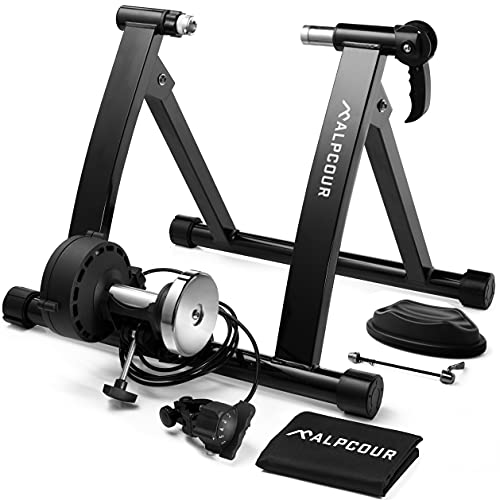
- Six fixed resistance settings
- Handlebar-mounted resistance control
- Foldable frame
- Carry bag included
- Quick, tool-free connection
Cons
- No app connectivity listed
- Compatibility listed for select wheel sizes
- Tire-driven design contacts rear tire
Pros
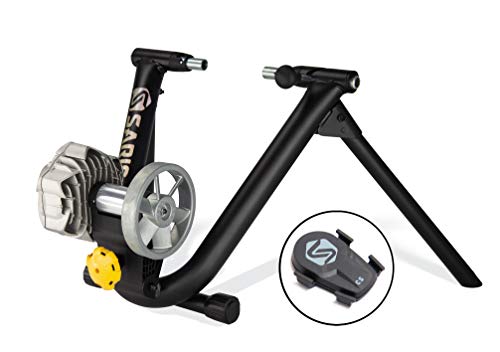
- Included speed sensor
- Zwift and Rouvy compatibility
- Foldable frame
- Leveling block included
Cons
- Thru-axle adapter sold separately
- Rear wheel stays on trainer

Pros
- Wheel-on mounting
- Bluetooth BLE 4.0 and ANT+
- Zwift and TrainerRoad compatibility
- Folds for storage
- Fits 26- to 29-inch and 700c wheels
Cons
- Thru-axle adapter sold separately
- Knobby tires make more noise
- Quick-release skewer included

Pros
- Progressive fluid resistance
- No resistance adjustment needed
- Folds for storage and transport
- Includes carrying bag
- Fits most 26 to 29 inch and 700c wheels
Cons
- No app connectivity listed
- No trainer weight listed
- Compatibility limited to listed wheel sizes
Side-by-Side Comparison
| Trainer | Design and resistance | Wheel compatibility | Connectivity | Included features |
|---|---|---|---|---|
| TacX Antares Indoor Retractable Bicycle Rollers | Rollers; no power required | 26 to 29 inches | Not listed | Folds to 31.5 x 18.5 x 5.31 inches |
| Alpcour Bike Trainer Stand for Indoor Riding | Magnetic; six fixed levels | Most 26 to 28 inches and 700c | Not listed | Controller, riser block, carry bag |
| Saris Fluid2 Smart Equipped Indoor Bike Trainer | Fluid; progressive resistance | Most quick-release bikes; thru-axle adapter sold separately | Included speed sensor; Rouvy, Zwift, other apps | Foldable frame, leveling block, cooling system |
| Smart Bike Trainer – Fluid Bike Trainer Stand | Fluid; resistance rises with speed | Most 26 to 29 inches and 700c | Bluetooth BLE 4.0 and ANT+ | Quick-release skewer; thru-axle adapter sold separately |
| Alpcour Fluid Bike Trainer Stand for Indoor Riding | Fluid; progressive resistance | Most 26 to 29 inches and 700c | Not listed | Riser block, dual tension knob, carry bag |
Resistance style and connectivity make the largest practical difference: the Saris pairs progressive fluid resistance with an included speed sensor, while Alpcour magnetic resistance offers selectable levels. The TacX Antares uses rollers instead of a clamped rear wheel, so choose it only if that riding format suits your indoor routine.
Common Mistakes to Avoid
Wheel and axle fit are easy to overlook when buying a wheel-on trainer. Compare your wheel size with the maker’s stated range, and confirm whether your rear axle needs an adapter before ordering.
Tire choice can change noise on a wheel-on trainer. The Smart Bike Trainer – Fluid Bike Trainer Stand warns that knobby tires may be louder than road tires, so consider tread and where you plan to ride indoors.
App compatibility does not mean every trainer includes a sensor or provides the same data. The Saris includes a speed sensor, and the Smart Bike Trainer – Fluid Bike Trainer Stand lists Bluetooth BLE 4.0 and ANT+; check the app’s device requirements before buying.
Rollers require a different setup decision than a stand that secures the rear wheel. The TacX Antares supports the bike on rotating drums, so read its setup instructions and decide whether you are comfortable riding that format indoors.
Best Bike Trainer Under $200: Buying Guide
Bike, Wheel, and Axle Compatibility
Bike fit determines whether a trainer can support your bicycle as intended, so check wheel diameter and rear axle standard first. Product listings may describe broad compatibility, but you should verify your exact bike and axle before purchase.
The TacX Antares lists compatibility with 26- to 29-inch wheels, while Alpcour models and the Smart Bike Trainer – Fluid Bike Trainer Stand list 26- to 29-inch or 700c fit. The Alpcour magnetic stand specifies most 26- to 28-inch and 700c wheels.
The Saris and Smart Bike Trainer – Fluid Bike Trainer Stand include quick-release skewers, and their descriptions say thru-axle bikes need a separate adapter. Confirm availability for your axle dimensions rather than assuming a supplied skewer will fit.
Resistance Type and Ride Feel
Resistance design determines how effort changes as you pedal and whether you can select levels manually. Magnetic trainers typically provide set resistance choices, while the fluid products here describe resistance that increases with pedaling speed.
The Alpcour Bike Trainer Stand for Indoor Riding offers six fixed settings through a handlebar-mounted controller. That arrangement lets you change levels without dismounting, but it differs from the automatic progression described for fluid trainers.
The Saris Fluid2, Smart Bike Trainer – Fluid Bike Trainer Stand, and Alpcour Fluid Bike Trainer Stand use fluid resistance. The TacX Antares is a roller system, not a wheel-on resistance stand. Choose according to your preferred format and the control you want during indoor sessions.
App Connectivity and Sensors
Connectivity matters when you want training apps to receive ride information from a trainer or sensor. Check whether a product includes a sensor, names supported connections, and matches the phone, tablet, or computer you plan to use.
The Saris Fluid2 includes a speed sensor that connects with Rouvy, Zwift, and other indoor cycling apps. The Smart Bike Trainer – Fluid Bike Trainer Stand lists Bluetooth BLE 4.0 and ANT+ and names Zwift, Kinomap, Meilan, and Trainer Road.
Other options do not list app connectivity in their stated features, so do not infer support from a product name or resistance type. Review the app’s device requirements and confirm which sensors or connections are needed for the features you expect to use.
Noise and Tire Choice
Noise depends on the resistance unit, riding speed, and tire contacting the trainer roller. If you share walls or ride near other people, check maker-stated noise information and consider whether your tire tread suits indoor use.
Saris lists the Fluid2 at 69 decibels at 20 mph, a maker-stated figure for that speed. It does not describe every speed, tire, or room, so treat it as a specific reference rather than a guarantee of household noise.
The Smart Bike Trainer – Fluid Bike Trainer Stand warns that rough, knobby tires can be louder and recommends a road tire. The Alpcour and Saris fluid models describe their resistance as quiet, but those claims do not mean any trainer will be silent.
Storage, Stability, and Setup
Storage and frame design matter when you need to move a trainer after each session. Compare folded dimensions where available, and measure the riding area because compact storage dimensions do not describe the full setup footprint.
The TacX Antares folds to 31.5 x 18.5 x 5.31 inches, according to its specifications. Alpcour describes foldable frames and includes carry bags; the Saris Fluid2 also folds and includes a leveling block.
The Smart Bike Trainer – Fluid Bike Trainer Stand describes a pyramid-shaped frame when unfolded, while Alpcour lists anti-slip pads and a front wheel riser block. Follow the maker’s assembly and bike-securing instructions, then check that the trainer rests evenly before riding.
Rollers or Wheel-On Stand
Rollers support the bicycle on rotating drums, while wheel-on stands secure the bike and apply resistance at the rear tire. That difference affects setup and the riding format, so decide which design fits your skill and training routine.
The TacX Antares uses tapered rollers to help keep wheels centered and needs no power. The other options use magnetic or fluid resistance. Check the maker’s instructions for setup and safe use, especially if you have not ridden rollers indoors before.
A wheel-on stand may suit riders who want their bicycle held in place, while rollers appeal to riders seeking an unpowered drum setup. Browse the Basic Bike Trainers category to compare related formats and specifications.
How We Chose
We score each option with the Haiku Ride Score: core performance accounts for 30%, build and weather resistance for 20%, ease of use for 20%, compatibility and battery for 15%, and value for 15%. For indoor trainers, we compare resistance, bike fit, setup, storage, and listed app connections.
Our evaluation draws on manufacturer specifications, compatibility information, and long-term owner feedback when available. We research and draft our guides with software tools, including AI, then run automated checks on product fit, sourcing, and our editorial rules. Our editor spot-checks guides rather than reading each one before publication. Our how we review page explains the method.
Price and Value: What Each Budget Gets You
Budget
At the lower end of this guide’s budget, basic wheel-on designs focus on converting your bicycle for indoor riding without a broad suite of listed features. The Smart Bike Trainer – Fluid Bike Trainer Stand combines fluid resistance with Bluetooth BLE 4.0 and ANT+, while requiring a separate adapter for thru-axle bikes. Confirm app support and fit before treating connectivity as useful value.
Mid-Range
Mid-range choices can add more control or useful included accessories without changing the basic wheel-on format. The Alpcour Bike Trainer Stand for Indoor Riding provides six magnetic settings, a handlebar controller, riser block, and carry bag. The Saris Fluid2 adds a speed sensor and progressive fluid resistance. Consider whether selectable levels or app-linked data matters more to your routine.
Premium
At the upper end, riders can prioritize different designs rather than assume one trainer is universally more capable. The TacX Antares offers a roller format that needs no power, while the Alpcour Fluid Bike Trainer Stand adds progressive resistance, a dual tension knob, riser block, and carry bag. Rollers require a different riding setup than a secured wheel-on stand.
Choosing Something Else
A stationary exercise bike suits riders who want indoor workouts without mounting and removing an outdoor bicycle. It avoids wheel and axle compatibility questions, but does not let you train on your own bike. Riders who want to maintain their usual riding position and use their own bicycle may prefer a wheel-on trainer instead.
Final Thoughts
Choose the Saris Fluid2 Smart Equipped Indoor Bike Trainer if app connections and an included speed sensor matter more than having selectable resistance levels. Its fluid resistance increases progressively, but thru-axle riders need to confirm a suitable adapter before purchase.
The Alpcour Bike Trainer Stand for Indoor Riding suits riders who want six fixed magnetic settings controlled from the handlebar. For resistance that rises as pedaling speed increases, consider the Alpcour Fluid Bike Trainer Stand for Indoor Riding, which does not list app connectivity.
Choose the TacX Antares Indoor Retractable Bicycle Rollers if you want rollers that need no power and accept the different riding format. The Smart Bike Trainer – Fluid Bike Trainer Stand lists Bluetooth BLE 4.0 and ANT+. Compare more setups in the Indoor Training category.
Skip these products if you need direct-drive construction, confirmed support for an unlisted app, or a trainer that does not require checking wheel and axle fit. A stationary exercise bike may suit riders who do not want to mount their outdoor bicycle for indoor sessions.
FAQs
Can I use a bike trainer with a thru-axle bike?
A thru-axle bike may work with a wheel-on trainer when the correct adapter is available. The Saris Fluid2 and Smart Bike Trainer – Fluid Bike Trainer Stand include quick-release skewers, and their descriptions say thru-axle adapters are separate. Check your axle dimensions and confirm adapter fit with the maker before ordering, because a quick-release skewer will not replace a thru-axle.
Which wheel sizes fit these bike trainers?
Wheel-size compatibility varies across these trainers, so compare the maker’s range with your bicycle before purchase. The TacX Antares lists 26- to 29-inch wheels; Alpcour fluid models list most 26- to 29-inch and 700c wheels. The Alpcour magnetic stand lists most 26- to 28-inch and 700c wheels. Confirm any unclear fit with the manufacturer.
Do these bike trainers work with Zwift?
Zwift support depends on the trainer’s stated connections and the devices or sensors your setup requires. Saris lists its included speed sensor as compatible with Zwift, while the Smart Bike Trainer – Fluid Bike Trainer Stand lists Bluetooth BLE 4.0 and ANT+. Check Zwift’s current device requirements and the trainer’s connection details before buying.
Are wheel-on bike trainers noisy?
Wheel-on trainer noise varies with the resistance unit, speed, tire, and room. Saris lists the Fluid2 at 69 decibels at 20 mph, while the Smart Bike Trainer – Fluid Bike Trainer Stand warns that knobby tires may be louder. Consider your tire tread, household noise limits, and riding location instead of assuming any trainer will be silent.
Which Best Bike Trainer Under $200 has app connectivity in 2026?
The Saris Fluid2 and Smart Bike Trainer – Fluid Bike Trainer Stand list app-related connectivity. Saris includes a speed sensor named as compatible with Rouvy, Zwift, and other apps; the Smart Bike Trainer lists Bluetooth BLE 4.0 and ANT+. Their connection methods differ, so match the trainer to your app and device requirements.
Do wheel-on trainers need a special tire?
A wheel-on trainer presses a roller against the bicycle’s rear tire, so tread can affect noise. The Smart Bike Trainer – Fluid Bike Trainer Stand recommends a road tire and cautions that rough, knobby tires may be louder. Check the maker’s instructions before choosing a tire, and use a dedicated indoor tire only if the trainer maker supports that setup.
How do rollers differ from wheel-on trainers?
Rollers support the bicycle on rotating drums, while a wheel-on trainer secures the bike and applies resistance at the rear tire. The TacX Antares uses tapered rollers and needs no power; the other options use magnetic or fluid resistance. Compare setup, fit, and your comfort with each format before choosing a trainer for indoor riding.
Where can I compare basic indoor bike trainers?
The Basic Bike Trainers category groups related indoor trainer options. Compare wheel ranges, axle requirements, resistance types, and connectivity before deciding. If a specification is unclear, confirm it with the manufacturer rather than assuming two wheel-on designs fit your bike or connect to the same apps.
Write Your Review
No reviews yet. Be the first to share your experience!