
Riders using a rear wheel mounted trainer need front wheel support that suits their tire and keeps the bike steady. A front wheel riser block can bring the front end closer to level, but lift height and fit vary across designs.
We compare 10 options from brands including GEEDIAR, Flexzion, KOM Cycling and more for indoor setups. Check your tire width and trainer arrangement first, then browse our trainer mats and accessories guide for other useful indoor riding gear.
At a Glance: Which One Fits You
- Best overall: KOM Cycling Indoor Trainer Front Wheel Riser Block earns this spot because its three marked heights suit riders who want more than one front wheel position.
- Best value: Flexzion Bike Trainer Front Wheel Block earns this spot because it lists a 1.5-inch rise, tire widths up to 50C, and a rubber-padded base.
- Best for wide tires: Saris Front Wheel Riser Block earns this spot because its grooves fit tires up to 2.2 inches wide.
- Best for a two-block package: YehVeh 2 Pack Bike Trainer Front Wheel Riser Block earns this spot because the package includes two supports with non-marking rubber pads.

Pros
- 1.4-inch front-wheel lift
- Fits 20c to 46c tires
- Non-slip rubber base
- Molded plastic construction
Cons
- Not compatible with fat tires
- Trainer model compatibility not stated

Pros
- 1.5-inch front-wheel rise
- Rubber-padded, grippy base
- Helps protect floors from scratches
- Molded plastic construction
Cons
- Trainer model compatibility not specified
- No height adjustment listed

Pros
- Four width options
- Fits several listed wheel sizes
- Listed for all trainers
- Lotus-inspired shape designed for stability
Cons
- No material listed
- No tire-width range listed
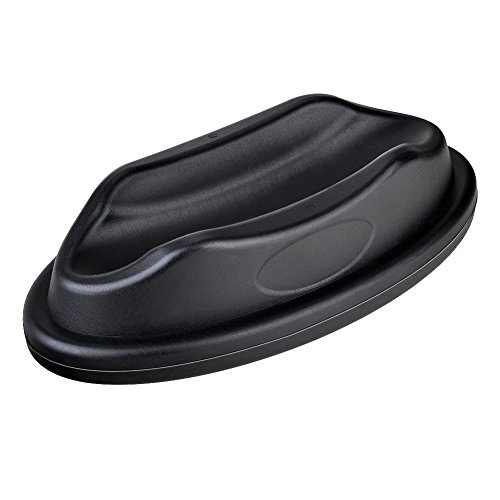
Pros
- Molded plastic construction
- Anti-slip feet
- Internal wheel support
- Raises front wheel
- Fits most road and mountain bike sizes
Cons
- Not suitable for beach cruisers
- Exact wheel and tire compatibility not specified

Pros
- Fits road, mountain, and hybrid bikes
- Supports tires up to 1.8 inches wide
- Anti-slip rubber base
- Non-marking floor pads
- Compact storage size
Cons
- Not compatible with fat-bike tires
- Maximum tire width of 1.8 inches
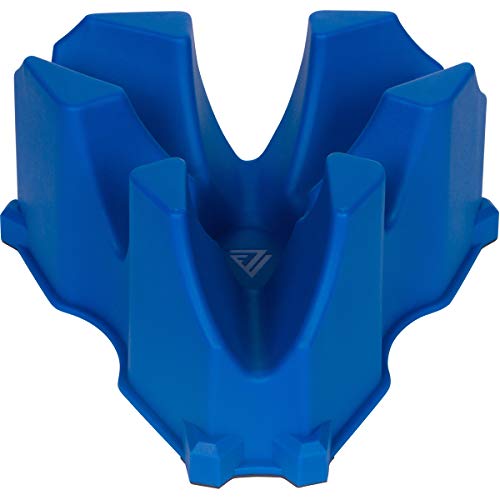
Pros
- Three height positions
- Tapered wheel channel
- Webbed grip base
- Works with many trainer brands
- 1.4 lb weight
Cons
- Three fixed height positions
- Front wheel leveling only

Pros
- Integrated rubber skid pads
- Helps protect floors
- Fits road bikes and mountain bikes
- Raises front wheel
Cons
- No height adjustment listed
- Wheel size details not provided
- One pad included

Pros
- Three front wheel height settings
- Stackable design
- Fits tires up to 2.2 inches
- Wide, solid base
- 1.65 lb weight
Cons
- For rear wheel mounted trainers only
- Does not fit tires wider than 2.2 inches
- More elevation requires another block

Pros
- Helps level bike on indoor trainer
- Stable front-wheel platform
- Compact for home setups
- Designed for most road bikes
Cons
- Specific bike fit not listed
- Riser height not specified

Pros
- Two blocks included
- Non-marking rubber floor pads
- Fits most trainer stand types
- Compact 9.06-inch length
Cons
- Specific trainer compatibility not listed
- No height-adjustment details provided
Side-by-Side Comparison
| Product | Stated fit | Lift or height settings | Grip or base feature | Package |
|---|---|---|---|---|
| Thinvik Bike Front Wheel Riser Block | 20C to 46C; up to 1.8 inches wide | 1.4-inch rise | Non-slip rubber base | Not listed |
| Flexzion Bike Trainer Front Wheel Block | Up to 50C; up to 2 inches wide | 1.5-inch rise | Rubber-padded base | Not listed |
| ThinkRider Cycling Indoor Trainer Front Wheel | 20-inch, 26-inch, 27.5-inch, 29-inch, 700C | Four widths listed | Flower-inspired design | Not listed |
| GEEDIAR Bike Front Wheel Riser Block Stabilize | Most road and mountain bikes; excludes beach cruisers | Not listed | Anti-slip feet | Not listed |
| Bike Trainer Front Wheel Block | 20C to 46C; up to 1.8 inches wide | 1.4-inch rise | Anti-slip rubber base | Not listed |
| KOM Cycling Indoor Trainer Front Wheel Riser Block | 700c to 29er | Three heights | Webbed grips | Not listed |
| Bike Front Wheel Riser Block | Road bike wheels and mountain bikes | Not listed | Integrated rubber skid pads | One pad |
| Saris Front Wheel Riser Block | Up to 2.2-inch tires | Three heights; stackable | Wide composite platform | Not listed |
| Bike Wheel Riser Block Indoor Bicycle Trainer | Most road bikes | Not listed | Stable platform | Not listed |
| YehVeh 2 Pack Bike Trainer Front Wheel Riser Block | Most trainer stands | Not listed | Non-marking rubber pads | Two blocks |
Tire fit and height adjustment make the biggest practical differences in this comparison. Riders with wider tires should check the stated limits, while riders who want selectable front wheel positions can compare the KOM Cycling and Saris designs.
Common Mistakes to Avoid
A common fit mistake is choosing a block before checking tire width and wheel size. Thinvik and Bike Trainer Front Wheel Block specify tires up to 1.8 inches wide, while Saris lists fit up to 2.2 inches; those measurements do not establish compatibility with every wheel.
Buyers can also assume that every block has adjustable height or suits every trainer. KOM Cycling and Saris list multiple heights, but several products do not publish a lift measurement. Compare stated features with your equipment instead of treating broad compatibility wording as a guarantee.
Package contents and floor grip deserve a check before purchase. YehVeh includes two blocks, while other descriptions may refer to a single support; place the block on a stable surface and follow its maker’s setup instructions.
Best Front Wheel Riser Block Buying Guide
Tire Width and Wheel Fit
Tire width and wheel size matter because the front tire must sit securely in the block’s channel. Read the width marked on your tire and compare it with the block maker’s stated fit, including any exclusions.
Thinvik and Bike Trainer Front Wheel Block list 20C to 46C tires up to 1.8 inches wide, while Flexzion lists widths up to 50C and 2 inches. Saris specifies tires up to 2.2 inches, while KOM Cycling lists wheel sizes from 700c to 29er. These are different fit descriptions, so do not treat them as interchangeable measurements.
Riders with a mountain bike should check tire width rather than relying on the bike category alone. Thinvik and Bike Trainer Front Wheel Block exclude fat tires, and GEEDIAR excludes beach cruisers; choose another support if your setup falls outside a stated range.
Lift Height and Riding Position
Lift height determines how far the support raises the front wheel and changes the bike’s angle on a rear wheel mounted trainer. A fixed rise can suit a dedicated setup, while adjustable positions offer more choice when matching equipment or preference.
Thinvik and Bike Trainer Front Wheel Block list a 1.4-inch lift, and Flexzion lists 1.5 inches. KOM Cycling and Saris provide three height positions instead, which can help riders choose among settings for their setup.
Do not assume a higher front wheel will feel better. The bike’s angle affects riding position, so use a published lift measurement or marked setting rather than estimating height from product photos.
Trainer Compatibility and Setup
Trainer compatibility matters because the block supports the front wheel while the trainer holds the rear of the bike. Confirm that the support is intended for your trainer arrangement and that the tire rests fully in its channel.
KOM Cycling names several trainer brands and types, and Saris specifies rear wheel mounted trainers. Other products use broader descriptions, such as fitting most trainer stands, so check the maker’s compatibility information when your equipment has a specific requirement.
Before riding, place the tire in the cradle and confirm that the bike sits securely. Follow instructions for both the trainer and the block, and do not modify either product to force a fit that the maker does not describe.
Base Grip and Floor Protection
Base grip helps a riser block stay in position, while floor pads can help limit scuffs. Look for a listed rubber base, skid pads, or webbed grips, then consider whether the support will sit on a hard floor or a mat.
Flexzion lists a rubber-padded base, and Thinvik, Bike Trainer Front Wheel Block, and YehVeh describe rubber features. KOM Cycling lists webbed grips underneath, while Saris describes a wide composite platform. These features differ and do not guarantee that a block will never move.
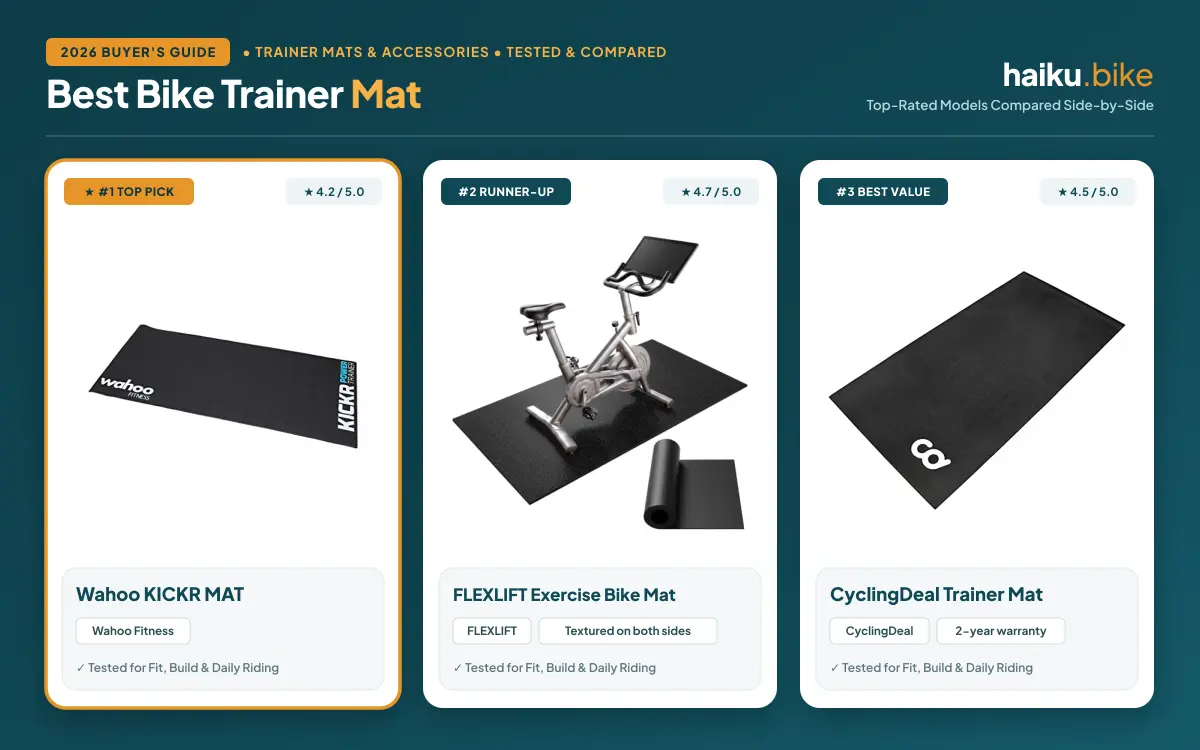
Keep the floor and block contact area clean, and check the support for visible damage before use. A trainer mat can help protect the floor, but it cannot replace checking that the block sits flat and the bike remains stable.
Construction, Storage, and Package Contents
Construction and package contents affect how a riser block fits into a home training space. A compact molded support may be easier to store, while a larger platform or multi-piece package may better suit a shared setup.
Thinvik and Flexzion specify molded plastic construction and dimensions of 9 by 5 by 2.5 inches. YehVeh lists two blocks in its package, whereas the Bike Front Wheel Riser Block description specifies one pad. Check dimensions and included pieces if storage space or package quantity matters.
Some product descriptions do not state dimensions, so consult the maker’s listing when storage space is tight. Stackability is also product-specific: Saris describes its block as stackable with another Saris climbing riser, not with any support from another brand.
How We Chose
We scored these front wheel riser blocks with the Haiku Ride Score: core performance at 30%, build and weather resistance at 20%, ease of use at 20%, compatibility and battery at 15%, and value at 15%. Battery does not apply to these unpowered accessories, so fit, stability, and practical use guide our comparison.
We compare manufacturer specifications, compatibility information, and long-term owner feedback where available. We research and draft our guides with software tools, including AI, then run automated checks on product fit, sourcing, and our editorial rules. Our editor spot-checks guides rather than reading each one before publication. Our how we review page explains the method.
Price and Value: What Each Budget Gets You
Budget
At the budget end, fixed molded supports focus on holding the front tire and keeping the bike closer to level. Bike Front Wheel Riser Block and GEEDIAR Bike Front Wheel Riser Block Stabilize describe straightforward support with rubber skid pads or anti-slip feet. Riders give up published height choices on these designs, so check tire fit and trainer compatibility carefully.
Mid-Range
Mid-range options add more explicit fit information, a measured rise, or a useful package feature. Flexzion lists a 1.5-inch lift and tire widths up to 50C, while YehVeh includes two blocks with non-marking pads. These details help match a support to your setup, but neither description offers the three selectable heights found on adjustable designs.
Premium
At the upper end, adjustable designs offer more control over front wheel position and can support a wider range of setups. KOM Cycling provides three marked heights and webbed grips, while Saris offers three heights, stackability, and fit up to 2.2-inch tires. These added features take more space and only help when your setup benefits from adjustment.
Choosing Something Else
You may not need a separate riser block if your trainer already includes a compatible front wheel support or its maker specifies another safe arrangement. Riders whose trainer instructions do not call for a separate block can avoid extra equipment. Do not substitute a loose object or improvised wedge, since it may not hold the tire securely.
Final Thoughts
Riders who want multiple front wheel positions should compare KOM Cycling Indoor Trainer Front Wheel Riser Block and Saris Front Wheel Riser Block. KOM Cycling has three marked heights and webbed grips, while Saris adds stackability and states fit for tires up to 2.2 inches wide.
For a fixed lift with a published measurement, Flexzion Bike Trainer Front Wheel Block lists a 1.5-inch rise and tire widths up to 50C. Riders whose tires fall within a narrower stated range can consider Bike Trainer Front Wheel Block, which lists 20C to 46C tires up to 1.8 inches wide.
Riders who want two supports in one package can consider YehVeh 2 Pack Bike Trainer Front Wheel Riser Block. For a compact fixed design with a stated 1.4-inch rise, compare Thinvik Bike Front Wheel Riser Block, while remembering its stated maximum tire width is 1.8 inches.
Skip a separate riser if your trainer already includes suitable front wheel support or your tire falls outside a block’s stated limits. Riders building a broader indoor setup can explore our indoor training category and road bike handlebar tape guide.
FAQs
Do I need a front wheel riser block for an indoor trainer?
A front wheel riser block supports the front tire on some rear wheel mounted trainer setups and can bring the bike closer to level. Whether you need one depends on your trainer’s design and instructions. Check whether your trainer includes wheel support or specifies a compatible accessory before buying a separate block.
How do I check front wheel riser block fit?
Front wheel riser block fit depends on tire width, wheel size, and the maker’s stated compatibility. Read the width marked on your tire, then compare it with the block’s listed range and exclusions. A general road or mountain bike description may not cover fat tires or every wheel setup, so confirm the exact combination.
Which Best Front Wheel Riser Block in 2026 has adjustable height?
The KOM Cycling Indoor Trainer Front Wheel Riser Block and Saris Front Wheel Riser Block each list three height positions. Saris also describes its support as stackable with another Saris climbing riser. Compare those features with your trainer instructions and preferred position, since an adjustment is useful only when its settings suit your setup.
Can I use a front wheel riser block with a mountain bike?
A front wheel riser block can suit some mountain bikes, but compatibility depends on tire width and wheel dimensions. Several products state mountain bike fit, while Thinvik and Bike Trainer Front Wheel Block exclude fat tires. Check your exact tire against the maker’s stated range rather than relying on the bike category alone.
Will a front wheel riser block protect my floor?
A front wheel riser block with rubber pads may help reduce floor scuffs and improve grip, but it cannot guarantee a mark-free floor. Thinvik, Flexzion, and YehVeh describe rubber features. Place the block on a clean, stable surface, and consider a trainer mat for additional floor protection.
Can I stack front wheel riser blocks?
Stack front wheel riser blocks only when the manufacturer describes that arrangement for the specific products. Saris says its riser can stack with another Saris climbing riser, but that does not establish compatibility across brands. Follow the maker’s instructions and avoid combining supports unless the manufacturer identifies them as suitable.
How should I set up a front wheel riser block?
Set a front wheel riser block on a stable surface, place the tire in its cradle, and confirm that the bike sits securely before riding. Follow instructions for both the block and trainer, and verify that your tire matches the stated fit. For related indoor setup gear, browse our trainer mats and accessories category.
Write Your Review
No reviews yet. Be the first to share your experience!