

Mostly-road riders need gravel tires that feel quick on pavement but stay composed when a route turns onto hardpack, loose gravel, or a rough shoulder. The right choice depends on your frame clearance, wheel size, usual surface, and whether you value speed, extra cushioning, or a matched pair with tubes.
Our guide to the Best Gravel Tires for Road and Gravel, Mostly Road compares 3 options from Fincci, Hycline, and Continental for October 2026. Riders considering a broader road setup can also read our road bike handlebar tape guide while planning a refresh.
At a Glance: Which One Fits You
- Best overall: Continental Terra Competition 700×35 Gravel Tire earns this spot because its 700×35 size, speed-oriented design, and tubeless-ready construction suit road-heavy mixed-surface riding.
- Best value: Hycline 700x42C Gravel Bike Tire Set earns this spot because its two tires come with two inner tubes and tire levers.
- Best for puncture-conscious riders: Pair 700x40c Gravel Bike Tires earns this spot because each tire includes a 1 mm nylon anti-puncture layer.

Pros
- Tubeless ready
- Hookless compatible
- Reinforced sidewalls and crown
- About 14.5 oz
- E25 rated
Cons
- Designed for light gravel
- Requires sealant for tubeless setup
- 35 mm width
Pros
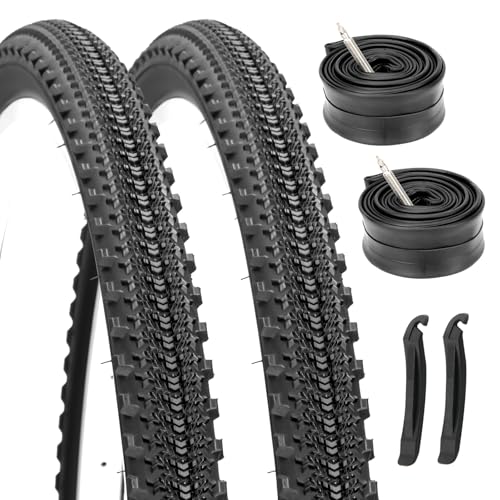
- Two tires, tubes, and levers included
- Mixed-surface tread design
- 42C width for added cushioning
- Folding tire construction
Cons
- Valve type not specified
- Requires 1 to 2 days laid flat before installation
- Fits 700x42C / 42-622 size

Pros
- Pair of tires
- Folding Kevlar bead
- 1mm nylon protection layer
- Tread for pavement and gravel
- About 19.8 oz per tire
Cons
- Only listed in 700x40c
- Protection layer is 1mm thick
Side-by-Side Comparison
| Product | Size | Tire format | Protection and construction | Included equipment | Pressure or rim details |
|---|---|---|---|---|---|
| Continental Terra Competition 700×35 Gravel Tire | 700×35, 35-622 | Single tire | Trail casing, reinforced sidewalls and crown, foldable aramid bead | Not listed | 43-79 PSI; 17-27 mm internal rim width; hookless compatible |
| Hycline 700x42C Gravel Bike Tire Set | 700x42C, 42-622 | Two tires | Nylon cord construction, puncture-resistant claim | Two butyl tubes and two tire levers | Recommended 40-70 PSI |
| Pair 700x40c Gravel Bike Tires | 700x40c, ETRTO 42-622 | Two tires | 1 mm nylon anti-puncture layer, folding Kevlar bead | Not listed | Not listed |
The main trade-off is tire width and package format: Continental offers a narrower 700×35 tire, while Hycline and Fincci provide pairs around 40 to 42 mm wide. A narrower tire may better suit riders prioritizing road pace, while wider options offer more volume; confirm frame and rim clearance before choosing.
Common Mistakes to Avoid
Buying by the printed width alone can lead to a tire that does not fit. Match the ETRTO size on the tire sidewall to the replacement, then check your frame, fork, and rim maker’s clearance guidance. The listed 700x40c Fincci tire also carries an ETRTO marking of 42-622, so compare the complete size information rather than relying on one label.
Assuming every gravel tire is tubeless-ready can create compatibility problems. Continental identifies its Terra Competition as tubeless ready and hookless compatible, while the Hycline set includes tubes; the Fincci description does not state tubeless compatibility. Check the tire, rim, and setup instructions together before buying sealant or removing existing tubes.
Ignoring pressure guidance can compromise comfort or handling. Continental lists a 43-79 PSI range and says riders must follow the maximum pressure printed on the tire when using hookless rims; Hycline recommends 40-70 PSI. Do not transfer one tire’s pressure range to another, and confirm your rim maker’s limits before inflation.
Expecting a road-focused tire to behave like an aggressive trail tire is another common mismatch. The Continental’s 35 mm size and speed-focused design favor pavement and hardpack, while Hycline describes open shoulder knobs for loose surfaces. Choose for your usual terrain, because a tread designed for mixed grip can trade away some pavement efficiency.
Best Gravel Tires for Road and Gravel, Mostly Road: Buying Guide
Fit, ETRTO Size, and Frame Clearance
Fit is the first buying criterion because a tire must match the wheel and clear the bicycle. Check the existing tire’s sidewall for its full size, including the ETRTO number, then compare that marking with the new tire specification. Nominal width alone can be misleading when labels differ.
Measure or confirm available clearance at the frame, fork, and any fenders, using guidance from the bicycle manufacturer. Rim internal width can affect the mounted tire’s shape and measured width, so ask the rim maker or a qualified shop when compatibility is uncertain. Hycline lists 42-622; Fincci lists 42-622 despite its 700x40c short name.
Continental lists its Terra Competition as 700×35, or 35-622, which differs from the wider pair options here. Riders moving from a narrower road tire should not assume a wider tire will fit simply because the wheel is also 700c. Check the bicycle’s documented maximum tire size before ordering.
Tread and Your Pavement-to-Gravel Mix
Tread determines how a tire balances smooth-road rolling with traction on loose or uneven ground. Tightly spaced center tread can help maintain efficient contact on pavement, while more open shoulder knobs can add bite when a rider leans into loose terrain. Compare the tread pattern with the surfaces you encounter most often.
Continental describes the Terra Competition as designed for speed, lower rolling resistance, grip, and hardpack use. Hycline describes a tightly spaced center with open shoulder knobs and deeper grooves for mixed conditions. Fincci describes a fast-rolling tread intended for tarmac and pavement, with grip on gravel.
Mostly-road riders may prefer a smoother center tread and should accept less bite on soft trails. Riders who regularly meet loose corners or muddy paths may prefer more open tread, even if it feels less efficient on pavement. For a road-bike cockpit refresh, our handlebar tape comparison covers a separate comfort and control decision.
Width, Cushioning, and Ride Feel
Tire width influences available air volume and the room a setup needs, so it affects both comfort choices and fit. Hycline’s 700x42C tires are described as absorbing bumps and vibration; Continental’s listed 700×35 size is narrower. These specifications help frame the choice, but they do not guarantee a particular ride feel on every bicycle.
Wider tires can be useful on rough pavement and gravel when the frame and rim support them. The rider still needs to follow manufacturer pressure guidance and stay within rim limits. A wider tire is not automatically faster or more comfortable in every setup, since tire construction, pressure, surface, and rider preference all matter.
Compare the tire’s stated width with your current setup and your route conditions, not with a general rule about gravel bikes. A rider spending most miles on smooth pavement may value the Continental’s narrower format, while someone seeking more volume may consider the Hycline or Fincci pair. Verify actual compatibility before changing sizes.
Puncture Protection and Casing
Casing and puncture protection matter because tire construction affects resistance to damage and the way a tire conforms to the road. Continental lists a reinforced trail casing with reinforced sidewalls and crown. Fincci specifies a 1 mm nylon anti-puncture layer, while Hycline describes its construction as puncture resistant.
These descriptions are not directly comparable guarantees, so consider the type of riding and maintenance you are willing to manage. Riders commuting across debris-strewn streets may prioritize added protection, while riders prioritizing lower weight may weigh that feature against other construction choices. No tire description removes the need to inspect tread and sidewalls regularly.
Continental lists an approximate weight of 410 g for its 700×35 tire, and Fincci lists 560 grams per tire. The figures come from the respective product specifications and refer to different sizes and constructions, so they are not a direct performance comparison. Hycline does not list tire weight here.
Tubes, Tubeless Setup, and Rim Compatibility
Setup compatibility determines whether a tire works with your existing tubes, rim, and preferred maintenance routine. Continental identifies the Terra Competition as tubeless ready and hookless compatible, and says it can be used with sealant or an inner tube. It lists compatibility with 17-27 mm internal rim widths.
Hycline supplies two butyl inner tubes and tire levers, making the set more complete for a conventional tube setup. Fincci is described with a folding Kevlar bead, but tubeless compatibility is not listed. Confirm valve type and tube size separately, because included tubes must still match your wheels and intended installation.
Hookless compatibility does not mean every pressure or rim combination is acceptable. Continental specifically directs riders to follow the hookless maximum pressure printed on the tire. Before purchase, confirm the rim maker’s compatibility rules and the tire maker’s installation instructions; if either source leaves a question unresolved, ask a bicycle shop.
Pressure, Installation, and Ongoing Care
Pressure guidance provides a starting constraint, not permission to exceed the tire or rim limits. Continental lists 43-79 PSI, and Hycline recommends 40-70 PSI; use only the guidance for the exact tire and wheel combination. Check the sidewall and manufacturer instructions, especially when fitting tires to hookless rims.
Installation details can affect setup time and avoid damage. Hycline says its folded tires should be unfolded and laid flat for one to two days before installation, and it includes tire levers. Riders fitting any new tire should inspect bead seating, confirm rotation direction if marked, and follow the maker’s mounting instructions.
Routine care starts with checking inflation, tread wear, embedded debris, and cuts in the casing. A tire with visible damage or unusual air loss needs attention before the next ride. For equipment that locks a bicycle during errands, our bike lock guide can help with a different part of a commuter setup.
How We Chose
We score products with the Haiku Ride Score: core performance 30%, build and weather resistance 20%, ease of use 20%, compatibility and battery 15%, and value 15%. For tires, we compare stated tread, casing, sizing, setup details, and included equipment against the needs of road-heavy gravel riding.
Our evaluation uses manufacturer specifications, compatibility information, and long-term owner feedback when available. We researched and drafted this guide with help from software tools, including AI, then reviewed and edited it before publication. See how we review for our methodology.
Price and Value: What Each Budget Gets You
Budget
At the entry end of this group, the Hycline 700x42C Gravel Bike Tire Set bundles two tires with two butyl tubes and tire levers. That combination can reduce the need to source basic installation parts separately. Riders give up the narrower format and specifically stated tubeless-ready construction found on the Continental, so this set better suits conventional tube users seeking a broad mixed-surface setup.
Mid-Range
The Fincci pair occupies a middle ground for riders who want two foldable tires and a stated 1 mm nylon anti-puncture layer. Its tread is described for tarmac, pavement, and gravel, which fits a varied commute or recreational route. The package does not list tubes or tire levers, and its pressure range and tubeless status are not stated here, so confirm details before purchase.
Premium
The Continental Terra Competition 700×35 Gravel Tire emphasizes speed, a reinforced casing, tubeless readiness, and hookless compatibility within a narrower single-tire format. Its stated rim-width range and pressure guidance help riders assess setup fit. The trade-off is that the package is one tire rather than a pair, and riders needing wider-volume cushioning may prefer another size.
Choosing Something Else
Riders whose routes stay almost entirely on smooth pavement may be better served by road tires that match their frame and riding priorities. A dedicated gravel tire can add tread and width that those riders do not need. Conversely, frequent rough-trail riders may want a more aggressive tire category than these road-and-gravel options; match the tire to terrain rather than choosing by label alone.
Final Thoughts
Mostly-road riders seeking a narrower, speed-oriented option can consider the Continental Terra Competition 700×35 Gravel Tire. Its 700×35 size, tubeless-ready construction, and stated hookless compatibility make it the clearest fit here for riders balancing pavement with hardpack, provided their rim and frame meet its requirements.
Riders who want a matched pair with conventional setup accessories can consider the Hycline 700x42C Gravel Bike Tire Set. Its included tubes and levers are practical, while its wider size and more open shoulder tread suit riders who value volume and mixed-terrain grip over a narrower road-focused format.
The Pair 700x40c Gravel Bike Tires may suit riders who want two tires with a stated puncture-protection layer and a tread described for pavement and gravel. Riders should verify the 42-622 ETRTO marking, available clearance, and setup details before buying, particularly if replacing a tire with a different labeled width.
Skip these options if your bicycle cannot safely clear their sizes, your rim setup does not match the tire instructions, or your routes demand dedicated road or aggressive trail tires. Confirm wheel standards and pressure guidance first. Riders also comparing broader commuting equipment can consult our adult tricycle guide for a different style of everyday riding.
FAQs
Are gravel tires suitable for mostly road riding?
Gravel tires can suit mostly road riding when their tread, width, and construction match the pavement and occasional unpaved sections on your route. A smoother center tread and narrower size may favor road-heavy use, while open shoulder knobs can provide more loose-surface grip. Check your frame clearance and compare the tread with your actual riding conditions.
Which size should I choose for road and gravel?
The right tire size for road and gravel depends on your wheel standard, rim, frame clearance, and the tire’s full sidewall marking. Compare ETRTO sizing rather than relying only on a rounded width label. The products here include 35-622 and 42-622 sizes, so verify that your bicycle supports the exact tire before ordering.
Can I use the Best Gravel Tires for Road and Gravel, Mostly Road tubeless?
Tubeless use depends on the exact tire and rim combination, not just the gravel label. Continental identifies its Terra Competition as tubeless ready and hookless compatible; the other product details here do not state tubeless compatibility. Check both manufacturers’ instructions, rim-width requirements, and pressure limits before setting up any tire without an inner tube.
What tire pressure should I use on gravel tires?
The correct pressure depends on the tire, rim, bicycle, rider, and terrain, so use the manufacturer’s guidance for your exact setup. Continental lists 43-79 PSI, and Hycline recommends 40-70 PSI. Those ranges are not interchangeable; hookless users must also follow the maximum pressure marked on the Continental tire.
Do wider gravel tires feel more comfortable on rough roads?
Wider gravel tires can provide more air volume, which may help absorb bumps when the tire, rim, pressure, and bicycle are compatible. Hycline describes its 42C tires as offering extra cushioning, but comfort varies by setup and rider. Confirm frame clearance and pressure guidance before choosing a wider tire, rather than assuming width alone guarantees comfort.
Are these tire sets sold as pairs?
The Hycline 700x42C Gravel Bike Tire Set includes two tires, two inner tubes, and two tire levers. Pair 700x40c Gravel Bike Tires is described as a pack of two tires. Continental Terra Competition 700×35 Gravel Tire is listed as a single tire, so check what quantity you need when replacing both bicycle tires.
How do I avoid buying a tire that will not fit?
To avoid a fit mismatch, match the new tire’s ETRTO marking to the wheel and confirm the frame and fork provide enough clearance. Check rim compatibility and any manufacturer size limits, especially when changing tire width. If the bicycle documentation and tire details leave compatibility unclear, ask a bicycle shop before installation.
How often should I inspect gravel tires?
Inspect gravel tires regularly for low pressure, worn tread, embedded debris, cuts, and casing damage, especially after rough or debris-covered rides. Follow the tire maker’s care and inflation instructions, and address visible damage before riding. Riders building a complete commute setup may also find our bike lock comparison useful.


Write Your Review
No reviews yet. Be the first to share your experience!