

Lock your bike frame to a fixed, sturdy rack, then secure a wheel with the same lock or a second lock. Choose a visible, well-used parking spot, keep the lock clear of the ground, and check that the rack cannot be lifted or dismantled to free your bike.
You need a secure locking routine whenever you leave a bike unattended, from a quick errand to regular commuting. Follow your lock and bike manufacturers’ instructions, and ask a bike shop to check any security setup you are unsure about.
What You Need
A suitable lock, a fixed anchor, and a moment to check your setup make up the basic requirements. Match the lock’s reach and security level to your bike, parking location, and time away.
- A bike lock with enough reach to pass through the frame and around a fixed rack or other secure anchor.
- A second lock or a longer primary lock if you need to secure both wheels as well as the frame.
- A parking rack that is firmly attached and cannot be lifted, opened, or removed with the bike locked to it.
- Your bike’s key or combination, kept separate from the bike when possible.
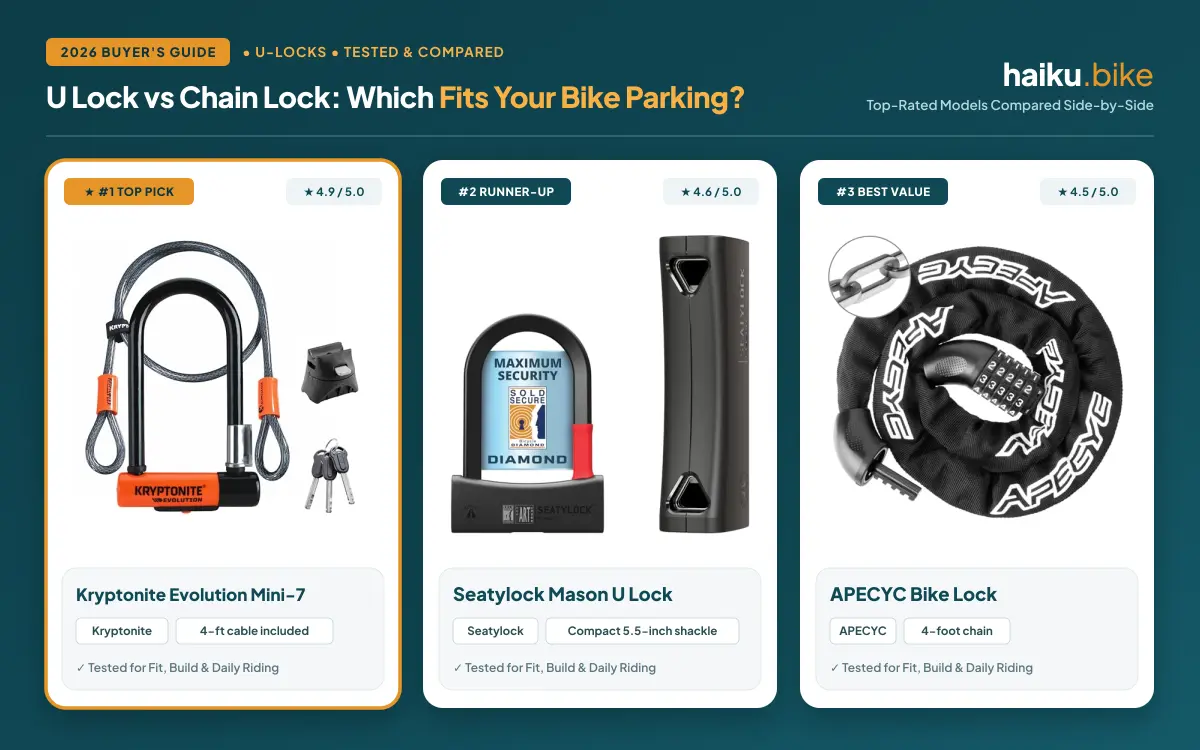
A U-lock, chain, or folding lock can work when it fits the frame and anchor without leaving excessive empty space. Compare lock types in our bike locks and security guide before choosing one for your routine.
Step by Step
A reliable locking routine secures valuable parts to an anchor that a thief cannot easily remove. Work through each check before walking away, rather than relying on the lock alone.
- Choose a visible, well-used parking spot with a permanent, sturdy rack. Visibility can make tampering harder to conceal, while a fixed rack gives your lock a secure anchor.
- Check the rack before locking your bike to it. Avoid loose, damaged, short, or easily dismantled fixtures, and make sure your bike will not block a walkway.
- Place your bike close to the anchor and identify its frame and wheels. Keeping the bike close reduces unnecessary lock slack and helps you plan which parts need protection.
- Pass the primary lock through the frame and around the rack. The frame is essential to secure because a wheel alone can be removed while the rest of the bike is left behind.
- Include the rear wheel in the lock when its shape and reach allow. The rear wheel can be costly to replace, but do not leave the frame unsecured just to capture it.
- Use a second lock to secure the front wheel to the frame or anchor if the primary lock cannot reach it. Separate locks make it harder to take the bike or an unsecured wheel.
- Position the lock so its mechanism faces downward or inward, where access is less convenient. Keep the lock body and chain off the ground to limit leverage and avoid scraping against pavement.
- Remove accessories that detach easily, such as lights, bags, and computers. Take the items with you instead of assuming a bike lock will protect removable gear.
- Pull the bike and lock gently, then confirm the lock has closed and the bike remains attached to the rack. A quick check can catch a missed frame tube, an unlocked mechanism, or a weak anchor.
Common Mistakes
Common locking mistakes leave the bike, its parts, or the anchor vulnerable even when you carry a good lock. Review these failure points before settling on a routine.
Locking only a wheel
A lock through only one wheel can leave the frame free to take, or leave the wheel behind after its attachment is removed. Pass the primary lock through the frame and around the anchor, then protect wheels with the same lock or another one.
Trusting a weak rack
A solid lock cannot compensate for a loose rack, an open-ended post, or a fixture that can be removed. Check the anchor’s construction and attachment, and choose another location if you cannot secure the bike to a fixed part.
Leaving too much slack
Extra space inside a lock can give someone room to apply leverage or position a tool. Bring the bike close to the anchor, use the smallest practical locking space, and keep the lock away from the ground.
Forgetting removable parts
A frame lock does not secure a quick-release wheel, light, bag, or bike computer unless the item is included in the locking setup. Take detachable accessories with you and secure exposed wheels with a second lock when needed.
Using the same routine everywhere
A brief stop in a busy area calls for a different level of care than unattended outdoor parking. Consider how long you will be away, how visible the location is, and whether a second lock or indoor parking is available.
When to Take It to a Bike Shop
A bike shop can help when your lock does not fit around the frame and a secure anchor, or when you cannot tell whether a parking fixture is suitable. Ask staff to explain locking options that fit your frame shape and regular parking locations.
Seek help if a lock is jammed, damaged, or difficult to close, rather than forcing the mechanism and risking a lockout. A shop can also advise you when a wheel or component uses a security system you do not know how to protect.
Riders who park outside often can also review our guide to bike lock options and the U-lock category to compare formats and security features.
Gear That Helps
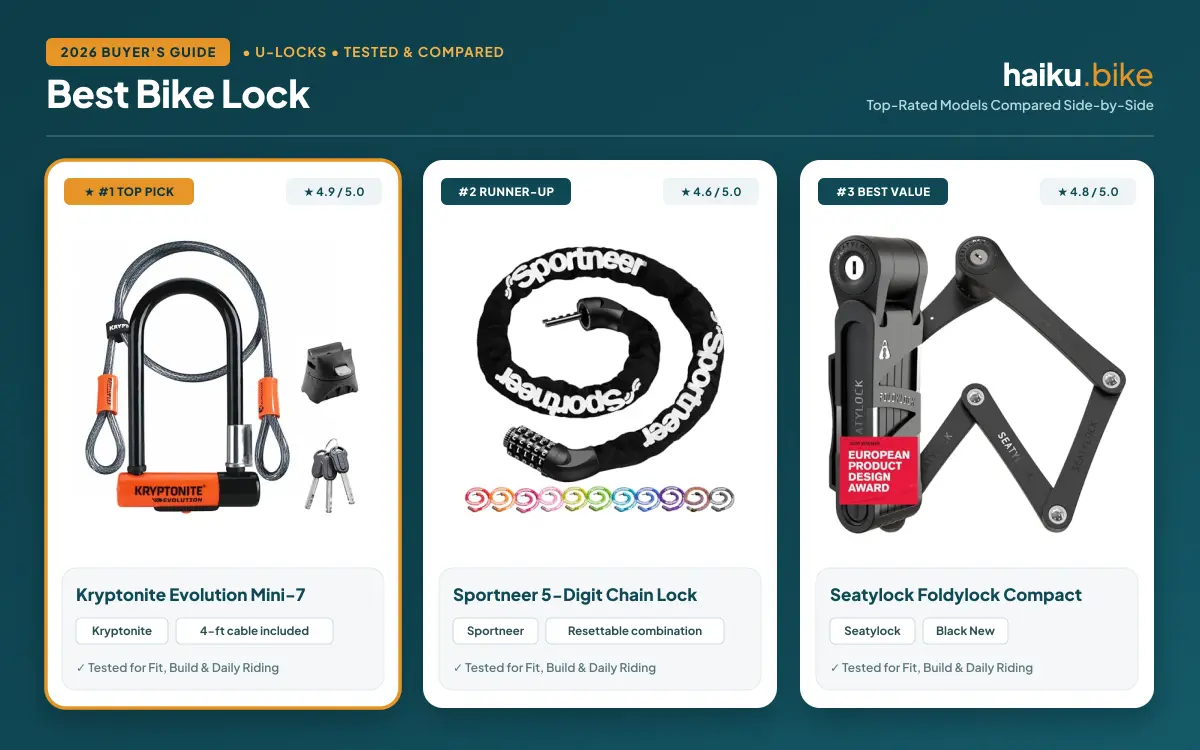
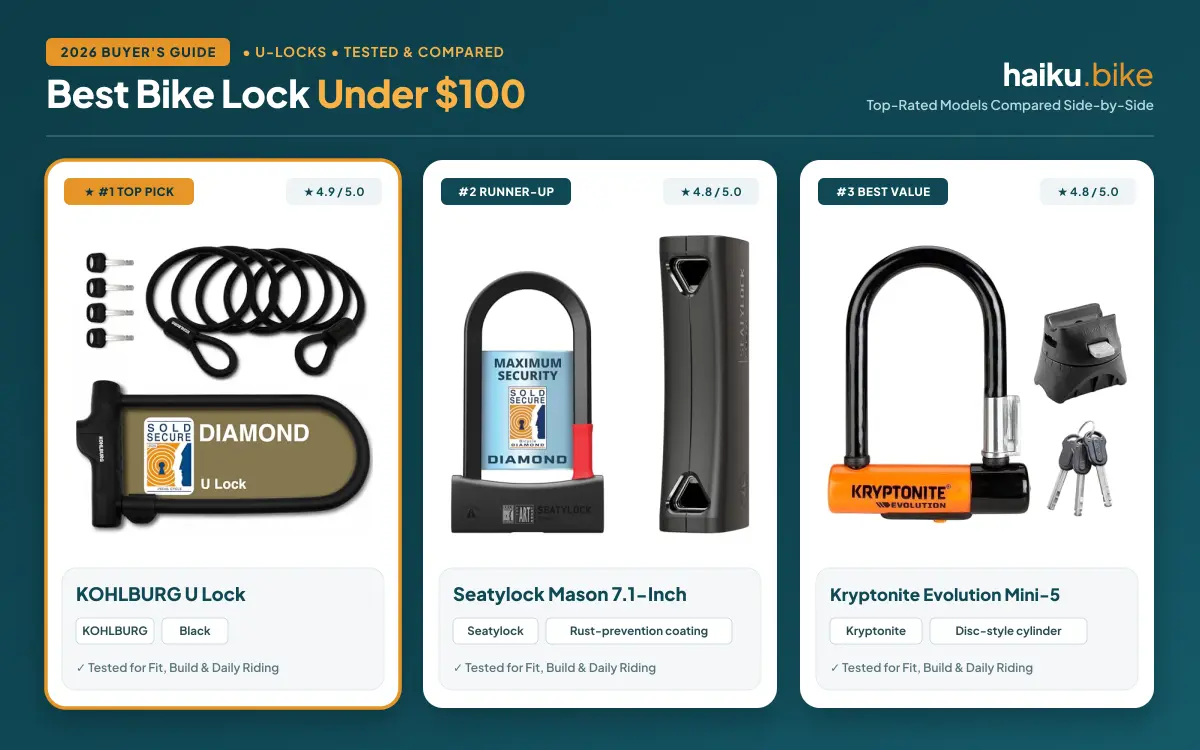
Different lock styles trade reach and carrying convenience against bulk and locking flexibility. These options illustrate folding, chain, and combination formats; match any lock to your parking conditions and the parts you need to secure.

Pros
- Keyed lock, no combination code
- Folds for compact carrying
- Frame-mount bracket included
- Sold Secure Silver rating
- 33.5-inch locking circumference
Cons
- About 2.2 lb to carry
- 33.5-inch circumference limits reach

Pros
- Four-foot locking reach
- Resettable four-digit combination
- Sold Secure Bronze rated
- Protective nylon sleeve
- Manganese steel chain links
Cons
- Heavy at 4.5 pounds
- Bronze rating suits moderate-risk areas
- No key backup listed

Pros
- Keyless, resettable combination
- 4-foot chain
- Fabric frame-protection sleeve
- Hardened steel chain links
Cons
- No security certification listed
- About 2.34 lb
- No chain diameter listed

Pros
- 7.2mm hardened steel bars
- 37.4-inch reach
- Mounting bracket included
- Three stainless keys
- Dust-covered lock core
Cons
- 2.86 lb adds carry weight
- Not intended for long-distance cycling
FAQs
What part of a bike should you lock first?
Secure the bike frame to a fixed anchor first, because the frame holds the bike together and is often its most valuable part. Include the rear wheel in that lock when practical, then use a second lock for the front wheel if the first lock cannot reach it.
Can you lock a bike to a signpost?
You can use a signpost only when it is sturdy, fixed, and cannot be lifted or dismantled to release the bike. Check the post and its attachment before locking up, and choose a purpose-built rack when the post looks loose, open-ended, or easy to remove.
Should you lock both bike wheels?
Lock both wheels when the primary lock cannot secure the frame and wheels together, or when your wheels can be removed easily. Keep the frame attached to the anchor, then use a second lock or another suitable method to protect the remaining wheel.
Is one bike lock enough?
One bike lock can secure a frame and wheel if it reaches both and fits close around a sound anchor. A second lock helps protect another wheel or add flexibility, especially when the primary lock is too short to secure every valuable part.
Where should you position a bike lock?
Position the lock around the frame and a fixed anchor, with little open space and the lock body away from the ground. Keep the mechanism facing inward or downward when the lock design allows, and make sure the bike cannot be lifted free of the rack.
Should you leave a bike locked outside overnight?
Leaving a bike outside for a long period increases its exposure to theft and weather, and a lock cannot remove that risk. Use a secure indoor location when available; otherwise, choose a visible, fixed anchor, secure the frame and wheels, and remove detachable accessories.
Write Your Review
No reviews yet. Be the first to share your experience!