

To inflate a Presta tire, remove its cap, loosen the small valve tip, and attach a pump head that fits Presta valves. Pump to the pressure recommended for your tire, then remove the head carefully and retighten the tip. A secure connection and gradual pumping help prevent air loss and valve damage.
You may need to add air before a ride, correct pressure after storage, or inflate a tire after repairing a flat. Follow your tire and pump manufacturers’ instructions, and ask a bike shop to check work you are unsure about.
What You Need
A Presta-compatible floor pump, a clear view of the tire sidewall, and access to the valve are usually enough. Check that your pump head supports Presta valves before connecting it; some pump heads switch modes, while others use separate openings.
Your tire’s sidewall gives a pressure range to guide inflation, but the appropriate pressure depends on your tire and riding setup. Use the tire maker’s guidance rather than treating the maximum printed pressure as a target. A pump gauge helps you track pressure as you inflate.
A valve cap is optional for inflation, but keep it nearby so you can replace it afterward. If your wheel has a deep rim, a valve extender or a pump head with a longer reach may be needed to make a secure connection.
Step by Step
- Position the wheel so the valve is easy to reach, then remove the valve cap. Keeping the valve accessible helps you attach the pump straight without pulling or twisting the valve stem.
- Turn the small knurled nut at the valve tip counterclockwise until it stops, without forcing it. The nut must be loosened so air can pass through the valve when you pump.
- Press the valve tip briefly to release a small puff of air. This confirms the valve is open and can help clear the opening before you attach the pump.
- Set your pump head to Presta mode if it has a reversible or switchable fitting. Using the correct setting helps the pump seal around the narrow valve without damaging its parts.
- Push the pump head straight onto the valve until it sits firmly, then lock its lever if the head has one. A straight, snug fit limits air leaks while you inflate.
- Stand securely on the floor pump base and hold the handle with both hands. Pump with controlled strokes while watching the gauge, since a stable stance helps you avoid bending the exposed valve.
- Stop when pressure reaches an appropriate point within the tire maker’s recommended range. The right pressure depends on your tire and setup, so do not assume one number works for every ride.
- Unlock the pump head and pull it straight off the valve. Removing it without twisting reduces stress on the valve stem and limits air escaping during disconnection.
- Turn the small valve-tip nut clockwise until it is snug, but do not overtighten it. Closing the valve helps keep air in the tire, while excess force can damage the delicate tip.
- Replace the cap and check that the tire feels evenly inflated and holds pressure. If air continues to escape or the tire feels unusually soft, inspect the valve and tire before riding.
Common Mistakes
Leaving the valve tip closed
A closed Presta tip blocks airflow, so the pump may resist, show no pressure increase, or appear to connect without inflating the tire. Loosen the small tip nut before attaching the pump, and press the tip briefly to confirm it opens.
Using the wrong pump setting
A pump head set for Schrader valves may not seal properly on a Presta valve. Check the head’s markings or instructions and select its Presta setting. If your pump uses a separate opening, choose the one labeled for Presta rather than forcing the fitting.
Attaching the pump at an angle
An angled pump head can leak air or put sideways force on the narrow valve stem. Align the head with the valve before pushing it on, and hold the pump hose so it does not tug while you work.
Forcing the valve tip or pump head
Presta valve parts are small, and forcing a stuck nut or pump fitting can bend or damage them. Stop if a part will not move normally, check that you are turning the correct piece, and consult the pump instructions or a bike shop if needed.
Removing the head with a twist
Twisting a tight pump head can stress the valve stem, especially when the stem is unsupported. Release the pump’s locking lever first, then pull the head straight away from the valve. Keep your hand near the rim to steady the wheel, not the exposed tip.
When to Take It to a Bike Shop
Ask a bike mechanic for help if the valve tip is bent, loose, stuck, or visibly damaged, or if air escapes steadily after you disconnect the pump. A damaged valve or a poor seal may need attention beyond routine inflation.
A tire that repeatedly loses pressure, will not seat evenly on the rim, or has visible damage also needs inspection before riding. A mechanic can check the tire, tube or tubeless setup, rim, and valve to identify the source of the problem.
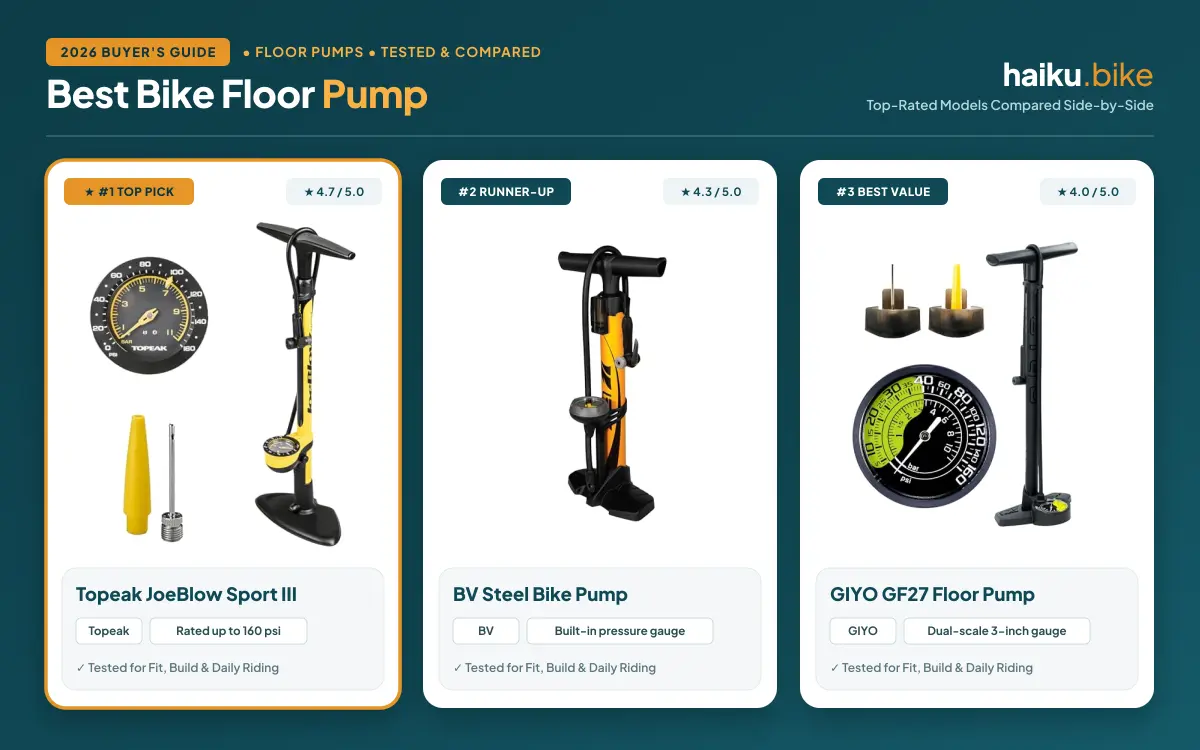
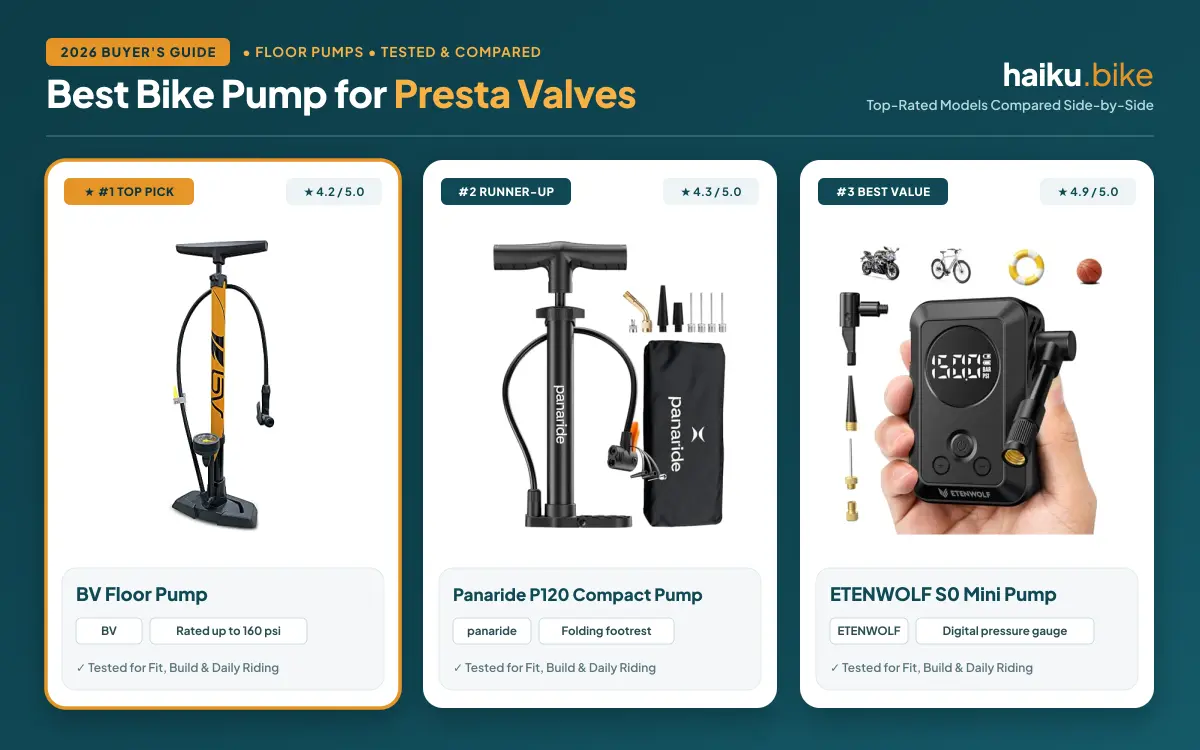
For help choosing compatible equipment, see Haiku Bike’s floor pump guide and the broader Pumps & Tire Care section. Riders comparing pump options can also read the Presta-compatible bike pump guide.
Gear That Helps
A floor pump with a Presta-compatible head and readable gauge makes tire inflation easier to manage. Check the pump maker’s instructions to confirm how its head attaches and releases.

Pros
- Compact 7.1-inch height
- Foldable foot pedals
- Presta, Schrader, and Dunlop compatibility
- Includes ball needles and nozzle adapters
- 12.9-inch hose
Cons
- Gauge range stops at 140 PSI
- Manual pumping required

Pros
- Presta, Schrader, and Dunlop compatibility
- Large 3-inch analog gauge
- Rated up to 160 psi
- Steel barrel and base
- Ball and bladder needles included
Cons
- Analog gauge, not digital
- Weighs 3.7 lb
- No pressure-release valve listed

Pros
- Presta and Schrader compatibility
- Built-in pressure gauge
- 160 PSI maximum rating
- Wide base and T-handle
- Three included inflation adapters
Cons
- Gauge accuracy not listed
- Pump weight not listed

Pros
- Presta and Schrader compatibility
- No valve-head reversal needed
- Rated to 160 psi
- Steel barrel
- Ergonomic handle
Cons
- No weight listed
- No pressure-gauge details listed
FAQs
Do you need to remove the Presta valve core?
You do not usually need to remove a Presta valve core to inflate a tire. Loosen the small nut at the valve tip, attach a compatible pump head, and add air. Removing a removable core is a separate repair or maintenance task, not part of ordinary inflation.
Why does air come out when you remove the pump?
A brief hiss as you remove a pump head can come from air in the pump hose or a small amount escaping at the connection. Unlock the head before pulling it straight off. If air keeps escaping from the valve afterward, check the tip and ask a bike shop if the leak persists.
Can you use a Schrader pump on a Presta valve?
You can use a pump that supports both valve types, but its head must be set up for Presta. Some pumps switch modes, while others have separate fittings. Check the pump instructions and use a Presta adapter only when your pump requires one.
How tight should the Presta valve tip be?
The Presta valve tip should be snug enough to close, not forced tight. Turn the small nut clockwise by hand after pumping, then stop when it is secure. Excess force can damage the tip, and the valve cap does not replace closing the tip.
What pressure should you use in a Presta tire?
Presta describes a valve type, not a tire pressure. Use the tire maker’s recommended range printed on the sidewall or in its instructions, and account for your tire and riding setup. Do not exceed the maximum pressure marked on the tire.
Why will a floor pump not attach to your Presta valve?
A floor pump may not attach because its head is set for Schrader, its seal is worn, or its fitting does not reach through a deep rim. Check the pump’s valve setting and instructions, then inspect the head. Do not force a fitting onto the valve.

Write Your Review
No reviews yet. Be the first to share your experience!