Riders who want low-impact cardio at home may prefer a recumbent exercise bike’s supported seat and reclined position. Adjustable seating, magnetic resistance, and simple displays can make steady indoor workouts easier to fit into a daily routine.
We compared 7 recumbent bikes from brands including 3G Cardio, MERACH, Sunny Health & Fitness and more in November 2026. Use this guide to compare fit, capacity, resistance, and connectivity, and browse our Indoor Training category for other home workout equipment.
At a Glance: Which One Fits You
- Best overall: MERACH Recumbent Exercise Bikes for Home High-end earns this spot because its seat has eight positions and its Bluetooth app tracks workout data.
- Best value: MERACH S08 Next-generation Recumbent Exercise Bike pairs eight resistance levels with app syncing and heart-rate tracking.
- Best for upper-body exercise: Sunny Health & Fitness Smart Recumbent Bike includes two resistance bands for arm work alongside pedaling.
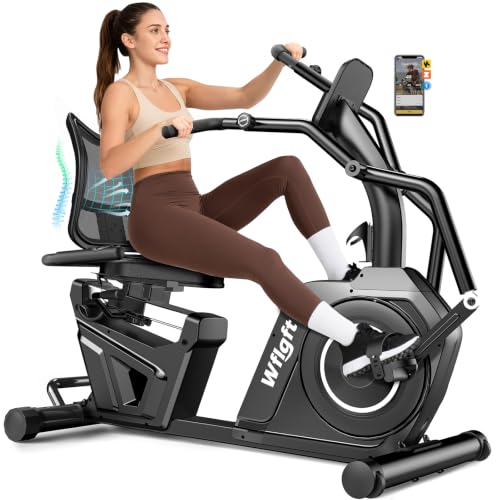
- Best for higher weight capacity: WFLGFT Recumbent Exercise Bikes lists a 450 lb capacity and synchronized arm and leg movement.

Pros
- Eight resistance levels
- Eight seat positions
- Mesh backrest
- Bluetooth app connection
- 330 lb weight capacity
Cons
- Recommended for riders 5'2" to 5'10"
- No listed ANT+ support
- No listed Zwift compatibility

Pros
- Padded seat and ergonomic backrest
- 16 resistance levels
- 400 lb stated weight capacity
- LCD workout metrics
- Front transport wheels
Cons
- 66 lb weight
- 48.3 x 45 x 25.4-inch footprint

Pros
- Sixteen magnetic resistance levels
- Cushioned, adjustable seat and padded backrest
- Flip-up handle for easier access
- Two included 20 lb resistance bands
- SunnyFit app access without membership fees
Cons
- No stated Bluetooth or ANT+ compatibility
- No user height range provided
- 63.9 lb listed weight
Pros
- Arm and leg exercise together or separately
- 16 magnetic resistance levels
- 450 lb maker-rated capacity
- Padded seat with breathable backrest
- LCD with hand-grip heart rate sensors
Cons
- Specific compatible apps not listed
- 87 lb bike may be difficult to move
- 52 x 43-inch footprint

Pros
- Eight resistance levels
- Heart rate pulse sensor
- Bluetooth connection to MERACH app
- Partially pre-assembled
- Wide, comfortable seat
Cons
- Only eight resistance levels
- 57.3 lb to move
- 49.6 inches long

Pros
- 16 resistance levels
- Quiet workout design
- Adjustable seat for 4-foot-9 to 6-foot-2 users
- Padded seat and backrest
- Supports up to 350 lb
Cons
- 55.23-inch length needs floor space
- 58.4 lb frame may take effort to move

Pros
- Seat adjusts forward, back, and to five tilt positions
- Airflow mesh backrest adjusts to body shape
- Low step-through frame
- Wireless heart rate strap included
- FTMS Bluetooth app connectivity
Cons
- 115 lb frame may be difficult to move
- Bring your own screen for app use
Side-by-Side Comparison
| Model | Resistance | Stated capacity | Connectivity or tracking | Fit and access |
|---|---|---|---|---|
| MERACH Recumbent Exercise Bikes for Home High-end | 8 levels | Not listed | Bluetooth app, heart-rate tracking | 8 seat positions |
| MERACH S08 Next-generation Recumbent Exercise Bike | 8 levels | Not listed | Bluetooth app, heart-rate tracking | Not listed |
| Sunny Health & Fitness Smart Recumbent Bike | 16 levels | Not listed | SunnyFit app | Adjustable seat, flip-up side handle |
| WFLGFT Recumbent Exercise Bikes | 16 levels | 450 lb | Bluetooth app, heart-rate sensors | Sliding seat, flip-up rear handle |
| YOSUDA Recumbent Exercise Bike for Home | 16 levels | 350 lb | Heart-rate tracking | 4’9″ to 6’2″ stated fit range |
| 3G Cardio Elite RB X Recumbent Exercise Bike | 16 levels | 350 lb | FTMS Bluetooth, heart-rate sensors, wireless strap | 25 forward and back positions, 5 tilt positions |
| Recumbent Exercise Bike for Home | 16 levels | 400 lb | LCD, heart-rate sensors | Lever-based seat adjustment |
Seat adjustment and stated capacity are among the most consequential differences in this comparison. Riders with specific fit or capacity needs should prioritize those specifications, while app users should confirm that a bike supports the platform they want.
Common Mistakes to Avoid
Choosing by resistance-level count alone can overlook whether the seat fits your leg length and posture. Check the maker’s fit information and adjustment method, then confirm that you can reach the pedals without locking your knees or stretching uncomfortably.
Assuming every recumbent bike states a weight capacity can lead to a poor match. WFLGFT lists 450 lb, the Recumbent Exercise Bike for Home lists 400 lb, and YOSUDA and 3G Cardio list 350 lb; capacity is not listed for the MERACH or Sunny models.
App support does not guarantee compatibility with every fitness platform, phone, or tablet. Check the named app or connectivity standard before buying, especially if you plan to connect existing devices or use a particular training service.
Buyers can also underestimate assembly and room access. Measure the bike’s intended floor area and the route through doorways, then check whether its transport wheels, handles, and seat position make it practical to move and use.
Best Recumbent Exercise Bike Buying Guide
Seat Fit and Adjustment
Seat fit determines whether you can pedal with a comfortable leg reach and supported posture. Check the maker’s rider-height range when available, plus how the seat moves and how securely it locks into position.
YOSUDA lists a fit range from 4’9″ to 6’2″, while the MERACH Recumbent Exercise Bikes for Home High-end offers eight seat positions. The 3G Cardio Elite RB X Recumbent Exercise Bike has forward and back adjustment and five seat-tilt positions.
Seat adjustment can use a knob, lever, or sliding rail, and each mechanism calls for a different reach before you start pedaling. If possible, review the adjustment process and seat dimensions before ordering, especially when more than one household member will use the bike.
Entry, Handles, and Comfort
Easy entry matters because a recumbent bike is only useful when you can get on and off comfortably. Look for a clear step-through area, reachable handles, and a seat position that does not require awkward stretching.
WFLGFT lists a sliding seat and flip-up rear handle, while Sunny Health & Fitness includes a flip-up side handle. Both details may help riders who value access, but compare the actual frame shape and handle placement with your needs.
Seat padding and backrest design also affect longer sessions. MERACH describes a thicker seat and breathable mesh backrest, and 3G Cardio lists an adjustable mesh backrest; comfort remains personal, so treat material descriptions as clues rather than guarantees.
Resistance and Workout Range
Resistance controls how much effort pedaling requires, so its range should match your planned workouts. Compare the number of levels and the control method, then consider whether you need gradual changes for easy sessions or stronger cardio.
Five bikes in this guide list 16 resistance levels, while both MERACH bikes list eight. The MERACH S08 describes its lower settings for warm-ups and recovery and its upper settings for harder sessions, but level counts alone do not show how demanding each setting feels.
Magnetic resistance is described across these products, with several makers also describing quiet or smooth operation. Review the console and resistance controls in the current product details, and choose a system that seems straightforward to adjust while seated.
Frame Capacity and Stability
A stated weight capacity helps you determine whether a bike is suitable for its intended rider. Compare the published limit with your needs, and do not infer capacity from a product’s appearance or claims about its frame material.
WFLGFT lists 450 lb, the Recumbent Exercise Bike for Home lists 400 lb, and YOSUDA and 3G Cardio list 350 lb. The maker does not list a capacity for either MERACH bike or the Sunny Health & Fitness model in the described features.
Stability also depends on correct assembly, a level floor, and appropriate use. Follow the manufacturer’s assembly and use instructions, and confirm the current product details if a specific capacity is essential to your decision.
Displays, Heart Rate, and Apps
Displays and connectivity help you track sessions, but their value depends on which metrics and platforms they support. Check the console information and named app before assuming a bike will connect with your preferred device or workout service.
Both MERACH bikes list Bluetooth app syncing and heart-rate tracking; Sunny names the SunnyFit app. WFLGFT lists hand-grip heart-rate sensors, while 3G Cardio specifies FTMS Bluetooth, third-party app connectivity, and an included wireless heart-rate strap.
The Recumbent Exercise Bike for Home lists an LCD and pulse sensors, and YOSUDA lists heart-rate tracking. Check which readings appear during a workout and whether connectivity requires a separate account or device before making those features central to your choice.
Space, Moving, and Assembly
A bike’s assembled footprint and moving route determine whether it fits your home, not its compactness description alone. Measure the intended workout area, doorway width, and the space needed to mount and dismount safely.
3G Cardio lists dimensions of 49 by 27 by 43 inches and a weight of 115 lb, with built-in wheels for moving through a standard doorway. MERACH describes the S08 as compact and lightweight but does not list dimensions in its feature details.
Assembly descriptions can help you plan, but they do not replace checking the instructions and available workspace. MERACH says its high-end bike arrives 80% pre-assembled and can be assembled within 30 minutes; other makers also describe partial pre-assembly.
For more indoor equipment comparisons, browse our Exercise Bikes category. Check transport-wheel placement and assembled dimensions against your route, since a bike that fits one room may still be difficult to move there.
How We Chose
We scored these recumbent exercise bikes with the Haiku Ride Score: core performance at 30%, build and weather resistance at 20%, ease of use at 20%, compatibility and battery at 15%, and value at 15%. Weather resistance and battery have limited relevance to this indoor category, so our comparisons emphasize applicable features such as fit, resistance, capacity, and connectivity.
We evaluate manufacturer specifications, compatibility information, and long-term owner feedback where available. We research and draft our guides with software tools, including AI, then run automated checks on product fit, sourcing, and our editorial rules. Our editor spot-checks guides rather than reading each one before publication. Read our how we review methodology for more about our approach.
Price and Value: What Each Budget Gets You
Budget
Budget recumbent bikes can cover steady indoor cardio with basic displays, magnetic resistance, and adjustable seating. The MERACH S08 offers eight resistance levels, app syncing, and heart-rate tracking, while YOSUDA lists 16 levels and a stated rider-height range. Buyers may give up broader adjustment details or additional connectivity, so check fit and capacity rather than comparing feature counts alone.
Mid-Range
Mid-range options can add more access features, upper-body exercise, or connected workout tools. Sunny Health & Fitness includes resistance bands and SunnyFit app support, while WFLGFT combines synchronized arm and leg movement with a stated capacity. These additions can suit riders who will use them regularly, but extra features do not replace a suitable seat fit or adequate room.
Premium
Premium recumbent bikes may provide broader seat adjustment, third-party connectivity, programmed workouts, and more extensive warranty coverage. The 3G Cardio Elite RB X lists 25 forward and back seat positions, five tilt positions, FTMS Bluetooth, and stated frame, parts, and labor coverage. Buyers give up a simpler purchase in exchange for those options, which matter most to riders who will use them.
Choosing Something Else
A basic upright stationary bike may suit riders who want a more familiar cycling posture and do not need a backrest. A walking routine may work for people seeking uncomplicated indoor movement without a machine. Compare those alternatives with your comfort, available space, and exercise goals before choosing a recumbent bike.
Final Thoughts
The MERACH Recumbent Exercise Bikes for Home High-end suits riders who want multiple seat positions, Bluetooth app tracking, and a tablet holder. Its eight resistance levels provide fewer adjustment steps than several alternatives, and its listed features do not state a weight capacity.
For app-connected basics, consider the MERACH S08 Next-generation Recumbent Exercise Bike, which lists eight levels and a one-year manufacturer warranty. Riders wanting upper-body movement can compare the Sunny Health & Fitness Smart Recumbent Bike, while the WFLGFT Recumbent Exercise Bikes lists synchronized arm and leg motion and a 450 lb capacity.
The YOSUDA Recumbent Exercise Bike for Home lists a rider-height range and 16 resistance levels. The Recumbent Exercise Bike for Home lists a 400 lb capacity, while the 3G Cardio Elite RB X Recumbent Exercise Bike offers detailed seat adjustment and FTMS Bluetooth.
Skip recumbent bikes if you need outdoor transportation, a folding machine, or a posture closer to road cycling. Compare other formats in our indoor exercise bike guide, or consider an adult tricycle for errands if practical outdoor travel matters more than indoor cardio.
FAQs
How do I choose a recumbent exercise bike for my height?
Choosing a recumbent exercise bike for your height starts with the maker’s stated fit range and seat adjustment details. YOSUDA lists a range from 4’9″ to 6’2″, while the MERACH high-end bike offers eight seat positions. Confirm that you can reach the pedals with a comfortable knee bend and that the seat locks securely where you need it.
Which Best Recumbent Exercise Bike options support apps?
Best Recumbent Exercise Bike options in this guide list different types of app or device connectivity. MERACH names its own app, Sunny Health & Fitness lists SunnyFit, and 3G Cardio specifies FTMS Bluetooth and third-party app connectivity. Confirm current compatibility with your phone, tablet, and preferred workout platform before buying.
What weight capacity should I look for in a recumbent bike?
A recumbent bike’s stated weight capacity should meet the needs of its intended rider. WFLGFT lists 450 lb, the Recumbent Exercise Bike for Home lists 400 lb, and YOSUDA and 3G Cardio list 350 lb. Some models do not state a capacity in their feature details, so confirm the current maker information before ordering.
Are recumbent exercise bikes quiet enough for home use?
Several makers describe their recumbent bikes as quiet or smooth, and multiple models use magnetic resistance. MERACH lists a dual-belt drive, while Sunny Health & Fitness describes a magnetic belt-drive mechanism. Room acoustics, floor surfaces, and assembly can affect noise, so follow setup instructions and consider where the bike will sit.
Can a recumbent exercise bike work the arms too?
Some recumbent exercise bikes include equipment for upper-body movement, but this feature is not standard across the category. WFLGFT describes synchronized arm and leg movement, and Sunny Health & Fitness includes two resistance bands. Check the maker’s description to confirm which equipment is included and how it is intended to be used.
How much space does a recumbent exercise bike need?
A recumbent exercise bike needs enough room for its assembled footprint, safe entry, and movement around the seat. 3G Cardio lists dimensions of 49 by 27 by 43 inches, while several other models do not list dimensions in their feature details. Measure your room and doorway, then confirm the bike’s current dimensions before arranging delivery.
How long does recumbent bike assembly take?
Recumbent bike assembly time depends on the model and the assembler’s setup experience. MERACH says its high-end bike arrives 80% pre-assembled and can be assembled within 30 minutes; other makers describe partial pre-assembly. Read the included instructions, check that parts are present, and leave enough space to work safely.
Which Best Recumbent Exercise Bike suits a small room?
The Best Recumbent Exercise Bike for a small room depends on assembled dimensions and the route into your workout space. 3G Cardio lists dimensions of 49 by 27 by 43 inches and built-in wheels, while MERACH describes the S08 as compact without listing dimensions. Measure your floor area and doorway, then compare details in our Exercise Bikes category.




Write Your Review
No reviews yet. Be the first to share your experience!