

Indoor riders use direct-drive smart trainers to follow structured workouts, ride virtual routes, and keep training through poor weather or limited daylight. These trainers replace the rear wheel and connect through the drivetrain, so axle fit, cassette needs, and app support matter before purchase.
For November 2026, we compare 6 models from XPLOVA, Garmin, ThinkRider and more, including options with automatic resistance, virtual climbing, and different connection methods. Follow each manufacturer’s setup instructions and applicable local laws, and see our smart trainer setup guide before assembling your indoor riding space.
At a Glance: Which One Fits You
- Best overall: Elite Avanti Direct Drive Smart Trainer combines ±1% stated power accuracy with WiFi, Bluetooth, ANT+, and automatic calibration.
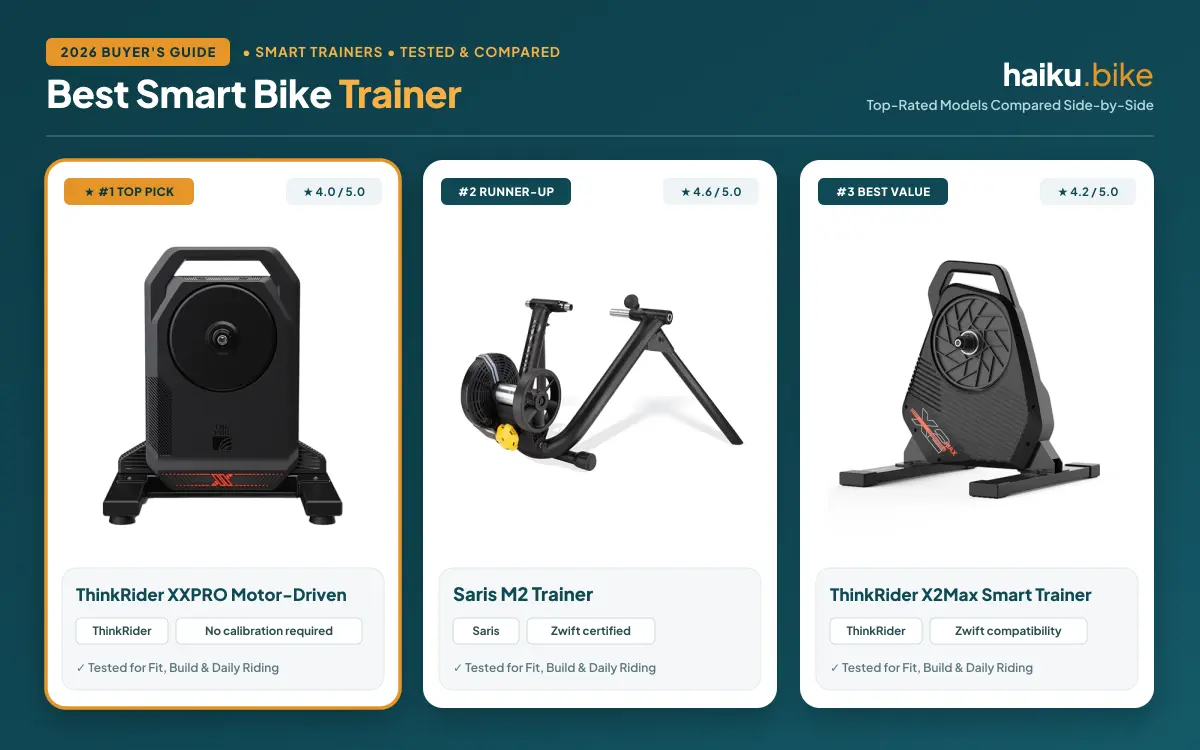
- Best value: ThinkRider XXPRO Smart Bike Trainer,2500W,25% lists ±1% accuracy, self-power generation, and simulated gradients up to 25%.
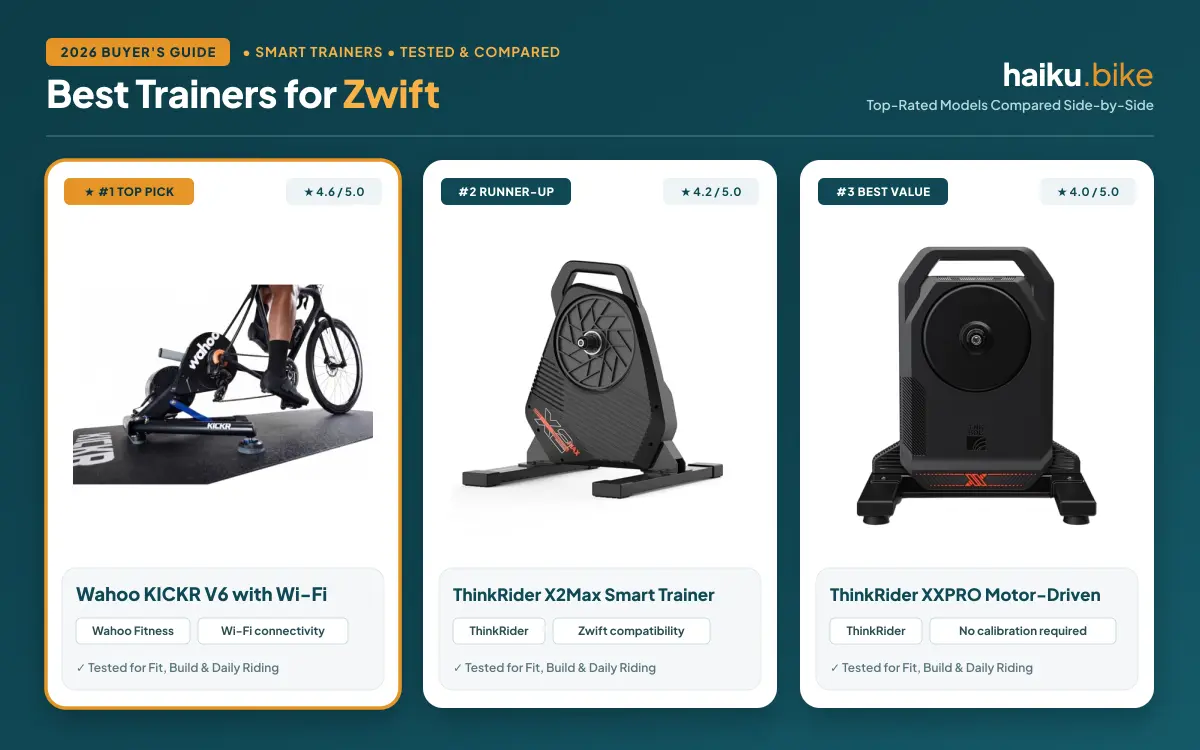
- Best for Zwift controls: Wahoo Fitness KICKR CORE 2 ZWIFT COG and Click includes Zwift COG and Click and adds integrated WiFi for pairing and updates on an active network.
- Best for moving ride feel: Garmin TacX NEO 3M Smart Trainer offers toggled motion plates and simulated road surfaces, with a larger feature set than some riders need.

Pros
- No calibration required
- Self-generates electricity
- Downhill simulation
- ANT+ and Bluetooth
- Zwift app compatibility
Cons
- Drivetrain compatibility unlisted
- Trainer weight unlisted

Pros
- Smooth, road-like resistance
- Built for hard efforts
- Supports structured training
- Integrated WiFi
Cons
- Connectivity details not specified
- Resistance range not listed
- Noise level not listed

Pros
- Belt-driven direct-drive system
- Automatic ERG resistance control
- Bluetooth FTMS and ANT+ FE-C
- Compatible with several indoor cycling apps
- Wide I-shaped base
Cons
- Cassette not included
- Micro Spline not directly compatible
- SRAM XDR 12-speed needs separate freehub body


Pros
- 2,200-watt maximum output
- 18% maximum incline
- Power accuracy within ±2%
- Cadence measurement
- Vibration-absorbing feet and stabilizers
Cons
- 39.7 lb trainer weight
- No drivetrain compatibility details provided
- No wireless protocol details provided

Pros
- Switchable motion plates
- Simulated road surfaces and descents
- Works with Zwift and TrainerRoad
- Pre-installed 11-speed cassette
- No calibration required
Cons
- Heavy at 52 lb
- Who should skip it: riders seeking a basic trainer
- Premium feature set may exceed casual riders' needs
Side-by-Side Comparison
| Trainer | Power accuracy | Maximum power | Climb simulation | Connectivity and notable feature |
|---|---|---|---|---|
| ThinkRider XXPRO Smart Bike Trainer,2500W,25% | ±1% | 2,500W | 25% | Bluetooth, ANT+, self-power generation |
| Wahoo Fitness KICKR CORE 2 ZWIFT COG and Click | Not listed | Not listed | Not listed | Integrated WiFi, Zwift COG and Click |
| COOSPO T10 Belt-Driven Direct Drive Indoor Bike | ±2% | 2,200W | 15% | Bluetooth FTMS, ANT+ FE-C, ERG mode |
| Elite Avanti Direct Drive Smart Trainer | ±1% | 2,100W | 18% | WiFi, Bluetooth, ANT+, automatic calibration |
| XPLOVA, NOZA V, ZWIFT Compatible, Smart Trainer | ±2% | 2,200W | 18% | Cadence function, vibration suppression |
| Garmin TacX NEO 3M Smart Trainer | Within 1% | 2,200W | 25% | Motion plates, simulated road surfaces |
Power accuracy and app connectivity separate models most clearly for riders following structured workouts or virtual routes. Riders who value physical movement and surface simulation may prefer Garmin, while riders prioritizing automatic calibration and multiple connection types can compare Elite Avanti.
Common Mistakes to Avoid
Bike fit is a frequent source of setup trouble because direct-drive trainers attach at the rear axle and drivetrain. Check axle type, frame spacing, cassette or freehub needs, and the manufacturer’s compatibility guidance before ordering. Elite Avanti lists quick-release and 142x12mm thru-axle adapters, but those details do not confirm fit with every bike.
Buyers can also mistake a large wattage or gradient figure for a measure of overall suitability. ThinkRider XXPRO lists 2,500W and a 25% simulated gradient, but a rider’s workout style, app support, and bike fit still determine whether those features are useful.
Bundled shifting controls and software functions deserve a separate check. Wahoo KICKR CORE 2 includes Zwift COG and Click, while other trainers use different setup arrangements; confirm that the included components support your intended drivetrain and app workflow.
Finally, do not assume similar connectivity labels mean identical features. COOSPO lists Bluetooth FTMS and ANT+ FE-C, while Elite lists WiFi, Bluetooth, and ANT+. Check that your devices and training apps support the specific connection and resistance controls you plan to use.
Best Direct Drive Smart Trainer Buying Guide
Bike Fit, Axles, and Drivetrain
Bike fit matters first because a direct-drive smart trainer replaces the rear wheel and secures the bike at its rear axle. Before buying, identify your axle type, frame spacing, drivetrain, and cassette requirements, then compare them with the manufacturer’s current compatibility guidance.
Elite Avanti lists adapters for 130-135mm quick-release and 142x12mm thru-axle setups, and its cassette is not included. Those stated details help narrow fit questions, but they do not establish compatibility with every frame or drivetrain.
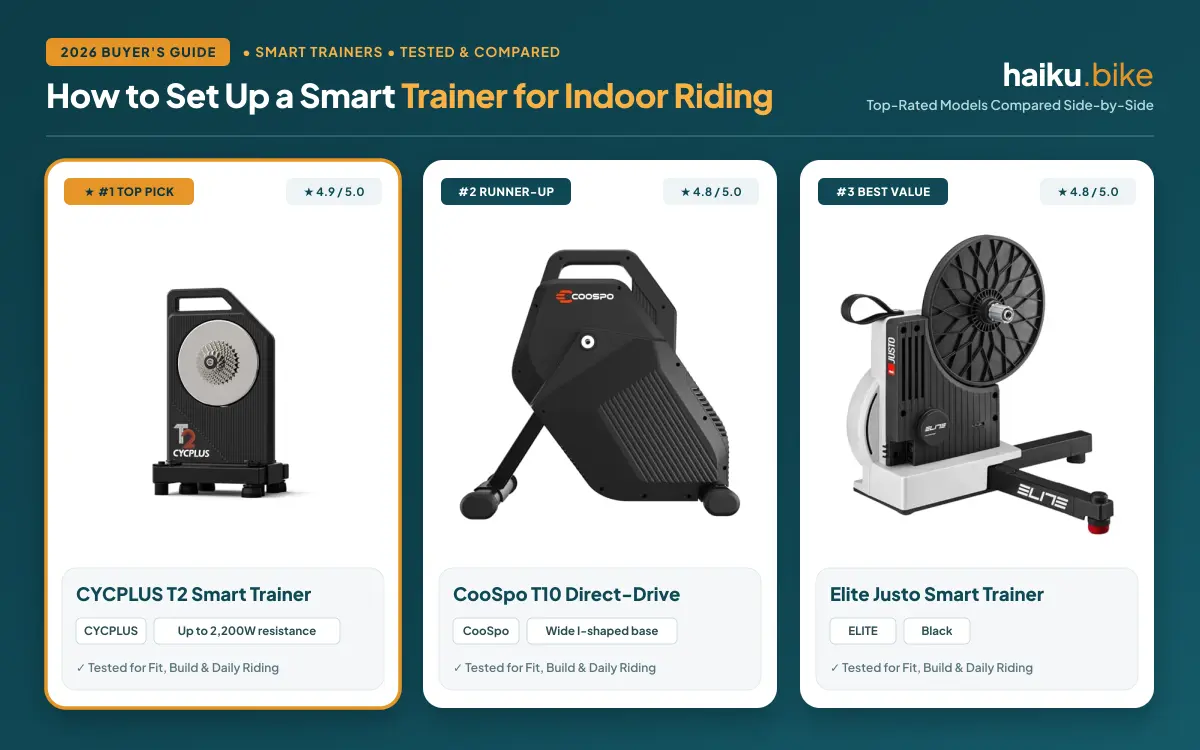
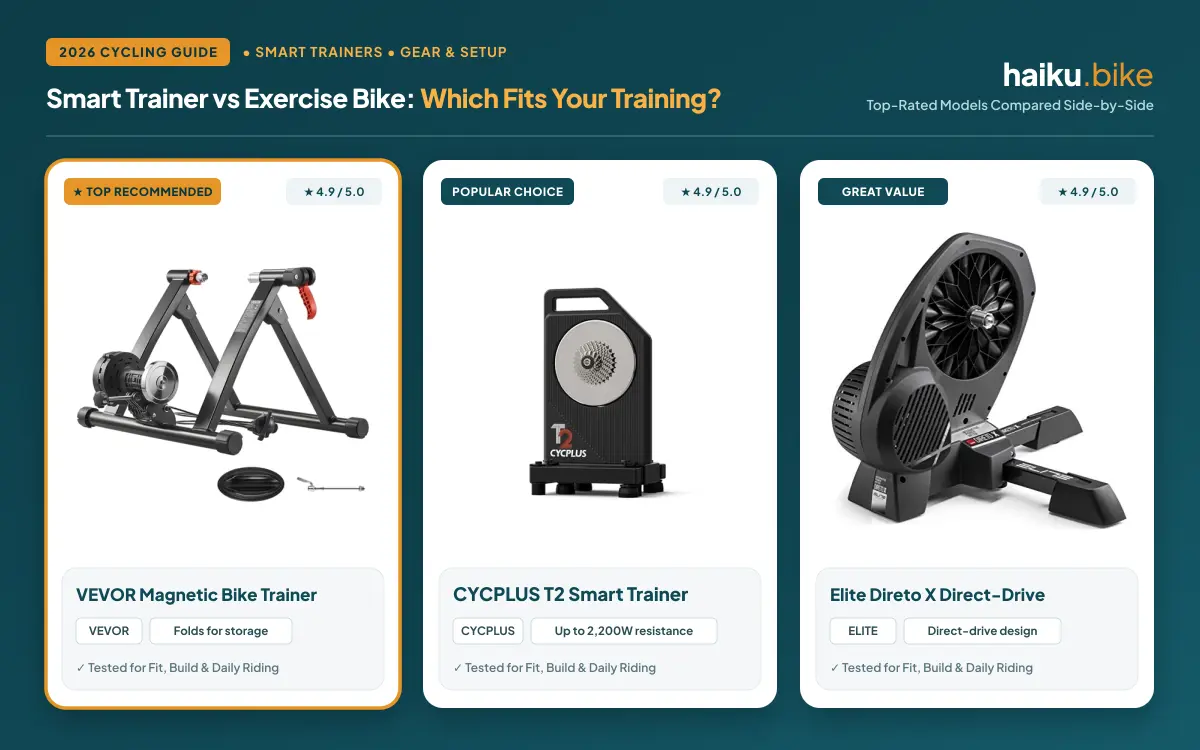
Check whether your chosen trainer includes a cassette, freehub body, or required adapters rather than assuming those parts come in the box. For broader indoor setup considerations, our smart trainer versus exercise bike comparison explains which format better suits different training habits.
Power Accuracy and Workout Capacity
Power accuracy matters when you use power targets to guide intervals or compare workout data over time. Elite Avanti and ThinkRider XXPRO list ±1% accuracy, COOSPO T10 and XPLOVA NOZA V list ±2%, and Garmin reports improved accuracy within 1% across a broader range of power outputs.
These are manufacturer-stated specifications, not a shared measurement result. Review how each trainer reports power and whether calibration or firmware steps apply. Elite Avanti lists automatic calibration, while COOSPO describes calibration through its supported COOSPO Tools app.
Maximum power describes capacity, not a required target for every rider. The listed figures range from 2,100W for Elite Avanti to 2,500W for ThinkRider XXPRO. Match capacity to your workouts, and weigh the figure alongside fit, resistance response, app compatibility, and setup needs.
Resistance Control and Climb Simulation
Climb simulation changes resistance in supported virtual routes, while ERG mode adjusts resistance to help maintain a selected power target. COOSPO T10 lists ERG mode and simulated gradients up to 15%, making its stated features relevant to structured sessions and virtual climbing.
ThinkRider XXPRO and Garmin TacX NEO 3M list simulated gradients up to 25%; Elite Avanti lists 18%, and XPLOVA NOZA V also lists 18%. A higher gradient figure does not by itself establish better ride feel or broader app support.
Check whether your preferred software sends route terrain or workout targets to the trainer. Garmin describes descent simulation and virtual road surfaces, while Wahoo emphasizes smooth resistance and a road-like feel. Choose the feature set that fits your typical rides rather than selecting by one number.
Connectivity and Training Apps
Connectivity determines how a trainer shares workout data and receives resistance commands from compatible devices and apps. COOSPO lists Bluetooth FTMS and ANT+ FE-C, Elite Avanti lists WiFi, Bluetooth, and ANT+, and ThinkRider XXPRO lists Bluetooth and ANT+.
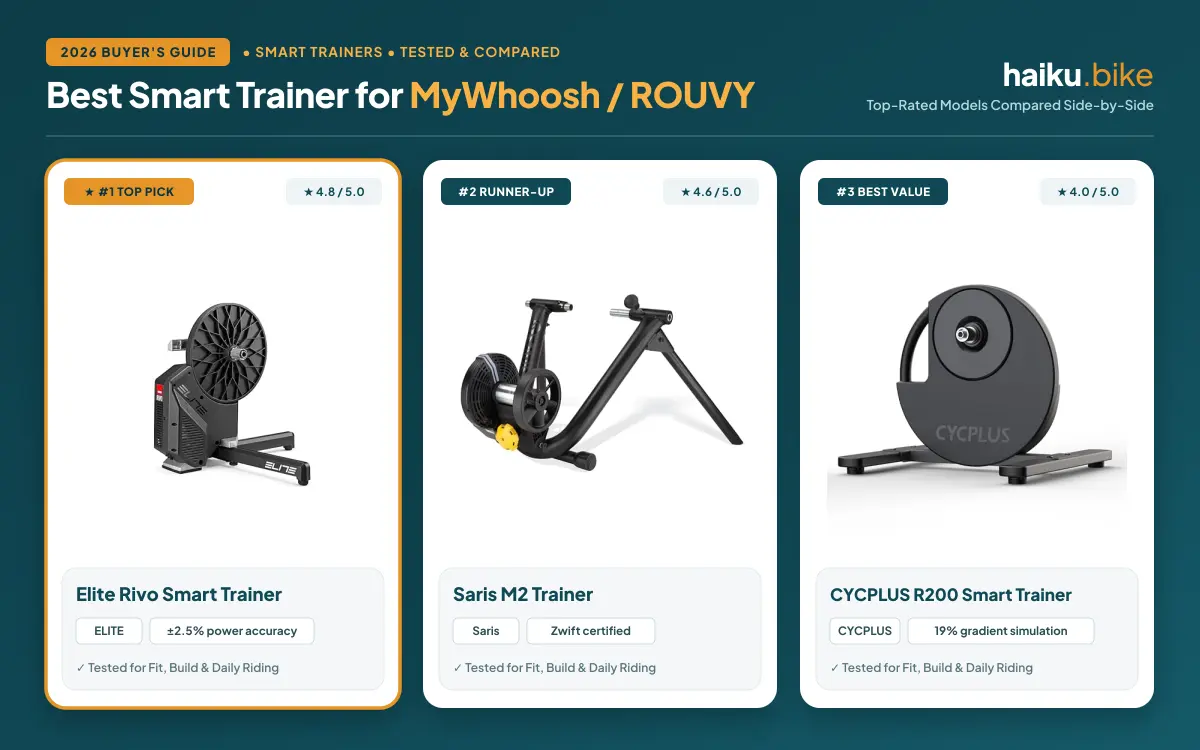
App compatibility does not guarantee that every feature works in every software setup. COOSPO names Zwift, TrainerRoad, Rouvy, Wahoo SYSTM, and MyWhoosh among compatible platforms, while Garmin describes integration with Zwift and TrainerRoad. Check current app and device requirements before choosing.
WiFi can support functions beyond basic trainer pairing. Elite Avanti lists automatic firmware updates over WiFi, while Wahoo KICKR CORE 2 describes faster pairing and automatic updates when connected to an active network. Riders comparing platform support can browse our smart trainer guide for MyWhoosh and ROUVY.
Noise, Vibration, and Movement
Noise and vibration matter when indoor riding takes place near other people or shared living spaces. COOSPO describes its belt-driven system as designed to help reduce operating noise, mechanical wear, and routine maintenance, but it does not publish a decibel figure.
XPLOVA NOZA V lists vibration suppression, with rubber feet and stabilizers described as absorbing vibration. Garmin TacX NEO 3M has built-in motion plates that riders can toggle on or off. Those features differ, so compare their purpose with your room and preferred ride feel.
Manufacturer descriptions do not promise a particular sound level in your home. Bike gearing, riding intensity, floor construction, and room placement can affect what nearby people hear. Follow the trainer’s placement and operating instructions, and consider the household environment before settling on a location.
Included Components and Maintenance
Included components affect installation, shifting, and ongoing device care. Elite Avanti lists axle adapters and an integrated storage compartment, but its cassette is not included. Wahoo KICKR CORE 2 comes with Zwift COG and Click, which may suit riders seeking that particular shifting setup.
COOSPO describes firmware updates and calibration through its supported app, while Elite lists automatic calibration and WiFi firmware updates. Check the current instructions for your selected trainer, because maintenance and connection procedures differ across products.
For a simpler indoor option, a basic trainer can suit riders who do not need automatic resistance or connected workout data. The basic bike trainer category covers that alternative, while this guide’s models focus on connected resistance and data features.
How We Chose
We score products with the Haiku Ride Score: core performance 30%, build and weather resistance 20%, ease of use 20%, compatibility and fit 15%, and value 15%. For smart trainers, compatibility and fit cover axle and drivetrain requirements, supported apps, connection methods, and included setup components.
We evaluate manufacturer specifications, compatibility information, and long-term owner feedback when available, then compare those details with indoor riders’ needs. We research and draft our guides with software tools, including AI, then run automated checks on product fit, sourcing, and our editorial rules. Our editor spot-checks guides rather than reading each one before publication. Read our how we review methodology.
Price and Value: What Each Budget Gets You
Budget
At the lower end of this guide’s range, riders can find direct-drive trainers with connected resistance, useful power capacity, and climbing features. ThinkRider XXPRO lists self-power generation, ±1% accuracy, and a 25% simulated gradient. Buyers may give up conveniences such as extensive network features or movement simulation, so axle fit and app support remain central.
Mid-Range
Mid-range options can add broader connectivity, automatic calibration, or a specific bundled control setup. Elite Avanti combines WiFi, Bluetooth, ANT+, automatic calibration, and stated ±1% accuracy, while Wahoo KICKR CORE 2 includes Zwift COG and Click. Riders should compare these conveniences with cassette needs and confirm that bundled features match their preferred apps.
Premium
Premium trainers can emphasize additional movement and ride-surface features alongside connected training. Garmin TacX NEO 3M offers toggled motion plates, simulated road surfaces, descent simulation, and climbs up to 25%. Those features may appeal to riders seeking immersion, but riders focused on basic structured sessions may not benefit enough to justify the added complexity.
Choosing Something Else
A basic indoor trainer may suit riders who want to pedal indoors without app-controlled resistance, virtual routes, or power-based workouts. A stationary exercise bike can also make sense for households that do not need to mount a road bike. Compare setup, workout control, and equipment needs in our smart trainer and exercise bike guide.
Final Thoughts
Riders who want multiple connection options and automatic calibration should consider Elite Avanti Direct Drive Smart Trainer. Its listed ±1% accuracy, WiFi, Bluetooth, and ANT+ support make it a flexible choice for connected training. Its cassette is not included, so account for drivetrain setup and confirm axle fit before ordering.
Riders seeking high stated power capacity and self-power generation can compare ThinkRider XXPRO Smart Bike Trainer,2500W,25%. Those who prefer automatic workout resistance can consider COOSPO T10 Belt-Driven Direct Drive Indoor Bike, which lists ERG mode and Bluetooth FTMS with ANT+ FE-C. Check supported apps and bike requirements for either option.
Virtual shifting and a bundled control setup make Wahoo Fitness KICKR CORE 2 ZWIFT COG and Click relevant to riders building around Zwift. Riders prioritizing motion plates and simulated road surfaces may prefer Garmin TacX NEO 3M Smart Trainer, though its extra ride features may be unnecessary for steady intervals.
Choose XPLOVA, NOZA V, ZWIFT Compatible, Smart Trainer if vibration suppression and a listed 18% climb simulation suit your priorities, while recognizing that its listed accuracy is ±2%. Skip smart trainers if you do not need connected resistance or workout data; browse our indoor training category for alternatives.
FAQs
What is a direct-drive smart trainer?
A direct-drive smart trainer replaces a bike’s rear wheel and connects the drivetrain to the trainer. Compatible apps can send resistance commands and receive workout data through supported connections. Before buying, check your bike’s axle, frame spacing, drivetrain, and cassette requirements against the manufacturer’s fit guidance, because standards and included adapters vary by model.
How do I check whether my bike fits a smart trainer?
Bike fit depends on the rear axle standard, frame spacing, drivetrain, and trainer connection requirements. Identify those details from your bike manufacturer, then compare them with the trainer’s current compatibility instructions. Elite Avanti lists quick-release and 142x12mm thru-axle adapters, but that information does not establish fit for every bike.
Do direct-drive smart trainers include a cassette?
Direct-drive smart trainers do not all include a cassette, so check the package details before ordering. Elite Avanti explicitly states that its cassette is not included. A cassette or compatible freehub may affect setup and drivetrain fit, so confirm what your bike needs and what the trainer package supplies.
Can these smart trainers connect to Zwift?
Several trainers in this guide describe Zwift compatibility or include Zwift-focused features, but supported functions vary. Wahoo KICKR CORE 2 includes Zwift COG and Click, while COOSPO lists Zwift among compatible platforms. Check current app requirements, device connections, and drivetrain setup to confirm that the functions you want will work together.
What does ERG mode do on a smart trainer?
ERG mode adjusts trainer resistance to help maintain a selected power target as cadence changes. COOSPO T10 lists automatic ERG mode control for structured workouts. App support and setup can affect how a workout controls resistance, so confirm that your training platform supports the trainer and the ERG functions you plan to use.
Do smart trainers need WiFi?
Smart trainers do not all require WiFi because Bluetooth and ANT+ can connect many trainers to compatible devices and apps. Elite Avanti lists WiFi, Bluetooth, and ANT+, while COOSPO lists Bluetooth FTMS and ANT+ FE-C. Check whether network access supports a feature you need, such as the automatic updates described by some manufacturers.
How should I maintain a direct-drive smart trainer?
Direct-drive smart trainer maintenance should follow the manufacturer’s instructions for cleaning, inspection, calibration, and firmware. COOSPO describes calibration and firmware updates through its supported app, while Elite Avanti lists automatic calibration and WiFi updates. Consult current product guidance when connection or resistance issues arise, because procedures differ by model.
Are direct-drive smart trainers quieter than wheel-on trainers?
Direct-drive smart trainers remove rear-tire contact with a roller, but the available product details do not establish a noise ranking across these models. COOSPO describes its belt-driven design as intended to help reduce operating noise, and XPLOVA lists vibration suppression. Room acoustics, flooring, gearing, and effort also affect household noise.
Write Your Review
No reviews yet. Be the first to share your experience!