

Home mechanics need a steady way to hold a bicycle while cleaning, adjusting components, or replacing parts. A repair stand lifts the bike to a workable height and frees both hands, but the clamp and base must suit your bicycle and workspace.
We compare 5 stands from BIKE HAND, CXWXC, Park Tool and more for different bike weights, clamp needs, and storage setups. Check your bicycle maker’s guidance before clamping, and follow the stand maker’s instructions when mounting or moving a bicycle. For other workshop essentials, browse our Tools & Maintenance guides.
At a Glance: Which One Fits You
- Best overall: CXWXC Bike Repair Stand 88lbs earns this spot because its stated 88 lb capacity and 25 to 45 mm tube range suit a broad range of home bikes.
- Best value: VEVOR Bike Repair Stand, 4-Leg Steel Bicycle earns this spot because its four-leg base, 80 lb stated capacity, and magnetic tray cover useful workshop basics.
- Best for compact storage: BikeHand Bike Repair Stand earns this spot because its aluminum alloy construction folds compactly and its height adjusts from 39 to 59 inches.
- Best for limiting front-wheel movement: CXWXC Bike Repair Stand -Shop Home Bicycle earns this spot because an included tightening rod helps restrain the front wheel during maintenance.

Pros
- Maker-rated for bikes up to 88 lb
- 360-degree rotating clamp
- Adjustable 44.45 to 66.45-inch height
- Magnetic tool tray compartment
- Folds for storage and travel
Cons
- Clamp limited to 25 to 45 mm tubes
- Weighs about 14.45 lb

Pros
- 55 lb maker-rated capacity
- 360-degree rotating head
- 39 to 59-inch height adjustment
- Foldable magnetic tool plate
- 5-year manufacturer warranty
Cons
- Plastic head and clamps
- Weighs about 15.4 lb
- No bike fit dimensions listed
Pros
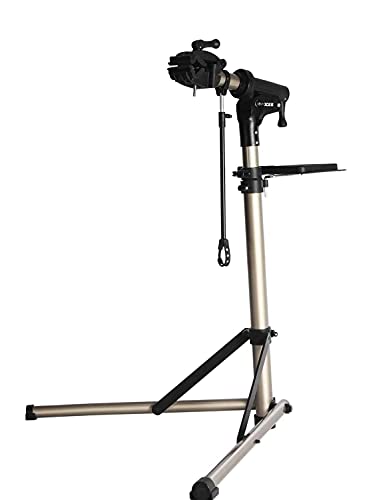
- 60 lb stated bike capacity
- 360-degree rotatable clamp
- Height-adjustable body
- Included front-wheel stabilizer rod
- Rubber feet on triangle base
Cons
- No stated height range
- No stated clamp compatibility range

Pros
- Designed for home mechanics
- 19.8 lb listed weight
- 57.1-inch listed height
- 14.6 by 14.6-inch listed footprint
Cons
- Clamp specifications not provided
- Bike compatibility details not provided
- Folded dimensions not provided

Pros
- 80 lb rated capacity
- 42.5 to 74.8 inch height range
- 360 degree rotating clamp
- Magnetic tool tray
- Folds for storage
Cons
- Remove bike before relocating stand
- Stand weighs 15.3 lb
- Must fully expand before clamping bike
Side-by-Side Comparison
| Stand | Stated capacity | Height range | Clamp details | Base and storage |
|---|---|---|---|---|
| CXWXC Bike Repair Stand 88lbs | 88 lb | 44.45 to 66.45 in | 360-degree rotation; 25 to 45 mm tubes | Three legs; folds for storage |
| CXWXC Bike Repair Stand -Shop Home Bicycle | 60 lb | Not listed | 360-degree rotating clamp | Triangle base; storage details not listed |
| BikeHand Bike Repair Stand | 55 lb | 39 to 59 in | 360-degree rotating head | Folds compactly |
| Park Tool PCS-10.3 – Deluxe Home Mechanic Repair | Not listed | Not listed | Not listed | Not listed |
| VEVOR Bike Repair Stand, 4-Leg Steel Bicycle | 80 lb | 42.5 to 74.8 in | 360-degree rotation; 25 to 40 mm opening range | Four legs; folds for storage |
Capacity and clamp compatibility are the first differences to compare, especially for heavier bikes or unusual tubing. Match the stand’s stated limit to your complete bike weight, then confirm that its clamp suits a bicycle-maker-approved attachment point.
Common Mistakes to Avoid
Choosing by load capacity alone can leave you with a clamp that does not fit your bike. CXWXC Bike Repair Stand 88lbs lists a 25 to 45 mm tube range, while VEVOR Bike Repair Stand, 4-Leg Steel Bicycle lists a 25 to 40 mm opening range. Check the tube or seatpost dimensions you plan to hold and consult your bicycle manual.
Clamping an unsuitable frame area can damage a bicycle, even when the stand supports its weight. Frame materials and shapes differ, so follow both makers’ instructions and do not assume every tube or seatpost is safe to grip.
Moving a loaded stand can make the setup unstable. VEVOR says to fully expand its stand before clamping the bike and to remove the bike before relocating the stand. Follow comparable instructions for any stand you choose.
Ignoring wheel movement can make drivetrain adjustments awkward. CXWXC Bike Repair Stand -Shop Home Bicycle includes a tightening rod to limit front-wheel swivel, while VEVOR includes a fixing rod that attaches at the handlebar or front wheel.
Best Bike Repair Stand for Home: Buying Guide
Load Capacity and Complete Bike Weight
Load capacity matters because a stand must support the complete bicycle, not only its frame. Include installed accessories, racks, and an e-bike battery when estimating total weight, then compare that figure with the maker’s stated limit.
CXWXC Bike Repair Stand 88lbs lists an 88 lb maximum, and VEVOR Bike Repair Stand, 4-Leg Steel Bicycle lists an 80 lb maximum. BikeHand Bike Repair Stand lists 55 lb, while CXWXC Bike Repair Stand -Shop Home Bicycle lists 60 lb. Park Tool PCS-10.3 – Deluxe Home Mechanic Repair has no capacity listed here, so check the maker’s current specifications before buying.
A capacity figure does not establish that every bike is suitable for a stand. The clamp, base, and approved attachment point also need to suit the bike, so consider those details together rather than selecting the largest limit automatically.
Clamp Fit and Safe Attachment
Clamp fit determines whether a stand can hold a compatible part of your bike securely. Check the clamp’s opening or supported tube range against the diameter of the intended attachment point, then follow your bicycle maker’s guidance.
CXWXC Bike Repair Stand 88lbs lists compatibility with tubes from 25 to 45 mm. VEVOR Bike Repair Stand, 4-Leg Steel Bicycle lists an opening range of 25 to 40 mm and a maximum opening size of 2 inches. Those figures describe clamp dimensions, not a guarantee that a particular frame is safe to clamp.
Some stands can grip a suitable frame tube or seatpost, but bicycle designs vary. CXWXC describes an ABS-plated clamp intended to help avoid scratches; careful placement and adherence to both makers’ instructions still matter.
Base Stability and Wheel Restraint
A stable base helps limit movement while you work on a raised bicycle. Consider the stand’s leg layout, floor footprint, and the room available to move around the bike in your workshop.
CXWXC Bike Repair Stand 88lbs uses a three-leg base with nonslip rubber bottoms, and CXWXC Bike Repair Stand -Shop Home Bicycle uses a triangle base with rubber feet. VEVOR Bike Repair Stand, 4-Leg Steel Bicycle has a four-leg base. These designs differ in layout, so leave enough clear floor space for the stand to open fully.
A wheel restraint can reduce unwanted front-end movement during adjustments. CXWXC Bike Repair Stand -Shop Home Bicycle includes an adjustable tightening rod, while VEVOR includes a fixing rod with handlebar or front-wheel attachment options. Check whether the restraint suits the repairs you commonly perform.
Working Height and Rotation
Height adjustment lets you position a bicycle for seated or standing work, which can affect comfort during longer maintenance sessions. Compare the listed range with your height, workspace, and the tasks you expect to handle.
VEVOR Bike Repair Stand, 4-Leg Steel Bicycle lists a range of 42.5 to 74.8 inches. CXWXC Bike Repair Stand 88lbs lists 44.45 to 66.45 inches, and BikeHand Bike Repair Stand lists 39 to 59 inches. CXWXC Bike Repair Stand -Shop Home Bicycle adjusts in height, but its range is not listed here.
A rotating clamp or head lets you reposition the bicycle for access to different components. BikeHand Bike Repair Stand and both CXWXC stands list 360-degree rotation. Check the maker’s instructions for locking and adjusting the head before loading your bike.
Storage, Construction, and Tool Trays
Folded size and construction matter when a home workshop shares space with a car, storage, or other equipment. Review how the stand folds and where you will keep it between repair sessions.
BikeHand Bike Repair Stand uses lightweight aluminum alloy and folds compactly. CXWXC Bike Repair Stand 88lbs describes lightweight alloy construction and compact storage, while VEVOR Bike Repair Stand, 4-Leg Steel Bicycle uses steel and folds for storage. Choose materials and a folding design that suit your handling and storage needs.
Tool trays keep small parts and supplies near the work area, but do not replace an organized tool kit. BikeHand Bike Repair Stand and CXWXC Bike Repair Stand 88lbs include magnetic tool trays, and VEVOR Bike Repair Stand, 4-Leg Steel Bicycle also lists one. Consider whether tray placement works in your available space.
Setup and Intended Repairs
Setup affects how easily a stand fits into your repair routine, especially if you fold it after use. Read the assembly and use instructions, and confirm that the stand can open fully on a level area with enough room around it.
Follow the maker’s directions for loading and balancing the bicycle, and remove the bike before moving a stand when instructed. VEVOR specifically advises fully expanding its stand before clamping and unloading it before relocation. A stand supports access to maintenance tasks, but it does not replace suitable tools or mechanical knowledge.
Riders planning cockpit maintenance may also find our road bike handlebar tape guide useful when choosing related workshop projects. For more equipment coverage, see the bike repair stands category.
How We Chose
We assess these stands with the Haiku Ride Score: core performance 30%, build and weather resistance 20%, ease of use 20%, compatibility and battery 15%, and value 15%. Battery is not a practical feature for manual repair stands, so our comparison emphasizes the criteria relevant to each stand’s stated design and intended use.
Our evaluation draws on manufacturer specifications, compatibility information, and long-term owner feedback when available. We research and draft our guides with software tools, including AI, then run automated checks on product fit, sourcing, and our editorial rules. Our editor spot-checks guides rather than reading each one before publication. Our how we review page explains our method.
Price and Value: What Each Budget Gets You
Budget
At the budget end, a stand can provide a folding frame, adjustable height, and a clamp for routine home maintenance. VEVOR Bike Repair Stand, 4-Leg Steel Bicycle adds a four-leg base, magnetic tool tray, and stated 80 lb capacity. Buyers should still confirm clamp fit and allow room to open the base; a lower-cost choice may not offer the same published detail or support information as a premium workshop stand.
Mid-Range
Mid-range stands can balance portability with practical workshop features, such as rotating heads, height adjustment, and tool storage. BikeHand Bike Repair Stand combines compact folding with a 55 lb stated capacity and includes a magnetic tool plate. CXWXC Bike Repair Stand -Shop Home Bicycle adds a front-wheel tightening rod and lists a 60 lb capacity. Buyers give up some load headroom compared with higher-capacity choices.
Premium
Premium options may suit riders seeking a more established home-mechanic stand, but a higher tier only helps when its details match your bicycle. Park Tool PCS-10.3 – Deluxe Home Mechanic Repair is presented as a deluxe home mechanic stand; its capacity, height range, and clamp details are not listed here. Confirm those specifications and support terms before choosing it over stands with more published fit information.
Choosing Something Else
A basic bicycle support can suit riders who mainly need storage or occasional access for light cleaning. It may not raise the bike to a comfortable working height or hold it in a repair-friendly position. Riders who rarely adjust components can avoid the space and setup demands of a repair stand, while regular home mechanics are more likely to value hands-free access.
Final Thoughts
Home mechanics with heavier bicycles should compare total bike weight and clamp fit against CXWXC Bike Repair Stand 88lbs. Its stated 88 lb capacity and 25 to 45 mm tube range offer useful guidance, though the bike maker must still approve the clamping point.
Riders who want a compact folding stand with a magnetic tool plate may prefer BikeHand Bike Repair Stand, provided its 55 lb limit suits their bicycle. CXWXC Bike Repair Stand -Shop Home Bicycle is worth considering when its included wheel-tightening rod addresses front-wheel movement, with its stated 60 lb capacity kept in mind.
Choose VEVOR Bike Repair Stand, 4-Leg Steel Bicycle if its four-leg base, broad listed height range, and magnetic tray fit your workspace. Park Tool PCS-10.3 – Deluxe Home Mechanic Repair may appeal to riders seeking a deluxe home mechanic stand, but verify its capacity and fit details first.
Riders who rarely perform hands-on maintenance, or whose bicycle cannot be clamped safely, should skip a repair stand and consider a simpler support. Browse our Tools & Maintenance coverage or compare another workshop essential in our Presta valve bike pump guide.
FAQs
How much weight should a home bike repair stand support?
A home bike repair stand should have a stated capacity above the complete weight of the bicycle you plan to clamp. Include installed accessories, racks, and an e-bike battery when calculating total weight. The stands here list capacities from 55 to 88 lb, while Park Tool PCS-10.3 – Deluxe Home Mechanic Repair has no capacity listed here, so check its current specifications.
Can a bike repair stand hold an e-bike?
A bike repair stand can hold an e-bike only when its capacity, clamp fit, and instructions suit that bicycle. CXWXC Bike Repair Stand 88lbs describes support for e-bikes and lists an 88 lb maximum. Compare your fully equipped bike’s weight with that limit and follow both manufacturers’ guidance before clamping.
Where should a repair stand clamp onto a bicycle?
A repair stand should clamp only at a point approved by the bicycle maker and compatible with the stand. Some designs can hold a suitable frame tube or seatpost, but materials and shapes differ. Check your bicycle manual and stand instructions before attaching the clamp, and do not assume every tube can safely be gripped.
Do bike repair stands fold for storage?
Several stands in this guide fold for storage, including BikeHand Bike Repair Stand, CXWXC Bike Repair Stand 88lbs, and VEVOR Bike Repair Stand, 4-Leg Steel Bicycle. Folding designs can suit a shared garage or small workshop. Compare the folded stand with your storage area and read setup instructions before choosing a model.
Does a rotating clamp make bike repairs easier?
A rotating clamp or head lets you reposition a bicycle to reach different components without repeatedly moving the stand. BikeHand Bike Repair Stand and both CXWXC stands list 360-degree rotation. Rotation does not replace secure clamping or careful balancing, so follow the maker’s directions when changing the bike’s position.
Which features matter most in Best Bike Repair Stand for Home in 2026?
The most important features in Best Bike Repair Stand for Home in 2026 are suitable load capacity, compatible clamp fit, and a stable base. After those, compare height adjustment, rotation, wheel restraint, and folded storage. The right choice depends on your bicycle and workspace, not on the largest capacity figure alone.
How can I keep a bike steady on a repair stand?
A bike is more secure on a repair stand when the base is fully opened, the clamp holds an approved point, and the bicycle is balanced as instructed. CXWXC Bike Repair Stand -Shop Home Bicycle includes a tightening rod, while VEVOR Bike Repair Stand, 4-Leg Steel Bicycle includes a fixing rod. Follow the stand maker’s setup directions.
What can I use instead of a bike repair stand?
A basic bicycle support can suit riders who mainly need storage or occasional access for light cleaning, though it may not hold a bike at a repair-friendly height. Regular adjusters may prefer a repair stand’s hands-free position. For other workshop essentials, browse our Tools & Maintenance guides for related equipment coverage.









Write Your Review
No reviews yet. Be the first to share your experience!