

Trail riders need a helmet that stays secure over rough ground, while gravity riders may want full-face coverage for bike-park laps. Fit, intended use, and U.S. certification matter more than a long feature list when choosing head protection.
Our Best Mountain Bike Helmet guide for November 2026 compares 5 options from brands including Schwinn, Favoto, Fly Racing and more. Follow the manufacturer’s instructions and local laws, and check each product listing for certification. Browse our Helmets & Safety category for related gear.
At a Glance: Which One Fits You
- Best overall: Giro Fixture MIPS II Bike Helmet earns this spot because it combines integrated MIPS with a one-handed Roc Loc Sport fit system.
- Best value: Schwinn Thrasher Helmet for Adults, Black suits recreational riders with its adjustable dial, removable visor, and washable padding.
- Best for trail convenience: Favoto Mountain Bike Helmet for Adult, Dark Green includes a magnetic buckle and rear glasses holder, though its listed size range is limited.
- Best for downhill: Fly Racing Rayce MTB/BMX Bicycle Helmet offers full-face coverage and lists ASTM F1952-15 for downhill riding.

Pros
- Integrated Mips system
- One-handed fit adjustment
- 7 cm adjustment range
- Reflective details
- Ponytail-compatible fit system
Cons
- Reflective details need an external light source
- Helmet weight not stated
- Safety certification not stated

Pros
- Dial-adjustable fit
- Removable, washable padding
- Removable visor
- Air vents
- CPSC-compliant
Cons
- Fits 58 to 62 cm head circumferences
- No MIPS feature listed

Pros
- One-hand magnetic buckle
- Rear glasses-holding cord
- 11.8 oz listed weight
- CPSC and CE standards listed
- Size L fits 23.2 to 24 inches
Cons
- Ventilation details not provided
- Fit-adjustment details not provided
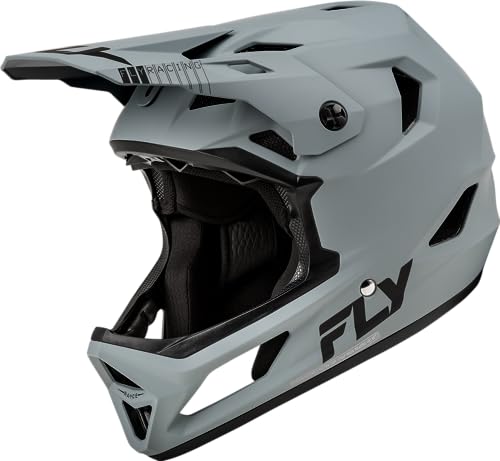
Pros
- Three listed safety certifications
- Intake and exhaust ventilation ports
- Removable, washable liner and cheek pads
- Adjustable visor with aluminum hardware
- Secure D-ring strap closure
Cons
- Only adult Large listed
- Approximate weight applies to size M

Pros
- Integrated MIPS slip plane
- One-handed fit adjustment
- 7 cm adjustment range
- Reflective details
- Ponytail-compatible fit system
Cons
- Fit range limited to 54 to 61 cm
- Safety certification not specified
Side-by-Side Comparison
| Helmet | Coverage and features | Fit or closure | Weight or ventilation | Standards listed |
|---|---|---|---|---|
| Giro Fixture MIPS II Bike Helmet | Open-face; integrated MIPS; reflective details | Roc Loc Sport; 54-61 cm | Weight not listed; airflow-focused construction | Not listed |
| Schwinn Thrasher Helmet for Adults, Black | Open-face; removable visor; washable padding | Adjustable dial; 58-62 cm | 20 air vents | U.S. CPSC bicycle helmet standard stated |
| Favoto Mountain Bike Helmet for Adult, Dark Green | Open-face; magnetic buckle; glasses holder | Size L; 59-61 cm | 335 g; 20 mm EPS foam | CPSC and CE stated by maker |
| Fly Racing Rayce MTB/BMX Bicycle Helmet | Full-face; adjustable visor; removable liner | D-ring strap | Approximately 930 g in size M; TFV airflow | ASTM F1952-15, CPSC 1203, CE EN1078 |
| Giro Fixture MIPS Bike Helmet – Matte Black/Grey | Open-face; integrated MIPS; reflective details | Roc Loc Sport; 54-61 cm | Weight not listed; airflow-focused construction | Not listed |
Coverage is the biggest difference: the Fly Racing Rayce is the only full-face option, while the other helmets are open-face designs. Gravity riders should compare full-face coverage and listed downhill standards; trail and recreational riders should prioritize a secure fit and the coverage their routes call for.
Common Mistakes to Avoid
Choosing a helmet by appearance without measuring your head can leave it loose or uncomfortable. Giro lists a 54-61 cm range, Schwinn lists 58-62 cm, and Favoto lists 59-61 cm for size L. Measure where the helmet sits and match that measurement to the exact size offered for your chosen configuration.
Buying open-face coverage for downhill riding may not match the protection you want for gravity use. The Fly Racing Rayce is full-face and lists ASTM F1952-15, CPSC 1203, and CE EN1078. Check the product listing for certification and intended use rather than assuming that every mountain bike helmet suits every discipline.
Assuming every helmet includes MIPS can lead to choosing a feature the maker does not identify. Giro lists integrated MIPS for both Fixture helmets, while the other product descriptions do not name that system. Look for a rotational impact system by name and do not infer one from a helmet’s shape or shell construction.
Convenience features do not replace correct adjustment. A magnetic buckle, glasses holder, visor, or reflective detail may suit your routine, but the helmet still needs to sit level and remain secure. Follow the maker’s fitting instructions, then check that the retention system and straps hold the helmet in its intended position.
Best Mountain Bike Helmet Buying Guide
Coverage and Riding Style
Coverage should match your riding style because open-face and full-face helmets protect different areas. The Fly Racing Rayce is the only full-face helmet here; Giro, Schwinn, and Favoto are not described as full-face designs. Consider your terrain, riding pace, and preferred facial coverage before comparing smaller features.
For trail and recreational riding, compare the helmet’s stated use with the routes you ride and the coverage you want. Gravity riders should look closely at full-face designs and relevant downhill standards. A visor may provide shade, but it does not change an open-face helmet into a full-face model.
U.S. Certification and Safety Features
Certification matters because bicycle helmets sold for U.S. use should meet CPSC 16 CFR Part 1203. Check the exact product listing for certification information instead of relying on a brand name, appearance, or general safety language. Verify that any listed standard matches the riding use you have in mind.
Schwinn states compliance with the U.S. CPSC bicycle helmet standard, while Favoto states CPSC and CE standards. Fly Racing lists CPSC 1203, ASTM F1952-15, and CE EN1078. The Giro descriptions identify MIPS but do not list a specific certification, so check the listing for the exact helmet configuration.
Rotational Impact Systems
MIPS is a rotational impact protection system that Giro identifies as integrated into both Fixture helmets. Giro says its system combines a Mips slip plane with the adjustable fit system to reduce rotational forces while supporting fit and comfort. Riders seeking a named rotational system should confirm it appears on their chosen helmet’s listing.
A rotational impact system does not replace correct sizing, appropriate coverage, or certification. Favoto describes dual-shell construction and EPS foam but does not identify MIPS. Compare named features rather than assuming that helmets with similar shapes or materials offer the same systems.
Fit Range and Retention
Fit range and retention determine whether you can secure a helmet comfortably. Giro lists a 54-61 cm universal fit and a Roc Loc Sport system with a 7 cm adjustment range. Schwinn lists 58-62 cm with an adjustable dial, while Favoto lists size L for 59-61 cm.
Measure your head where the helmet rests, then compare that measurement with the maker’s range for the exact size. Adjust the retention system and straps using the manufacturer’s directions; a helmet should sit level and feel secure. Favoto’s magnetic buckle and Fly Racing’s D-ring closure change fastening, not the need to check overall fit.
Ventilation, Weight, and Comfort
Ventilation and weight can affect comfort on long climbs and extended rides. Schwinn lists 20 air vents, Favoto lists a weight of 335 g, and Fly Racing lists approximately 930 g for size M alongside its TFV airflow system. Compare weights only when sizes and configurations match.
Giro describes its shell and foam construction as lightweight and designed to boost airflow, but does not list a weight. Treat maker descriptions and stated figures as separate kinds of information when comparing comfort. Schwinn and Fly Racing also describe removable, washable padding or liners, which may suit riders who want simpler cleaning.
Visibility, Visors, and Useful Extras
Secondary features matter when they address a need you have on the bike. Schwinn includes a removable visor, Fly Racing has an adjustable visor, and Giro lists reflective details that return light toward its source when illuminated. These features serve different purposes, so consider your routes and riding conditions.
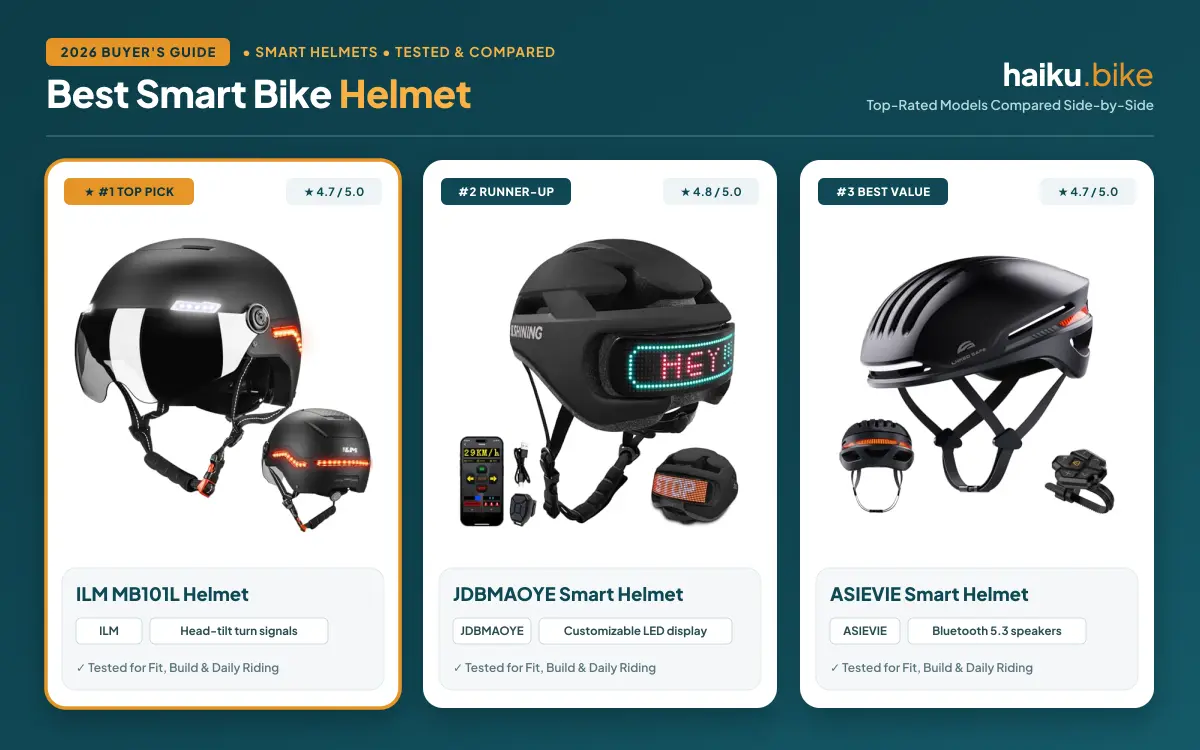
Favoto lists a rear elastic cord for holding glasses, which may help riders who remove sunglasses as light changes. Reflective details do not replace a suitable light for riding in low light. Riders comparing other visibility features can browse our bike helmet with turn signals guide.
How We Chose
We compare helmets using the Haiku Ride Score: core performance accounts for 30%, build and weather resistance for 20%, ease of use for 20%, compatibility and battery for 15%, and value for 15%. Battery is not relevant to these helmet designs, but we retain the same published scoring framework across guides.
Our evaluation considers manufacturer specifications, compatibility information, and long-term owner feedback where available. We research and draft our guides with software tools, including AI, then run automated checks on product fit, sourcing, and our editorial rules. Our editor spot-checks guides rather than reading each one before publication. See our how we review methodology for more about our editorial approach.
Price and Value: What Each Budget Gets You
Budget
Budget mountain bike helmets can cover core needs such as an adjustable fit, ventilation, and a removable visor, without adding many specialized features. The Schwinn Thrasher includes an adjustable dial, washable padding, and 20 listed air vents. Riders may give up a named rotational impact system or gravity-specific full-face coverage, so check fit and certification before choosing.
Mid-Range
Mid-range options may add convenience or named protection features while keeping an open-face design. The Favoto adds a magnetic buckle and glasses holder, while the Giro Fixture MIPS II combines integrated MIPS with a Roc Loc Sport fit system. Riders should compare sizing carefully and avoid treating convenience features as a substitute for appropriate coverage or verified certification.
Premium
Premium options in this group include a different coverage category rather than only extra open-face features. The Fly Racing Rayce offers full-face construction, an adjustable visor, a removable liner, and listed downhill and bicycle helmet standards. Its greater coverage and listed weight may not suit riders seeking a light, ventilated helmet for ordinary trail or recreational rides.
Choosing Something Else
A different bicycle helmet category may suit riders whose routes are mostly paved and who do not need mountain-bike-specific coverage or features. Compare any alternative by fit, intended use, and CPSC certification, rather than assuming a road or commuter design is interchangeable. Riders who want connected safety features can also browse our smart helmet category.
Final Thoughts
The Giro Fixture MIPS II Bike Helmet suits trail riders seeking an open-face helmet with integrated MIPS, reflective details, and an adjustable Roc Loc Sport system. Its listed universal fit range is 54-61 cm, so measure before ordering. The product description does not list a specific certification, making a listing check important.
The Schwinn Thrasher Helmet for Adults, Black is a practical fit for recreational riders who want a dial adjustment, removable visor, and washable padding. Riders outside its listed 58-62 cm range should choose another size or model. The Favoto Mountain Bike Helmet for Adult, Dark Green adds a magnetic buckle and glasses holder, but its listed size L range is 59-61 cm.
Gravity riders seeking full-face coverage can consider the Fly Racing Rayce MTB/BMX Bicycle Helmet, which lists ASTM F1952-15, CPSC 1203, and CE EN1078. The Giro Fixture MIPS Bike Helmet – Matte Black/Grey lists the same MIPS and Roc Loc Sport features as the other Fixture, with a different finish.
Skip these options if their listed size ranges do not fit, if you need a different coverage style, or if you cannot confirm certification for your intended use. Compare other models in our mountain bike helmet category, and choose by verified fit and intended use rather than color or extra features alone.
FAQs
What safety standard should a mountain bike helmet meet in the United States?
A mountain bike helmet for bicycle use in the United States should meet CPSC 16 CFR Part 1203. Check the product listing for certification because a helmet’s features and description do not confirm compliance by themselves. The Fly Racing Rayce also lists ASTM F1952-15 for downhill use; verify that its stated standards match your intended riding.
How should a mountain bike helmet fit?
A mountain bike helmet should sit level, feel secure, and fit within the maker’s stated head circumference range. Giro lists 54-61 cm for both Fixture helmets, Schwinn lists 58-62 cm, and Favoto lists 59-61 cm for size L. Measure your head and follow the maker’s instructions to adjust retention and straps before riding.
Which Best Mountain Bike Helmet options in 2026 include MIPS?
The Best Mountain Bike Helmet guide for 2026 includes two Giro helmets whose descriptions identify integrated MIPS: the Giro Fixture MIPS II Bike Helmet and Giro Fixture MIPS Bike Helmet – Matte Black/Grey. Giro describes the system as combining a Mips slip plane with its adjustable fit system. Check the exact product listing to confirm the feature.
Should I choose a full-face helmet for mountain biking?
A full-face helmet may suit riders who want greater facial coverage for gravity riding, bike-park laps, or downhill use. The Fly Racing Rayce is the full-face option here and lists ASTM F1952-15, CPSC 1203, and CE EN1078. Check its fit, certification, and intended use before choosing it over an open-face design.
Can I use a mountain bike helmet for night riding?
A mountain bike helmet can be worn for night riding if its fit and coverage suit your ride, but reflective details are not a substitute for a light. Giro lists reflective details that return light toward its source when illuminated. Use suitable lighting, follow local laws, and check whether your helmet offers the visibility features you want.
How should I clean and maintain a mountain bike helmet?
Clean and maintain a mountain bike helmet according to its manufacturer’s instructions. Schwinn and Fly Racing describe removable, washable padding or liners, while the other descriptions do not specify washable interior parts. Do not assume every component can be washed or use unapproved cleaners; check the maker’s guidance after an impact or visible damage.
Are visors and glasses holders necessary on mountain bike helmets?
Visors and glasses holders are convenience features, not requirements for every mountain bike rider. Schwinn lists a removable visor, Fly Racing lists an adjustable visor, and Favoto lists a rear elastic cord for glasses. Choose features that match your routine while prioritizing fit, coverage, and certification. Our Helmets & Safety category has related gear guides.
Write Your Review
No reviews yet. Be the first to share your experience!