Night commuters and riders navigating busy streets may want turn signals that remain visible without requiring a hand gesture. Smart helmets add directional lights and controls, but fit, safety certification, and dependable visibility still matter more than display effects.
We compare 6 helmets from Lumos, asteron, Shinmax and more for November 2026, covering stated standards, fit, signal controls, and charging details. Follow the manufacturer’s instructions and local laws, and check each helmet’s certification against CPSC 16 CFR Part 1203, the US bicycle helmet standard. For another helmet safety consideration, see our MIPS and non-MIPS helmet guide.
At a Glance: Which One Fits You
- Best overall: LUMDEER E-Bike Smart Helmet NTA 8776 Certified LED earns this spot because its stated features include front and rear signals, automatic brake lighting, and a photochromic visor.
- Best value: Shinmax Bike Helmet with Turn Signals earns this spot because it lists CPSC certification, a handlebar remote, and USB-C charging with up to 5 hours of runtime.
- Best for automatic signals: ILM Smart Adult Bike Helmet Front Side Rear LED earns this spot because its stated gravity sensor activates turn signals when the rider tilts their head.
- Best for customizable displays: Bike Helmet, Bicycle Helmet with Light earns this spot because its maker describes more than 100 customizable LED patterns and a stated fit range.
Pros
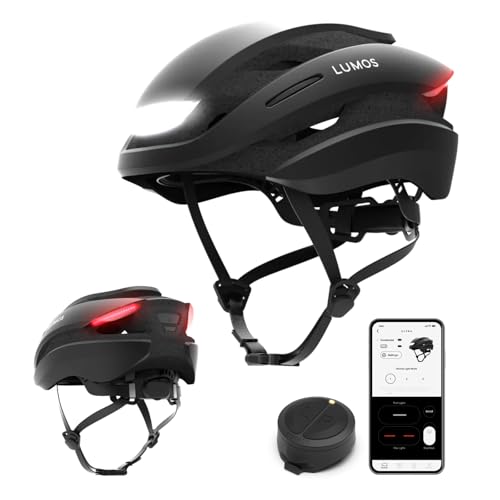
- Built-in front and rear lights
- Rear turn signals included
- USB-C rechargeable
- Up to 10-hour battery life
- CPSC-certified helmet
Cons
- No MIPS on this model
- Remote required for turn signals
- Who should skip it: riders needing MIPS

Pros
- Front and rear LED lights
- Handlebar-mounted turn-signal remote
- App-controlled lighting
- MIPS protection system
- Retractable face shield
Cons
- Listed weight: 1.96 lb
- Fit limited to 21.2 to 24 inches
- Who should skip it: riders prioritizing low helmet weight

Pros
- Front and rear turn signals
- Automatic brake light
- Photochromic magnetic visor
- Up to 12-hour light runtime
- 0.86 lb listed weight
Cons
- Only size L listed
- No specific water-resistance rating listed

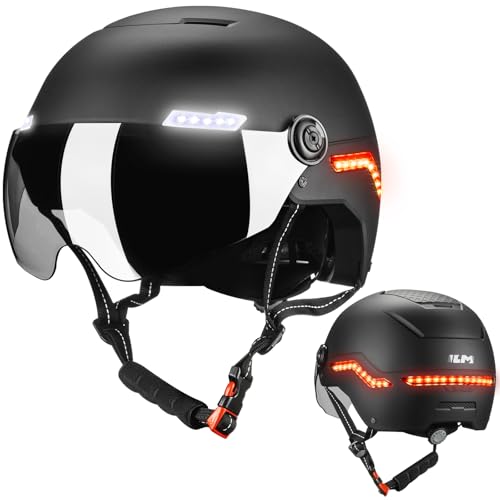
Pros
- CPSC, CE, and NTA 8776 certified
- Handlebar remote with audible signal
- Up to 5 hours of stated runtime
- Washable, removable pads
- Built-in visor
Cons
- Front light is not for road illumination
- Only M and L sizes listed
- Who should skip it: riders needing a headlight
Pros
- Front, side, and rear LED lights
- Head-tilt turn signals
- Brake warning light
- Adjustable dial fit system
- Detachable tinted visor
Cons
- Large-X-Large size only
- Battery life and charging details not provided
- Who should skip it: riders who need a smaller size

Pros
- Turn signals and STOP display
- Wireless mode-control remote
- More than 100 customizable patterns
- Adjustable dial-fit system
- Eight ventilation vents
Cons
- Battery runtime not specified
- No CPSC certification listed
- Fit range limited to 22.8 to 24 inches
Side-by-Side Comparison
| Product | Stated safety standards | Signals and controls | Fit information | Lighting and charging |
|---|---|---|---|---|
| Lumos Ultra Bike Helmet TÜV 360˚ Visibility LED | U.S. CPSC; TÜV-certified visibility | Rear signals; wireless Remote Lite | Not listed | USB-C; up to 10 hours |
| Lumos Ultra E-Bike Smart Helmet | U.S. CPSC; NTA 8776 | Turn signals; wireless handlebar remote | 54 cm to 61 cm | Not listed |
| LUMDEER E-Bike Smart Helmet NTA 8776 Certified LED | U.S. CPSC, NTA-8776, EU EN 1078 | Front and rear signals; remote; automatic brake light | Not listed | USB rechargeable; up to 12 hours |
| Shinmax Bike Helmet with Turn Signals | CPSC, CE, NTA 8776 | Signals, handlebar remote, sound alert | M: 54 cm to 58 cm; L: 57 cm to 61 cm | USB-C; up to 5 hours |
| ILM Smart Adult Bike Helmet Front Side Rear LED | NTA-8776, CPSC, CE, ASTM | Head-tilt signals; automatic brake light | Adjustable dial fit; range not listed | Not listed |
| Bike Helmet, Bicycle Helmet with Light | Not listed | Turn and stop signals; remote; app | 58 cm to 61 cm | Not listed |
Certification and fit information make the biggest buying difference because lights cannot establish impact protection or a secure fit. Lumos, LUMDEER, Shinmax, and ILM name standards, while asteron’s listed product details do not; confirm the current helmet marking and fit before riding.
Common Mistakes to Avoid
Buyers can mistake bright lights or elaborate displays for proof of bicycle helmet certification. Check the product information and helmet marking for CPSC 16 CFR Part 1203, and do not infer compliance from a brand’s other claims or from a signal feature.
Riders can also order a helmet before measuring head circumference and comparing it with the maker’s range. Shinmax lists separate M and L ranges, while asteron specifies 58 cm to 61 cm; Lumos Ultra E-Bike lists 54 cm to 61 cm. Confirm that the retention system can hold the helmet level and securely.
Signal controls can distract riders when their operation is unfamiliar or requires attention to a phone. Learn the remote or head-tilt controls in a safe setting, then choose clear directional patterns that traffic can interpret. Check which app functions need a phone before relying on them during a ride.
Helmet lights do not automatically replace dedicated bike lights or hand signals required by local rules. Check local requirements, keep electronic systems charged, and consider separate lights when your route needs additional illumination. A display with many effects may look distinctive but communicate direction less clearly than a simple signal.
Best Bike Helmet With Turn Signals: Buying Guide
CPSC Certification and Intended Use
CPSC certification matters because a bicycle helmet sold for US use should meet CPSC 16 CFR Part 1203, regardless of its electronic features. Check the maker’s current product information and the helmet’s marking instead of assuming that a listing’s general safety language confirms certification.
LUMDEER, Shinmax, ILM, and both Lumos products state relevant standards in their product information. The asteron product information does not name a bicycle helmet standard, so verify its status before purchase. For higher-speed e-bike use, also confirm the helmet’s stated intended use and follow the maker’s instructions.
Certification does not guarantee protection in every crash, and a signal system does not replace attentive riding. Riders comparing other helmet designs can review our road and commuter helmet category for conventional alternatives.
Fit, Sizing, and Adjustment
Fit determines whether a helmet can remain positioned securely during a ride, so measure your head and compare it with the maker’s stated range. Shinmax lists M at 54 cm to 58 cm and L at 57 cm to 61 cm; Lumos Ultra E-Bike lists 54 cm to 61 cm.
asteron lists a dial-fit range of 58 cm to 61 cm, while ILM describes an adjustable dial system without giving a circumference range. The LUMDEER product information also does not specify a head-size range. Ask the seller or maker when your measurement falls outside stated information.
After ordering, use the manufacturer’s adjustment instructions and confirm that the helmet sits level without shifting as you move your head. Check strap adjustment, padding, and retention controls. A helmet that cannot be secured comfortably is a poor choice, even when its lighting features suit your commute.
Signal Controls and Road Visibility
Signal controls matter because riders need to communicate direction without losing control or dividing attention. Lumos, LUMDEER, and Shinmax list handlebar remotes; ILM describes gravity-sensing signals activated by a head tilt. Consider which control style you can use consistently while keeping attention on traffic.
LUMDEER lists front and rear turn signals and automatic brake lighting, while Shinmax describes a remote signal with a sound alert. Lumos Ultra lists rear signals through its included Remote Lite. Confirm which lights indicate direction, whether a control is included, and whether the maker identifies functions that require a separate accessory.
asteron describes an app-controlled display with more than 100 patterns, turn signals, and a stop display. Customization may appeal to group riders, but simple, recognizable signals can be easier for nearby road users to interpret. Review signal placement and learn the selected settings before riding in traffic.
Battery Runtime and Charging
Runtime and charging determine how much planning helmet lights need between rides. Lumos lists up to 10 hours, LUMDEER lists up to 12 hours, and Shinmax lists up to 5 hours. These are maker-stated figures, and actual runtime may vary with lighting mode and use.
Lumos identifies USB-C charging for the Ultra, while Shinmax also lists USB-C and says a 2-hour charge provides up to 5 hours of runtime. LUMDEER describes USB-rechargeable lighting. ILM and asteron do not list runtime or charging details in the product information.
Check whether the stated runtime applies to the mode you plan to use, since a maximum figure may not describe every setting. Set a regular charging routine and carry separate lights when your ride depends on consistent illumination. Follow the maker’s charging and storage instructions to care for the electronics.
Weather, Ventilation, and Everyday Comfort
Ventilation and weather guidance affect comfort and help determine whether a smart helmet suits daily commuting. ILM and LUMDEER list 10 vents, while Shinmax and asteron list eight. Vent counts alone do not establish comfort, so consider fit, removable padding, and the maker’s care instructions.
LUMDEER describes its helmet as water-resistant but does not give a rating in the listed product details. The other products do not state water resistance in the information here. Do not assume electronic components are waterproof; check the current manufacturer guidance before riding in rain or cleaning the helmet.
Visors differ across these helmets. LUMDEER lists a removable magnetic photochromic visor, Shinmax and ILM list tinted visors, and Lumos Ultra E-Bike lists a retractable face shield. Check how a visor suits your light conditions and whether it can be adjusted or removed for your usual routes.
App Compatibility and Setup
App compatibility matters when useful functions depend on a phone rather than a remote. Lumos describes app controls for lighting and ride tracking, and asteron describes an app for customizing display patterns. Check the maker’s current app requirements and pairing instructions before choosing a helmet around phone-based features.
Remote functions vary, so confirm what works without opening an app. Shinmax says its remote is pre-paired, while LUMDEER lists remote-controlled turn signals and four lighting modes. asteron’s product information does not identify compatible phone operating systems, so verify compatibility if app customization is important.
Set up the helmet and practice its controls before riding in traffic, then keep the selected signals simple and consistent. Riders who prefer fewer electronic dependencies may choose a conventional helmet with separate lights. Our smart helmet feature guide offers more context on connected helmet functions.
How We Chose
We score smart helmets with the Haiku Ride Score: core performance counts for 30%, build and weather resistance for 20%, ease of use for 20%, compatibility and battery for 15%, and value for 15%. For this guide, we compare stated certifications, fit ranges, signal controls, visibility features, and charging information.
Our evaluation uses manufacturer specifications, compatibility information, and long-term owner feedback when available. We research and draft our guides with software tools, including AI, then run automated checks on product fit, sourcing, and our editorial rules. Our editor spot-checks guides rather than reading each one before publication. Our how we review page explains our editorial approach.
Price and Value: What Each Budget Gets You
Budget
Lower-cost smart helmets can add turn signals, a remote, or a customizable display without offering equally complete information on certification, runtime, or charging. The asteron helmet emphasizes a dial-fit range and a large selection of display patterns, but its product information does not name a safety standard or battery runtime. Choose this tier only after confirming safety details and fit.
Mid-Range
Mid-range options can combine named safety standards with useful lighting controls and a defined charging or fit feature. Shinmax lists CPSC and NTA 8776 standards, a remote, stated fit ranges, and up to 5 hours of runtime. LUMDEER adds front and rear signals, automatic brake lighting, and a photochromic visor, although its fit range is not listed.
Premium
Higher-tier smart helmets may add app features, MIPS on a listed model, a face shield, or longer stated lighting runtime. Lumos Ultra E-Bike includes MIPS and lists a 54 cm to 61 cm fit range, while Lumos Ultra lists USB-C charging and up to 10 hours. Check which features matter to your ride; advanced electronics do not remove the need to verify fit.
Choosing Something Else
A conventional helmet paired with separate front and rear bike lights can suit riders who want simpler controls or prefer replacing lights independently. That setup avoids relying on a helmet display for signaling, while still requiring proper light placement and charging. Check the helmet’s CPSC certification and follow local rules for lights and turn signals.
Final Thoughts
Commuters who want stated CPSC, NTA-8776, and EU EN 1078 standards, front and rear turn signals, automatic brake lighting, and a photochromic visor should consider the LUMDEER E-Bike Smart Helmet NTA 8776 Certified LED. Its listed runtime reaches up to 12 hours, but its head-size range is not specified, so confirm fit before ordering.
Riders who want a stated size range, remote signaling, and USB-C charging may prefer the Shinmax Bike Helmet with Turn Signals. The ILM Smart Adult Bike Helmet Front Side Rear LED suits riders interested in head-tilt signals and an automatic brake light, though its fit range and runtime are not listed.
For app customization, compare the Bike Helmet, Bicycle Helmet with Light with the Lumos options, and verify certification details before choosing asteron. The Lumos Ultra Bike Helmet TÜV 360˚ Visibility LED lists CPSC certification and up to 10 hours of battery life; the Lumos Ultra E-Bike Smart Helmet adds MIPS and a stated fit range. Both Lumos helmets have trade-offs, including features or fit information that differ by model.
Skip smart helmets if you cannot confirm a secure fit or the certification information you need, or if app and battery upkeep would complicate your rides. A certified conventional helmet with separate lights may suit those riders better. Browse our bike mirror guide for another commuting visibility option.
FAQs
Which Best Bike Helmet With Turn Signals options list CPSC certification?
Several Best Bike Helmet With Turn Signals options name CPSC certification, including the Lumos helmets, LUMDEER, Shinmax, and ILM. The asteron product information does not name a bicycle helmet standard. Check the current product information and helmet marking for CPSC 16 CFR Part 1203 before riding, since built-in lights do not establish certification.
How do I choose a helmet size for turn signals?
Choose a helmet size by measuring your head and comparing that measurement with the maker’s stated range and adjustment instructions. Shinmax lists M and L ranges, Lumos Ultra E-Bike lists 54 cm to 61 cm, and asteron lists 58 cm to 61 cm. Confirm secure retention before riding, and ask the maker when sizing information is missing.
How long do smart helmet lights last between charges?
Smart helmet light runtime varies by product and lighting mode. Lumos lists up to 10 hours, LUMDEER lists up to 12 hours, and Shinmax lists up to 5 hours; each figure comes from the maker’s product information. ILM and asteron do not list runtime. Check mode-specific details and charge before rides when lights matter.
Can I wear a turn-signal helmet in the rain?
A turn-signal helmet’s suitability for rain depends on manufacturer guidance for its electronics and care. LUMDEER describes its helmet as water-resistant but does not give a rating in its listed details. The other product information does not state water resistance. Check the current instructions before riding in wet conditions, and do not assume electronic components are waterproof.
Do turn-signal helmets replace bike lights or hand signals?
Turn-signal helmets add directional cues, but they do not automatically replace separate bike lights or hand signals. Visibility depends on lighting conditions, helmet position, and whether other road users can interpret the display. Follow local laws, learn the controls before riding in traffic, and use separate lights when your route needs additional illumination.
Do smart helmet signals work without a phone app?
Smart helmet signal functions vary, so check which controls work without a phone. Lumos, LUMDEER, and Shinmax list wireless remotes, while ILM describes head-tilt signal activation. asteron lists a remote and app customization, but does not identify phone operating system compatibility. Verify setup requirements before purchase if you want to avoid app dependence.
Is Best Bike Helmet With Turn Signals suitable for an e-bike?
A Best Bike Helmet With Turn Signals option may suit an e-bike when its certification, fit, and intended use match your needs. LUMDEER lists Class 3 e-bike compatibility, and several products name NTA 8776. Confirm the current manufacturer guidance and local requirements. Our Helmets and Safety category includes more helmet guidance.
Write Your Review
No reviews yet. Be the first to share your experience!