

Long rides can make bottle access inconvenient, while rough trails can send a loose pack shifting against your back. A cycling hydration pack keeps water and a drinking hose close, but reservoir size, fit, and carry style vary widely.
We compare 7 hydration packs in November 2026, from brands including MARCHWAY, N NEVO RHINO, MSR and more, for road, trail, and gear-light rides. Start with the water you need and the fit you can keep stable, then compare these packs with water bottles and cages if you prefer not to wear your hydration system.
At a Glance: Which One Fits You
- Best overall: Osprey Berm 4L Bike Hydration Pack, Black OS earns this spot because its 2.5-liter reservoir, bike-specific harness, and breathable backpanel suit gear-light rides.
- Best value: Lightweight Hydration Backpack earns this spot because it pairs a 2-liter bladder with an 8.5-ounce pack and adjustable straps.
- Best for off-road riding: MSR Low-Profile Race Hydration Pack earns this spot because its slim profile and self-sealing bite valve are designed for off-road use.
- Best for riders who prefer a waist pack: Osprey Seral 4L Biking Waist Pack with Hydraulics earns this spot because its 1.5-liter reservoir and bike-specific hipbelt move hydration off your back.

Pros
- Included 2.5L reservoir
- Magnetic bite valve attachment
- Ventilated, bike-specific harness
- Zip pocket with key clip
- Reflective details
Cons
- 2.5L reservoir capacity
- One-size fit
- Blinker light not included

Pros
- 2 L water bladder included
- 8.5 oz listed weight
- 12 L storage capacity
- Adjustable shoulder and chest straps
- Air-mesh back panel
Cons
- No bike-specific fit details listed
- No bladder cleaning instructions listed

Pros
- 2-liter bladder included
- Low-profile design
- Adjustable chest and shoulder straps
- Self-sealing bite valve
- Breathable back panel
Cons
- 2-liter reservoir capacity
- No listed cargo capacity

Pros
- Included 1.5-liter reservoir
- Magnetic bite valve attachment
- Bike-specific, airmesh wrap hipbelt
- Internal organization and key clip
- 0.74 lb pack weight without reservoir
Cons
- Limited 4L storage capacity
- Reservoir adds 0.28 lb

Pros
- 85oz Crux reservoir included
- Ventilated back panel and harness
- Reflective accents
- Zippered pocket for small essentials
- Reservoir on-off lever
Cons
- Only one zippered pocket listed
- No fit adjustment details provided

Pros
- Included 3L TPU bladder
- Adjustable waist and sternum straps
- Two external pockets
- MOLLE webbing for add-on pouches
- Wide bladder opening
Cons
- 2 lb pack weight
- No insulation details provided

Pros
- Included 2.0L bladder
- BPA-free PEVA bladder
- Adjustable chest straps
- Multiple storage pockets
- Water-resistant construction
Cons
- No water-resistance rating listed
- Fit range not specified
- Listed weight: 1.65 lb
Side-by-Side Comparison
| Product | Reservoir capacity | Carry style | Listed pack weight | Notable feature |
|---|---|---|---|---|
| Osprey Berm 4L Bike Hydration Pack, Black OS | 2.5 L | Backpack | 0.97 lb | Bike-specific harness |
| Lightweight Hydration Backpack | 2 L | Backpack | 8.5 oz | 12 L storage |
| MSR Low-Profile Race Hydration Pack | 2 L | Low-profile backpack | Not listed | Self-sealing bite valve |
| Osprey Seral 4L Biking Waist Pack with Hydraulics | 1.5 L | Waist pack | 0.74 lb without reservoir | Bike-specific hipbelt |
| CamelBak Classic Bike Hydration Pack | 85 oz | Backpack | Not listed | Air mesh back panel |
| MARCHWAY Tactical Molle Hydration Pack Backpack | 3 L | Backpack | Not listed | Wide reservoir opening |
| Criuage USA Patent Running Hydration Vest | 2 L | Vest | Not listed | Multiple pockets |
Reservoir capacity and carry style make the biggest practical differences. The MARCHWAY holds 3 liters, while the Seral holds 1.5 liters and carries it at the waist; choose according to route length, refill access, and how much back coverage you want.
Common Mistakes to Avoid
Choosing by reservoir capacity alone can leave you carrying unnecessary weight or running short between refill stops. Match the bladder to your usual route, water access, and any bottles you plan to bring, remembering that a full reservoir adds weight.
Ignoring adjustment and hose position can make a pack uncomfortable once you settle into your riding posture. Check shoulder, chest, and waist adjustments, then consider whether the drinking hose stays reachable without interfering with your movement.
Assuming all reservoirs clean and connect the same way can complicate routine care. MARCHWAY describes a wide opening and quick-release valve, while MSR specifies a twist shutoff on its bite valve; check care and replacement-part guidance for the system you choose.
Buying a general-purpose pack without considering cycling stability can cause unwanted movement on rough ground. The Osprey Berm and Seral specify bike-focused harness or hipbelt designs, while the N NEVO RHINO and Criuage designs emphasize adjustable fit for multiple activities.
Best Hydration Packs for Cycling: Buying Guide
Fit and Stability
Fit and stability matter because a pack that shifts can distract you and feel uncomfortable as the ride continues. Check whether shoulder, chest, and waist straps adjust, and look for a harness or hipbelt shaped for cycling if you ride rough trails.
The N NEVO RHINO lists shoulder adjustment from 19 to 34 inches and a chest strap adjustable vertically from 2.4 to 7.9 inches. MARCHWAY describes adjustable sternum, waist, and shoulder straps, while the Osprey Berm identifies a bike-specific harness.
Try a pack over your usual riding layers and check that the reservoir does not pull the harness out of position when full. A waist pack changes where the load sits; the Seral uses a bike-specific hipbelt, but its smaller reservoir may not suit riders seeking more water.
Reservoir Capacity and Drinking System
Reservoir capacity determines how much water you can carry before refilling, while the valve and hose affect access during a ride. Choose capacity according to route length and refill opportunities, rather than treating the largest bladder as the automatic choice.
The options range from the Seral’s 1.5-liter reservoir to MARCHWAY’s 3-liter bladder. CamelBak lists an 85-ounce Crux reservoir, and the Osprey Berm includes a 2.5-liter reservoir, so compare stated units and capacity before deciding.
Valve details help distinguish how each system handles drinking and shutoff. MSR specifies a bite valve that self-seals and has a twist on/off bar, while Osprey lists a magnetic bite-valve attachment on its bike packs. Check cleaning directions and hose routing alongside capacity.
Pack Style and Ventilation
Pack style determines where water and gear sit, and how much of your back the system covers. Backpacks distribute a load across the torso, vests use a closer chest fit, and waist packs carry hydration around the hips.
Back ventilation may matter during warm rides and sustained climbs. CamelBak describes an air mesh back panel, while the Osprey Berm specifies ridged foam with a center airflow channel. These designs promote airflow, but any back-worn pack still covers part of your back.
Riders who want less material against their back can compare the Seral’s lumbar format with conventional backpacks. A running-style vest may offer a closer fit, but check strap placement and hose access in your riding position. For another comfort choice, see our photochromic cycling glasses guide.
Storage and Ride Essentials
Storage layout matters when you want a phone, keys, tools, or snacks within reach. Compare pocket locations, closures, and stated capacity with the items you carry, since extra compartments can add bulk without helping every ride.
The Osprey Berm includes a zip pocket and key clip, while the Seral lists internal organization, a key clip, and accessory straps. CamelBak describes a zippered pocket for small items. These layouts suit essentials, not necessarily bulky layers or a full repair kit.
MARCHWAY adds two external pockets and MOLLE webbing for compatible attachments, while the N NEVO RHINO describes small compartments and mesh pouches. More storage can help on mixed-use outings, but riders carrying only water and a phone may prefer a simpler layout.
Weight, Materials, and Weather Resistance
Pack weight affects what you carry before adding water and gear, so compare figures that describe the same configuration. Osprey lists the Seral at 0.74 lb without its reservoir and the Berm at 0.97 lb; N NEVO RHINO lists 8.5 oz.
Material claims can indicate intended resistance to abrasion and moisture, but they do not promise a particular service life. MARCHWAY specifies 1000D water-repellent nylon, while N NEVO RHINO describes waterproof, tear-resistant, PU-coated nylon. Water-repellent fabric is not the same as a waterproof guarantee.
Consider whether your rides include dusty trails, rain, or mostly paved routes, and review care directions before buying. Do not assume a pack protects electronics unless its maker says so; use appropriate protection for valuables when weather exposure is possible.
Cleaning and Maintenance
Reservoir maintenance affects taste and readiness, so check how the bladder opens, disconnects, and dries before choosing a system. MARCHWAY specifies a wide opening for cleaning and a quick-release valve, features that can make filling and hose removal more convenient.
Follow the maker’s directions after each use, especially if the reservoir held anything besides water. Empty and dry the bladder and hose as instructed, and inspect the valve and connections for leaks before packing the system for another ride.
Replacement compatibility matters if you expect frequent use or want spare components. Product descriptions do not establish compatibility for every replacement hose or valve, so confirm the connection with the maker before ordering accessories.
How We Chose
We score each option with the Haiku Ride Score: core performance accounts for 30%, build and weather resistance for 20%, ease of use for 20%, compatibility and battery for 15%, and value for 15%. Battery does not apply directly to these non-electronic packs, so our category assessment focuses on relevant fit, hydration, and compatibility details.
We evaluate manufacturer specifications, compatibility information, and long-term owner feedback when available. We research and draft our guides with software tools, including AI, then run automated checks on product fit, sourcing, and our editorial rules. Our editor spot-checks guides rather than reading each one before publication. Our how we review page explains our editorial method.
Price and Value: What Each Budget Gets You
Budget
Budget hydration packs can provide a reservoir, basic storage, and adjustable straps without a cycling-specific harness. The Lightweight Hydration Backpack pairs a 2-liter bladder with a listed 8.5-ounce pack, while the Criuage vest includes a 2-liter bladder and multiple pockets. Riders gain accessible hydration and low carry weight, but may give up specialized bike fit or more developed reservoir features.
Mid-Range
Mid-range options can add cycling-focused stability, ventilation, or more capable reservoir hardware. The MSR Low-Profile Race Hydration Pack pairs a 2-liter bladder with a self-sealing valve, while the CamelBak Classic includes an 85-ounce reservoir and breathable back panel. Riders can gain practical ride features, but may not get the storage layout or off-the-back carry of a waist pack.
Premium
Premium designs in this group emphasize bike-specific fit, reservoir integration, and refined organization rather than simply adding water capacity. The Osprey Berm includes a 2.5-liter reservoir, magnetic bite-valve attachment, and bike-specific harness; the Seral offers lumbar carry and a bike-specific hipbelt. Riders gain purpose-built details, but pay for features that may not matter on short, paved rides.
Choosing Something Else
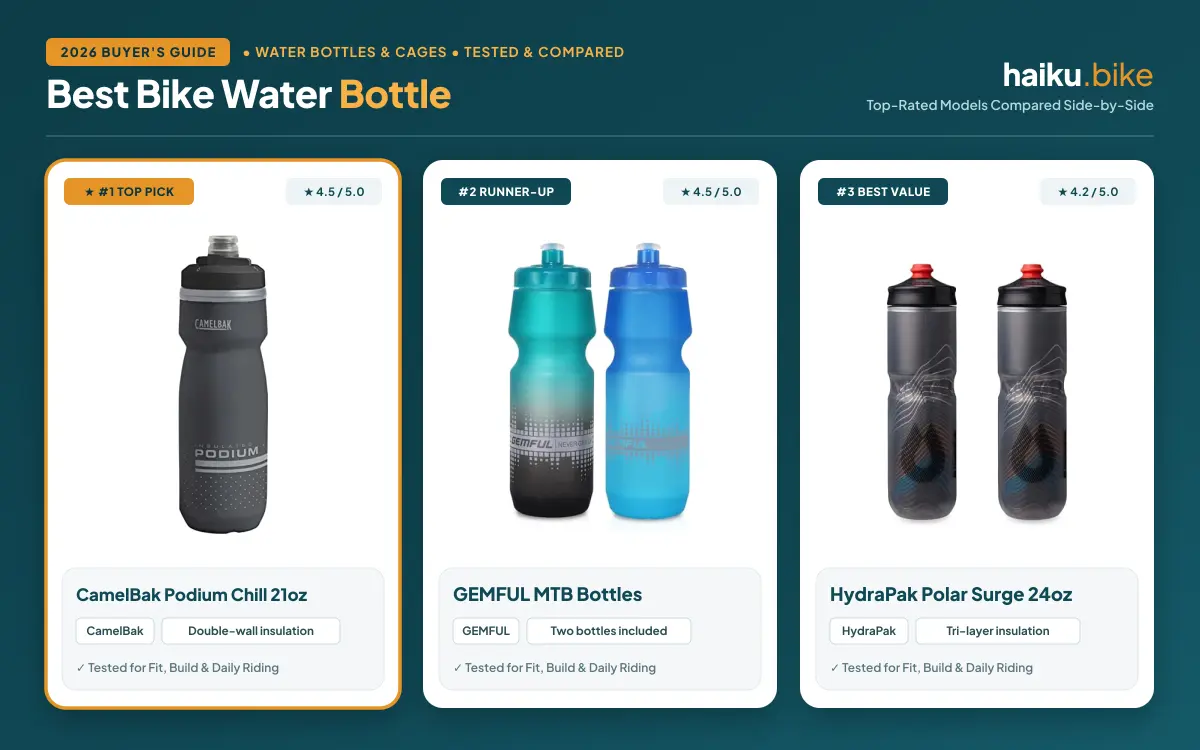
Bottles and cages suit riders who can reach their frame-mounted bottles comfortably and have refill access along the route. This setup avoids wearing a pack and makes refilling simple at stops, but carries less water than a large reservoir and depends on suitable frame mounts. Browse our Commuting & Comfort category for related ride accessories.
Final Thoughts
For a conventional cycling backpack with a bike-specific harness, the Osprey Berm 4L Bike Hydration Pack, Black OS brings a 2.5-liter reservoir, breathable backpanel, zip pocket, and reflective details. Its backpack format still covers more of your back than a waist pack, so riders seeking less coverage may prefer another carry style.
Riders prioritizing low listed pack weight can consider the Lightweight Hydration Backpack, while off-road riders may value the slim shape and shutoff valve of the MSR Low-Profile Race Hydration Pack. The MARCHWAY Tactical Molle Hydration Pack Backpack carries a 3-liter bladder and offers expandable attachment points, but its design is less specifically focused on cycling.
Choose the Osprey Seral 4L Biking Waist Pack with Hydraulics if you prefer lumbar carry and a bike-specific hipbelt. Riders wanting a ventilated backpack can compare the CamelBak Classic Bike Hydration Pack, while the Criuage USA Patent Running Hydration Vest offers a vest format and multiple pockets.
Skip hydration packs if you carry little water, dislike wearing gear, or can meet your needs with bottles and cages. Riders choosing other comfort accessories can also browse our cycling glasses category and photochromic cycling glasses guide.
FAQs
Which Best Hydration Packs for Cycling suit long rides?
Hydration packs for long cycling rides should match your water needs, refill access, and preferred fit. MARCHWAY includes a 3-liter bladder, while the Osprey Berm includes a 2.5-liter reservoir and bike-specific harness. A larger full reservoir adds carried weight, so consider route conditions and refill stops before choosing capacity.
Can I use a running hydration pack for cycling?
A running hydration pack can work for cycling when its straps stay secure and its hose remains reachable in your riding position. The Criuage vest and N NEVO RHINO backpack are described for cycling and other activities. Check adjustment, pocket access, and movement over your riding layers, especially before using a general-purpose pack on rough terrain.
Is a waist hydration pack better than a backpack?
A waist hydration pack carries water around your hips, while a backpack holds its load against your torso. The Osprey Seral pairs a bike-specific hipbelt with a 1.5-liter reservoir, making it a compact option for riders who prefer less back coverage. A backpack may suit riders who want more water or shoulder-strap storage.
How much water should a cycling hydration pack hold?
A cycling hydration pack should hold enough water for your route and available refill stops, not simply the largest bladder you can find. These options range from the Seral’s 1.5-liter reservoir to MARCHWAY’s 3-liter bladder, while CamelBak lists an 85-ounce reservoir. Consider ride length, conditions, and whether you also carry bottles.
How do I clean a cycling hydration bladder?
Clean a cycling hydration bladder according to its maker’s care directions because materials and valve systems differ. Empty it after use, then follow instructions for washing, drying, and storing the reservoir and hose. MARCHWAY describes a wide opening for cleaning, but that feature does not replace following the specific care guidance.
Are cycling hydration packs waterproof?
Cycling hydration packs are not all described as waterproof, and water-repellent fabric should not be treated as a waterproof guarantee. MARCHWAY calls its nylon water repellent, while N NEVO RHINO describes its fabric as waterproof and tear resistant. Check the maker’s guidance before carrying valuables or electronics in wet conditions.
Which cycling hydration packs have reflective details?
The CamelBak Classic and Osprey Berm list reflective details intended to enhance visibility in low light. Reflective accents do not replace bicycle lights, so use lights suited to your route and follow local requirements. For gear that adapts to changing light, see our photochromic cycling glasses guide.

Write Your Review
No reviews yet. Be the first to share your experience!