

Road and trail riders need sunglasses that control glare and help shield eyes from wind and debris without slipping under helmet straps. The right lens depends on your routes: polarized lenses reduce reflected glare, while photochromic lenses change tint as light conditions shift.
We compared 6 cycling sunglasses in November 2026, from brands including ROCKBROS, KAPVOE, Lamicall and more. Follow each maker’s care and fit instructions, and obey local rules while riding. For more on adaptive lenses, see our guide to photochromic lenses for cycling.
At a Glance: Which One Fits You
- Best overall: Lamicall Polarized Sports Sunglasses for Men combines adjustable nose pads, lens air holes and a listed weight of 24 g.
- Best value: QALLY Polarized Sports Sunglasses for Men Women pairs polarized lenses with non-slip nose pads and a hydrophobic coating.
- Best for changing light: ROCKBROS 22g Photochromic Sports Sunglasses Anti has a photochromic lens, frameless construction and a listed weight of 22 g.
- Best for adjustable coverage: Tifosi Optics Moab Sunglasses offers a photochromic lens, vented shield and adjustable ear pieces.

Pros
- Lightweight 0.85 oz frame
- Three-level adjustable nose pads
- Vented lenses
- Hard-shell case included
Cons
- Fit range not specified
- Listed option has gray lenses
- Impact rating not listed
Pros
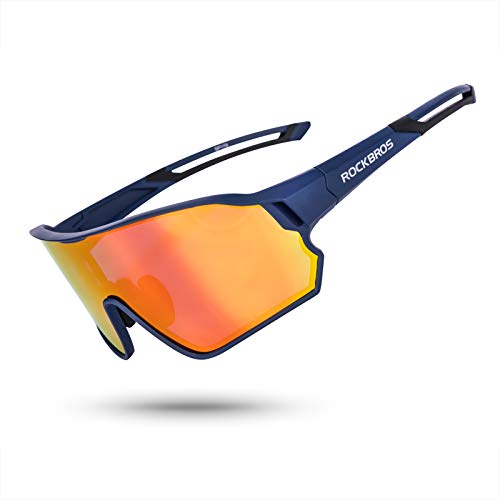
- Polarized lenses reduce glare
- UV400 UVA and UVB protection
- Curved lens design
- 25 g frame
- Adjustable rubber ear pads
Cons
- One size only
- No lens-change details provided

Pros
- Polarized lenses
- Wraparound design
- Hydrophobic lens coating
- Non-slip nose pads
Cons
- Medium size only listed
- No weight or fit measurements listed

Pros
- Photochromic lenses
- About 0.8 oz per pair
- Frameless peripheral view
- Adjustable rubber nose bridge
- UV400 coating
Cons
- No light transmission range listed
- No lens transition speed listed

Pros
- Photochromic clear-to-gray lenses
- UV-protective coating
- Flexible TR90 frame
- Soft rubber nose pads
- Lens air inlets
Cons
- Inner-frame lenses not included
- No stated fit measurements
Pros
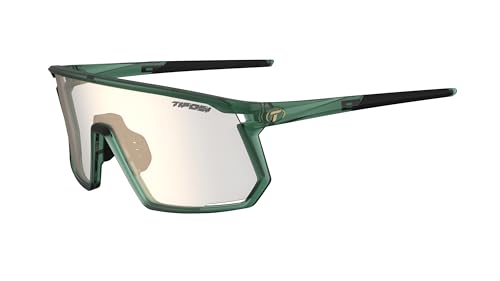
- Light-responsive lens
- Water- and sweat-shedding coating
- Vented shield
- 100% UVA/UVB protection
- 31-gram weight
Cons
- Medium-large fit may not suit every face
- No fit measurements provided
Side-by-Side Comparison
| Product | Lens type | Stated UV protection | Listed weight | Fit or airflow feature |
|---|---|---|---|---|
| Lamicall Polarized Sports Sunglasses for Men | TAC HD polarized | 99.9% UV400 | 24 g | Three-position nose pads; lens air holes |
| ROCKBROS Polarized Sports Sunglasses Anti-Glare HD | Polarized | UV400 | 25 g | Curved lens; adjustable rubber ear pads |
| QALLY Polarized Sports Sunglasses for Men Women | TAC HD polarized | 99% UV400 | Not listed | Non-slip nose pads; hydrophobic coating |
| ROCKBROS 22g Photochromic Sports Sunglasses Anti | Photochromic | UV400 | 22 g | Frameless; adjustable rubber nose bridge |
| KAPVOE Photochromic Cycling Sunglasses for Men | Photochromic | UV400 | Not listed | TR90 frame; lens air inlets; inner frame accessory |
| Tifosi Optics Moab Sunglasses | Clarion Gold Fototec photochromic; roughly 27% to 75% VLT | 100% UVA/UVB | 31 g | Vented shield; adjustable ear pieces |
Lens behavior makes the clearest distinction: polarized lenses target reflected glare, while photochromic lenses adjust tint as light changes. Choose by the conditions you ride in, then compare listed fit adjustments and airflow features; no lens type guarantees a comfortable fit on every face.
Common Mistakes to Avoid
Choosing by the word “polarized” or “photochromic” alone can lead to a poor match for your routes. Polarized lenses reduce reflected glare but do not adapt their tint, while photochromic lenses change tint but differ in their stated range. Match lens behavior to your usual light before weighing frame features.
Assuming every photochromic lens gets equally clear or dark can leave you with unsuitable eyewear. Tifosi lists roughly 27% to 75% visible light transmission (VLT) for its Fototec lens, while other listed models do not state a transmission range. Check the maker’s range when you ride in deep shade or changing conditions.
Ignoring helmet compatibility can cause pressure, slipping or interference from the temples and straps. Compare frame shape and adjustment features, then check the fit with your helmet when possible. Product descriptions cannot predict how a frame will sit on your face.
Assuming an included prescription insert comes with prescription lenses is another avoidable error. KAPVOE includes an inner frame accessory, and ROCKBROS Photochromic Sports Sunglasses includes a myopia frame, but the listed details do not say prescription lenses are included. Confirm package contents and prescription suitability with an optical provider.
Best Cycling Sunglasses: Buying Guide
Lens Type and Your Riding Conditions
Lens type matters because polarized and photochromic lenses address different light problems. Polarized lenses reduce reflected glare, which can help on bright, exposed routes. Photochromic lenses alter tint with changing light, which may suit rides that move between sun and shade.
Compare the maker’s description with your typical route, rather than treating either lens type as universally better. ROCKBROS 22g Photochromic Sports Sunglasses Anti and KAPVOE Photochromic Cycling Sunglasses for Men both describe lenses that change with light. The listed details do not give a transmission range for either, so do not assume their darkest and clearest states match.
Riders focused on reflected glare can compare the polarized options, including Lamicall Polarized Sports Sunglasses for Men and ROCKBROS Polarized Sports Sunglasses Anti-Glare HD. Riders moving through mixed light may prefer adaptive tint, but should check whether the published range suits dim sections. Our photochromic cycling glasses guide covers that lens category in more detail.
UV Claims and Lens Coverage
Stated UV protection and lens coverage help you assess how eyewear addresses sunlight, wind and airborne debris. A dark tint alone does not establish UV protection, so check the maker’s stated claim. The products here describe UV400 or UVA/UVB protection, but claims vary by model.
Wraparound and shield designs can extend coverage toward the sides, although face shape affects how well any frame sits. ROCKBROS Polarized Sports Sunglasses Anti-Glare HD describes a curved lens, while Tifosi Optics Moab Sunglasses has a tall, wraparound shield. Neither shape guarantees a close fit for every rider.
Compare coverage with your preferred field of view and helmet shape. A larger shield may suit riders seeking broad coverage, while a smaller frame may feel less intrusive on some faces. Confirm the maker’s current UV information if a particular protection claim is important to your decision.
Fit, Adjustability and Helmet Comfort
Fit determines whether sunglasses stay in place without uncomfortable pressure during a ride. Compare nose-pad adjustment, temple features, frame shape and stated weight. Also consider how the arms will sit beneath helmet straps, since frame and helmet shapes vary.
Lamicall Polarized Sports Sunglasses for Men lists a 24 g weight and three-position adjustable nose pads. ROCKBROS 22g Photochromic Sports Sunglasses Anti lists a 22 g weight and an adjustable rubber nose bridge. Those details help comparison, but they do not establish which pair will fit your face best.
Tifosi Optics Moab Sunglasses lists adjustable ear pieces and hydrophilic rubber contact points. ROCKBROS Polarized Sports Sunglasses Anti-Glare HD lists adjustable rubber ear pads. If you cannot check fit in person, review the maker’s fit information and return terms before ordering.
Ventilation and Fog Management
Ventilation encourages airflow around lenses and may help limit fogging as effort and weather change. Look for physical vents or a clear airflow description, but treat anti-fog language as a design feature, not a guarantee. Fogging also depends on fit, humidity, temperature and riding effort.
KAPVOE Photochromic Cycling Sunglasses for Men describes lens air inlets, while Lamicall Polarized Sports Sunglasses for Men lists air holes on both sides of the lens. Tifosi Optics Moab Sunglasses has a vented shield. These details give you concrete features to compare across styles.
A close fit may limit airflow, while a looser fit can admit more wind and debris. Riders who climb slowly or ride in humid conditions may value ventilation, but should also weigh coverage and stability. Compare the frame’s shape with the way you use sunglasses on a ride.
Prescription Needs and Included Accessories
Prescription compatibility depends on whether a frame accepts an insert and whether prescription lenses are included. Check the maker’s stated limits, accessory details and fit before choosing eyewear for vision correction. An accessory frame by itself does not confirm compatibility with your prescription.
ROCKBROS Photochromic Sports Sunglasses includes a myopia frame, but prescription lenses are not included. KAPVOE Photochromic Cycling Sunglasses for Men includes an inner frame accessory, and its listing says lenses are not included. Ask an optical provider whether an insert and prescription suit your needs before relying on either setup.
Included cases, cloths and other accessories can help with storage and care, but should not outweigh lens choice or fit. Lamicall lists a hard case, cleaning cloth and pouch. Check package contents when an accessory matters to you, and follow the maker’s care directions.
Lens Care and Durability
Lens materials and care practices affect how well sunglasses hold up to routine use. Several products describe polycarbonate or TAC lenses and impact or scratch resistance, but those descriptions do not mean lenses are immune to damage. Review the maker’s care instructions before cleaning coated lenses.
Store sunglasses in a case when they are not in use, and clean them with an appropriate cloth. Avoid wiping grit across a dry lens because debris can scratch its surface. A scratch-resistant claim is not a substitute for careful handling.
Coatings also differ. QALLY Polarized Sports Sunglasses for Men Women describes a hydrophobic coating, while Tifosi Optics Moab Sunglasses describes a coating intended to shed water, sweat and road spray. Consider these features alongside the lens type, but do not treat a coating as a replacement for cleaning.
How We Chose
We score each option with the Haiku Ride Score: core performance counts for 30%, build and weather resistance for 20%, ease of use for 20%, compatibility and fit for 15%, and value for 15%. For cycling sunglasses, compatibility and fit means assessing frame shape, stated adjustments, coverage and listed accessories.
We compare manufacturer specifications, compatibility information and long-term owner feedback where available. We research and draft our guides with software tools, including AI, then run automated checks on product fit, sourcing, and our editorial rules. Our editor spot-checks guides rather than reading each one before publication. Our how we review page explains our editorial method.
Price and Value: What Each Budget Gets You
Budget
Lower-cost cycling sunglasses can provide core features such as UV claims, polarized lenses and basic non-slip contact points. QALLY Polarized Sports Sunglasses for Men Women lists polarized lenses, non-slip nose pads and a hydrophobic coating. Buyers may give up a published weight, detailed fit adjustments or a stated photochromic transmission range, so compare the features that affect your routes first.
Mid-Range
Options in the middle of this selection add more specific fit, airflow or lens details. Lamicall Polarized Sports Sunglasses for Men lists three-position nose pads, air holes and a weight, while ROCKBROS Photochromic Sports Sunglasses Anti lists a lightweight design and adjustable nose bridge. These details can make comparisons easier, but do not remove the need to check face and helmet fit.
Premium
Higher-tier cycling sunglasses may pair adaptive lens behavior with more specified coverage and adjustments. Tifosi Optics Moab Sunglasses lists a Clarion Gold Fototec lens with roughly 27% to 75% VLT, a vented shield and adjustable ear pieces. Riders get a more detailed feature set, but should still decide whether the lens range, frame size and fit suit their routes.
Choosing Something Else
Ordinary sunglasses may suit casual rides when they fit securely and clearly state UV protection. They may provide less wraparound coverage than cycling-specific shields, which can matter on faster roads or debris-prone trails. Riders who do not need extra coverage can compare their everyday eyewear with cycling frames before buying another pair.
Final Thoughts
Riders who want polarized lenses, adjustable nose pads and airflow features should consider Lamicall Polarized Sports Sunglasses for Men. Its listed weight and fit adjustments make specifications easy to compare, but polarized lenses do not change tint as conditions shift. Riders who prioritize adapting to changing light should consider a photochromic option instead.
For changing light, ROCKBROS 22g Photochromic Sports Sunglasses Anti lists an adjustable nose bridge and a 22 g weight. KAPVOE Photochromic Cycling Sunglasses for Men adds a TR90 frame, lens air inlets and an inner frame accessory. Neither listing provides a transmission range, so riders who need precise light-range information should compare another lens.
Riders seeking polarized glare reduction can compare ROCKBROS Polarized Sports Sunglasses Anti-Glare HD and QALLY Polarized Sports Sunglasses for Men Women. Riders prioritizing a specified adaptive range and adjustable ear pieces may prefer Tifosi Optics Moab Sunglasses, though its fit and lens behavior still need to suit the individual. See our cycling glasses category for other styles.
Skip cycling-specific sunglasses if your everyday eyewear fits securely, states UV protection and provides enough coverage for your rides. Riders who need prescription lenses should confirm insert suitability with an optical provider before choosing. If adaptive lenses are your priority, compare details in our photochromic cycling glasses guide.
FAQs
Do cycling sunglasses need UV protection?
Cycling sunglasses should state their UV protection because lens darkness alone does not show how much ultraviolet light a lens blocks. The models in this guide state UV400 or UVA/UVB protection, with claims that vary by product. Check the maker’s current specifications, then choose coverage and fit that suit your usual routes and exposure to sunlight.
Are polarized or photochromic cycling sunglasses better?
Polarized cycling sunglasses reduce reflected glare, while photochromic cycling sunglasses change tint with light. Polarized lenses may suit riders focused on glare on bright, exposed roads; adaptive lenses may suit routes with alternating sun and shade. Compare any stated transmission range, because photochromic lenses can differ in how light or dark they become.
Can photochromic cycling sunglasses replace clear lenses?
Photochromic cycling sunglasses can adjust tint as light changes, but their clearest and darkest states vary by lens. Tifosi Optics Moab Sunglasses lists roughly 27% to 75% VLT, while some models here do not list a range. Compare the maker’s stated information with your routes, especially if you ride in very dim conditions.
How should cycling sunglasses fit under a helmet?
Cycling sunglasses should sit securely without uncomfortable temple pressure or interference with helmet straps. Adjustable nose pads or ear pieces can help position contact points, but fit depends on face and helmet shape. When possible, check the frame with your helmet before a long ride, and follow both makers’ fit guidance.
Can I use prescription lenses with cycling sunglasses?
Prescription use with cycling sunglasses depends on whether the frame accepts an insert and whether prescription lenses are included. ROCKBROS Photochromic Sports Sunglasses includes a myopia frame, but its prescription lenses are separate. Ask an optical provider whether an insert suits your prescription and fits correctly before relying on it while riding.
How can I reduce fogging in cycling sunglasses?
Vented cycling sunglasses encourage airflow and may help reduce fogging during climbs or stops. KAPVOE Photochromic Cycling Sunglasses for Men describes lens air inlets, while Lamicall Polarized Sports Sunglasses for Men lists lens air holes. Fogging still depends on effort, weather and fit, so vents cannot ensure clear lenses in every condition.
How do I choose cycling sunglasses for changing light?
Cycling sunglasses for changing light should have a photochromic lens and, ideally, a stated transmission range. Tifosi Optics Moab Sunglasses lists roughly 27% to 75% VLT, while several other models do not state a range. Compare the available information with your routes, and consider separate clear lenses if you regularly ride in very low light.
Write Your Review
No reviews yet. Be the first to share your experience!