
Riders who drive to trailheads or group rides can use a roof bike rack to carry a bicycle above the vehicle while keeping the hitch and rear hatch available. The right carrier depends on your crossbars, bike dimensions, frame contact preferences, and ability to lift a bicycle overhead.
We compare 9 models from brands including Swagman, Yakima, Thule and more, with guide details current for November 2026. Follow the carrier and vehicle manufacturers’ instructions and local laws, and compare other vehicle-mounted options in our car bike racks guide.
At a Glance: Which One Fits You
- Best overall: Thule ProRide XT Roof Bike Rack earns this spot because its frame holder and wheel tray help position the bike while a dial controls clamping force.
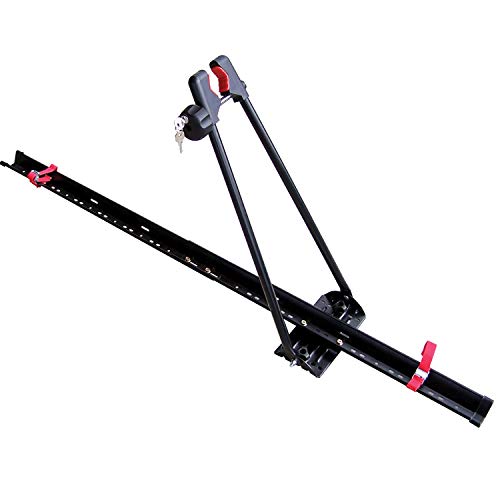
- Best value: Swagman Upright Roof Mount Bike Rack earns this spot because it carries a bike without front-wheel removal and has a lockable downtube clamp.
- Best for frame-free carrying: Thule UpRide Roof Bike Rack earns this spot because its wheel-retention design avoids contact with the bike frame.
- Best for flexible bar spacing: GATHERSKY Roof Bike Rack earns this spot because its recommended crossbar-center spacing covers a broad stated range.
Pros
- No wheel removal
- 35 lb capacity
- Fits tires up to 2.5 inches
- Lockable downtube clamp
- Tool-free assembly
Cons
- Not suited to heavier e-bikes
- Downtubes over 2 inches may not fit
- Bike wheelbase limited to 49 inches

Pros
- No front wheel removal
- No frame contact
- Folding arms
- T-bolts and U-bolts included
- One-hand release
Cons
- Carries one bike only
- Bike limit of 50 lb
- Rack weighs about 23.2 lb

Pros
- Wheel-gripping design avoids frame contact
- Ratchet locks on front and rear wheels
- Single-hand lock release
- Fits 18- to 29-inch wheels
- Two-bike capacity
Cons
- Tire width limited to 3.1 inches
- Requires 29.76-inch crossbar spacing
- Two bikes need staggered positioning

Pros
- No frame contact
- Works with carbon frames
- Fits most 20 to 29-inch bikes
- Switches between vehicle sides
- Fits most factory racks
Cons
- Locks sold separately
- Fat Bike Adapter sold separately
- 44 lb load capacity
Pros
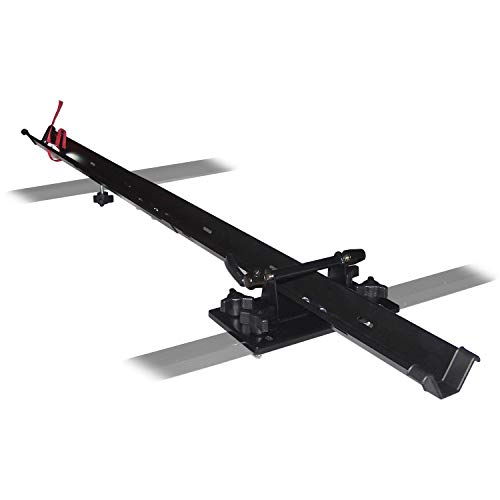
- Tool-free assembly
- Carries one bike
- 9mm quick-release fork mount
- Fits square, round, and oval bars
Cons
- Fits 9mm quick-release bikes only
- Carries one bike
- Requires a roof rack

Pros
- No frame contact
- One-hand, tool-free locking handle
- Fits tires up to 3 inches wide
- Fits square, aero, and factory crossbars
Cons
- Not compatible with round crossbars
- Does not fit bikes with fenders
- Not compatible with 29-inch wheels

Pros
- Adjustable frame-holding pressure
- Soft, adaptable claw pads
- Automatic bike positioning
- Quick-release wheel straps
- Switches sides of vehicle
Cons
- One-bike capacity
- 44 lb load limit
- Locks sold separately

Pros
- Carries one bike up to 35 lb
- Frame-free bike hold
- Aluminum alloy and Q235 steel
- Mounting accessories included
- 6.83 lb rack weight
Cons
- Exact tire-size range not listed
- Vehicle roof-bar fit details not listed
- No owner reviews provided
Pros
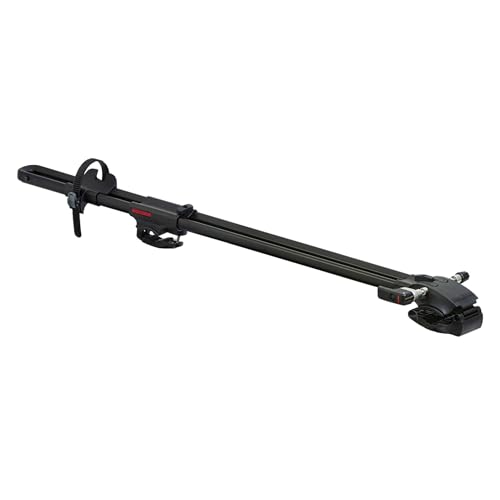
- One-bike capacity
- Fork-mount design
- Roof-rack use
- Limited lifetime warranty listed
Cons
- Description details conflict with bike-rack title
- Crossbar compatibility unclear
- Fork-mount fit details missing
Side-by-Side Comparison
| Product | Bike contact | Capacity | Bike fit | Crossbar fit |
|---|---|---|---|---|
| Thule ProRide XT Roof Bike Rack | Frame holder and wheel tray | One bike; limit not listed | Not listed | Thule systems and most factory racks |
| VEVOR Roof Bike Rack 35 lbs 1 Bike Carrier Upright | No frame contact | One bike; limit not listed | Most road and mountain bikes; tire range not listed | Not listed |
| TOOENJOY Rooftop Bike Rack for Car SUV | Wheel-holding arms | One bike, 44 lb | 18 to 29-inch wheels; tires up to 3.1 inches | 29.76-inch spacing |
| GATHERSKY Roof Bike Rack | Wheel-holding arms | One bike, up to 50 lb | Up to 29-inch wheels; tires up to 3.1 inches | 19.68 to 47.25-inch recommended spacing |
| Thule UpRide Roof Bike Rack | No frame contact | One bike; limit not listed | 20 to 29-inch wheels; tires up to 3 inches | Not listed |
| Swagman Standard Fork Mount Roof Bike Rack | Fork mount; front wheel removed | One bike; limit not listed | 9mm quick-release fork | Square, round, and oval bars up to 3 inches wide |
| Yakima, Forklift Fork Mount Bike Carrier for Roof | Fork mount | One bike | Not listed | Yakima round, square, factory, and aerodynamic bars |
| Swagman Upright Roof Mount Bike Rack | Downtube clamp and wheel straps | One bike, 35 lb | Tires up to 2.5 inches; downtube 1 to 2 inches wide | Square, round, and oval bars up to 3 inches wide |
| Upright Roof Bike Rack Mount, 2 Arms | Wheel-holding arms | One bike, up to 44 lb | 21 to 28-inch wheels; tires up to 3 inches | Square, aero, and factory bars up to 3.15 inches wide |
Bike contact and fit limits separate these roof carriers most clearly. Frame-free wheel holders suit riders who want to avoid frame contact, while a fork mount requires front-wheel removal and a compatible axle.
Common Mistakes to Avoid
Crossbar mismatch can make a roof carrier incompatible even when a product description uses broad fit language. Measure bar shape, width, height, and center spacing, then compare each measurement with the carrier’s stated limits and mounting hardware.
Bike fit errors can leave a wheel or frame held incorrectly. Check wheel diameter, tire width, wheelbase, frame shape, and complete bike weight against the exact carrier requirements before ordering.
Overhead loading can be difficult when a carrier and bicycle sit above shoulder height. Consider whether you can lift and secure your bike safely, and follow the maker’s loading instructions before a trip.
A carrier lock does not guarantee theft prevention, and compatible locks may cost extra. Thule lists separate locks for the ProRide XT and UpRide, so check included hardware and choose secure parking when leaving a bike unattended.
Best Roof Bike Rack Buying Guide
Crossbar Shape, Size, and Spacing
Crossbar compatibility determines whether a roof carrier can attach securely to your vehicle. Identify whether your bars are round, square, oval, or aerodynamic, then compare their width and height with the carrier’s stated limits.
Bar-center spacing matters as much as bar shape because mounting points must align with the carrier. GATHERSKY recommends a center distance from 19.68 to 47.25 inches, while TOOENJOY specifies 29.76 inches.
Check the vehicle roof-system instructions and carrier mounting guide together, since a bar can fit your car but not the carrier hardware. If a necessary measurement is missing, ask the manufacturer before buying.
Bike Contact and Frame Compatibility
Contact points affect bike compatibility, loading, and the chance of finish damage. Frame-clamp racks grip the frame, fork mounts secure the fork, and wheel-holding racks retain the bike by its wheels.
Thule ProRide XT Roof Bike Rack uses a frame holder with soft claw pads and a dial that controls clamping force. Swagman Upright Roof Mount Bike Rack clamps the downtube and specifies a suitable width from 1 to 2 inches.
Wheel-holding designs avoid frame contact, which can help riders with carbon or nontraditional frames. Thule UpRide Roof Bike Rack is described as suitable for carbon frames, rear suspension, and bottle cages, but wheel and tire limits still apply.
Bike Weight and Wheel Limits
Published weight and size limits show whether a carrier can accommodate your complete bicycle. GATHERSKY lists a maximum of 50 lb, while TOOENJOY and Upright Roof Bike Rack Mount, 2 Arms each list a 44 lb maximum.
Swagman Upright Roof Mount Bike Rack lists a 35 lb capacity, a wheelbase of 49 inches or less, and tires up to 2.5 inches wide. Compare your bike’s full weight, including accessories, with the carrier limit.
Some carriers in this guide do not state a bike weight limit or complete size range. Do not infer capacity from a similar-looking design; confirm the manufacturer’s limit before carrying a heavier bicycle.
Wheel Removal and Axle Fit
Fork-mount carriers require front-wheel removal, so axle compatibility should guide your choice. Swagman Standard Fork Mount Roof Bike Rack includes 9mm quick-release skewers, a specification that does not establish fit with other axle types.
Yakima, Forklift Fork Mount Bike Carrier for Roof lists compatibility with Yakima round, square, factory, and aerodynamic crossbars, but axle fit is not specified. Confirm the fork interface and any required adapters with the manufacturer.
Wheel-on carriers avoid storing a removed front wheel, but still need compatible wheel and tire dimensions. Riders comparing other transport styles can browse Racks & Storage options before deciding which carrier type suits their vehicle.
Loading, Locks, and Everyday Use
Loading design affects how easily you can secure a bike and how much effort each trip requires. GATHERSKY and TOOENJOY use wheel arms with ratchet-style retention, while Thule ProRide XT Roof Bike Rack combines a frame holder and wheel tray.
Consider whether you can reach the roof while supporting your bicycle, especially when loading alone. Some carriers allow transfer from one side of the vehicle to the other, but check the exact model’s instructions and available clearance.
Locks can secure a bike to a carrier and a carrier to a vehicle when the design supports both functions. Thule lists locks sold separately for ProRide XT and UpRide, so account for additional hardware and plan where you park.
Materials, Weather, and Storage
Materials and folding features affect upkeep and how much space a carrier needs when it is not in use. GATHERSKY lists aluminum and powder-coated steel construction, and its arms fold down for more compact storage.
VEVOR describes its carrier as weather resistant and made with aluminum alloy and Q235 steel. That description does not replace routine inspection of fasteners and moving parts after exposure to road spray or seasonal weather.
Remove and store a roof carrier according to its manufacturer’s instructions when it is not needed. A folded carrier still adds roof equipment, so account for vehicle clearance and the added height of a loaded bike.
How We Chose
We evaluate roof carriers with the Haiku Ride Score: core performance 30%, build and weather resistance 20%, ease of use 20%, compatibility and battery 15%, and value 15%. Battery does not apply to these non-powered carriers, so fit and practical transport details inform that part of our comparison.
We compare manufacturer specifications, compatibility information, and long-term owner feedback where available. We research and draft our guides with software tools, including AI, then run automated checks on product fit, sourcing, and our editorial rules. Our editor spot-checks guides rather than reading each one before publication. Our how we review page explains the method.
Price and Value: What Each Budget Gets You
Budget
Budget roof carriers can provide basic bike transport without elaborate loading mechanisms or broad published fit details. Swagman Upright Roof Mount Bike Rack offers wheel straps and a lockable downtube clamp, but its 35 lb capacity, tire-width limit, and downtube requirements narrow compatibility. Buyers should confirm those measurements and accept simpler materials and fewer stated refinements.
Mid-Range
Mid-range carriers often add wheel-based retention, adjustable arms, or broader stated crossbar compatibility. GATHERSKY Roof Bike Rack lists a 50 lb capacity, folding arms, and a wide recommended bar-spacing range; TOOENJOY Rooftop Bike Rack for Car SUV lists wheel retention and a 44 lb limit. These designs avoid frame contact, but bar spacing and tire dimensions still require careful matching.
Premium
Premium roof carriers can offer refined bike positioning, brand-specific fit information, or frame-free retention for unusual frame shapes. Thule ProRide XT Roof Bike Rack uses a frame holder and force-control dial, while Thule UpRide Roof Bike Rack avoids frame contact and accommodates tires up to 3 inches wide. Locking hardware is sold separately, and neither design removes the effort of lifting a bike overhead.
Choosing Something Else
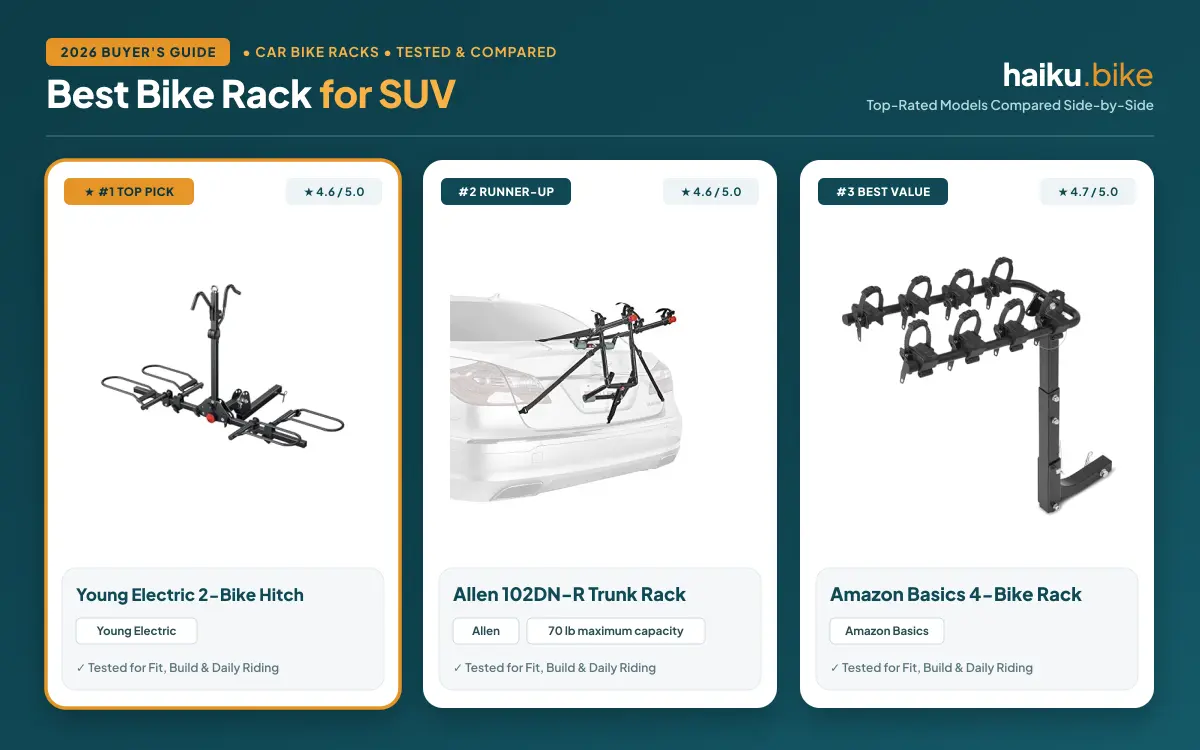
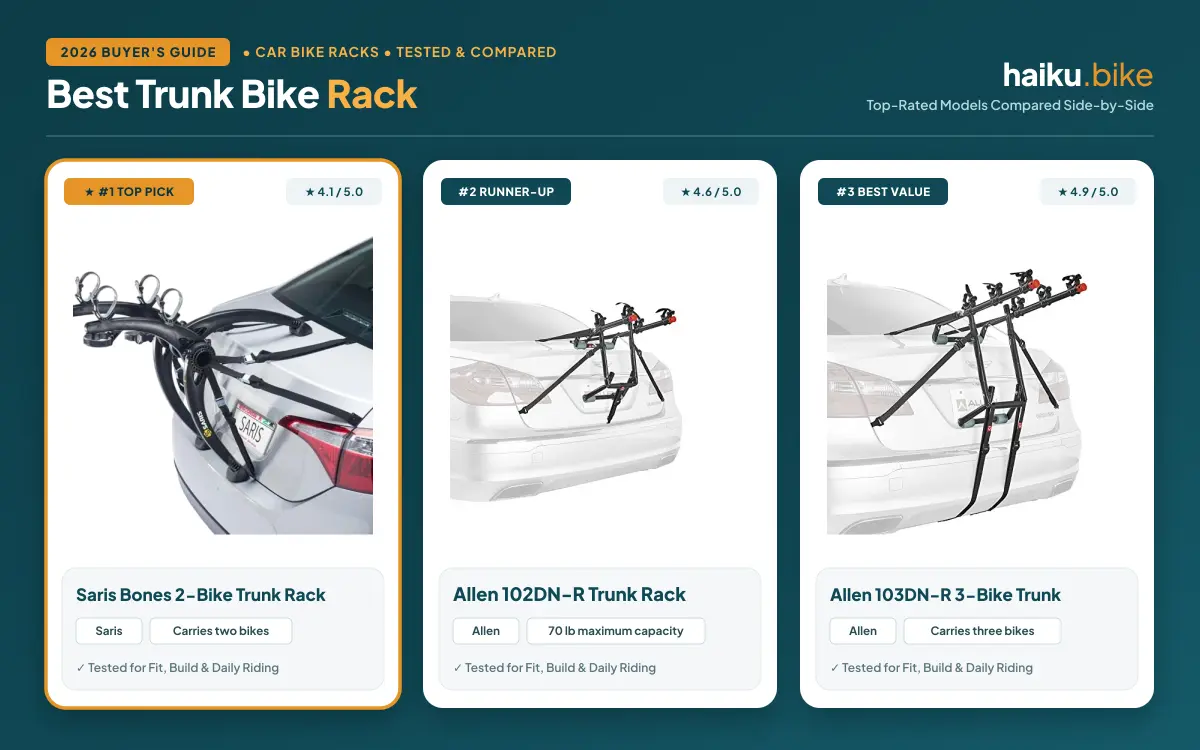
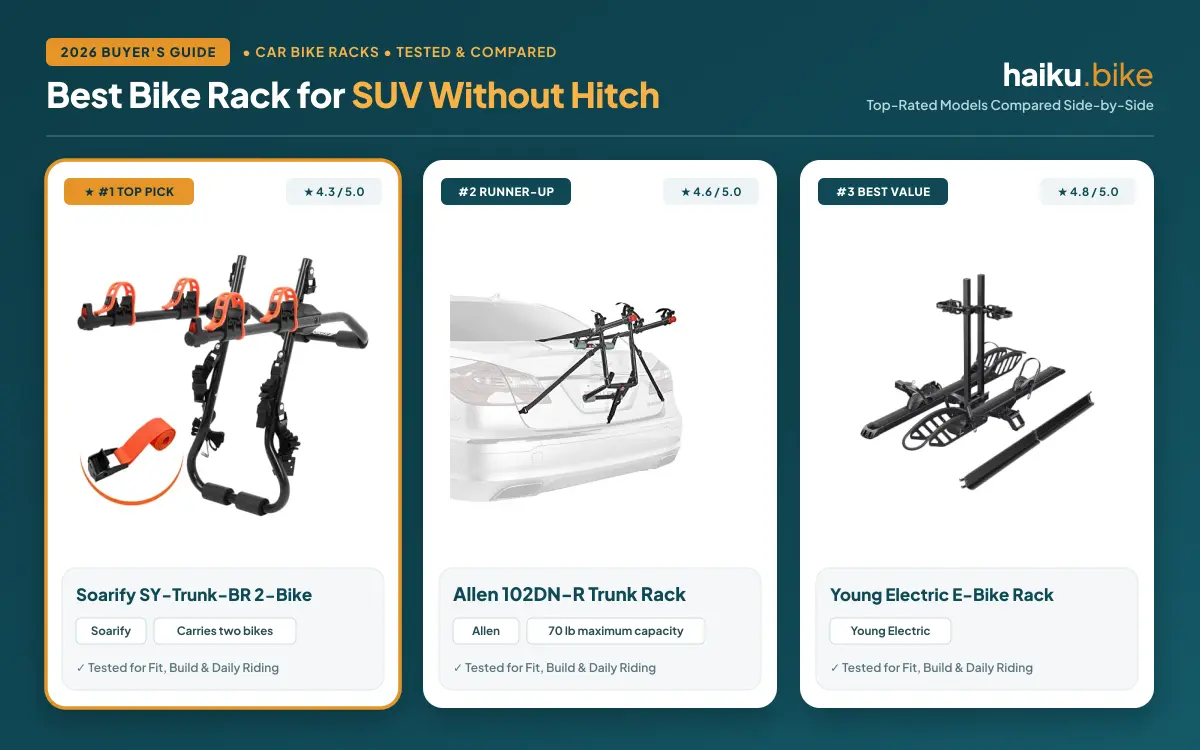
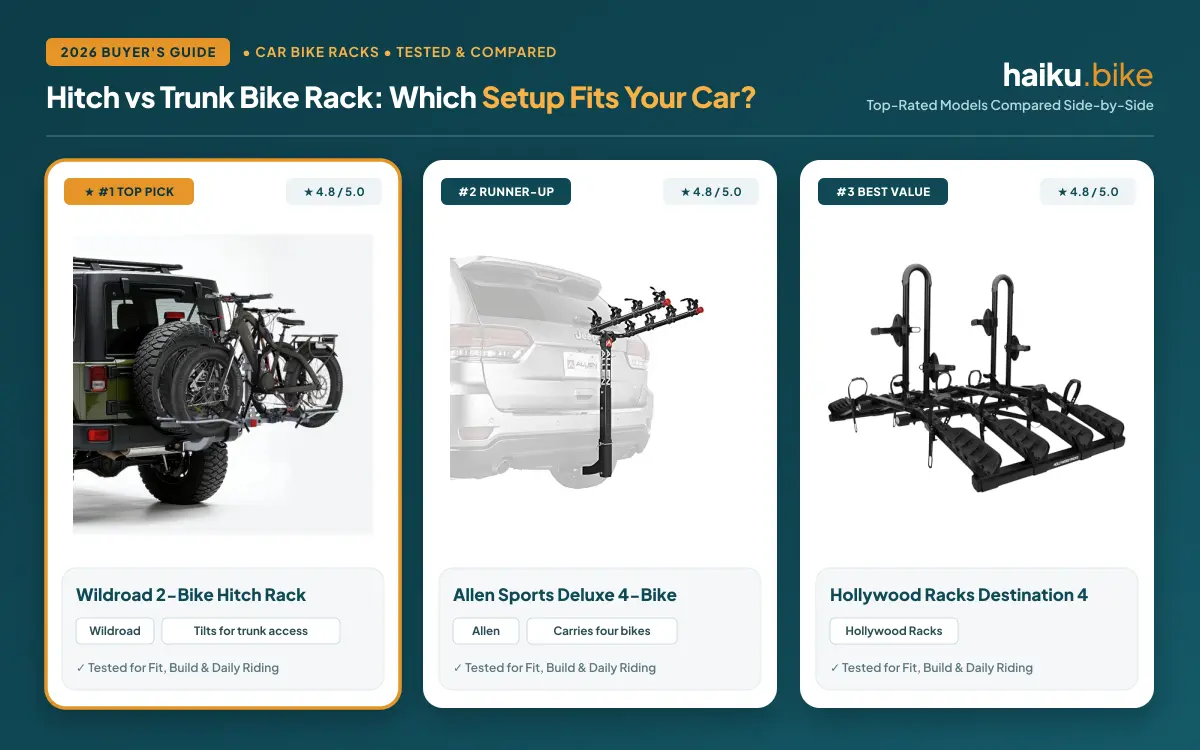
A hitch-mounted carrier can suit riders who want to avoid lifting a bicycle onto the roof or who need a lower loading position. A trunk-mounted carrier may suit occasional trips when a vehicle lacks compatible roof bars. Check vehicle fit and access to the rear hatch, and confirm any carrier’s limits before transport.
Final Thoughts
Riders wanting an integrated upright design can consider Thule ProRide XT Roof Bike Rack. Its frame holder and wheel tray assist positioning, while its dial controls clamping force; riders who want no frame contact should choose a wheel-holding design instead.
For wheel-on carrying, GATHERSKY Roof Bike Rack combines folding arms with a broad recommended crossbar-spacing range. Riders protecting a delicate or nontraditional frame can compare Thule UpRide Roof Bike Rack, while remembering that its fat-bike adapter is sold separately.
Riders seeking a simpler frame-clamp carrier can compare Swagman Upright Roof Mount Bike Rack with their downtube and tire measurements. Browse our bike travel cases or bike travel case guide for other ways to transport a bicycle.
Skip roof carriers if overhead lifting is uncomfortable, your vehicle lacks compatible crossbars, or your bike exceeds a carrier’s stated limits. A hitch rack or another vehicle-compatible option may better suit heavier bicycles and riders who need lower loading height.
FAQs
How do I know whether a roof bike rack fits my car?
A roof bike rack fits your car only when its mounting hardware matches your crossbars and vehicle roof system. Check bar shape, width, height, center spacing, and manufacturer restrictions. GATHERSKY specifies a recommended spacing range, while other carriers state different requirements. Compare the exact measurements before ordering, and ask the maker about any missing fit detail.
Which Best Roof Bike Rack avoids frame contact?
Best Roof Bike Rack options that avoid frame contact include Thule UpRide Roof Bike Rack and VEVOR Roof Bike Rack 35 lbs 1 Bike Carrier Upright. GATHERSKY, TOOENJOY, and Upright Roof Bike Rack Mount, 2 Arms also hold bikes at the wheels. Check wheel, tire, and weight limits to confirm that a frame-free design fits your bicycle.
Can a roof bike rack carry a heavy e-bike?
A roof bike rack should carry an e-bike only when the complete bicycle weight falls within the carrier’s stated capacity. Swagman Upright Roof Mount Bike Rack lists a 35 lb maximum and is not suitable for heavier e-bikes. GATHERSKY lists up to 50 lb, while some other carriers provide no stated limit here. Verify the exact capacity before purchase.
Do roof bike racks require removing the front wheel?
Some roof bike racks require front-wheel removal, while upright wheel-holding designs carry both wheels on the bicycle. Swagman Standard Fork Mount Roof Bike Rack uses a 9mm quick-release fork mount. Confirm axle compatibility before choosing a fork carrier, and consider where you can store the removed wheel during transport.
Are roof bike racks safe to use in bad weather?
Roof bike racks need correct installation and secure bike retention in changing weather. VEVOR describes its carrier as weather resistant, and GATHERSKY lists corrosion-resistant materials, but those descriptions do not replace maintenance. Follow the maker’s installation and care instructions, and inspect straps and mounting points before each drive.
Can a roof bike rack carry a fat bike?
A roof bike rack can carry a fat bike only when its wheel and tire limits allow it. Thule UpRide Roof Bike Rack fits tires up to 3 inches wide, or up to 5 inches with its separately sold Fat Bike Adapter. Check wheel diameter and bike weight too, then confirm current carrier and adapter instructions before buying.
Do roof bike racks include locks?
Roof bike rack lock features vary, and some compatible locks are sold separately. Thule lists provisions to lock the bike to the carrier and the carrier to the vehicle for ProRide XT and UpRide, with locks sold separately. Check included hardware and use an appropriate parking plan, since a rack lock cannot guarantee theft prevention.
Where can I compare other bike transport options?
Haiku Bike’s Racks & Storage category covers other ways to transport bicycles. A roof rack suits riders with compatible bars who can lift a bike overhead, while a travel case may suit air travel or protected storage. Compare your vehicle, bicycle, and trip needs before choosing a transport style.
Write Your Review
No reviews yet. Be the first to share your experience!