

A hitch rack suits frequent bike hauling, heavier bikes, and easier loading when your vehicle has a compatible receiver. A trunk rack costs less upfront and works without a hitch, but takes more setup and careful checks of straps, contact points, and vehicle fit.
Your choice matters if you carry bikes often, drive a vehicle without a receiver, or need to load bikes with minimal lifting. Check your vehicle manual and rack maker’s fit guidance before buying, then consider bike weight, frame shape, storage, and access to the rear hatch.
The Short Answer
- Choose a hitch rack if your vehicle has a compatible receiver and you want a sturdy, repeatable setup.
- Choose a trunk rack if you want lower upfront cost and do not have a hitch receiver.
- Choose a hitch rack if frequent loading, multiple bikes, or heavier bikes make lifting and setup important concerns.
- Choose a trunk rack if you carry bikes occasionally and your vehicle appears on the rack maker’s fit list.
Side-by-Side Comparison
Hitch and trunk racks differ most in vehicle fit, installation, loading, and rear access. The best match depends on your car and bikes, not on rack style alone.
| Characteristic | Hitch rack | Trunk rack |
|---|---|---|
| How it attaches | Slides into a receiver hitch mounted to the vehicle. | Uses straps and padded hooks against vehicle surfaces. |
| Setup | Requires a compatible receiver; rack attaches at the hitch. | Requires fitting straps and contact points to the vehicle. |
| Bike loading | Often lower than roof loading, though rack design varies. | May require lifting bikes over the rack support arms. |
| Vehicle compatibility | Depends on receiver size, capacity, clearance, and rack fit. | Depends on the exact vehicle shape and rack fit guide. |
| Bulk and storage | Can be heavy or bulky; some models fold or tilt. | Usually lighter to store, but straps need arranging each time. |
| Rear access | Some racks tilt away; others can block the hatch. | Usually blocks or limits hatch access while bikes are loaded. |
| Typical rider | Frequent hauler, multi-bike household, or rider with heavier bikes. | Occasional hauler seeking a lower-cost option without a receiver. |
When a Hitch Rack Makes Sense
A hitch rack makes sense when your vehicle already has a compatible receiver or you plan to install one. The rack mounts low at the rear, which can make loading easier than lifting bikes onto a roof.
Hitch racks suit riders who haul bikes often, carry several bikes, or want a setup that stays assembled between trips. Platform-style models support bikes at their wheels, while hanging models hold bikes by their frames; each design handles frame shapes differently.
Receiver fit alone does not confirm a safe match. Check vehicle and rack limits, receiver size, tongue weight guidance, bike weight, tire clearance, and whether your bike frame needs an adapter.
Hitch racks can cost more once you include receiver installation, and they add bulk behind your vehicle. A loaded rack may also obstruct the hatch, rear camera, or license plate, so check the rack instructions and vehicle manual.
When a Trunk Rack Makes Sense
A trunk rack makes sense when you do not have a hitch and want a portable option for occasional trips. Straps hold the rack against approved parts of the vehicle, so fit depends on body shape, spoiler design, and hatch layout.
Trunk racks usually have a lower upfront cost and store more easily than many hitch racks. They can work well for riders who carry bikes now and then, provided the rack maker lists their exact vehicle as compatible.
Setup takes attention each time you use the rack. Follow the strap routing diagram, keep hooks away from delicate trim, and confirm pads rest on approved surfaces rather than paint edges or glass.
Bike frames also affect compatibility. Step-through, small, or unusual frames may need a crossbar adapter, and some bikes may not fit the rack’s support arms securely. Verify bike capacity and frame compatibility before loading.
Switching From One to the Other
Switching rack styles usually means buying a different rack and checking vehicle compatibility again. A trunk rack does not convert into a hitch rack, and a receiver does not guarantee that every hitch model fits your car.
Before moving to a hitch rack, confirm whether your vehicle can accept a receiver and identify the permitted receiver size and load limits in vehicle documentation. Include the rack’s own weight and the combined bike weight when checking limits.
Before moving to a trunk rack, check the manufacturer’s fit guide for your exact vehicle body style. Inspect the hatch, spoiler, trim, and strap contact areas, then confirm that your bike frames sit securely on the support arms.
For either style, review rear visibility, hatch access, and storage needs before purchase. The car bike racks category covers related rack guidance, while the Racks & Storage category includes broader carrying options.
Gear That Helps
These hitch-mounted examples show differences in carrying style, receiver fit, and bike-frame compatibility. Confirm each rack’s current instructions and your vehicle fit before choosing.

Pros
- Maker-rated 180-lb total capacity
- Tilts for trunk access
- Folds for compact storage
- Padded hooks and nylon straps
- Adjustable hooks and tire holders
Cons
- Requires 2-inch hitch receiver
- Not suitable for step-through bikes
- Requires proper bike crossbar

Pros
- Carries four bikes
- Individual tie-down cradles
- Tilts for lift-gate access
- Folding carry arms
- No-wobble bolt
Cons
- Fits 2-inch receivers only
- Minor assembly required

Pros
- Carries up to four bikes
- Fits 1.25-inch and 2-inch hitches
- Tilt-down access
- Optional DeadLock security system
Cons
- Not compatible with e-bikes
- 30 lb maximum per bike
- TubeTop required for some bike frames
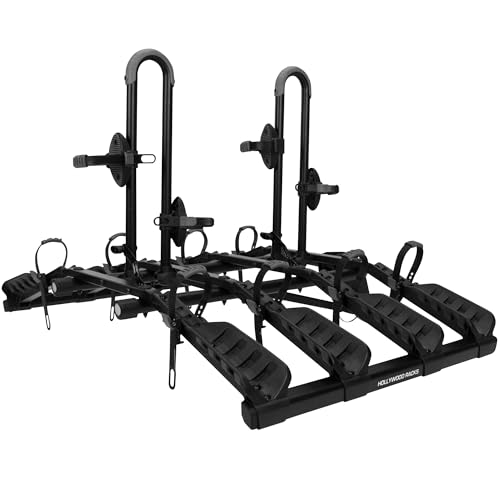
Pros
- Carries up to four bikes
- Individual wheel trays
- Rotating padded frame holders
- Folds for storage
- 42 lb rack weight
Cons
- 35 lb maximum per bike
- Fits only 2-inch hitches
- Maximum tire width of 3 inches
FAQs
Is a hitch rack more secure than a trunk rack?
A hitch rack attaches to a receiver, while a trunk rack depends on properly routed straps and stable contact points. Neither style is secure by default; installation, fit, and regular checks matter. Follow the rack instructions, confirm every attachment before driving, and use any included locking system to discourage theft.
Can a trunk rack fit any car?
A trunk rack cannot fit every car because hatch shape, spoiler placement, trim, and strap routing vary. Check the rack maker’s fit guide for your exact vehicle and body style. Do not assume a rack fits because it attaches to a similar-looking car or because its straps can reach.
Which rack is easier to load?
A hitch rack is often easier to load because it sits behind the vehicle rather than above the roof. Loading height and effort still depend on rack design, bike weight, and frame shape. Compare the rack’s loading method with your bikes, and check whether frame adapters are required.
Can either rack carry an e-bike?
Some racks support e-bikes, but compatibility depends on each bike’s weight, rack capacity, tire width, and frame design. Many trunk racks are not intended for heavier bikes. Read the rack maker’s limits and confirm your bike qualifies before loading; remove the battery only if its maker recommends doing so for transport.
Will a bike rack block my hatch?
A loaded bike rack can block or limit access to a rear hatch. Some hitch racks tilt away, but that feature varies by model and may have limits on use while loaded. Trunk racks generally remain strapped against the hatch, so check the instructions before trying to open it.
What should I check before buying either rack?
Check vehicle compatibility, rack capacity, bike weight, frame fit, tire clearance, and rear access before buying either rack. For hitch models, confirm receiver size and vehicle limits; for trunk models, confirm strap routing and approved contact points. The bike travel cases category explains another option for transporting bikes when racks do not suit your trip.




Write Your Review
No reviews yet. Be the first to share your experience!