
Commuters who want better visibility, rider communication, or ride footage may find smart helmets useful, but each feature adds setup and fit considerations. The models here cover different needs, from mesh intercom and integrated lights to front and rear cameras.
We compare 5 smart helmets for November 2026, including options from LIVALL, Lumos, EKUZO and more. Follow each manufacturer’s instructions and local laws, and check the product listing for certification. For another approach to visibility, see our commuter bike light guide.
Safety note: Bicycle helmets sold in the United States must meet CPSC 16 CFR Part 1203. Check the product listing and helmet labeling for certification, then confirm fit according to the manufacturer’s instructions before riding.
At a Glance: Which One Fits You
- Best overall: Lumos Ultra E-Bike Smart Helmet combines MIPS, front and rear LED lights, turn signals, and a retractable face shield.
- Best value: LIVALL BH51M NSO Smart Bluetooth Bike Helmet pairs speakers and a microphone with turn signals, fall detection, and an SOS alert through its app.
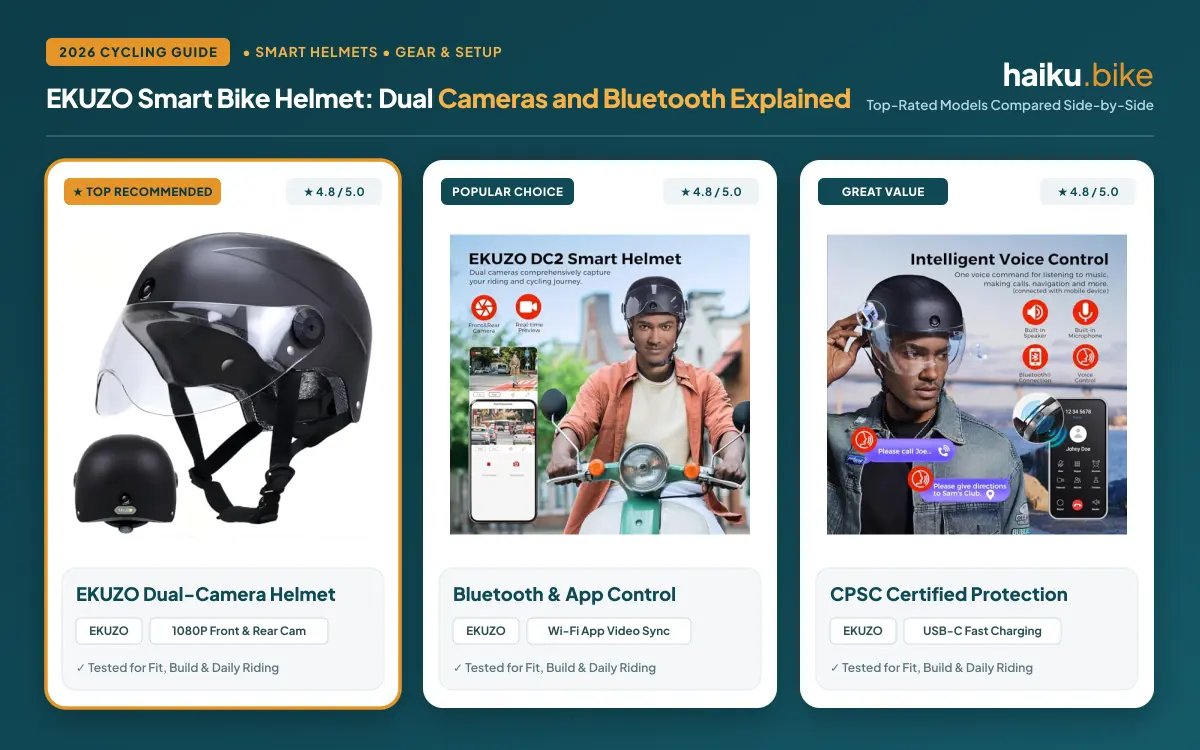
- Best for ride footage: DC Smart Bike Helmet with Cameras Dual HD Front records with front and rear cameras, though riders need the app to set the front camera to 2K.
- Best for group communication: Sena U1 E-Bike Smart Helmet with Mesh 3.0 Intercom offers Mesh 3.0 intercom and a rear LED, but its listed certification is NTA for e-bike helmets.

Pros
- Mesh 3.0 rider communication
- Advanced Noise Control
- Rear visibility LED
- IPX4 splash resistance
- Over-the-air firmware updates
Cons
- Battery runtime not listed
- Fit details not listed
- Large size only specified
Pros
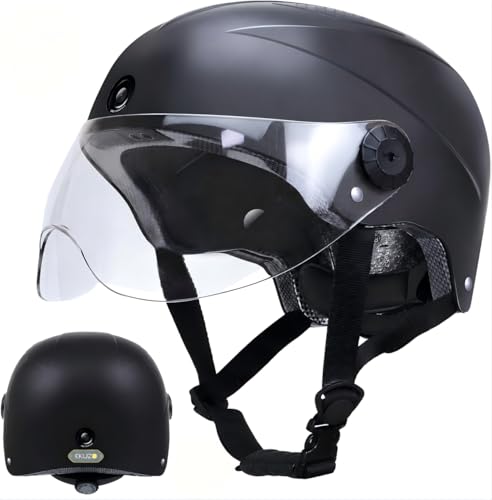
- Front and rear cameras
- Automatic recording on power-up
- CPSC certified
- Hands-free calls and voice navigation
- Adjustable fit from 21 to 24.8 inches
Cons
- Bluetooth disconnects when app is open
- Maker-rated battery life of 4 hours
- Weighs about 2.4 lb

Pros
- Wireless handlebar turn-signal remote
- Integrated front and rear lights
- MIPS rotational impact protection
- Retractable face shield
- App-adjustable LED patterns and brightness
Cons
- Battery life and charging details not provided
- Weight listed at about 1.08 lb
- Who should skip it: riders outside 21.2 to 24-inch fit range

Pros
- Built-in turn signals and brake lights
- Fall detection with app-based SOS
- Bluetooth speakers and microphone
- PTT group communication
- CPSC and CE certification listed
Cons
- Smart features require app connection
- Helmet and remote both need charging
- Who should skip it: riders wanting a basic helmet

Pros
- Integrated rear light
- App-adjustable light settings
- Adjustable fit
- Vented design
- Crash Alert feature
Cons
- No front light
- Remote sold separately for signals and brake lighting
- Who should skip it: riders seeking MIPS or a front light
Side-by-Side Comparison
| Helmet | Main feature | Fit range | Water resistance | Certification listed |
|---|---|---|---|---|
| Sena U1 E-Bike Smart Helmet with Mesh 3.0 Intercom | Mesh 3.0 intercom, rear LED | Not listed | IPX4 | NTA e-bike helmet certification |
| DC Smart Bike Helmet with Cameras Dual HD Front | Front and rear cameras | 21 to 24.8 inches | IPS5, as stated by maker | CPSC certified |
| Lumos Ultra E-Bike Smart Helmet | MIPS, lights, turn signals | 21-1/4 to 24 inches | Not listed | CPSC and NTA 8776 |
| LIVALL BH51M NSO Smart Bluetooth Bike Helmet | Audio, turn signals, fall detection | Not listed | Not listed | CE and CPSC 1203 |
| UNIT 1 NEON SE Smart Bike Helmet with Turn Signals | Rear light, app controls | Adjustable fit, range not listed | Not listed | Not listed |
Certification and fit are the first differences to resolve, because a feature-rich helmet is unsuitable if it does not fit or meet the applicable standard. The Lumos and DC helmets list CPSC certification, while the Sena data names NTA e-bike certification; check each listing and label before purchase.
Common Mistakes to Avoid
Buying for electronics before checking fit can leave a rider with a helmet that cannot be adjusted securely. The DC lists a circumference range of 21 to 24.8 inches, and the Lumos lists 21-1/4 to 24 inches. Measure as the maker directs, compare the result with the stated range, and check fit before riding.
Assuming every smart feature works together can also lead to frustration. EKUZO says opening its app disconnects Bluetooth, although recording continues, while the LIVALL app is required for full use of its features. Read current instructions and confirm which functions can operate simultaneously.
Remote requirements and certification deserve attention before ordering. The UNIT 1 NEON SE requires a separately sold remote for turn signals and automatic brake lighting, and its product details do not state CPSC certification. Check the listing for certification and included accessories rather than assuming either is present.
Best Smart Bike Helmet Under $200 Buying Guide
CPSC Certification and Intended Use
CPSC certification is a core purchase check for bicycle helmets in the United States because the helmet must meet the applicable bicycle helmet standard. CPSC 16 CFR Part 1203 covers bicycle helmets. Check the current product listing and helmet label for certification instead of inferring compliance from features or a general safety claim.
The Lumos and DC helmets list CPSC certification, and LIVALL identifies CPSC 1203. Sena lists NTA e-bike helmet certification, but its published product details do not name CPSC certification. These statements are not interchangeable; check which certification applies to your intended riding and confirm the product’s current label before buying.
Fit and Adjustment
Fit determines whether a helmet can sit securely and comfortably, so compare your measured head circumference with the manufacturer’s stated range. The DC lists 21 to 24.8 inches, while Lumos lists 21-1/4 to 24 inches. Do not assume adjustment can make a helmet suitable when your measurement falls outside its published range.
Several products do not provide a fit range in their listed details. For Sena, LIVALL, and UNIT 1, consult the current size chart and instructions before ordering. Once the helmet arrives, adjust the retention system and straps as directed, and do not ride if the helmet cannot be positioned securely.
Visibility and Lighting
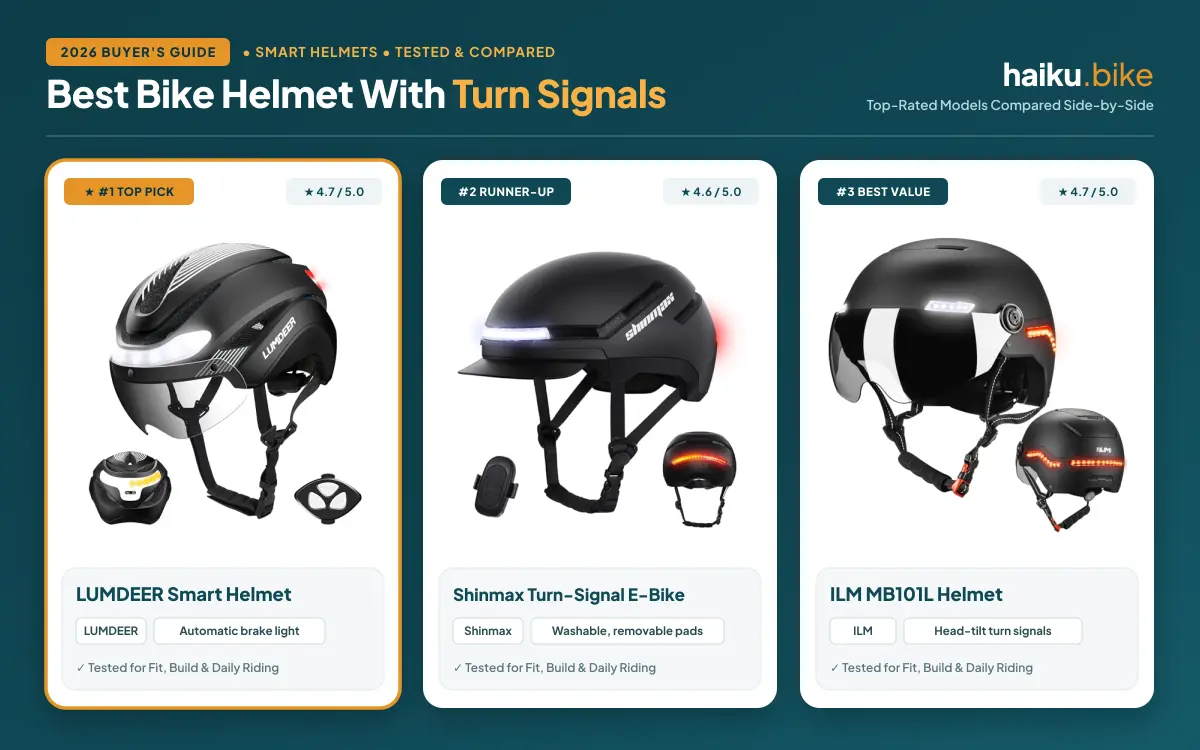
Integrated lighting can make a helmet more visible, while turn signals add a way to communicate intended direction. Lumos has front and rear LED lights and handlebar-remote turn signals. LIVALL lists 270-degree lighting, turn signals, and brake warning lights controlled by a wireless remote.
The UNIT 1 NEON SE has an integrated rear light but no front light. Its remote is sold separately and required for turn signals and automatic brake lighting. Confirm what comes with the helmet and whether you are willing to buy and configure any required accessory. A helmet light does not replace checking local laws or using suitable bike lighting.
Camera, Audio, and Communication
Camera and communication features suit different ride needs, so choose by the function you will use rather than the longest feature list. The DC combines front and rear cameras with Bluetooth calls, voice navigation, and music. Its front camera can be set to 2K through the app, while its rear camera records in 1080P.
Sena focuses on rider-to-rider communication through Mesh 3.0 intercom, with Advanced Noise Control and a rear LED. LIVALL lists speakers, a microphone, calls, navigation, music, and app-based group communication. Lumos and UNIT 1 focus more on lighting and app controls. For more detail on camera and app behavior, see our EKUZO smart helmet guide.
App and Remote Requirements
App and remote requirements affect setup and which features remain available during a ride. LIVALL says the helmet and remote should be charged and linked to its app to use all smart features. The UNIT 1 remote is sold separately and required for turn signals and automatic brake lighting.
EKUZO says its app disconnects Bluetooth when open, though recording continues. Check the current app instructions, device compatibility, and remote requirements before purchase. Configure connected features while stationary, learn how the controls work, and avoid interacting with a phone while riding.
Weather Resistance and Care
Weather-resistance information helps clarify how a helmet’s electronics are described for exposure, but it does not replace maker guidance. Sena lists IPX4 protection against water splashes from any direction. EKUZO describes its helmet as IPS5 water resistant. The other product details do not state a water-resistance rating.
Follow the manufacturer’s directions for cleaning, charging, storage, and weather use. Do not extend a stated rating to conditions the maker does not describe, and protect charging connections as instructed. Check straps, fit components, lights, and remotes before riding, and avoid modifying the helmet in ways the manufacturer does not allow.
How We Chose
We compare smart helmets with the Haiku Ride Score: core performance 30%, build and weather resistance 20%, ease of use 20%, compatibility and fit 15%, and value 15%. For this category, compatibility and fit cover published head-size ranges, app and remote requirements, connected functions, and stated weather protection.
Our evaluation uses manufacturer specifications, compatibility information, and long-term owner feedback when available. We research and draft our guides with software tools, including AI, then run automated checks on product fit, sourcing, and our editorial rules. Our editor spot-checks guides rather than reading each one before publication. Read how we review for our methodology.
Price and Value: What Each Budget Gets You
Budget
At the lower end of this guide’s budget, smart features tend to focus on one or two daily-use functions rather than combining cameras, extensive lighting, and communication. UNIT 1 NEON SE provides an integrated rear light and app controls, but lacks a front light and MIPS, and its remote costs extra. Riders should verify certification and accessory needs before choosing it.
Mid-Range
Middle-of-budget options add a more specialized feature set, such as LIVALL’s audio, turn signals, and fall detection, or EKUZO’s front and rear cameras. These functions can reduce the need for separate devices, but app setup and feature limitations matter. LIVALL relies on its app for full functionality, while EKUZO’s app affects Bluetooth availability.
Premium
At the upper end, riders can prioritize mesh communication or a broader lighting and protection package. Sena offers Mesh 3.0 intercom and a rear LED, while Lumos combines MIPS, front and rear lights, and turn signals. These helmets serve distinct needs, and neither feature set suits every rider. Check certification, fit, and the functions you will actually use.
Choosing Something Else
A conventional bicycle helmet paired with separate lights, a camera, or a communication device suits riders who want to choose each component independently. This setup can avoid app or remote dependencies built into a smart helmet, though it adds separate equipment to mount, charge, and maintain. Confirm helmet certification and secure fit, then follow each device maker’s instructions.
Final Thoughts
Riders who want integrated visibility and rotational-impact management should consider the Lumos Ultra E-Bike Smart Helmet. It combines MIPS, front and rear lights, turn signals, and a retractable face shield, with a published fit range. Its listed details do not state weather resistance, so riders who need that information should check with the maker before choosing.
For group communication, the Sena U1 E-Bike Smart Helmet with Mesh 3.0 Intercom offers Mesh 3.0 and a rear LED, but its listed certification is NTA for e-bike helmets. Riders seeking camera coverage may prefer the DC Smart Bike Helmet with Cameras Dual HD Front, provided its fit range and app behavior suit their routine.
The LIVALL BH51M NSO Smart Bluetooth Bike Helmet suits riders who want audio, turn signals, and app-based fall alerts, but depends on app setup. The UNIT 1 NEON SE Smart Bike Helmet with Turn Signals offers a rear light and connected controls, but requires a separately sold remote for signaling and does not list MIPS.
Skip smart helmets if their fit, certification, app requirements, or included features do not match your needs. A conventional CPSC-compliant helmet with separate lights or a camera may be a better fit. Commuters comparing lighting options can also consult our rear bike light guide.
FAQs
Are smart bike helmets legal in the United States?
Smart bike helmets are subject to the same applicable bicycle helmet requirements as other bicycle helmets. CPSC 16 CFR Part 1203 is the US bicycle helmet standard, so check the product listing and helmet label for certification. Rules for lights and riding vary by location; follow local laws and the manufacturer’s instructions.
How should a smart bike helmet fit?
A smart bike helmet should fit within the manufacturer’s stated size range and adjust securely according to its instructions. Measure your head and compare that measurement with the published range before ordering. The DC lists 21 to 24.8 inches, and Lumos lists 21-1/4 to 24 inches. Choose another size if adjustment cannot secure the fit.
Which smart bike helmets include turn signals?
The Lumos Ultra and LIVALL BH51M NSO list integrated turn signals controlled by a wireless handlebar remote. UNIT 1 NEON SE supports turn signals with its separately sold remote, which is required for that feature. Check what accessories are included and follow setup directions before riding, because a helmet’s lighting functions depend on proper configuration.
Can a smart helmet record video and play music?
The DC Smart Bike Helmet with Cameras Dual HD Front combines front and rear video recording with Bluetooth calls, navigation, and music playback. EKUZO says opening its app disconnects Bluetooth while recording continues. Review the current instructions to understand how camera controls and connected audio interact, and confirm that the functions match your intended use.
Are smart bike helmets waterproof?
Smart bike helmets have different stated water-resistance information, so do not assume every model is waterproof. Sena lists IPX4 protection against splashes, and EKUZO describes its helmet as IPS5 water resistant. Follow each maker’s directions for rain, cleaning, and storage, and check current documentation for operating limits before riding in wet conditions.
Do smart bike helmets need an app?
App requirements vary by helmet and feature. LIVALL says its app is needed with the charged, linked remote to use all smart features, while UNIT 1 offers app-based light settings. EKUZO says its app disconnects Bluetooth when open, although recording continues. Check the current instructions and app compatibility before purchase.
Should I buy a smart helmet or a regular helmet with lights?
A smart helmet combines electronics with head protection, while a regular helmet and separate lights let you choose devices independently. The separate setup may suit riders who want fewer app dependencies or simpler equipment, but adds components to mount and maintain. Compare fit and CPSC certification first, and see our commuter light guide for lighting alternatives.
Write Your Review
No reviews yet. Be the first to share your experience!