

Set your saddle so your knee stays slightly bent when the pedal reaches its lowest point and your foot rests naturally on the pedal. Adjust in small increments, then check that your hips stay level and your pedal stroke feels smooth. No single formula replaces a careful fit check.
Check your saddle position after changing bikes, shoes, pedals, or saddle, or when reaching the pedals feels awkward. Follow your bike and seatpost manufacturer’s instructions, and ask a bike shop to check any work you are unsure about.
What You Need
You need only a few basic items to adjust your saddle and assess the result. Check your seatpost instructions first, since clamp designs and adjustment methods differ.
- The correct hex key or other tool for your seatpost clamp, if adjustment requires one.
- A stable way to hold the bike upright, such as a helper or a suitable repair stand.
- Your usual cycling shoes and pedals, so your leg position matches your normal riding setup.
- A tape measure or a piece of tape to mark the starting height and track changes.
- Your bike’s owner’s manual, especially for seatpost insertion and clamp guidance.
Step by Step
Use the same shoes and pedal setup you ride with. Work slowly, keep the bike stable, and avoid exceeding any markings or limits printed on the seatpost.
- Place the bike on stable ground or secure it in a suitable stand. A steady bike lets you focus on leg position rather than balancing.
- Record your current saddle height by measuring from a consistent point on the frame to the saddle. A reference mark helps you return to your starting position.
- Loosen the seatpost clamp according to its instructions. Do not force the clamp or use a tool that does not fit correctly.
- Set the saddle near your current position if it already feels close, or lower it if you cannot reach the pedals without pointing your toes. Starting conservatively makes it easier to assess each change.
- Sit on the saddle and place your heel on one pedal. Rotate that pedal to its lowest position while keeping your hips level.
- Raise or lower the saddle until your leg is nearly straight with your heel on the pedal. With the ball of your foot in your usual pedaling position, your knee should then retain a slight bend.
- Align the saddle and tighten the clamp as directed by the manufacturer. A crooked saddle or an incorrectly tightened clamp can shift during riding.
- Pedal gently while holding a stable support, or take a short, easy ride in a safe area. Check for hip rocking, toe reaching, knee over-bending, or discomfort.
- Make a small adjustment if needed, then repeat the check. Change one thing at a time so you can tell whether saddle height improves your position.
Common Mistakes
Setting Height by Leg Extension Alone
Locking your knee straight at the bottom of the stroke can leave you reaching for the pedal, especially when your foot sits in its normal position. Use the heel-on-pedal check as a starting point, then confirm a slight knee bend while pedaling with your usual foot placement.
Raising the Saddle Until Your Hips Rock
Hip rocking often means the saddle sits too high or your foot position is changing to reach the pedal. Lower the saddle slightly and repeat the check with your hips level. Do not compensate by leaning from side to side or stretching your toes downward.
Making a Large Adjustment at Once
A large move makes it harder to tell which position feels better and can overshoot a useful setting. Mark your starting point, make small changes, and reassess after each one. Keep notes if you are comparing positions across different rides.
Ignoring Seatpost Limits
Pulling a seatpost beyond its minimum insertion mark can compromise the post’s support. Keep the required portion inside the frame and follow the bike and seatpost maker’s instructions. If the saddle cannot reach a workable height within those limits, ask a shop to assess fit and compatibility.
Changing Saddle Height to Fix Every Fit Problem
Hand pressure, saddle discomfort, and knee position can involve saddle angle, fore-aft position, crank length, shoes, or other fit factors. Avoid repeatedly raising or lowering the saddle to solve a separate issue. Adjust one factor at a time, and seek a qualified fit professional if problems continue.
When to Take It to a Bike Shop
Ask a mechanic for help if the seatpost sticks, slips, or will not tighten securely, or if the frame or post shows damage. A shop can check the clamp, post compatibility, insertion limits, and whether the saddle can be positioned within the bike’s specifications.
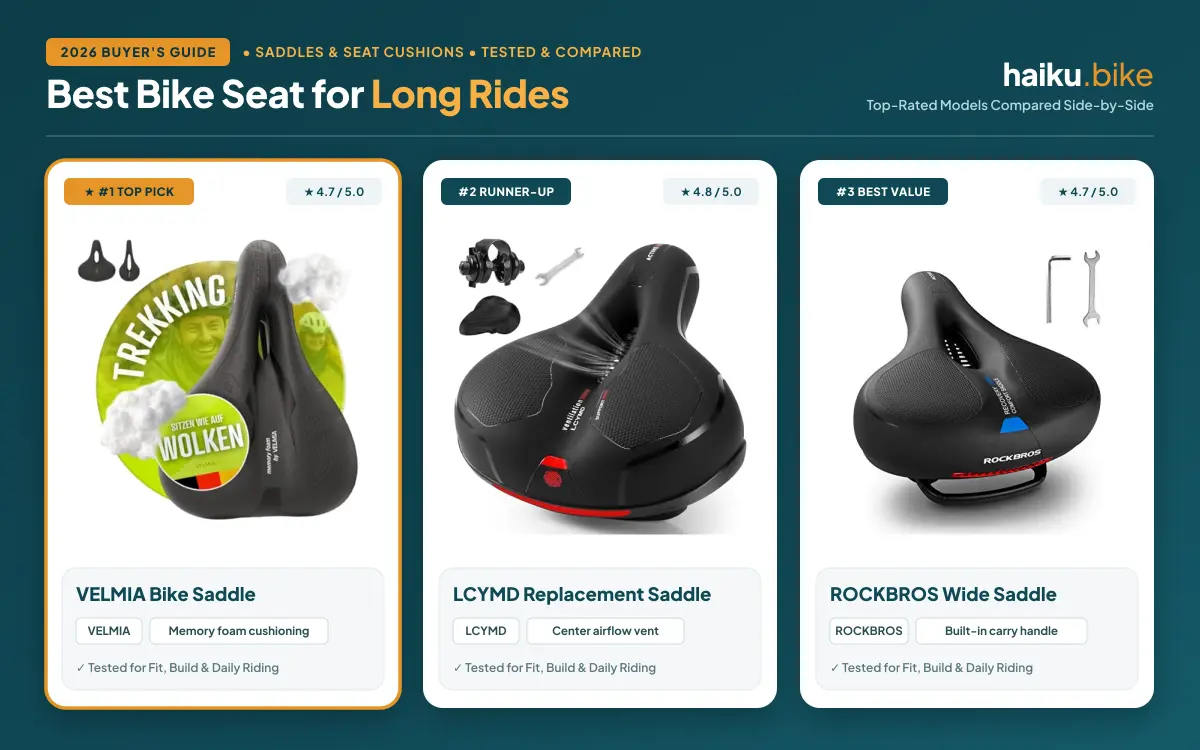
A professional fit can help when careful adjustments do not resolve persistent discomfort, rocking, or an awkward pedal stroke. Riders choosing a saddle for longer outings can also read our guide to bike seats for long rides for broader comfort considerations.
How to Keep Your Position Consistent
Once your position feels natural, record the saddle height from a repeatable point and note the saddle’s fore-aft position. A reference makes it easier to restore your setup after transport, maintenance, or a seatpost change.
Recheck your position when changing shoes, pedals, saddle, or bike. These changes can affect where your foot sits or how your body reaches the pedals. For broader fit resources, visit our bike fit and cycling tools page.
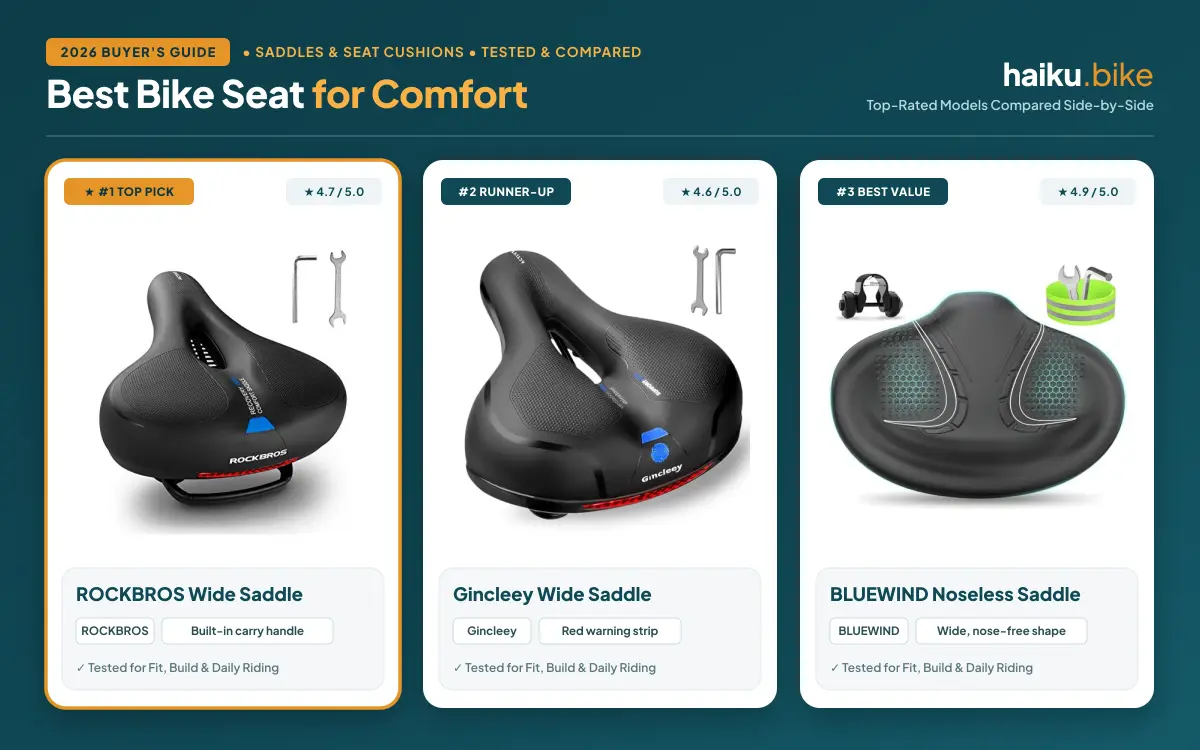
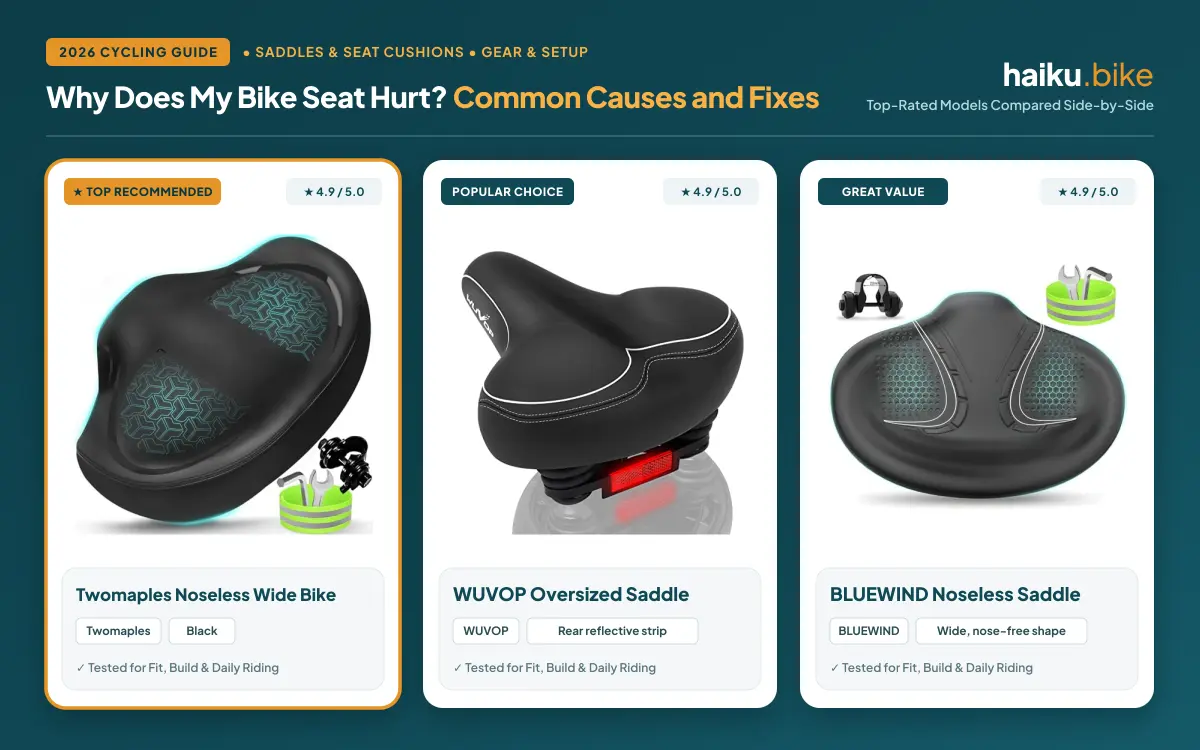
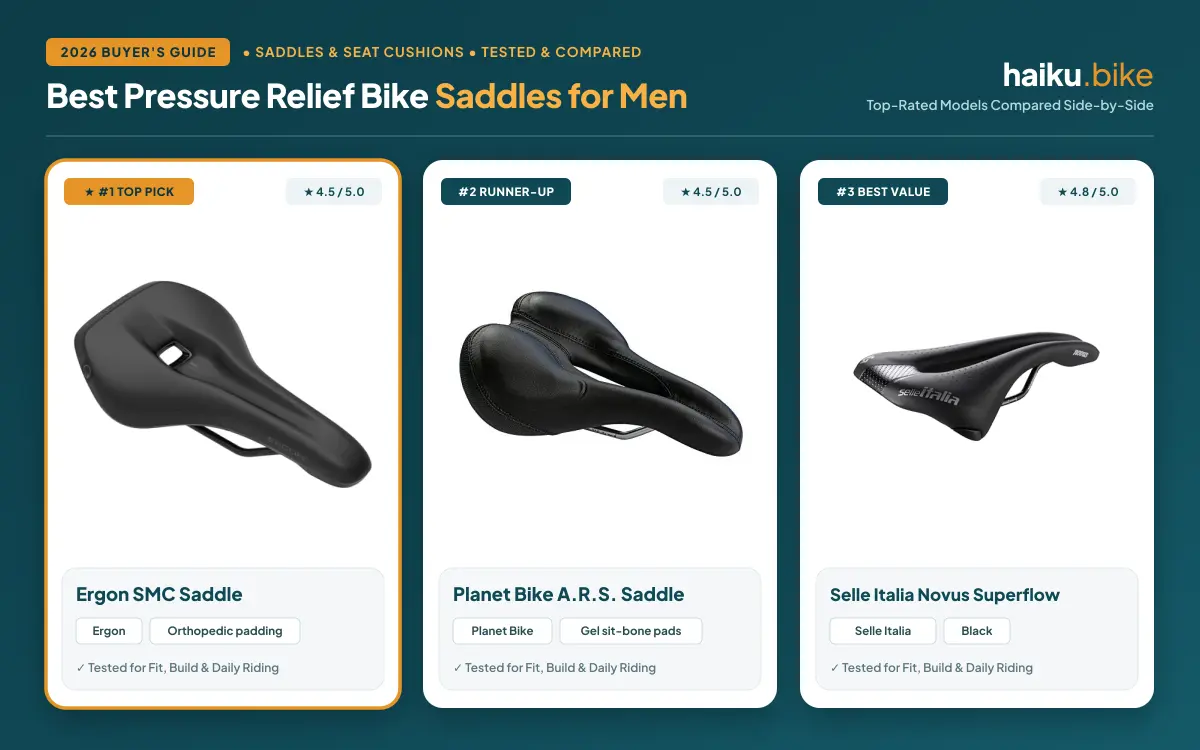
Saddle height is only one part of a comfortable fit. Saddle shape and width also matter, so browse the Saddles & Seat Cushions section for related guidance.
FAQs
How do I know if my saddle is too high?
A saddle may be too high if your hips rock from side to side, your toes point down to reach the pedals, or your knee straightens fully at the bottom of the stroke. Lower the saddle slightly and reassess with your usual shoes and foot position. Persistent problems may need a professional fit check.
How do I know if my saddle is too low?
A saddle may be too low if your knee remains strongly bent at the bottom of the pedal stroke or pedaling feels cramped. Raise it gradually and check that your hips stay level and your foot remains in a natural position. Do not raise the post beyond its marked insertion limit.
Should my leg be straight at the bottom of the pedal stroke?
Your leg should not lock straight when your foot sits in its normal pedaling position at the bottom of the stroke. A slight knee bend is a practical starting point. The heel-on-pedal check can help set an initial height, but your normal foot position determines the final assessment.
Can I set saddle height without a bike fit?
You can make a useful initial adjustment at home with a stable bike, your regular shoes, and a careful leg-position check. A home adjustment may not address every fit issue, such as saddle shape or fore-aft position. Ask a qualified bike fitter or shop for help if discomfort or awkward movement persists.
Does saddle height change when I change shoes or pedals?
Saddle height can feel different after you change shoes or pedals because the distance between your foot and pedal may change. Recheck your position using the new setup rather than assuming your old setting still fits. Keep a record of the saddle position so you can compare adjustments accurately.
Write Your Review
No reviews yet. Be the first to share your experience!