

Cold-weather commuters and winter training riders need a jacket that blocks wind without trapping too much heat. Fleece lining, vent placement, rear coverage and pocket access all affect comfort when your pace or weather changes.
We compare 5 jackets from INBIKE, ROCKBROS, Bikewa and more for November 2026, from fleece-lined softshells to cycling-specific designs with adjustable vents. Follow each manufacturer’s care and fit instructions, and obey local laws when riding on public roads. For related clothing, browse our cycling apparel and shoes category.
At a Glance: Which One Fits You
- Best overall: Men’s Winter Cycling Jackets Thermal Warm Water pairs three-layer construction with underarm vents and eight utility pockets, though its water-repellent finish does not establish waterproof protection.
- Best value: INBIKE Men’s Cycling Jacket combines polar-fleece lining, a windproof softshell and a chin flap, but its cycling-specific pocket and vent details are limited.
- Best for storage and visibility: NyxionQ Men’s Winter Cycling Jacket Windproof has four utility pockets and reflective accents across several areas, while its fit and rain rating deserve a closer check.
- Best for adjustable airflow: baleaf Men’s Cycling Jacket Winter Running Water adds a two-way zipper, underarm stretch panels and a packable rear pocket, but its stated comfort range is for cool weather.
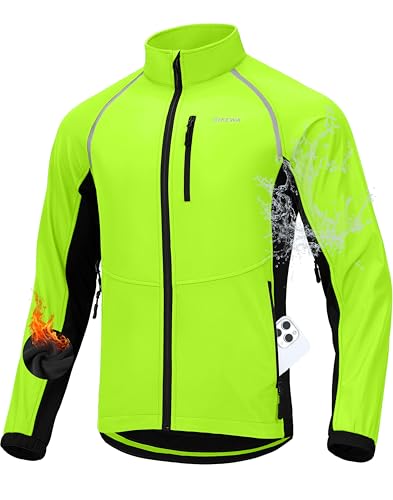
Pros
- Warm fleece lining
- Underarm zip vents
- Eight storage pockets
- Reflective front and back details
- Silicone waist grippers
Cons
- Water-resistant, not stated as waterproof
- No temperature range stated
- Listed in Large size
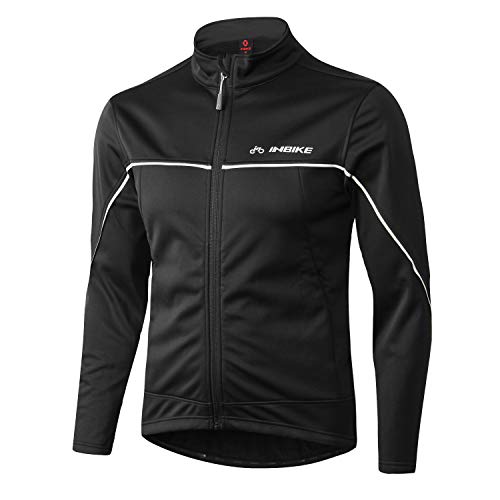
Pros
- Two-sided polar fleece lining
- Windproof, water-resistant shell
- Stand-up collar
- Chin flap
- Breathable mesh pocket fabric
Cons
- No waterproof rating stated
- Only black, size Large listed
- Who should skip it: riders needing quantified waterproof protection

Pros
- Fleece inner layer
- Windproof, water-resistant outer fabric
- Six vents plus side mesh
- Three storage pockets
- Front and rear reflective strips
Cons
- Runs slightly small
- Touchscreen panel on left sleeve

Pros
- Fleece-lined wind-blocking softshell
- Four pockets, including bottle-sized rear pocket
- Packs into rear pocket
- Reflective shoulder and back prints
- Two-way zipper and silicone gripper hem
Cons
- Water-resistant, not waterproof
- Maker-stated range limited to 40°F to 65°F
- Who should skip it: riders needing waterproof or deep-winter protection

Pros
- Fleece-lined three-layer softshell
- Two zippered chest vents
- Four utility pockets
- Twelve reflective accents
- Drop-tail hem with silicone gripper
Cons
- No stated water-resistance rating
- Who should skip it: riders needing specified rain protection
Side-by-Side Comparison
| Jacket | Shell and insulation | Ventilation | Pockets | Fit and visibility details |
|---|---|---|---|---|
| INBIKE Men’s Cycling Jacket | Windproof softshell with two-sided polar fleece | Mesh pocket lining; other vent details not listed | Not listed | 3D cut, stand-up collar and chin flap |
| NyxionQ Men’s Winter Cycling Jacket Windproof | Three-layer softshell with fleece lining | Two zippered chest vents | Four: two side and two rear | 12 reflective accents, stretch panels, drop-tail hem |
| ROCKBROS Cycling Jackets for Men Windproof Thermal | Windproof, water-resistant outer with 320 GSM polar fleece | Six back and shoulder holes, mesh side panels | Two hand pockets and one rear zip pocket | Reflective strips, extended rear hem, runs slightly small |
| baleaf Men’s Cycling Jacket Winter Running Water | Fleece-lined windproof, water-resistant softshell | Two-way zipper and stretch underarm panels | Four, including large rear hook-and-loop pocket | Reflective prints, drop hem, silicone gripper |
| Men’s Winter Cycling Jackets Thermal Warm Water | Three-layer fabric with windproof surface, membrane and fleece | Underarm zip vents | Eight listed pockets | Reflective elements, high collar, silicone waist grip |
Ventilation is the biggest practical difference for riders whose effort changes during a route. The Bikewa jacket and NyxionQ jacket use zippered vents, while ROCKBROS relies on fixed openings and mesh; choose adjustable airflow for climbs or variable pace.
Common Mistakes to Avoid
Buyers can mistake water-resistant wording for proof of waterproof protection. INBIKE and ROCKBROS describe windproof and water-resistant materials, while Bikewa lists a durable water repellent finish; none of those descriptions supplies a waterproof rating here. Riders facing sustained rain should check the manufacturer’s full garment details or choose a dedicated rain shell.
Choosing insulation without considering riding effort can leave a rider overheated on climbs or cold during easy commutes. Match fleece warmth to your usual pace, base layers and local conditions, then look for vents you can adjust. Fixed holes and mesh provide airflow, but they do not close when wind or temperature changes.
Ignoring sizing guidance can make a jacket restrictive over winter layers. ROCKBROS says its thermal jacket runs slightly small and advises considering one or two sizes up for a looser fit. Compare your measurements with each maker’s size chart, and check sleeve reach, rear coverage and pocket access in a forward riding position.
Reflective details should not be treated as a replacement for bike lights. Reflective material returns light toward its source when illuminated, while lights provide their own illumination. Check reflective placement from the sides and rear, and choose suitable lights for your route and local requirements.
Best Cycling Jackets for Winter / Cold Weather Buying Guide
Wind Protection and Insulation
Wind protection and insulation determine how quickly a jacket loses heat to cold air during a ride. INBIKE uses a softshell with two-sided polar fleece, while Bikewa describes a three-layer build with a windproof surface, breathable membrane and fleece layer.
Compare the shell and lining separately rather than choosing by fleece thickness alone. A close-fitting jacket can block drafts, but it still needs enough room for the base layer you plan to wear. A brisk training ride produces more body heat than an easy commute, so riders working hard should also prioritize airflow.
Rain Resistance and Weather Exposure
Rain resistance describes help against moisture, but it does not automatically mean a jacket can protect you through prolonged rain. Bikewa lists a durable water repellent finish, and ROCKBROS and INBIKE describe water-resistant materials. The baleaf jacket is also described as water-resistant, with a stated comfort range from 40°F to 65°F.
Match the shell to your typical route and weather, then check for a stated waterproof rating and seam details if rain protection matters. These product descriptions do not establish waterproof ratings. A cold, dry ride may suit an insulated softshell, while a long wet commute may call for a separate rain shell over warm layers.
Ventilation and Heat Management
Ventilation releases excess heat and moisture as effort rises, which can make a thermal jacket more comfortable on changing terrain. Bikewa has underarm zip vents, NyxionQ lists two zippered chest vents, and ROCKBROS describes six back and shoulder holes with mesh side panels.
Adjustable zippers let you change airflow as conditions shift, while fixed openings and mesh remain open. The baleaf jacket combines a two-way zipper with stretch underarm panels. Before choosing, consider whether you can reach the closures while riding and whether their placement suits your position and preferred layering.
Fit, Sizing and Riding Position
A cycling jacket should allow your shoulders and arms to move while covering your lower back when you lean toward the handlebars. NyxionQ and baleaf describe drop-tail coverage, while ROCKBROS also lists an extended rear hem. These details can help reduce draft exposure in a forward riding position.
Use the maker’s size chart and plan for the layers you will wear underneath. ROCKBROS notes that its thermal jacket runs slightly small and suggests considering one or two sizes up for a looser fit. Check collar comfort, sleeve length and pocket reach while standing in a riding posture, not only while upright.
Pockets and Storage
Pocket layout affects whether you can carry and reach essentials without a backpack. Bikewa lists eight pockets, NyxionQ has four, and baleaf describes four including a large rear pocket. ROCKBROS lists two hand pockets and one zippered rear pocket, while INBIKE’s pocket count is not listed.
Check pocket position, closure type and capacity against what you carry, such as keys, gloves or a phone. Rear pockets are convenient while riding, but their access can vary by body position and backpack use. A larger stated pocket count does not guarantee that every pocket suits your items or gloved hands.
Visibility and Practical Details
Reflective details can help drivers see a rider when headlights illuminate the jacket. NyxionQ lists accents across the chest, sleeves, back and rear pocket, while baleaf describes reflective prints on the shoulders and back. Bikewa and ROCKBROS also list reflective details, but reflective clothing does not replace a bike light.
Look at rear and side placement, then consider collar height, hem grip and zipper design for your riding position. The baleaf jacket has a silicone gripper and a packable rear pocket, while Bikewa lists a silicone waist grip. For more wet-weather clothing choices, browse our rain gear and shoe covers category.
How We Chose
We score jackets with the Haiku Ride Score: core performance 30%, build and weather resistance 20%, ease of use 20%, compatibility and fit 15%, and value 15%. For cycling apparel, compatibility and fit mean how the garment’s sizing, riding cut, closures, pockets and layering room suit a rider’s use.
We evaluate manufacturer specifications, fit and weather details, and long-term owner feedback when available. We research and draft our guides with software tools, including AI, then run automated checks on product fit, sourcing, and our editorial rules. Our editor spot-checks guides rather than reading each one before publication. See our how we review methodology.
Price and Value: What Each Budget Gets You
Budget
Lower-cost jackets in this selection focus on fleece warmth, wind protection and straightforward softshell construction. The INBIKE Men’s Cycling Jacket adds a stand-up collar and chin flap, but its pocket layout and adjustable vent details are not listed. That simpler feature set may suit riders who want a warm outer layer, while commuters needing secure storage should compare pocket specifications carefully.
Mid-Range
Mid-range designs add cycling-specific storage, reflective placement and more ways to manage heat. The NyxionQ jacket combines chest vents, four pockets and a drop-tail hem, while baleaf adds a two-way zipper and packable rear pocket. These features suit commuters and training riders, though product descriptions still do not establish waterproof performance or long-term durability.
Premium
At the upper end of this selection, ROCKBROS combines a polar-fleece interior with mesh ventilation, multiple pockets and a touchscreen sleeve panel. Bikewa offers a three-layer build, underarm vents and extensive storage. Those added features can help riders manage changing effort and carry gear, but they do not guarantee a waterproof rating, and the ROCKBROS fit guidance warrants attention.
Choosing Something Else
A breathable base layer under a dedicated rain shell can suit riders whose temperatures and effort vary widely. Separate layers let you remove insulation or add weather protection without relying on one jacket’s balance of warmth and airflow. This setup means carrying extra clothing and managing more pieces, so it best suits riders who value flexibility over a one-layer solution.
Final Thoughts
Commuters who want substantial storage and adjustable airflow should consider Men’s Winter Cycling Jackets Thermal Warm Water. Its three-layer construction, underarm vents and eight listed pockets cover useful cold-weather needs. The trade-off is that its water-repellent finish does not establish waterproof protection, so riders who face sustained rain should choose a dedicated shell.
Riders who want a simpler fleece-lined windproof layer can compare INBIKE Men’s Cycling Jacket, while those seeking reflective coverage and four pockets may prefer NyxionQ Men’s Winter Cycling Jacket Windproof. NyxionQ lists chest vents and stretch panels, but its fit and full weather rating should be checked before ordering.
Choose baleaf Men’s Cycling Jacket Winter Running Water if a two-way zipper, packable rear pocket and water-resistant shell suit your cool-weather rides. The ROCKBROS Cycling Jackets for Men Windproof Thermal offers fixed vents and a touchscreen sleeve panel, but runs slightly small. Riders needing guaranteed waterproof protection, different sizing options or substantial severe-weather insulation should shop those specifications directly. Compare related cycling gloves and cycling apparel for a complete clothing setup.
FAQs
What should a winter cycling jacket have?
A winter cycling jacket should match your typical temperature, riding effort and exposure to wind or rain. Look for insulation, a wind-resistant outer layer, rear coverage and ventilation suited to your pace. Reflective details can add visibility, and secure pockets can carry essentials. Check the maker’s size chart and confirm the jacket fits over your planned layers.
Are winter cycling jackets waterproof?
Winter cycling jackets are not automatically waterproof because terms such as water-resistant and water-repellent do not establish protection in sustained rain. The jackets in this guide include those types of claims, but their descriptions do not provide a waterproof rating. Check the manufacturer’s full specifications and seam details, or choose a dedicated rain shell for prolonged wet rides.
How should a cycling jacket fit?
A cycling jacket should allow free shoulder movement and cover your lower back when you lean forward. Compare your measurements with the manufacturer’s size chart, allowing room for the layers you plan to wear. ROCKBROS says its thermal jacket runs slightly small and advises considering one or two sizes up for a looser fit. Check sleeve reach and pocket access.
How warm should a winter bike jacket be?
A winter bike jacket should provide enough insulation for your usual pace and local conditions, not only the coldest day you might encounter. Hard efforts generate more heat than easy commutes, so ventilation and layering flexibility matter. Compare lining details and the maker’s stated temperature guidance where available, then plan the jacket around your base layer and route.
Which cycling jackets have adjustable vents?
Cycling jackets with zippered openings offer adjustable airflow, including the Bikewa jacket’s underarm vents, NyxionQ’s chest vents and baleaf’s two-way zipper. ROCKBROS describes fixed back and shoulder holes with mesh side panels instead. Choose openings you can adjust safely and comfortably for your riding position, especially if your route includes climbs or changing effort.
Do reflective jacket details replace bike lights?
Reflective jacket details do not replace bike lights because reflective material needs an external light source to be visible. Lights provide their own illumination, while reflective prints can help return light toward its source. Choose lights appropriate for your route and local requirements, and treat a jacket’s reflective placement as an additional visibility feature rather than your only one.
How should I care for a winter cycling jacket?
Care for a winter cycling jacket according to its garment label and the manufacturer’s instructions. Close zippers and empty pockets before washing when the care guidance allows machine cleaning. Do not assume every shell tolerates the same detergent or heat, particularly when it has a water-repellent finish. For additional wet-weather layers, browse our rain gear and shoe covers guide.


Write Your Review
No reviews yet. Be the first to share your experience!