
Two-year-olds need tricycles that fit their reach and coordination, while caregivers need a design they can supervise and manage. Seat position, handlebar reach, and wheel layout matter more than lights or baskets when a toddler is learning to steer and pedal.
We compared 5 toddler tricycles in November 2026 from brands including Radio Flyer, KRIDDO, newyoo and more. Follow the manufacturer’s instructions and local laws, supervise every ride, and check fit before your child pedals. Families comparing other child-focused cycling gear can also browse Kids & Family Cycling.
At a Glance: Which One Fits You
- Best overall: newyoo TR007 5-in-1 Tricycle for Toddlers 1-3 earns this spot because five modes and a steering push handlebar support caregiver-guided riding and independent practice.
- Best value: KRIDDO Toddler Tricycle for Toddlers Age 2-5 earns this spot because its wide wheelbase and extended rear wheels support a simple learning setup.
- Best for carrying toys: Umatoll Tricycle for 2-5 Year Old earns this spot because removable front and rear baskets carry small belongings.
- Best for caregiver transport: Radio Flyer Red Rider Trike, for Ages 2.5-5 earns this spot because its seatback hand grip helps caregivers lift and carry it.

Pros
- Wider wheelbase for added stability
- Indoor and outdoor wheels
- Silent, shock-absorbing wheels
- 9 lb weight
- Non-slip grips
Cons
- Conflicting age guidance: 2-5 years or 24-48 months
- Pink color only listed

Pros
- Five riding modes
- Parent steering handle
- Adjustable seat and handlebar
- Solid EVA wheels
- 9.7 lb weight
Cons
- Listed only for ages 1 to 3
- Listed height limit of 43.3 inches
- No reviews provided

Pros
- Wide wheelbase
- Two-position adjustable seat
- Removable front and rear baskets
- Rear wheels light up without batteries
- Carbon-steel frame
Cons
- Only two seat positions
- Weight capacity not listed
- Braking details not provided
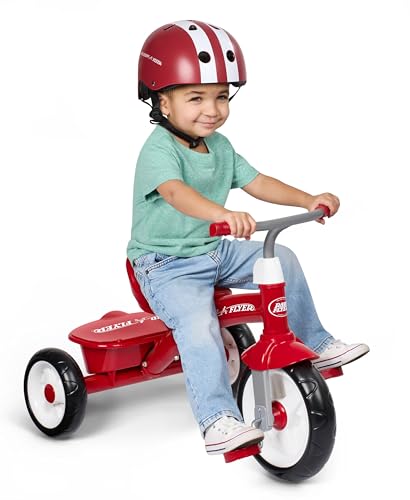
Pros
- Adjustable seat
- Covered rear storage bin
- Quietride wheels
- Seat-back carry grip
- 9.9 lb listed weight
Cons
- One size listed
- No brake details provided

Pros
- Lightweight 6.6 lb frame
- Three-position adjustable seat
- Two-position adjustable handlebar
- Battery-free glowing rear wheels
- Detachable front and rear baskets
Cons
- Small size
- No age-specific fit measurements provided
- No safety certification listed
Side-by-Side Comparison
| Product | Age guidance | Adjustability or modes | Storage or convenience | Frame and wheel details |
|---|---|---|---|---|
| newyoo TR007 5-in-1 Tricycle for Toddlers 1-3 | Ages 1-3; under 43.3 inches | Five modes; adjustable seat, handlebar, and pedal positions | Steering push handlebar | Carbon steel frame; solid EVA wheels |
| KRIDDO Toddler Tricycle for Toddlers Age 2-5 | 24-48 months | Not listed | Easy-to-carry seat; silent wheels | Wide wheelbase; extended rear wheels |
| Umatoll Tricycle for 2-5 Year Old | Ages 2-5 | Two-position seat | Removable front and rear baskets | Carbon steel frame; extended rear wheels |
| Radio Flyer Red Rider Trike, for Ages 2.5-5 | Ages 2.5-5 | Adjustable seat | Covered rear bin; seatback hand grip | Steel construction; quietride wheels |
| SEREED Colorful Lighting Kid Tricycle Gift Toy | Ages 2-5 | Three-position seat; two-position handlebar | Detachable baskets; light-up rear wheels | Lightweight, sturdy construction |
Fit and caregiver control create the most meaningful differences in this comparison. The newyoo offers multiple configurations and a steering push handlebar, while simpler designs such as KRIDDO focus on a straightforward tricycle layout.
Common Mistakes to Avoid
Choosing by age label alone can leave a child unable to reach the pedals or handlebars comfortably. Compare your child’s height and reach with the manufacturer’s guidance, then check whether the seat position supports a stable seated posture.
Assuming a wide wheelbase prevents every fall can also create false confidence. KRIDDO and Umatoll describe stability-oriented wheel layouts, but neither design removes the need for supervision, suitable riding surfaces, and correct assembly.
Prioritizing lights, baskets, or extra modes before fit is another common mistake. Umatoll and SEREED add storage and light-up wheels, while newyoo has multiple riding modes, but those extras cannot make an oversized tricycle easier to control.
Best Tricycle for 2 Year Old: Buying Guide
Fit, Age Guidance, and Reach
Fit matters because a toddler needs to reach the pedals, seat, and handlebars without straining. Age ranges are useful starting points, but children of the same age vary in height, leg length, and coordination.
The newyoo TR007 is described for children ages 1-3 under 43.3 inches, while KRIDDO lists 24-48 months. Radio Flyer specifies ages 2.5-5, so its stated range may exclude some two-year-olds. Compare your child’s measurements with the maker’s limits before deciding.
If possible, have your child sit on the tricycle before a longer ride. Look for a secure posture, comfortable handlebar reach, and a pedal position that allows natural leg movement. When a listing omits seat dimensions, ask the manufacturer rather than guessing.
Stability and Supervision
Wheelbase and rear-wheel placement affect how steady a tricycle may feel as a toddler steers. KRIDDO and Umatoll describe wider wheel layouts intended to help prevent tipping, but product descriptions cannot guarantee stability on every surface.
Choose a flat, open area with room to turn, and keep the tricycle away from traffic, stairs, and steep slopes. A child can turn or shift weight unexpectedly, so an adult should stay close throughout the ride.
Before use, confirm that the frame, wheels, seat, and handlebar are assembled according to the instructions. Check the manufacturer’s safety information and product listing for applicable standards. Newyoo states EN188 and ASTM approval, but caregivers should verify current certification details with the manufacturer.
Riding Modes and Parent Control
Riding modes determine how much assistance a caregiver can provide and how a child can progress. The newyoo TR007 has push tricycle, push balance bike, tricycle, balance bike, and bike modes, plus a steering push handlebar.
Newyoo says the push handlebar rotates 135 degrees to control steering and direction, and adjusts to parent height. That setup may help caregivers guide early rides, but several configurations bring more mode changes and setup decisions than a basic tricycle.
Before choosing a convertible design, check how pedals and other parts change between modes and how securely each configuration locks in place. A child who can pedal and steer independently may prefer a simpler tricycle. Families seeking more caregiver guidance may value a push option.
Adjustability and Room to Grow
Adjustable seats and handlebars can help maintain a comfortable fit as a child grows. Umatoll lists a two-position seat, while SEREED lists a three-position seat and a two-position handlebar.
Radio Flyer describes an adjustable seat, and newyoo lists adjustments for its seat and handlebar. Check each maker’s instructions to learn how adjustments work and whether tools are required. Do not assume adjustment will fit every child in the stated age range.
Adjustability cannot extend a tricycle beyond its manufacturer’s size guidance. Recheck your child’s fit as they grow, and stop using the product when its stated limits no longer apply. A secure fit matters more than keeping a familiar tricycle in service.
Wheels, Riding Surface, and Storage
Wheel construction can affect how a tricycle feels on indoor floors and outdoor paths. KRIDDO describes shock-absorbing silent wheels for indoor use, newyoo lists solid EVA wheels, and Radio Flyer describes quietride wheels.
Check whether the maker recommends indoor, outdoor, or mixed use, then choose a surface suited to the child’s control. A quiet wheel is not proof of traction on uneven pavement, and smooth floors still require supervision and clear space.
Baskets and bins add convenience but are not necessary for learning to ride. Umatoll and SEREED include baskets, while Radio Flyer has a covered rear bin. Keep carried items light and secured so they do not interfere with steering.
Assembly and Routine Checks
Correct assembly supports predictable steering and wheel movement. SEREED describes a spring-loaded snap design, KRIDDO describes a tool-free design, and newyoo uses press buttons for assembly and mode changes.
Follow the instructions for the exact tricycle rather than copying another model’s setup. Confirm that the seat, handlebar, and wheels are secured as directed before each ride. Contact the maker if an assembly step is unclear.
Caregivers should look for loose fasteners, damaged parts, or objects caught near wheels and pedals before rides. Clean and store the tricycle according to its maker’s guidance. Routine checks help identify visible problems, but they do not replace the product instructions.
How We Chose
We scored these tricycles with the Haiku Ride Score: core performance accounts for 30%, build and weather resistance for 20%, ease of use for 20%, compatibility and battery for 15%, and value for 15%. Battery has limited relevance for these non-powered tricycles, so we focused on the factors that shape fit, use, and value.
We compare manufacturer specifications, compatibility information, and long-term owner feedback where available. We research and draft our guides with software tools, including AI, then run automated checks on product fit, sourcing, and our editorial rules. Our editor spot-checks guides rather than reading each one before publication. Our how we review methodology explains how we assess products and organize recommendations.
Price and Value: What Each Budget Gets You
Budget
At the lower end of this category, expect a straightforward tricycle focused on basic steering and early pedaling. KRIDDO emphasizes a wide wheelbase, easy-to-carry seat, and silent wheels rather than multiple modes or extensive adjustment. That simpler design can suit families who value uncomplicated use, but buyers give up the convertible setup offered by newyoo.
Mid-Range
Mid-range choices may add practical conveniences without changing the basic riding experience. Umatoll combines a two-position seat with removable baskets and light-up rear wheels, while SEREED adds seat and handlebar adjustment, baskets, and quick snap assembly. These features can make daily play more flexible, but storage and lights matter less than a secure fit.
Premium
At the upper end of this guide, the newyoo TR007 provides five riding modes, adjustable components, and a steering push handlebar. That range can suit families who want caregiver guidance alongside later independent riding configurations. The trade-off is complexity: a child ready for a basic tricycle may not benefit from extra modes or setup choices.
Choosing Something Else
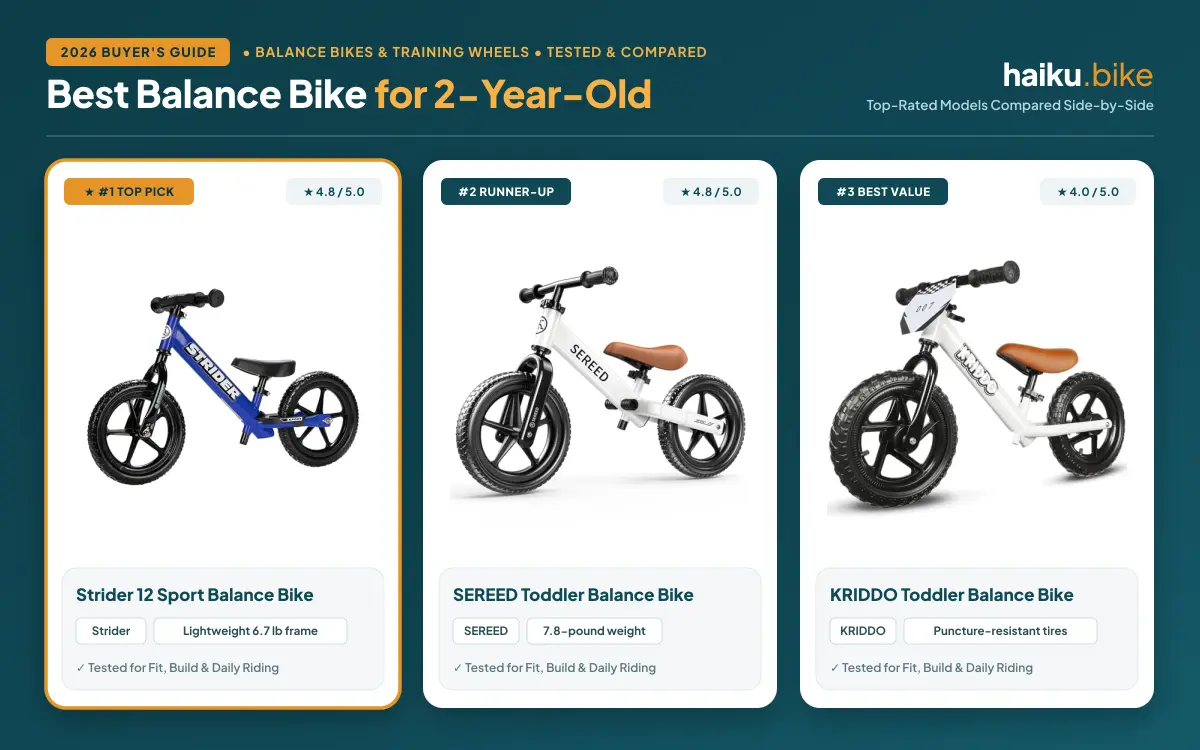
A push toy or balance bike can suit a child who is not ready to pedal or steer a tricycle. A caregiver-led push toy leaves more direction with the adult, while a balance bike lets a child move forward by pushing with their feet. Families can also wait until their child’s reach and coordination better match a tricycle.
Final Thoughts
Families who want caregiver steering and several ways to progress should consider the newyoo TR007 5-in-1 Tricycle for Toddlers 1-3. Its five modes and adjustable parts offer options for changing the riding setup, although a straightforward tricycle may be easier for families who do not need conversion.
The KRIDDO Toddler Tricycle for Toddlers Age 2-5 suits families who want a simpler design with a wide wheelbase and silent wheels. The Umatoll Tricycle for 2-5 Year Old adds removable baskets and light-up rear wheels, though those features should come after fit and supervision in the decision.
Caregivers who often carry a tricycle between home, car, and play areas may appreciate the seatback grip on the Radio Flyer Red Rider Trike, for Ages 2.5-5. The SEREED Colorful Lighting Kid Tricycle Gift Toy offers adjustable seating, a two-position handlebar, and detachable baskets, but its stated age range does not confirm fit for every child.
Skip these tricycles if your child cannot reach the controls comfortably or needs a different kind of riding support. Compare other options in Toddler Tricycles and browse our adult tricycle guide only when shopping for an adult rider.
FAQs
What should I look for in a best tricycle for 2 year old?
A tricycle for a two-year-old should fit the child’s reach, coordination, and the manufacturer’s age or size guidance. Check that the child can sit securely and reach the pedals and handlebars without strain. Seat adjustment and a caregiver-friendly steering setup may help, but an age label alone cannot confirm that a particular tricycle fits.
Is the newyoo TR007 suitable for a two-year-old?
The newyoo TR007 is described for children ages 1-3 under 43.3 inches, according to the manufacturer. It includes push and independent riding modes, an adjustable seat and handlebar, and a steering push handlebar. Caregivers should compare the child’s height and reach with the maker’s guidance, follow setup instructions, and supervise each ride.
Which toddler tricycles have adjustable seats?
Several tricycles in this guide list adjustable seats, including Umatoll, Radio Flyer, newyoo, and SEREED. Umatoll specifies two seat positions, while SEREED specifies three and also lists a two-position handlebar. Check the manufacturer’s instructions for adjustment steps and fit limits, because adjustability does not guarantee a suitable fit for every child.
Can toddlers ride these tricycles indoors?
Some toddler tricycles are described for indoor use, including KRIDDO, whose silent wheels are intended for quieter riding. Indoor use still carries collision and fall risks, so choose a clear, open area away from stairs and obstacles. Follow the maker’s guidance and supervise the child closely, even on a smooth floor.
Do toddler tricycle lights need batteries?
The Umatoll and SEREED descriptions say their rear wheels light up with movement without batteries. The lights are decorative features, not safety equipment or a substitute for adult supervision. Check the product instructions for care guidance, and do not treat wheel lights as a reason to ride near traffic or in unsafe conditions.
How can I check whether a toddler tricycle fits?
Check the manufacturer’s age and size guidance, then observe whether your child can sit securely and reach the pedals and handlebars comfortably. A listed age range cannot account for every child’s proportions. If dimensions are not provided or your child falls near a stated limit, ask the manufacturer before buying and recheck fit as your child grows.
Which tricycle is easiest for a caregiver to carry?
The Radio Flyer Red Rider Trike, for Ages 2.5-5 has a seatback hand grip designed to help caregivers lift and transport it. KRIDDO also describes an easy-to-carry seat. Consider how you will carry and store the tricycle, and compare options in the Toddler Tricycles category.


Write Your Review
No reviews yet. Be the first to share your experience!