

When rain, cold, or an early sunset makes outdoor miles impractical, a smart trainer lets you ride your own bike indoors and connect workouts to cycling apps. The right setup depends on your bike’s axle, your preferred training software, and how much noise and resistance control matter at home.
Our Best Smart Trainer guide compares 7 options from Garmin, Saris, Wahoo Fitness, and other brands for November 2026. Start with our indoor training category if you are weighing a smart trainer against other ways to ride indoors.
At a Glance: Which One Fits You
- Best overall: Wahoo KICKR V6 Smart Indoor Trainer earns this spot because Wahoo lists power accuracy within +/- 1% and resistance above 2,200 watts.
- Best value: ThinkRider X2Max Smart Bike earns this spot because its maker lists +/- 2% power accuracy, app connectivity, and simulated inclines up to 18%.
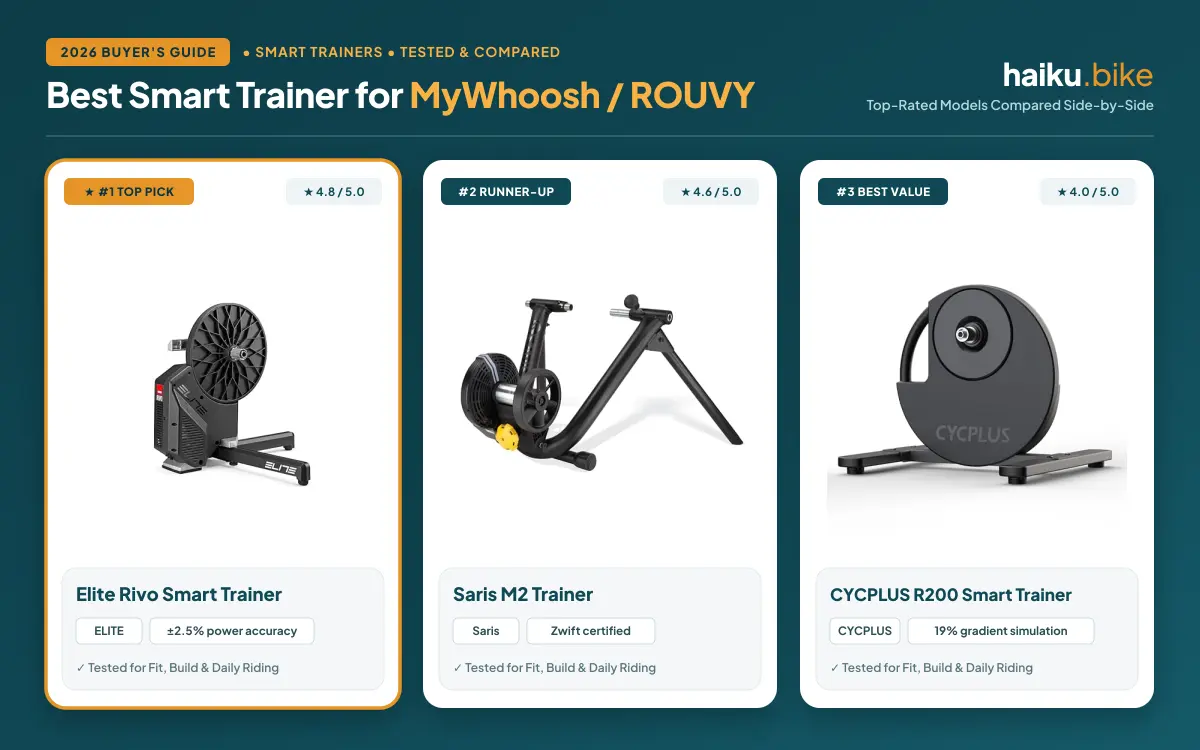
- Best for wheel-on simplicity: Saris M2 Smart Indoor Bike Trainer earns this spot because it connects at the rear wheel without removing the wheel.
- Best for a premium direct-drive setup: Garmin TacX Neo 2T Smart Trainer earns this spot because it supports ANT+ and Bluetooth and includes axle adapters for several common standards.

Pros
- Zwift certified
- ANT+ FE-C and Bluetooth
- Wheel-on setup
- Electromagnetic resistance
- Steel quick-release skewer included
Cons
- Power accuracy rated at ±5%
- Noise rated at 69 dB at 20 mph

Pros
- ANT+ and Bluetooth connectivity
- Foldable frame
- Multiple axle adapters included
- Front wheel block included
- Tacx Premium month included
Cons
- Cassette not included
- 47.4 lb weight

Pros
- Wheel-on mounting
- Bluetooth BLE 4.0 and ANT+
- Zwift and TrainerRoad compatibility
- Folds for storage
- Fits 26- to 29-inch and 700c wheels
Cons
- Thru-axle adapter sold separately
- Knobby tires make more noise
- Quick-release skewer included

Pros
- ANT+ and BLE connectivity
- Zwift compatibility
- Up to 2,000 watts
- Grade simulation up to 18%
- Maker-rated power error of ±2%
Cons
- Drivetrain compatibility not specified
- Cassette details not specified
- Heavy at 35.2 lb
Pros
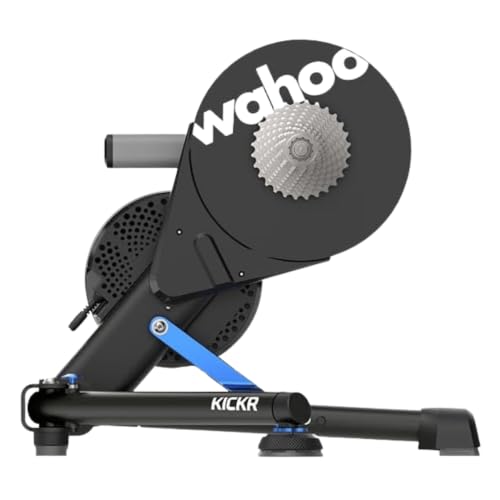
- Power accuracy within ±1%
- Over 2,200 watts of resistance
- Automatic calibration
- 2.4 GHz Wi-Fi connectivity
- Side-to-side movement from AXIS feet
Cons
- Weighs about 48.5 lb
- High price for indoor training

Pros
- No calibration required
- Self-generates electricity
- Downhill simulation
- ANT+ and Bluetooth
- Zwift app compatibility
Cons
- Drivetrain compatibility unlisted
- Trainer weight unlisted

Pros
- Smooth, road-like resistance
- Built for hard efforts
- Supports structured training
- Integrated WiFi
Cons
- Connectivity details not specified
- Resistance range not listed
- Noise level not listed
Side-by-Side Comparison
| Trainer | Drive setup | Connectivity | Power or resistance details | Fit and power needs |
|---|---|---|---|---|
| Saris M2 Smart Indoor Bike Trainer | Wheel-on | ANT+ FE-C and Bluetooth | +/- 5% accuracy; electromagnetic resistance | Steel quick-release skewer included |
| Garmin TacX Neo 2T Smart Trainer | Direct drive | ANT+ and Bluetooth | Magnetic resistance with 32 Neodymium magnets | Adapters listed for 130mm QR, 135mm QR, 12 x 142mm thru-axle, and 12 x 142mm Boost |
| Smart Bike Trainer – Fluid Bike Trainer Stand | Wheel-on | Bluetooth BLE4.0 and ANT+ | Fluid resistance; power accuracy not listed | 26- to 29-inch bikes and 700c wheels; quick-release skewer included |
| ThinkRider X2Max Smart Bike | Not listed | BLE and ANT+ | Up to 2000W; +/- 2% accuracy; simulated incline up to 18% | Not listed |
| Wahoo KICKR V6 Smart Indoor Trainer | Not listed | 2.4 GHz Wi-Fi | Above 2,200 watts; +/- 1% accuracy | Power cable required |
| Wahoo Fitness KICKR CORE 2 ZWIFT COG and Click | Not listed | Integrated Wi-Fi | Power accuracy and resistance figures not listed | Not listed |
| ThinkRider XXPRO Smart Bike Trainer,2500W,25% | Direct motor drive | Bluetooth and ANT+ | Up to 2500W; +/- 1% accuracy; simulated gradient up to 25% | Self-generates electricity, according to the maker |
Drive setup and bike fit change the purchase decision most because a trainer that cannot attach to your bike is not useful. Wheel-on designs keep the rear wheel installed, while direct-drive designs connect through the drivetrain; confirm axle compatibility and setup details before choosing.
Common Mistakes to Avoid
Axle mismatch is a common smart trainer buying mistake. The Saris M2 includes a steel quick-release skewer, while the Garmin TacX Neo 2T lists adapters for several quick-release and thru-axle standards. Check your bike’s rear axle type and the trainer’s included hardware, then confirm whether a separate adapter is needed.
Wheel and tire assumptions can also cause trouble with wheel-on trainers. The CXWXC fluid stand lists compatibility with 26- to 29-inch bikes and 700c wheels, but its maker warns that knobby tires can make more noise. Check wheel size and tire tread before buying, especially if you ride a mountain bike indoors.
App support does not guarantee every device will pair in the way you expect. Match the trainer’s listed connection standard, such as Bluetooth or ANT+, to your phone, computer, or cycling app. Also check power requirements: the Garmin TacX Neo 2T includes a power cable, while the ThinkRider XXPRO says it can generate its own electricity.
Best Smart Trainer Buying Guide
Wheel-On or Direct Drive
Wheel-on trainers hold the bike by its rear wheel, while direct-drive trainers connect to the drivetrain after wheel removal. That difference affects setup, tire wear considerations, and which hardware you need to fit your bike.
The Saris M2 and CXWXC fluid stand are wheel-on options, so you can leave the rear wheel installed. The Garmin TacX Neo 2T is a direct-drive option. The ThinkRider XXPRO is described as direct motor drive, while the drive arrangement for some other models is not listed. Confirm the maker’s setup instructions and required drivetrain parts before ordering.
Power Accuracy and Resistance
Power accuracy describes how closely a trainer’s reported power corresponds to its measured output, while resistance determines how hard it can make a ride. These figures matter most if you follow structured workouts or want the app to change resistance during a route.
Wahoo lists the KICKR V6 at +/- 1% accuracy and above 2,200 watts; ThinkRider lists the X2Max at +/- 2% and up to 2000W. ThinkRider lists the XXPRO at +/- 1% and up to 2500W. Compare figures only when the maker publishes them, and check whether your intended app controls resistance on the trainer.
Incline Simulation and Ride Feel
Incline simulation lets a connected trainer increase resistance to reflect climbing in a virtual route. A larger stated gradient can matter to riders who want steep virtual climbs, but it does not alone describe road feel or overall training quality.
ThinkRider lists simulated inclines up to 18% for the X2Max and up to 25% for the XXPRO. Wahoo describes the KICKR V6’s high-inertia flywheel, algorithms, and AXIS feet as contributing to its ride feel. Compare the features you will use, and do not assume an unlisted incline figure means a trainer cannot vary resistance.
Noise and Your Riding Space
Trainer noise matters when you ride near other people or in a shared building. Sound varies with the trainer mechanism, tire, riding speed, and installation, so a single maker figure does not describe every home setup.
Saris lists the M2 at 69 decibels at 20 mph, and ThinkRider lists the X2Max at about 58dB at 30km / H. The CXWXC fluid stand’s maker says tire tread affects noise and recommends road tires over rough mountain bike tires. Consider where you will ride and check the manufacturer’s guidance for your tire and setup.
App and Device Compatibility
Connectivity determines whether a smart trainer can communicate with your training app and devices. ANT+ and Bluetooth are common options in this group, while Wi-Fi appears on the listed Wahoo trainers.
The Saris M2 supports ANT+ FE-C and Bluetooth, and Garmin lists ANT+ and Bluetooth for the TacX Neo 2T. Wahoo describes Wi-Fi connectivity for the KICKR V6 and integrated Wi-Fi for the KICKR CORE 2. Check your preferred app’s device requirements, the trainer’s connection modes, and whether you need an additional receiver or adapter.
Axle, Wheel, and Setup Fit
Bike fit includes axle standard, wheel size, and the hardware required to attach the frame securely. A smart trainer may support an app you like and still need an adapter that is not included in the box.
The Garmin TacX Neo 2T lists multiple axle adapters, while the CXWXC stand lists 26- to 29-inch and 700c wheels and says its package includes a quick-release skewer. Its maker notes that thru-axle bikes need a separately purchased adapter. Compare your bike’s specifications with the product listing, and consult the trainer maker if compatibility remains unclear.
Indoor training can also be a useful complement to outdoor equipment, rather than a replacement for it. Riders refreshing their road setup can compare our guide to road bike handlebar tape while planning comfort and fit changes.
How We Chose
We score smart trainers with the Haiku Ride Score: core performance 30%, build and weather resistance 20%, ease of use 20%, compatibility and battery 15%, and value 15%. We evaluate manufacturer specifications, compatibility information, and long-term owner feedback to compare how each trainer may suit different indoor riders.
We research and draft our guides with software tools, including AI, then run automated checks on product fit, sourcing, and our editorial rules. Our editor spot-checks guides rather than reading each one before publication. We focus on clearly stated features and trade-offs, and explain where a listing leaves a useful specification unreported. See our how we review page for more about the editorial method.
Price and Value: What Each Budget Gets You
Budget
At the budget end, a smart trainer can provide app connections and a straightforward way to ride your existing bike indoors, often with a wheel-on setup. The Saris M2 adds electromagnetic resistance and dual ANT+ FE-C and Bluetooth connectivity. Buyers give up the extra published precision and features found on higher-tier options, so check whether the listed accuracy suits your training needs.
Mid-Range
Mid-range options can add more detailed resistance control, stronger stated power accuracy, or features intended to make setup and virtual riding more engaging. The ThinkRider X2Max lists +/- 2% accuracy, up to 2000W, and incline simulation up to 18%. The trade-off is that some setup and fit details are not listed, so confirm those with the maker before purchase.
Premium
Premium trainers may prioritize closer stated power accuracy, high resistance, connectivity, and refined ride feel. The Wahoo KICKR V6 lists accuracy within +/- 1%, resistance above 2,200 watts, Wi-Fi, and calibration-free operation. Garmin’s TacX Neo 2T includes axle adapters and broad device support. Buyers give up value if they will not use advanced resistance or connected training features.
Choosing Something Else
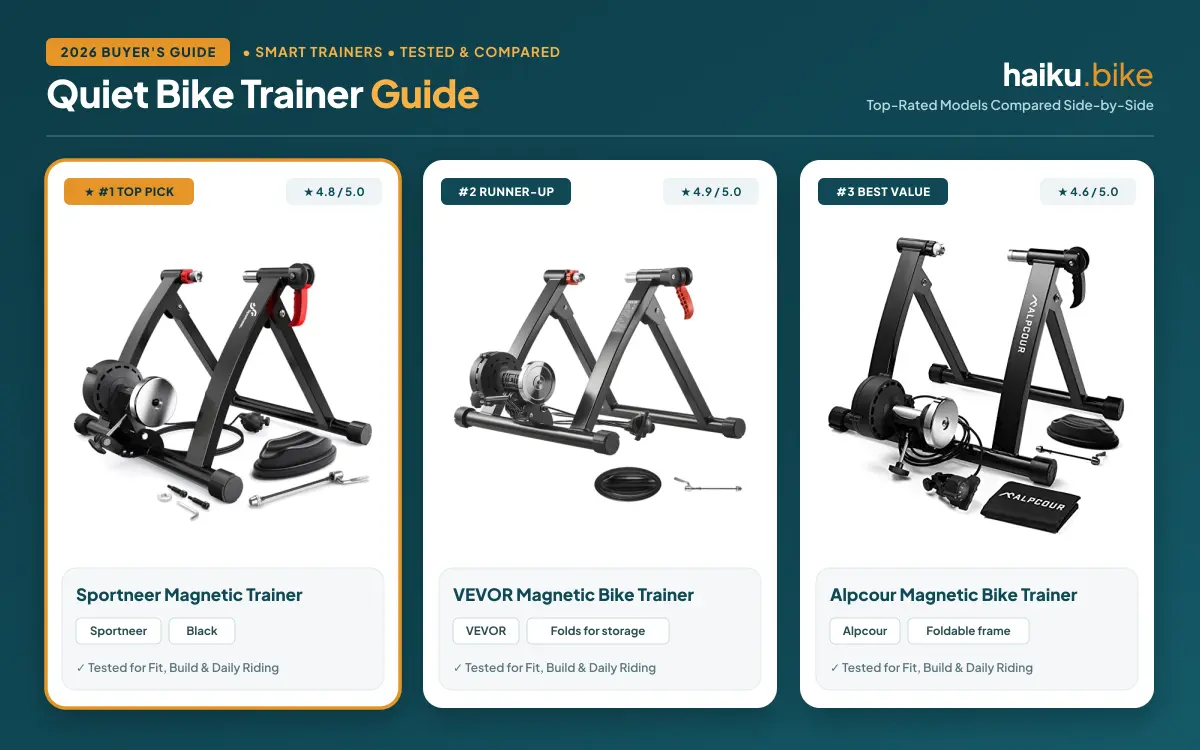
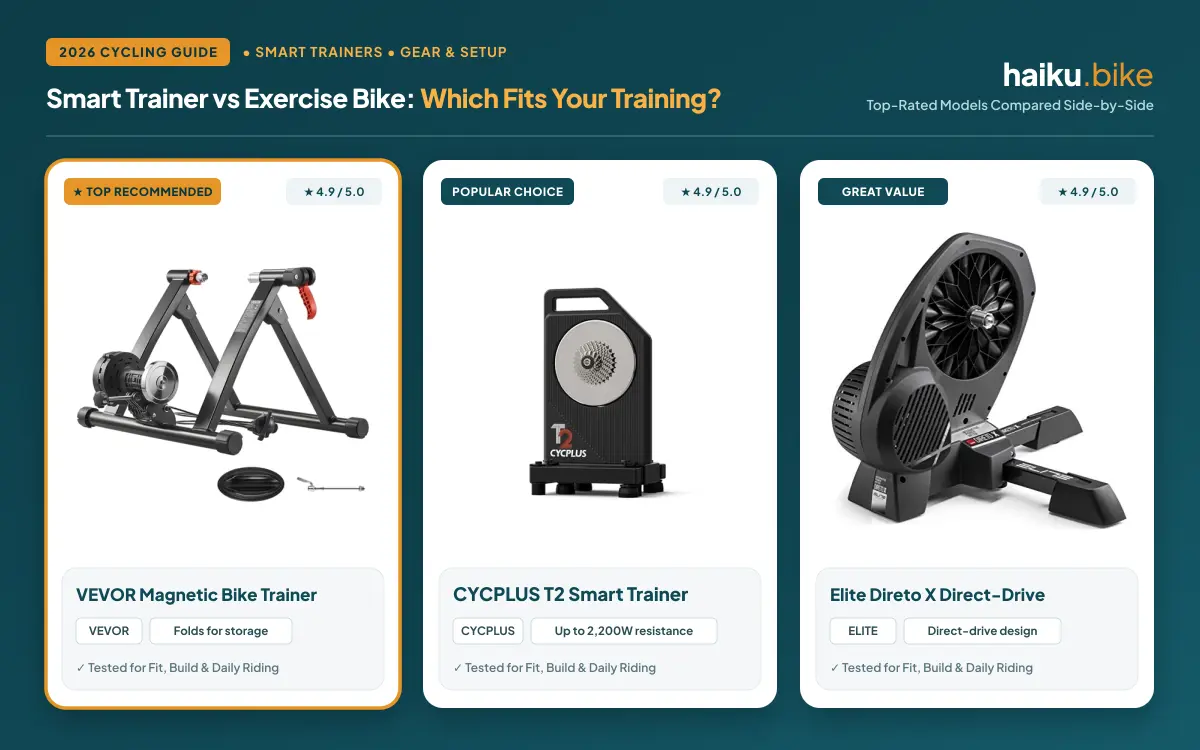
A basic fluid or magnetic trainer may suit riders who want indoor exercise without app-controlled resistance or connected workout features. The CXWXC fluid stand connects to a rear wheel and supports popular training apps, but its listing does not state power accuracy. Choose a simpler setup if you value indoor riding more than precise connected workouts, and confirm bike fit first.
Final Thoughts
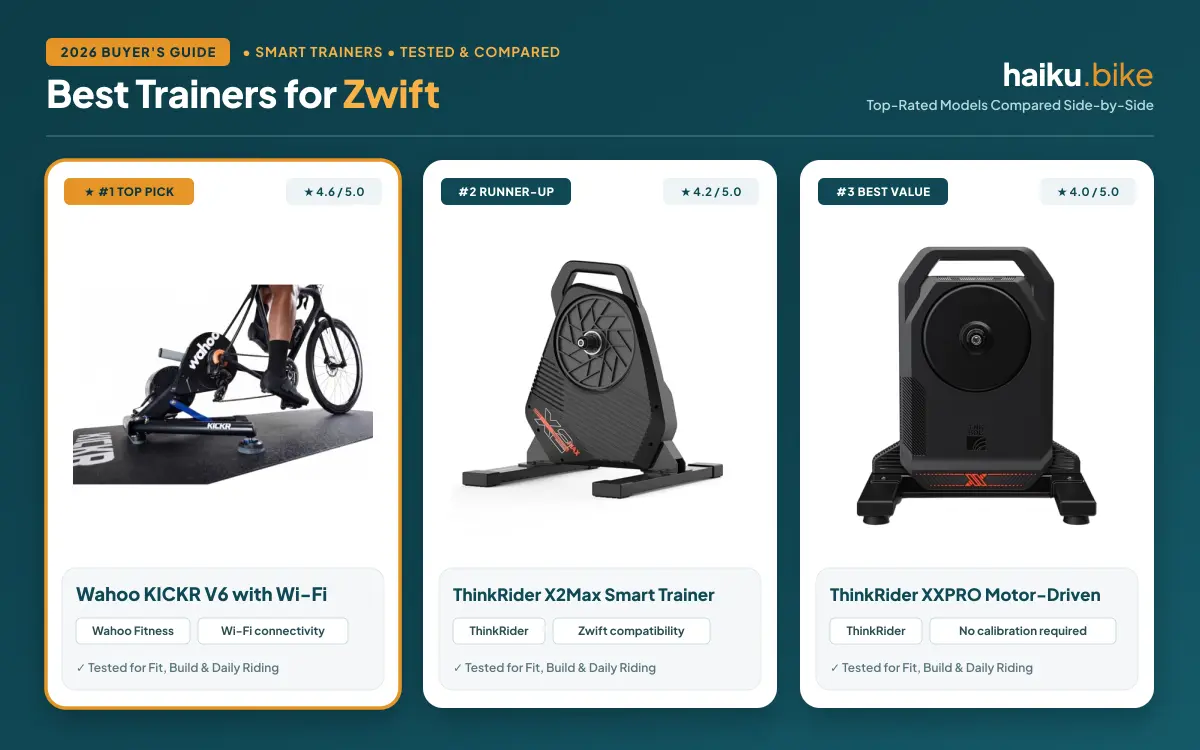
Riders who want strong published power accuracy and high resistance should compare the Wahoo KICKR V6 Smart Indoor Trainer with the ThinkRider XXPRO Smart Bike Trainer,2500W,25%. Wahoo lists Wi-Fi and calibration-free operation; ThinkRider lists direct motor drive, self-generation, and a simulated gradient up to 25%. Check fit and app support before deciding.
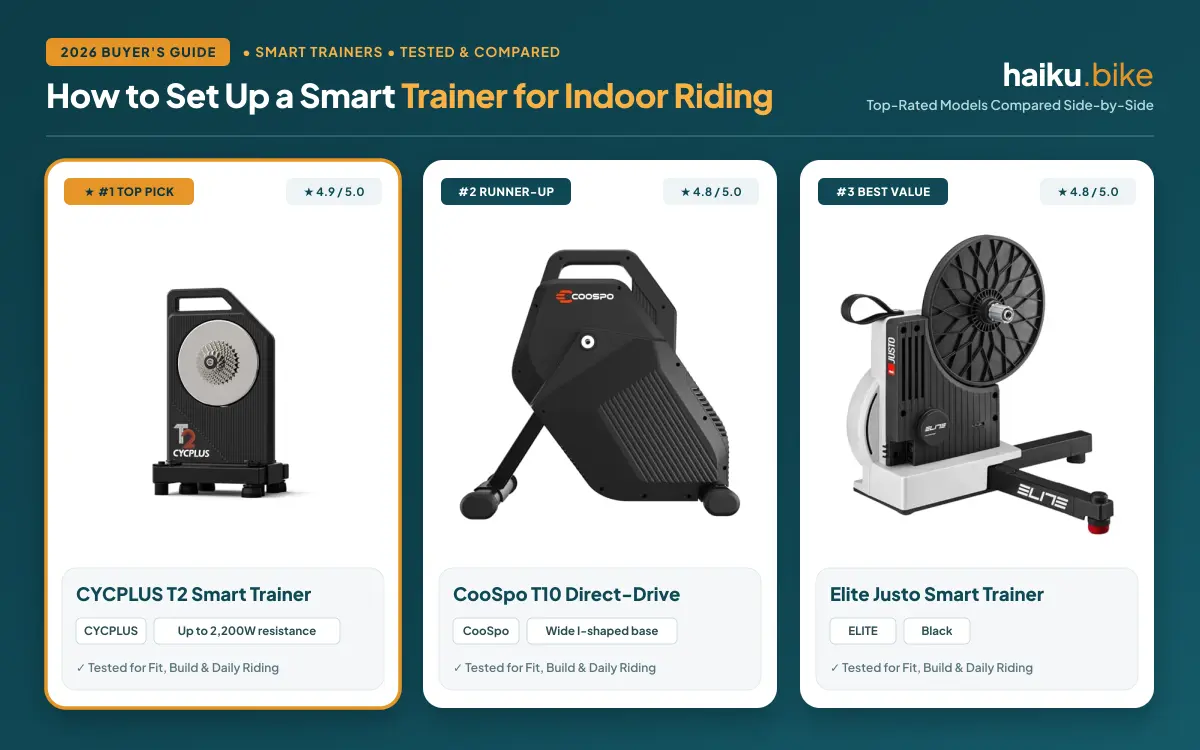
For a wheel-on setup, the Saris M2 Smart Indoor Bike Trainer avoids rear-wheel removal and supports ANT+ FE-C and Bluetooth. Riders seeking a direct-drive premium option can consider the Garmin TacX Neo 2T Smart Trainer, but should match its adapters to their bike’s axle. Budget-focused buyers can compare the ThinkRider X2Max Smart Bike and its listed incline and power figures.
Skip a smart trainer if you do not plan to ride indoors or use connected workouts; a simpler indoor stand may fit occasional exercise better. Riders with a bike that does not match available axle or wheel hardware should resolve compatibility before buying. For other bike upgrades, browse our smart trainers category and folding electric bike guide.
FAQs
Which Best Smart Trainer options work with Zwift?
Several Best Smart Trainer options in this guide list compatibility with Zwift or cycling apps that include Zwift. Saris says the M2 is Zwift certified, and ThinkRider names Zwift among compatible software for its trainers. Check the current Zwift device requirements and your trainer’s connection method before purchase, because pairing depends on compatible hardware and software.
Can I use a wheel-on smart trainer with a mountain bike?
A wheel-on smart trainer can work with some mountain bikes, but wheel size, axle hardware, and tire tread all matter. The CXWXC fluid stand lists 26- to 29-inch bikes and 700c wheels, and its maker notes that rough tires can make more noise. Check the trainer’s fit information and your bike’s axle before ordering.
Do smart trainers need a power outlet?
Smart trainer power needs depend on the model. Garmin lists a power cable for the TacX Neo 2T, and Wahoo lists Wi-Fi connectivity for its KICKR models. ThinkRider says the XXPRO can generate its own electricity and operate without a power adapter. Confirm the exact power and connectivity requirements for your chosen trainer in its maker instructions.
How do I know whether a trainer fits my bike axle?
To confirm smart trainer axle fit, identify your bike’s rear axle type and compare it with the trainer’s included adapters. Garmin lists adapters for common quick-release and thru-axle standards, while the CXWXC stand includes a quick-release skewer and requires a separate adapter for thru-axle bikes. Check the manufacturer’s fit guide if your bike’s standard is unclear.
Are smart trainers quiet enough for an apartment?
Smart trainer noise varies by trainer, tire, speed, and floor setup, so no single specification guarantees quiet operation in an apartment. Saris lists a noise figure for the M2 at a stated speed, and ThinkRider lists one for the X2Max. Check those maker figures, consider your tire tread, and follow building rules about indoor noise.
Can a smart trainer change resistance during a virtual ride?
A connected smart trainer can adjust resistance when compatible software supports that control. ThinkRider says the X2Max matches resistance to mapped incline when connected to riding software, and Wahoo describes connected KICKR features. Before buying, confirm that your preferred app, device, and trainer use compatible connection standards and support the features you want.
How should I maintain a smart trainer?
Smart trainer maintenance starts with following the manufacturer’s instructions for installation, cleaning, and storage. Keep the trainer stable, inspect its connections and bike fit before riding, and use the specified adapters rather than forcing an axle into place. For indoor training guidance and related equipment, see our indoor training category.

Write Your Review
No reviews yet. Be the first to share your experience!