

A six-year-old learning to ride needs a bike that fits comfortably, stops predictably, and matches their current balance skills. Age ranges help narrow choices, but a child’s height and ability to stand over the frame matter more than age alone.
Our guide compares 7 children’s bikes for different starting points, from a pedal-free balance bike to 16-inch beginners’ bikes and a geared 20-inch option. Follow each manufacturer’s assembly and safety instructions, obey local riding laws, and choose a properly fitted helmet that meets CPSC 16 CFR Part 1203. See our Kids Bikes coverage for more options.
At a Glance: Which One Fits You
- Best overall: Schwinn Elm 16-Inch Bike for Kids Ages 5-7 earns this spot because its low-step frame, adjustable seatpost, and removable training wheels suit many beginner riders.
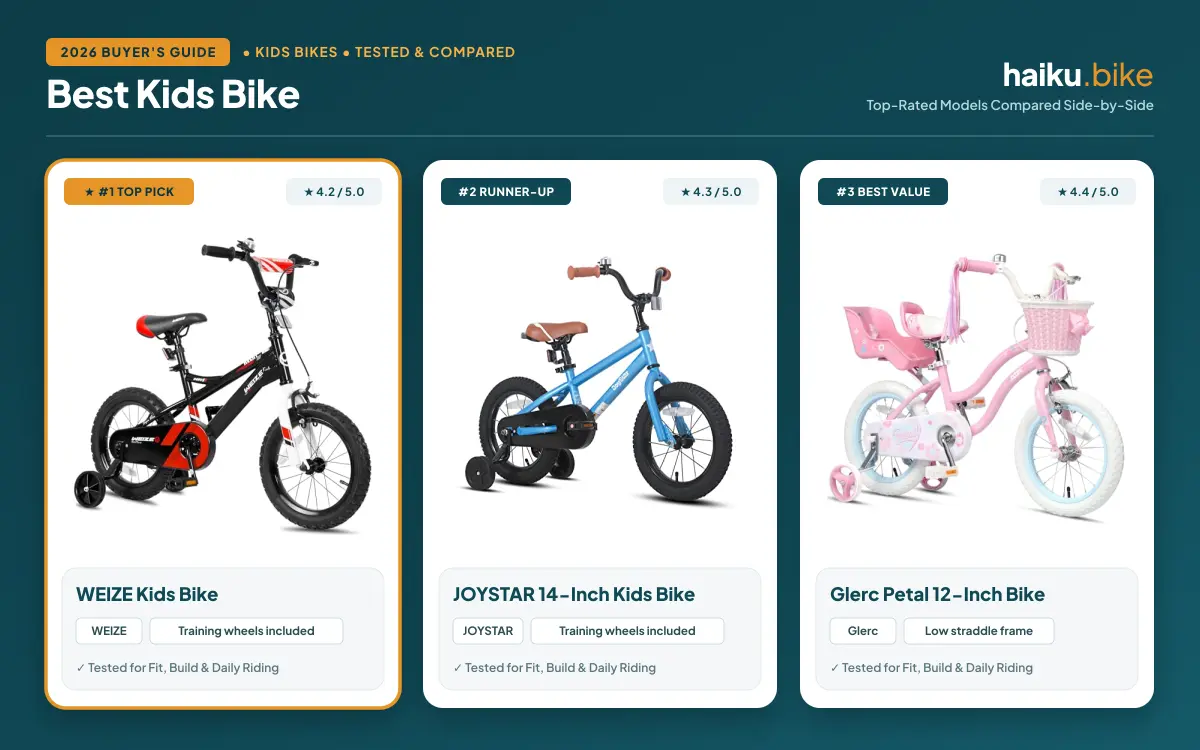
- Best value: WEIZE Kids Bike, 14 16 20 Inch Children Bicycle earns this spot because it offers three wheel-size choices, a hand brake plus coaster brake, and training wheels on smaller sizes.
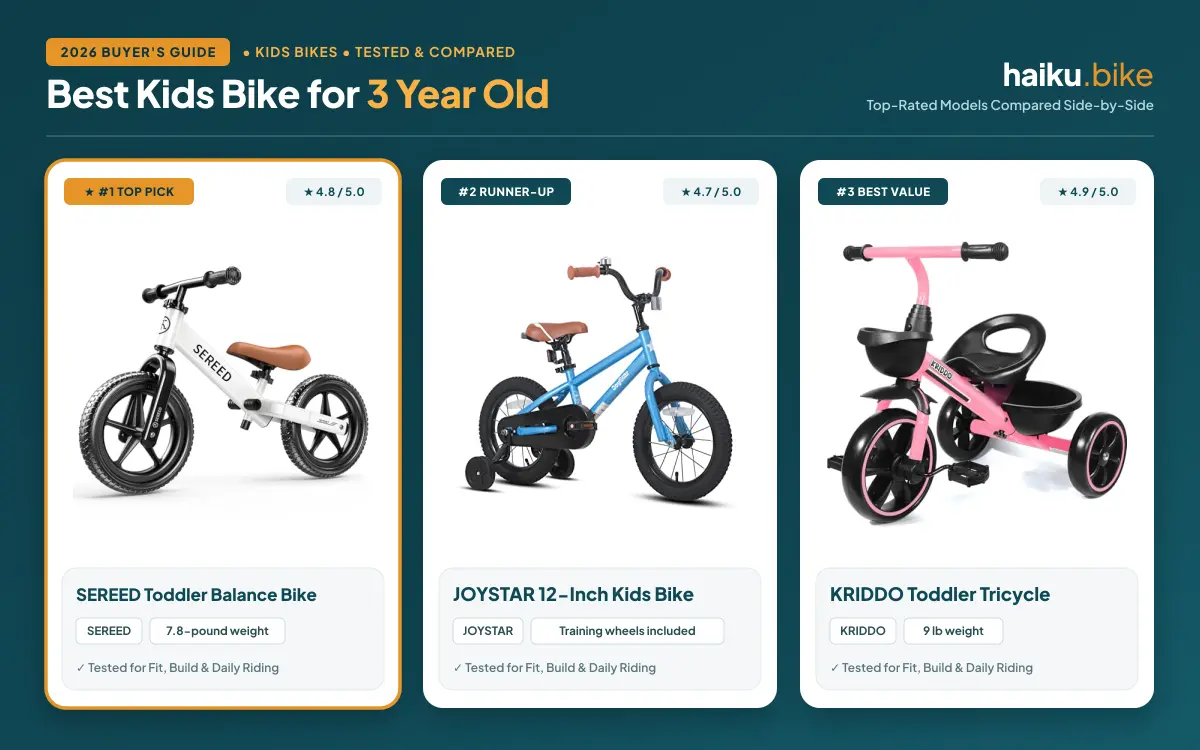
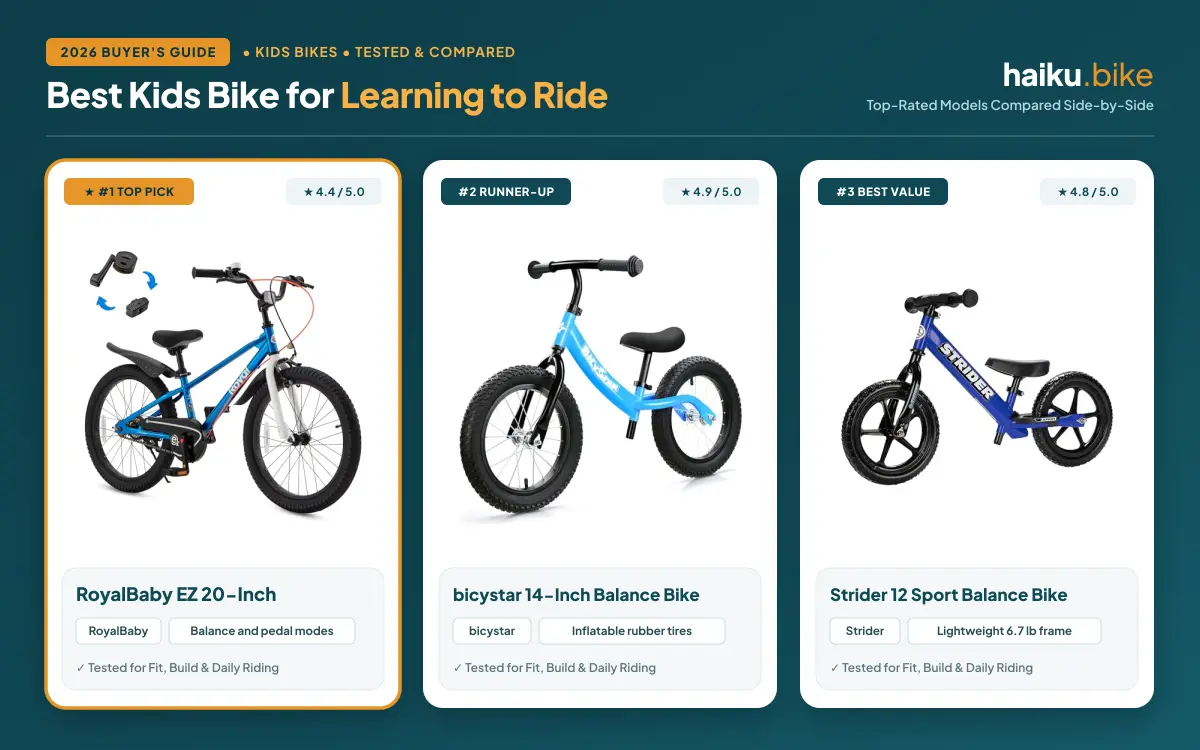
- Best for balance-bike learners: Ridego 14 Inch Balance Bike for Kids 3-6 Year earns this spot because its pedal-free design lets children practice balance before managing pedaling.
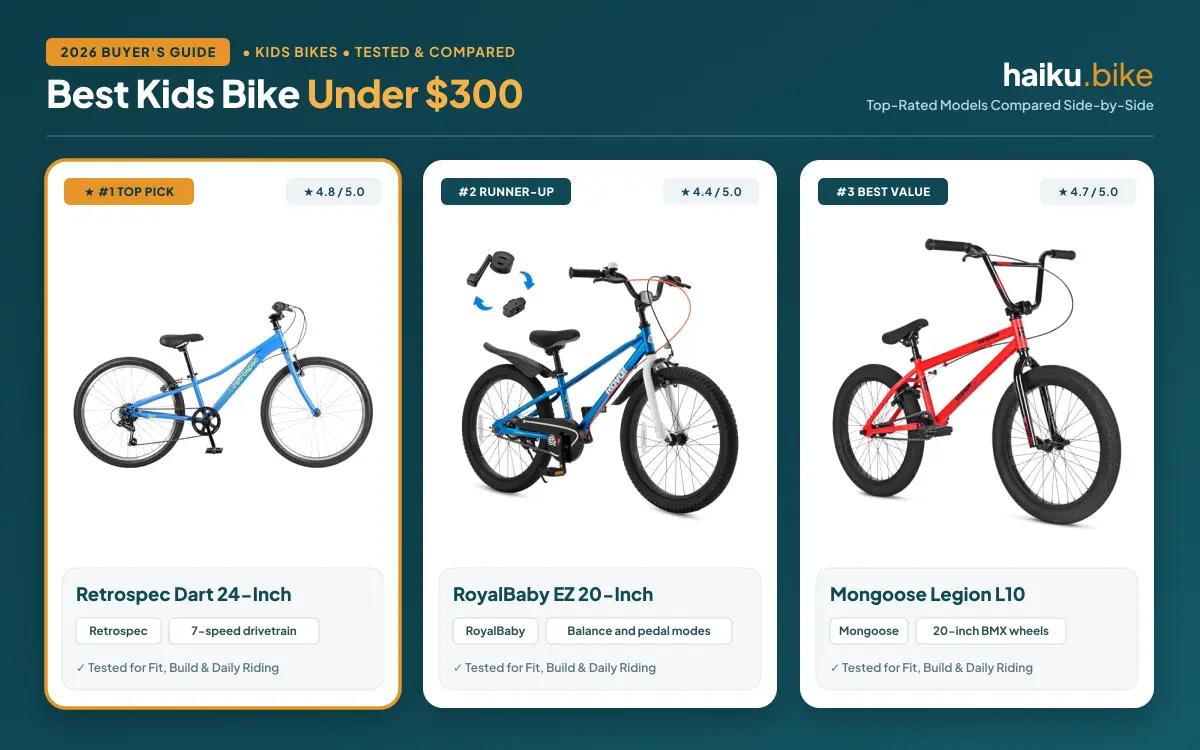
- Best for young riders wanting gears: WEIZE 20 Inch Kid Mountain Bike,Kid Bike for Girls earns this spot because it has six speeds and a front suspension fork.

Pros
- Air-filled rubber tires
- Adjustable 14.2- to 18.3-inch seat
- Footrest included
- Non-slip handlebars
Cons
- No brake specification listed
- 14-inch wheel size may not fit every child aged 3 to 6

Pros
- Low-step frame
- Tool-free adjustable seatpost
- Removable training wheels
- Rear coaster brake
- Seat handle for parent guidance
Cons
- Fit limited to riders 42 to 48 inches tall
- Coaster brake requires backward pedaling

Pros
- Six-speed drivetrain
- Front suspension fork
- Front and rear caliper brakes
- Adjustable saddle
- 85% pre-installed
Cons
- 20-inch version listed for ages 6 to 11
- No bike weight listed
- No tire details listed

Pros
- Training wheels included
- Rear coaster brake
- 2.125-inch pneumatic tires
- Enclosed chainguard and reflectors
- Motocross-style accessories included
Cons
- Single-speed drivetrain
- 28.7 lb listed weight
- Assembly still required

Pros
- Hand brake and coaster brake
- Tool-free adjustable saddle
- Training wheels on 14- and 16-inch sizes
- Full chain guard
- Steel frame
Cons
- Only three wheel sizes listed
- No bike weight stated
- No assembly time stated

Pros
- Hand brake and coaster brake
- Training wheels included
- Tool-free adjustable saddle
- Adjustable handlebar
- Full chain guard
Cons
- 14-inch size for smaller riders
- Bike weight not listed

Pros
- Removable training wheels
- Tool-free seat adjustment
- Low-step frame
- Seat handle for parent guidance
- Kid-sized grips and pedals
Cons
- No hand brake listed
- 20.5 lb overall weight
- Rider height range: 42 to 48 inches
Side-by-Side Comparison
| Bike | Wheel size | Age or rider fit listed | Brakes or learning features | Other listed features |
|---|---|---|---|---|
| Ridego 14 Inch Balance Bike for Kids 3-6 Year | 14 inches | Ages 3 to 6; seat 14.2 to 18.3 inches | No pedals; balance bike | Air tires; 8.16 lb; 110 lb capacity |
| Schwinn Elm 16-Inch Bike for Kids Ages 5-7 | 16 inches | Riders 42 to 48 inches | Rear coaster brake; removable training wheels | Low-step frame; adjustable seatpost |
| WEIZE 20 Inch Kid Mountain Bike,Kid Bike for Girls | 20 inches | Ages 6 to 11; 42 to 56 inches | Front and rear caliper brakes | Six speeds; front suspension; steel frame |
| KEANO 16" Motocross Kids Bike for 4-7 Yrs Training | 16 inches | Ages 4 to 7 | Rear coaster brake; training wheels | Steel frame; 2.125-inch tires; chain guard |
| WEIZE Kids Bike, 14 16 20 Inch Children Bicycle | 14, 16, or 20 inches | 14-inch: 35.4 to 41.3 inches; 16-inch: 38 to 48 inches; 20-inch: 48 to 62 inches | Hand brake and coaster brake; training wheels on 14- and 16-inch sizes | Adjustable handlebar and saddle; enclosed chain guard |
| WEIZE Kids Bike, 14 16 20 Inch Children Bicycle | 14, 16, or 20 inches | 14-inch: 35.4 to 41.3 inches; 16-inch: 38 to 48 inches; 20-inch: 48 to 62 inches | Hand brake and coaster brake; training wheels on 14- and 16-inch sizes | Adjustable handlebar and saddle; enclosed chain guard |
| Schwinn Koen 16-Inch Bike for Kids Ages 5-7 | 16 inches | Riders 42 to 48 inches | Rear coaster brake; removable training wheels | Low-step frame; adjustable seatpost |
Wheel size and rider fit change the decision most: the listed 16-inch bikes suit riders around 42 to 48 inches, while the 20-inch options cover taller children. Check the exact size configuration before ordering, because multi-size listings describe more than one fit range.
Common Mistakes to Avoid
Buying by age alone can leave a child unable to reach the ground comfortably or control the handlebars. Measure your child’s height and inseam, then compare those measurements with the maker’s stated fit range and confirm the child can mount and stop confidently.
Choosing a larger wheel to extend the bike’s useful life can make learning harder today. A child should be able to stand over the frame and reach controls without stretching; a future growth spurt does not compensate for poor present fit.
Training wheels do not teach balance by themselves, and they can be a poor match for a child ready to ride independently. Consider a balance bike for a learner who needs balance practice, or removable training wheels when added support helps the child start pedaling.
Brake type deserves a hands-on check after assembly, even when the listing describes a beginner-friendly setup. Confirm your child can operate the hand brake if fitted, understands backward-pedal braking on coaster-brake models, and can stop in a safe open area with adult supervision.
Best Kids Bike for a 6-Year-Old: Buying Guide
Fit and Wheel Size
Fit determines whether a child can start, steer, and stop with control, so compare the child’s measurements with the maker’s stated rider range. Six-year-olds vary widely in height, and age labels cannot confirm that a particular frame fits.
For example, Schwinn lists its Elm and Koen 16-inch bikes for riders 42 to 48 inches tall, while WEIZE gives different ranges for each size. The WEIZE 20-inch option lists a 48-to-62-inch range, so it may suit a taller child but can be too large for a shorter six-year-old.
Ask the child to stand over the frame and reach the bars without locking their arms when trying a bike in person. Check whether the seat adjusts enough for a secure starting position, then reassess fit as the child grows instead of buying extra size upfront.
Balance Skills and Training Wheels
A bike’s learning setup should match whether the child is still developing balance or is ready to pedal independently. A balance bike has no pedals, while training wheels provide side-to-side support on a pedal bike.
The Ridego balance bike has a 14-inch frame, adjustable seat, and no pedals, making it a choice for practicing steering and balance before moving to a pedal bike. Schwinn Elm and Koen include training wheels that can be removed as confidence improves.
Training wheels may help a beginner feel steady, but they do not replace learning to balance. Choose the approach that keeps the child engaged, and avoid forcing a transition before the rider feels ready to practice starts, turns, and stops.
Brakes and Control
Brake design affects how a young rider slows down and whether they can reach the controls comfortably. A coaster brake engages when the rider pedals backward, while a hand brake requires enough reach and finger strength to squeeze its lever.
Schwinn Elm and Koen list rear coaster brakes, while the WEIZE multi-size bikes combine a hand brake with a coaster brake. The WEIZE 20-inch mountain bike lists front and rear caliper brakes, so consider whether the child can use both levers correctly before choosing that setup.
Check lever reach and braking instructions before the first ride, and supervise practice in a level, low-traffic area. Do not assume a child understands a braking system because they have used another bike; controls can differ between models.
Terrain, Tires, and Gears
Tires and gearing should suit the surfaces and hills a child will ride, rather than appearance alone. A simple single-speed bike keeps controls straightforward for neighborhood paths, while multiple gears add options for changing terrain and effort.
The WEIZE 20-inch bike lists six speeds and a front suspension fork for riders seeking a more trail-oriented setup. The KEANO 16-inch bike has one speed and 2.125-inch pneumatic tires, while the Ridego balance bike lists air-filled tires for pavement, grass, and gravel.
Match features to the child’s regular routes: gears add shifting tasks, and suspension adds a component the child may not need for smooth paths. For a family considering other styles, our Bikes & E-Bikes category covers adult and youth bicycle topics.
Frame, Chain Guard, and Everyday Safety
Frame design and protective details affect how easy a bike is to mount and use during ordinary rides. A low-step frame can make getting on easier, while an enclosed chain guard helps protect clothing and legs from the chain.
Schwinn lists low-step frames on Elm and Koen, and both WEIZE multi-size listings describe a full chain guard. The KEANO listing also specifies an enclosed chainguard, reflectors, and a steel frame; compare these practical details with the riding conditions your family expects.
Inspect the assembled bike according to its manufacturer’s instructions, including fasteners, brakes, tires, and any included accessories. Choose a properly fitted bicycle helmet that meets CPSC 16 CFR Part 1203, and check the helmet listing for certification rather than assuming it is compliant.
Assembly and Adjustability
Assembly and adjustment determine whether the bike can be set up safely and adapted as the child grows. Check what arrives assembled, which tools are included, and whether the saddle or handlebar can be adjusted without specialized equipment.
Schwinn describes one-tool assembly for Elm and Koen and a tool-free adjustable seatpost. KEANO and the WEIZE 20-inch bike describe partial preassembly, while the WEIZE multi-size bikes list adjustable handlebars and saddles.
Follow the included instructions and seek qualified bicycle service if any assembly step is unclear. Recheck fit and adjustment as the rider grows, and do not rely on a seatpost range or assembly estimate that the manufacturer has not specified.
How We Chose
We compare children’s bikes with the Haiku Ride Score, which weights core performance at 30%, build and weather resistance at 20%, ease of use at 20%, compatibility and battery at 15%, and value at 15%. The battery category remains part of our standard score, although these bicycles do not list batteries.
Our evaluation draws on manufacturer specifications, compatibility information, and long-term owner feedback when available. We research and draft our guides with software tools, including AI, then run automated checks on product fit, sourcing, and our editorial rules. Our editor spot-checks guides rather than reading each one before publication. Our how we review page explains the method.
Price and Value: What Each Budget Gets You
Budget
At the lower end of this guide, buyers can find a straightforward balance bike or a basic pedal bike with beginner-friendly features. The Ridego balance bike focuses on balance practice, while the WEIZE multi-size bikes include a chain guard and dual braking. Lower-cost choices may offer fewer riding features than a geared bike, so prioritize fit and the learning setup over extras.
Mid-Range
Moving into the middle of the range can bring a more specialized riding setup, such as the KEANO’s wide pneumatic tires, training wheels, reflectors, and enclosed chain guard. The trade-off is that its single-speed drivetrain offers no gearing choices. Families should weigh useful fit and safety details more heavily than decorative accessories that do not match the child’s routes.
Premium
At the upper end, the Schwinn Elm adds a low-step frame, removable training wheels, a rear coaster brake, and an adjustable seatpost. The higher spend does not guarantee a better fit, and a child who needs a different wheel size should choose the right size over a familiar brand name. Compare reach, standing clearance, and brake operation before deciding.
Choosing Something Else
A child who is not ready for pedals may benefit more from a balance bike than a conventional children’s bicycle. The Ridego is one listed example, but families can also wait and practice basic balance skills before buying. A child who has outgrown small wheels may need a correctly fitted larger bike instead of any 14- or 16-inch option here.
Final Thoughts
For a six-year-old who fits the listed rider range and is beginning to pedal, the Schwinn Elm 16-Inch Bike for Kids Ages 5-7 combines a low-step frame, adjustable seatpost, and removable training wheels. Its coaster brake suits children comfortable with backward-pedal stopping, but a child who needs hand-brake practice should compare the WEIZE dual-brake options.
Choose the Ridego 14 Inch Balance Bike for Kids 3-6 Year when balance practice is the main need, or the WEIZE Kids Bike, 14 16 20 Inch Children Bicycle when you want size choices and a hand brake plus coaster brake. Riders who fit its range and want gears can consider the WEIZE 20 Inch Kid Mountain Bike,Kid Bike for Girls, while accepting its larger-wheel fit requirements.
The KEANO 16" Motocross Kids Bike for 4-7 Yrs Training suits a beginner drawn to its motocross styling and included training wheels, though its single speed limits gearing choices. The Schwinn Koen 16-Inch Bike for Kids Ages 5-7 shares the Elm’s listed fit and learning features, so compare availability and preferred styling.
Skip these choices if none fits the child’s height or riding ability; an ill-fitting bike can make control harder regardless of its features. A child who has mastered balance and needs a larger frame should shop by measured fit, while a not-yet-pedaling learner may prefer a balance bike. Browse our kids’ bike guides for related buying advice.
FAQs
What size bike does a 6-year-old need?
A six-year-old’s bike size depends on height, inseam, and confidence, not age alone. The bikes in this guide include 14-, 16-, and 20-inch wheel options, with manufacturer fit ranges that vary by model. Measure the child and compare those figures with the exact size listing, then confirm the rider can stand over the frame and reach the controls.
Is a 16-inch bike suitable for a 6-year-old?
A 16-inch bike can suit a six-year-old who falls within its stated fit range and can control the frame. Schwinn lists its Elm and Koen for riders 42 to 48 inches tall, while WEIZE lists different ranges by size. Check the specific model’s measurements because wheel size does not guarantee that every child of the same age fits.
Should a 6-year-old use training wheels or a balance bike?
A six-year-old who is still learning balance may prefer a balance bike, while another beginner may feel more comfortable starting on pedals with training wheels. The Ridego has no pedals, and several listed 16-inch bikes include removable training wheels. Choose based on the child’s confidence and learning needs, then allow supervised practice without rushing a transition.
Are coaster brakes or hand brakes better for a child?
Coaster brakes stop a bike when the rider pedals backward, while hand brakes require the rider to squeeze a lever. Neither system fits every child equally well. Check whether the child can reach and operate any hand lever, and teach the braking method on the chosen bike in a safe area before riding near traffic.
Does a six-year-old need a geared bike?
A six-year-old does not automatically need gears; a single-speed bike can keep controls simpler on flat neighborhood rides. The WEIZE 20-inch option lists six speeds and may suit a rider who fits its size range and is ready to shift. Consider route hills, rider coordination, and fit before adding shifting tasks.
What safety equipment should a child wear on a bike?
A child riding a bicycle should wear a properly fitted helmet that meets CPSC 16 CFR Part 1203, and adults should check the helmet listing for certification. Follow the helmet and bicycle manufacturers’ instructions, supervise according to the child’s ability, and follow local riding laws. A bike’s included reflectors do not replace a correctly fitted helmet.
How can I tell whether a children’s bike fits?
A children’s bike fits when the rider can stand over its frame, reach the handlebars, and operate the brakes without stretching. Compare the rider’s height with the maker’s stated range, then check saddle adjustment and control reach. For more category guidance, visit our Kids Bikes page and compare models by fit rather than age label alone.
Write Your Review
No reviews yet. Be the first to share your experience!