Young riders need a bike they can mount, steer, and stop confidently, not one chosen by age or appearance alone. The right wheel size, reachable controls, and suitable learning features can make neighborhood rides more manageable.
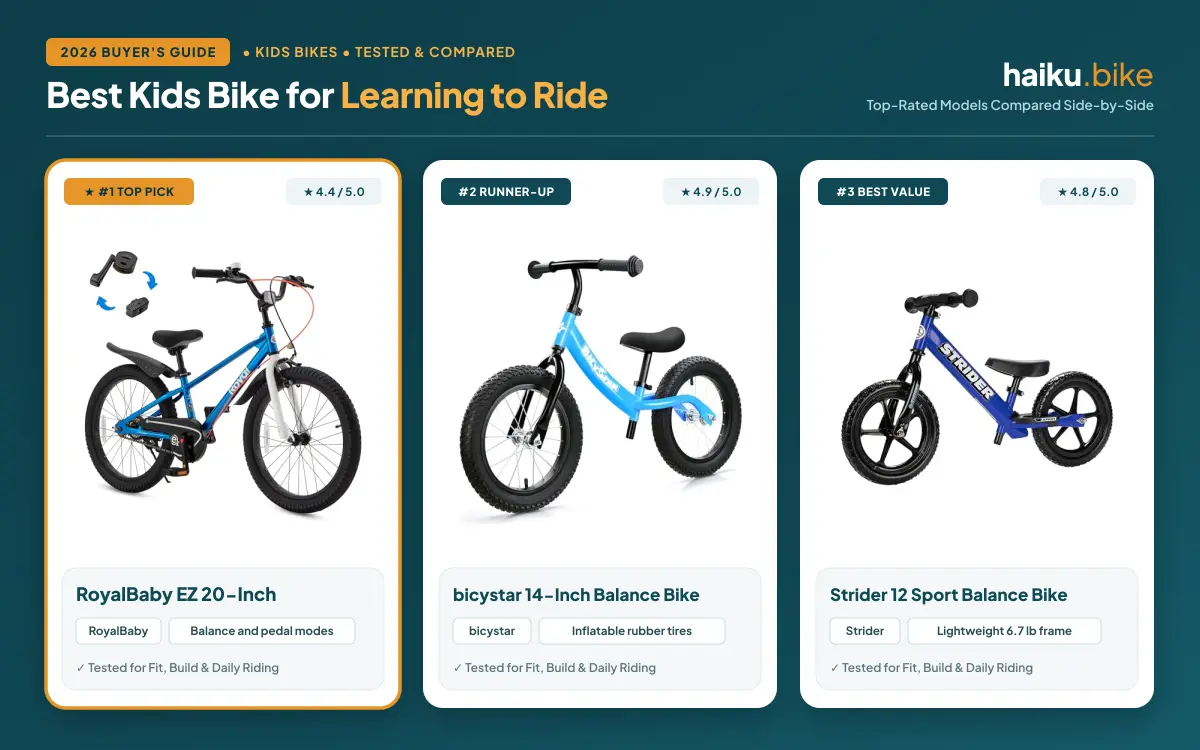
We compare 4 kids bikes from brands including JOYSTAR, WEIZE, Glerc and more, with options for first rides and growing riders. For narrower fit advice, see our kids bikes for learning to ride guide.
Safety note: Children’s bicycles sold in the United States must meet CPSC bicycle requirements (16 CFR Part 1512), and every rider should wear a helmet certified to the CPSC bicycle helmet standard (16 CFR Part 1203). An adult or bike shop should confirm fit, assembly, and brakes; follow the manufacturer’s instructions and local laws.
At a Glance: Which One Fits You
- Best overall: WEIZE Kids Bike, 14 16 20 Inch Children Bicycle offers three wheel sizes, adjustable parts, and training wheels on its 14- and 16-inch versions.
- Best value: JOYSTAR 14 Inch Kids Bike for 3-5 Years Boys Girls keeps the setup simple with a single speed, training wheels, and a foot brake.
- Best for smaller riders: Glerc Petal 12 Inch Girls Bike for Ages 2-4 Years has a low frame, adjustable seat, and dual braking controls.
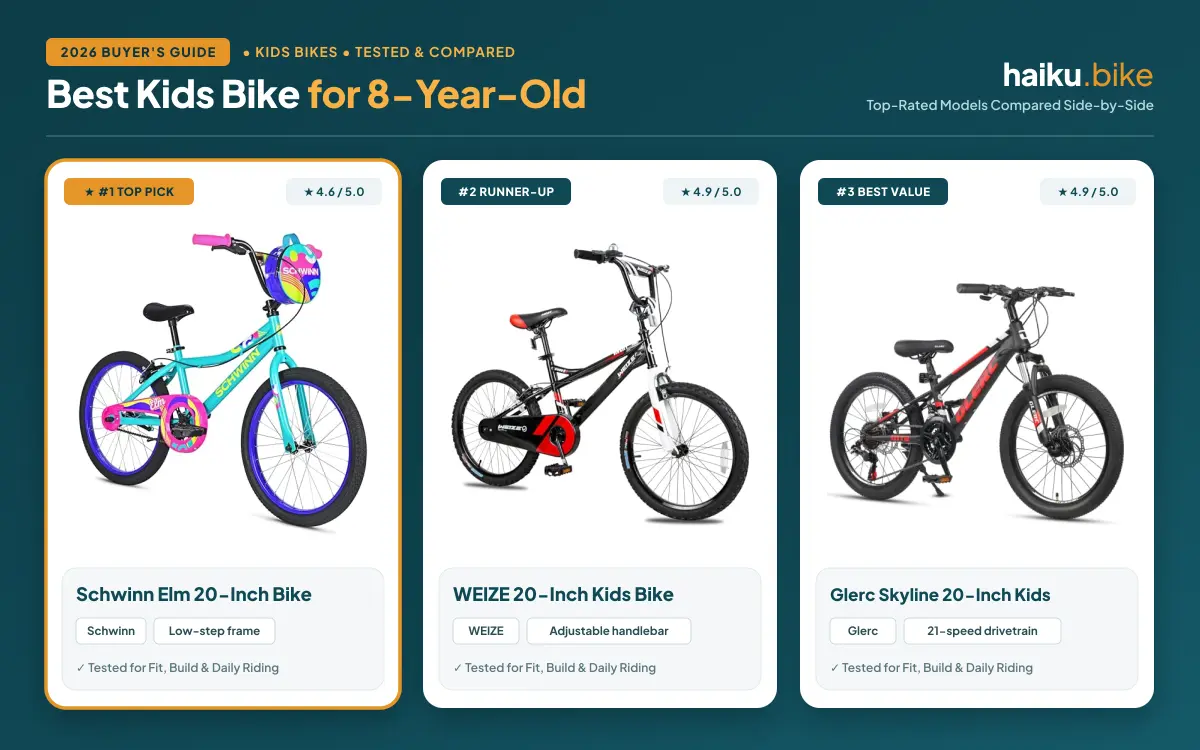
- Best for growing riders: Schwinn Elm 20-Inch Bike for Kids Ages 7-10 pairs a low-step frame with a rear hand brake, coaster brake, and adjustable seatpost.

Pros
- Hand brake and coaster brake
- Training wheels included
- Tool-free adjustable saddle
- Adjustable handlebar
- Full chain guard
Cons
- 14-inch size for smaller riders
- Bike weight not listed

Pros
- Rear coaster and hand brakes
- Tool-free adjustable seatpost
- Low-step frame
- Kid-sized touchpoints
- Kickstand included
Cons
- 25.87 lb bike weight
- Rear hand brake only
- Rider height range limited to 47 to 53 inches

Pros
- Training wheels included
- Foot brake
- Quick-release seat
- Limited lifetime frame warranty
- 85% preassembled
Cons
- 20.9 lb
- Single-speed drivetrain
- Who should skip it: children outside the 35 to 47 inch range

Pros
- Coaster brake and hand brake
- Low straddle frame
- Height-adjustable seat
- Training wheels, basket and streamers
- Basic assembly tools included
Cons
- 23 lb bike weight
- No safety certification listed
- Who should skip it: children outside listed fit range
Side-by-Side Comparison
| Bike | Wheel size and listed fit | Brakes | Learning or fit features | Frame and setup |
|---|---|---|---|---|
| WEIZE Kids Bike, 14 16 20 Inch Children Bicycle | 14 inch: 35.4 to 41.3 inches; 16 inch: 38 to 48 inches; 20 inch: 48 to 62 inches | Hand and coaster | Training wheels on 14- and 16-inch versions; kickstand on 20-inch version | Adjustable handlebar and saddle; steel frame |
| Schwinn Elm 20-Inch Bike for Kids Ages 7-10 | 20 inch; riders 47 to 53 inches tall | Rear hand and coaster | Tool-free adjustable seatpost; low-step frame | One-tool assembly; kickstand |
| JOYSTAR 14 Inch Kids Bike for 3-5 Years Boys Girls | 14 inch; riders 35 to 47 inches tall | Foot brake | Training wheels; quick-release seat | Steel frame; single speed |
| Glerc Petal 12 Inch Girls Bike for Ages 2-4 Years | 12 inch; riders 34 to 38 inches tall; inseam 14 to 17 inches | Coaster and hand brake | Adjustable seat; low straddle frame | 85% pre-assembled |
Fit ranges and brake arrangements matter most because they determine whether a child can control the bike comfortably. Compare the rider’s height and inseam with the exact size, then confirm the child can reach and operate every brake.
Common Mistakes to Avoid
Choosing by age alone can leave a child unable to mount or reach the controls. Use the maker’s height range and, when listed, inseam guidance for the exact size; children of one age can have different proportions.
Buying a larger bike for future growth can make starting, turning, and stopping harder now. Check that the rider can sit comfortably, hold the handlebars, and reach the brake levers without stretching before settling on a size.
Assuming all sizes share the same equipment can lead to an unsuitable setup. The WEIZE bike includes training wheels on its 14- and 16-inch versions, while its 20-inch version has a kickstand, so verify the chosen configuration.
Ignoring brake type can make learning less comfortable. The JOYSTAR uses a foot brake, while the Schwinn Elm and Glerc Petal combine hand and coaster brakes; let the child practice stopping in a quiet, controlled area.
Best Kids Bike Buying Guide
Fit, Wheel Size, and Reach
Fit matters because a child needs to mount, balance, steer, and reach the brakes without straining. Wheel diameter is a useful starting point, but height ranges, inseam, frame shape, and saddle adjustment help complete the fit picture.
Compare the rider’s measurements with the maker’s range for the precise model and size. Glerc lists its 12-inch Petal for riders 34 to 38 inches tall with a 14- to 17-inch inseam, while Schwinn lists a 47- to 53-inch range for the Elm.
Before buying, consider whether the child can stand over or step through the frame and reach the handlebars naturally. A bike that feels oversized may be difficult to control, even if its age recommendation seems right.
Brake Type and Control
Brake choice matters because children must be able to slow and stop using controls they understand and can operate. A coaster brake engages when the rider pedals backward, while a hand brake works through a lever.
The Schwinn Elm and Glerc Petal combine a hand brake with a coaster brake, giving riders two stopping methods to learn. The JOYSTAR uses a foot brake, which its maker describes as suitable for young riders who lack the power to operate a hand brake.
Check lever reach and operation with the child before regular riding, and practice in a controlled area away from traffic. Brake labels alone cannot establish whether a particular child can use the controls comfortably.
Training Wheels and Balance
Training wheels support early practice, but they do not appear on every size or bike. The WEIZE includes them on its 14- and 16-inch versions, and the JOYSTAR and Glerc descriptions also list training wheels.
Consider the child’s current balance and the family’s learning plan before selecting a bike with training wheels. Riders who already balance independently may prefer a standard setup, while new riders may value included support during early practice.
Confirm what comes with the exact configuration before ordering, since equipment can change with size. When a child is ready to move on, follow the maker’s instructions for removing or adjusting components.
Gearing and Intended Route
Gearing affects how a rider manages pedaling effort, so match drivetrain complexity to the child’s skills and usual route. The JOYSTAR is a single-speed bike, a straightforward arrangement for riders who do not need multiple gears.
The product details for the Schwinn Elm, WEIZE, and Glerc Petal do not list a gear count, so do not assume more options are available. Check the maker’s description for drivetrain details if hills or varied terrain shape your choice.
For sidewalks, parks, and other smooth routes, a simple setup may be easier for a young rider to manage. A bike’s appearance does not determine whether its fit, controls, or gearing suit the child’s route.
Adjustability and Everyday Protection
Adjustable parts can help maintain a comfortable position as a child grows. The WEIZE has an adjustable handlebar and saddle, the Schwinn Elm has a tool-free adjustable seatpost, and the JOYSTAR lists a quick-release seat.
A chain guard helps keep clothing and fingers away from the chain, and the WEIZE and JOYSTAR descriptions list chain protection. Confirm that the guard is present on the exact bike configuration and follow the maker’s instructions for adjustments.
Assembly descriptions differ: Glerc and JOYSTAR say their bikes arrive 85% pre-assembled, while Schwinn describes one-tool assembly. Read the instructions carefully, and ask a bike shop for help if assembly or brake setup is unclear.
Helmet and Bicycle Safety
A properly fitted helmet and correctly assembled bicycle are essential parts of a child’s riding setup. Check helmet labeling for the CPSC bicycle helmet standard, 16 CFR Part 1203, and follow the helmet maker’s fitting instructions.
Children’s bicycles sold in the United States must meet CPSC bicycle requirements under 16 CFR Part 1512. Confirm that the bike is assembled according to its instructions and that the child can reach the brakes before riding.
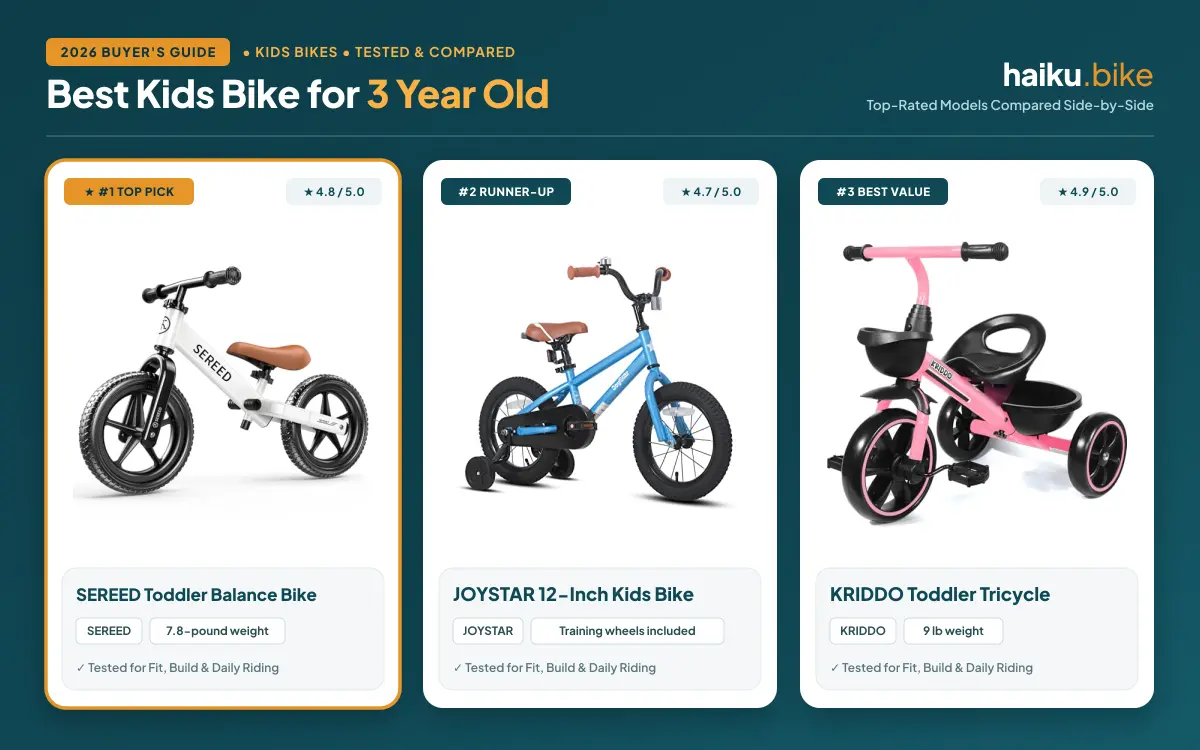
An adult should supervise young riders and choose a practice area suited to their experience. For more age-specific fit considerations, see our kids bike guide for three-year-olds.
How We Chose
We score recommendations with the Haiku Ride Score: core performance 30%, build and weather resistance 20%, ease of use 20%, compatibility and fit 15%, and value 15%. For kids bikes, compatibility and fit cover frame size, published rider range, wheel size, braking, and equipment that varies by configuration.
We compare manufacturer specifications, fit information, and long-term owner feedback when available, then evaluate how each bike suits young riders. We research and draft our guides with software tools, including AI, then run automated checks on product fit, sourcing, and our editorial rules. Our editor spot-checks guides rather than reading each one before publication. Our how we review page explains our method.
Price and Value: What Each Budget Gets You
Budget
At the budget end, expect a simple pedal bike with basic learning features rather than extensive adjustability or extra equipment. The JOYSTAR uses a single-speed drivetrain, training wheels, and a foot brake, while the WEIZE adds multiple size choices and adjustable parts. Buyers give up some size-specific features and should confirm the exact equipment before ordering.
Mid-Range
Mid-range bikes can add a more tailored fit, dual braking controls, or features aimed at a particular stage of learning. The Glerc Petal offers a low frame and adjustable seat, while the JOYSTAR keeps its setup straightforward. These choices still require careful size selection, and decorative extras do not replace checking brake reach or assembly.
Premium
At the upper end, buyers may find a bike with a defined fit range, convenient adjustments, and everyday details. The Schwinn Elm lists a low-step frame, tool-free seat adjustment, dual brakes, and a kickstand. That feature set may suit a growing rider, but the 20-inch size and listed height range will not fit every child.
Choosing Something Else
A balance bike can suit a young child who is learning balance but is not ready for pedals. It avoids drivetrain and pedal-brake choices, but does not provide the same equipment as a conventional bicycle. Families comparing more age-specific pedal bikes can browse our Kids Bikes category.
Final Thoughts
The WEIZE Kids Bike, 14 16 20 Inch Children Bicycle suits families who want a choice of wheel sizes and features that vary by size. Its adjustable parts and chain guard support everyday use, but buyers must match the rider’s height to the exact version and confirm whether it includes training wheels or a kickstand.
The Schwinn Elm 20-Inch Bike for Kids Ages 7-10 fits riders within its listed height range who want a low-step frame and both hand and coaster brakes. Its adjustable seatpost and kickstand add convenience, but its 20-inch format will not suit every child. The JOYSTAR 14 Inch Kids Bike for 3-5 Years Boys Girls offers a simpler single-speed setup and training wheels, with a foot brake rather than hand braking.
The Glerc Petal 12 Inch Girls Bike for Ages 2-4 Years is aimed at smaller riders who match its listed height and inseam ranges. Its low frame and dual brakes are useful features, though its style and fit may not suit every child or family.
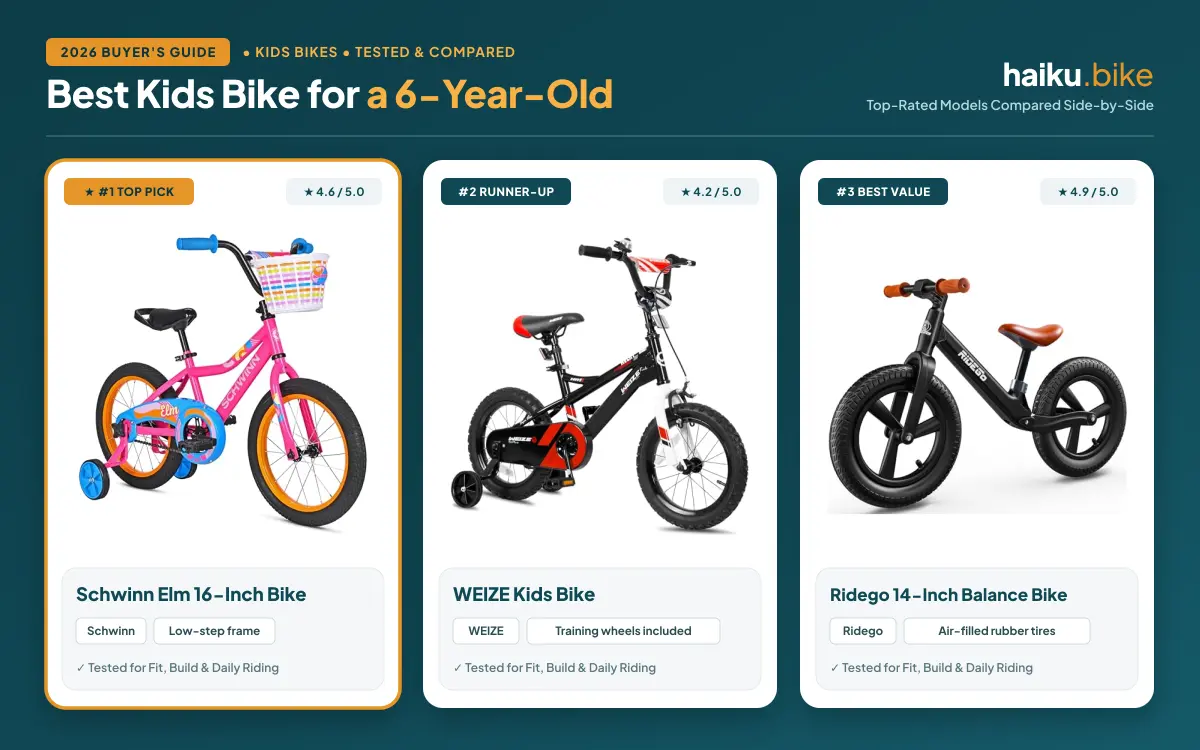
Skip these bikes if none of their listed sizes fits the rider or if the child needs a different bicycle type. Families can compare more sizes in our Kids Bikes category or read our kids bike guide for six-year-olds.
FAQs
How do I choose the right kids bike size?
The right kids bike size depends on the rider’s measurements and the maker’s fit range for the exact model. Compare height and, when available, inseam with the published chart rather than relying on age alone. Before riding, confirm the child can mount, steer, and reach the brakes comfortably, because an oversized bike can make control harder.
Are hand brakes or coaster brakes better for kids?
Hand brakes and coaster brakes work differently, and the suitable setup depends on the child’s control and comfort. A hand brake uses a lever, while a coaster brake engages when the rider pedals backward. Some bikes combine both systems. Check that the child can operate each control, then practice stopping in a safe, controlled area.
Do kids bikes come with training wheels?
Some kids bikes include training wheels, but the equipment can vary by model and size. The WEIZE includes them on its 14- and 16-inch versions, while its 20-inch version comes with a kickstand. The JOYSTAR and Glerc Petal descriptions also list training wheels. Check the exact configuration before ordering.
What size bike fits a child who is 3 years old?
A three-year-old’s bike size depends on height, inseam, and the maker’s fit guidance, not age by itself. The Glerc Petal is listed for riders 34 to 38 inches tall with a 14- to 17-inch inseam, and the JOYSTAR 14-inch bike is listed for riders 35 to 47 inches tall. Compare measurements before choosing.
What safety standard should a kids bike meet?
Children’s bicycles sold in the United States must meet CPSC bicycle requirements under 16 CFR Part 1512. Check the product information and follow the manufacturer’s assembly instructions. Every rider should wear a helmet certified to the CPSC bicycle helmet standard, 16 CFR Part 1203, and an adult should confirm fit and brake operation.
How do I know whether my child can reach bike brakes?
A child should be able to operate the bike’s brakes comfortably while holding the handlebars. Check hand-brake lever reach with the rider, and confirm that the child understands how a coaster brake works if the bike has one. Practice starts and stops in a controlled area before riding near other people or traffic.
What should I check before assembling a kids bike?
Before assembling a kids bike, read the manufacturer’s instructions and confirm which parts and tools the maker includes. Follow the specified assembly steps, then have an adult or bike shop check fit and brakes before the child rides. If any instruction or setup is unclear, ask a qualified bicycle mechanic for help.
Write Your Review
No reviews yet. Be the first to share your experience!