Riders who want to track pedal rate on outdoor rides or during indoor training need a sensor that communicates with their computer, phone, or training equipment. The right choice depends on your preferred wireless protocol, crank-arm fit, app support, and whether you need cadence alone or speed data too.
For November 2026, we compare 7 sensors from brands including CooSpo, moofit, Magene and more, with attention to maker-stated features and connection limits. Before buying, check that your receiving device supports the sensor’s protocol. Riders comparing compatible displays can also browse our Bike Computers & GPS category.
At a Glance: Which One Fits You
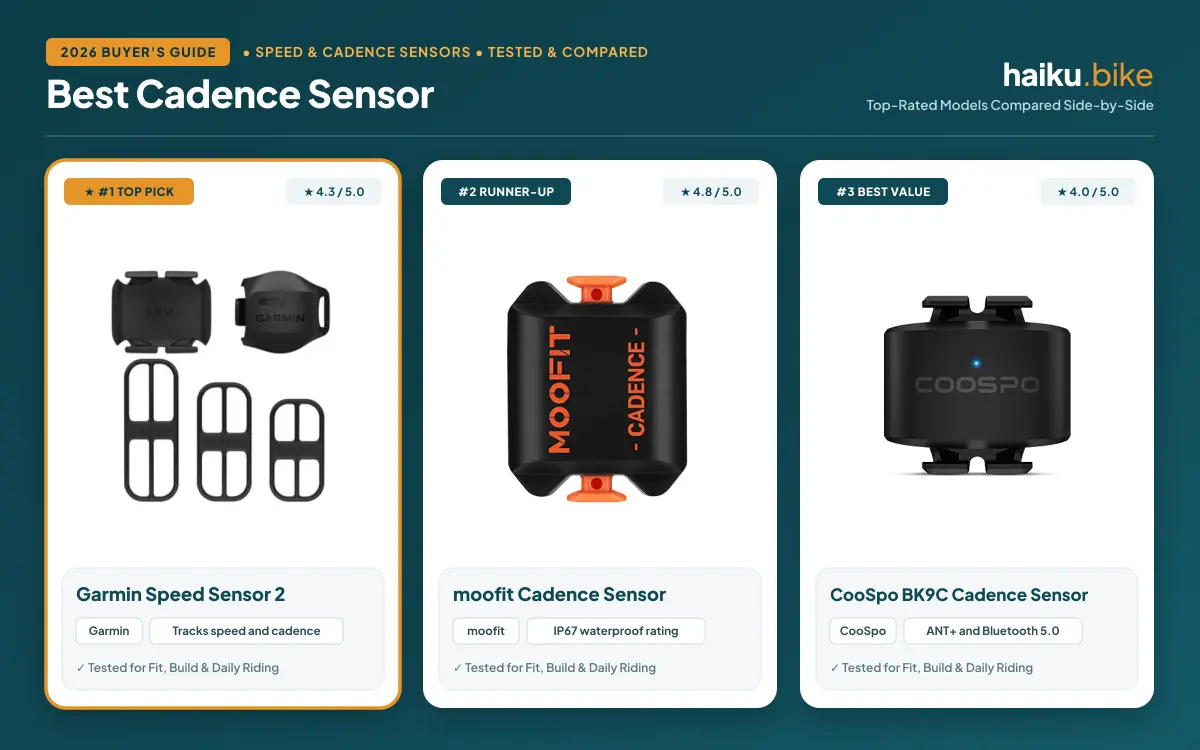
- Best overall: moofit Cadence Sensor Bluetooth/ANT+ IP67 earns this spot because it sends cadence data over Bluetooth or ANT+ and has an IP67 waterproof rating.
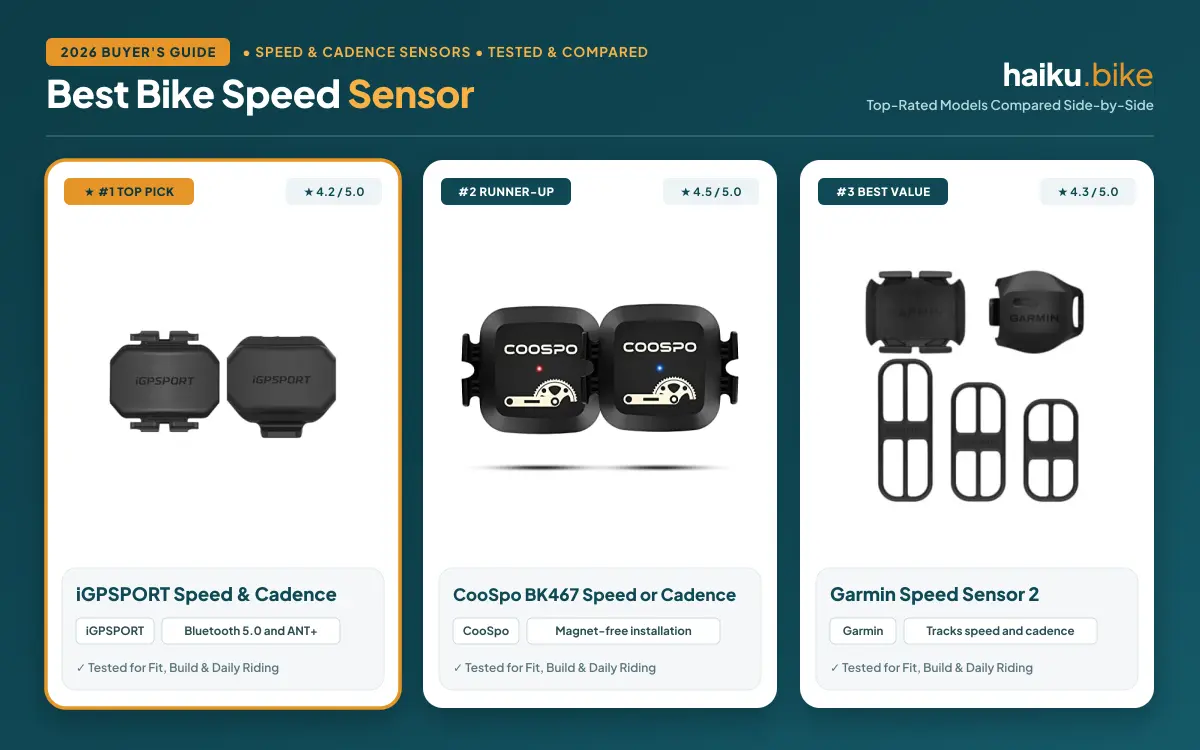
- Best value: COOSPO BK467 Bike Speed & Cadence Sensor earns this spot because it can operate in speed or cadence mode and supports Bluetooth and ANT+.
- Best for simultaneous speed and cadence: iGPSPORT Speed & Cadence Sensor Set earns this spot because its set includes separate speed and cadence sensors.
- Best for long stated battery life: COOSPO Bike Cadence Sensor BK9C earns this spot because CooSpo specifies 300 hours of battery life.

Pros
- ANT+ and Bluetooth connectivity
- Magnet-free crank-arm attachment
- IP67 waterproof rating
- Real-time cadence data
- Works with listed third-party apps
Cons
- MooFit app unavailable
- Peloton app support limited to iOS
- Wahoo app cannot pair two sensors at once
Pros
- Bluetooth and ANT+ support
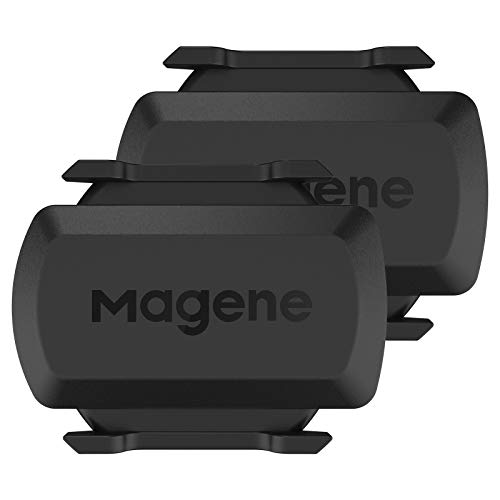
- Speed or cadence mode
- ANT+ multi-device connection
- Compatible with Zwift
- Automatic sleep mode
Cons
- One sensor cannot measure both modes at once
- Bluetooth connects to one device at a time
- Must wake sensor before it broadcasts

Pros
- Bluetooth and ANT+ connectivity
- Up to 300-hour battery life
- Replaceable CR2032 battery
- Magnet-free installation
- Works with several cycling apps
Cons
- Tracks only speed or cadence at a time
- Two sensors needed to track both metrics
- Bluetooth connects to one device at a time
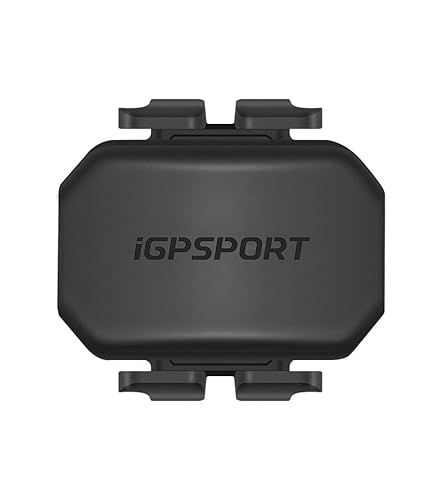
Pros
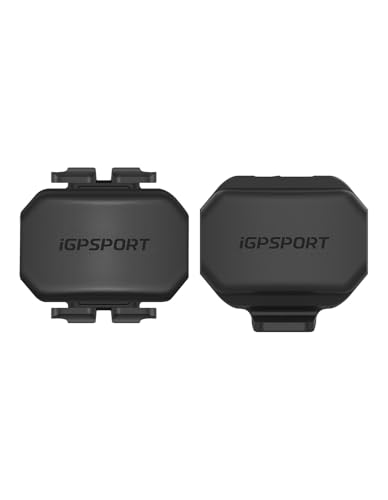
- Bluetooth 5.0 and ANT+
- Speed and cadence tracking
- Maker-rated 300-hour battery life
- IPX7 water resistance
- Slim sensor design
Cons
- Specific app support not listed
- Installation details not provided
Pros
- Bluetooth 5.0 and ANT+ connectivity
- Up to 300 hours of stated battery life
- IPX7 waterproof rating
- Replaceable battery
- Ultra-thin design
Cons
- Named app compatibility not listed
- Battery type not specified
- Installation method not detailed

Pros
- Fits any size crank arm
- ANT+ connectivity
- Bluetooth Low Energy
- Works indoors and outdoors
- Sends cadence data to Garmin Connect
Cons
- Battery details not provided
- Water-resistance rating not provided

Pros
- ANT+ and Bluetooth 5.0
- Magnet-free crank-arm installation
- Maker-rated 300-hour battery life
- IP67 waterproof rating
- Works with listed cycling apps
Cons
- Cadence sensor only
- Wahoo app limits pairing two third-party sensors at once
- CR2032 battery requires replacement
Side-by-Side Comparison
| Sensor | Connectivity | Measurement | Mount or mode | Weather rating | Stated battery life |
|---|---|---|---|---|---|
| moofit Cadence Sensor Bluetooth/ANT+ IP67 | Bluetooth, ANT+ | Cadence | Crank arm, no magnets | IP67 | Not listed |
| Magene Outdoor/Indoor Speed/Cadence Sensor | Bluetooth, ANT+ | Speed or cadence | One mode at a time | Not listed | Not listed |
| COOSPO BK467 Bike Speed & Cadence Sensor | Bluetooth, ANT+ | Speed or cadence | One mode at a time | Not listed | Not listed |
| iGPSPORT Speed & Cadence Sensor Set | Bluetooth 5.0, ANT+ | Speed and cadence set | Set includes both sensors | IPX7 | 300 hours |
| Garmin Cadence Sensor 2, Bike Sensor to Monitor | Bluetooth Low Energy, ANT+ | Cadence | Fastens to crank arm | Not listed | Not listed |
| iGPSPORT CAD70 Cycling Cadence Sensor | Bluetooth 5.0, ANT+ | Cadence | Dedicated cadence sensor | IPX7 | 300 hours |
| COOSPO Bike Cadence Sensor BK9C | Bluetooth 5.0, ANT+ | Cadence | Crank arm, no magnets | IP67 | 300 hours |
The key distinction is whether a product measures cadence alone, switches between speed and cadence, or comes as a separate-sensor set. Magene and COOSPO describe switchable units that use one mode at a time, while iGPSPORT’s set is designed to supply both measurements.
Common Mistakes to Avoid
A common buying mistake is assuming that a speed-and-cadence sensor measures both values simultaneously. The Magene Outdoor/Indoor Speed/Cadence Sensor and COOSPO BK467 operate in one mode at a time, so riders who need both readings should plan on two sensors or choose a set.
Another mistake is pairing through a phone’s general Bluetooth settings when the maker directs riders to use an app. Magene and COOSPO specify in-app discovery. The Magene sensor also enters sleep when stationary and must wake before it broadcasts, so check its wake-up instructions if it does not appear.
Buyers can also overlook simultaneous connection limits and app restrictions. Magene and COOSPO say Bluetooth supports one app or device at a time, while ANT+ can connect to multiple compatible devices. The moofit product description also notes a Wahoo app restriction on pairing two sensors from other brands together.
Best Bluetooth Cadence Sensor Buying Guide
Cadence-Only or Speed-and-Cadence Use
Measurement type matters because cadence and wheel speed are different data points, and a switchable sensor may not report both at once. Decide whether you want pedal-rate information, wheel-speed information, or both before comparing individual features.
The Magene Outdoor/Indoor Speed/Cadence Sensor and COOSPO BK467 each select one mode at a time. The iGPSPORT Speed & Cadence Sensor Set includes separate sensors for both measurements, while dedicated options such as the iGPSPORT CAD70 focus on cadence.
Check how your bike computer or training app displays each sensor type before ordering. If you need simultaneous readings, confirm that your plan uses separate sensors or a set that explicitly includes them, rather than relying on a single unit’s mode-switching feature.
Bluetooth, ANT+, and Connection Limits
Wireless compatibility determines whether a sensor can send cadence data to the devices and apps in your riding setup. Bluetooth is commonly used by phones and apps, while ANT+ lets compatible cycling devices receive sensor data.
Several products here support both protocols, including the moofit, Magene, and COOSPO options. Garmin Cadence Sensor 2 lists ANT+ and Bluetooth Low Energy. Check the receiving device’s specifications, because a sensor cannot add protocol support that the computer or phone lacks.
Connection limits matter when you want a phone and bike computer to receive data together. Magene and COOSPO describe one Bluetooth connection at a time, while ANT+ can connect with multiple compatible devices. Confirm the limits for your particular app and receiver before choosing a protocol.
App and Training-System Compatibility
App support matters because a successful wireless connection does not guarantee that your preferred training software will display cadence. Product descriptions name platforms including Zwift, Rouvy, Peloton, Ride with GPS, and Wahoo Fitness, but compatibility differs between sensors.
Check the app, phone operating system, and pairing instructions as a group. The moofit description says Peloton support applies to iOS and notes that its MooFit app is unavailable. The COOSPO BK467 lists several cycling apps and compatible COOSPO bike computers.
Indoor riders should confirm that their training equipment can receive cadence data from a separate sensor. Outdoor riders should check whether their bike computer supports Bluetooth or ANT+. Our bike computers for gravel riding guide covers displays for riders comparing compatible computers.
Crank-Arm Fit and Installation
Crank-arm fit affects whether a cadence sensor mounts securely and clears the frame while the crank turns. The moofit and COOSPO BK9C descriptions specify crank-arm mounting without magnets, and Garmin says its Cadence Sensor 2 fastens to any size crank arm.
Review the maker’s installation instructions and compare the sensor’s position with nearby frame parts before buying. Product descriptions do not provide a universal fit range for every sensor, so riders should not assume each design suits every crank shape.
After mounting, follow the maker’s guidance for orientation and activation, then check that the sensor clears the frame during a full crank rotation. Magene says its sensor needs to wake after entering sleep before it broadcasts, which can affect initial setup and later pairing.
Weather Resistance and Battery Life
Weather ratings and battery information help you judge upkeep and suitability for outdoor riding. The moofit and COOSPO BK9C descriptions list IP67, while iGPSPORT lists IPX7 for its CAD70 and speed-and-cadence set.
Do not treat IP67 and IPX7 as identical claims. Follow each maker’s care instructions for cleaning and exposure, and keep battery covers properly installed. A stated protection rating does not remove the need to follow the product’s specific maintenance guidance.
iGPSPORT specifies 300 hours of battery life for the CAD70 and sensor set, and CooSpo specifies 300 hours for the BK9C. Other sensors here have no stated runtime in their product descriptions, so consult the maker’s current instructions rather than estimating battery life.
Pairing, Wake-Up, and Troubleshooting
Pairing instructions and sleep behavior can determine whether a sensor appears in your training app. Magene says its S3+ enters sleep after remaining stationary and must wake before broadcasting, so movement may be needed before a receiver can find it.
When a maker directs app-based pairing, search for the sensor inside the compatible cycling app instead of the phone’s Bluetooth menu. Magene and COOSPO both describe in-app discovery. Follow the product’s instructions if the sensor needs activation before the app can detect it.
Riders using multiple sensors should review the app’s connection rules before purchase. The moofit description notes a Wahoo app restriction for pairing two sensors from other brands at the same time. If your setup needs multiple connections, confirm whether compatible ANT+ receivers suit your needs.
How We Chose
We evaluate these sensors with the Haiku Ride Score: core performance 30%, build and weather resistance 20%, ease of use 20%, compatibility and battery 15%, and value 15%. Those weights help us compare measurement options, mounting, wireless support, maker-stated durability, and everyday setup.
Our evaluation draws on manufacturer specifications, compatibility information, and long-term owner feedback where available. We research and draft our guides with software tools, including AI, then run automated checks on product fit, sourcing, and our editorial rules. Our editor spot-checks guides rather than reading each one before publication. Our how we review page explains the method.
Price and Value: What Each Budget Gets You
Budget
At the budget end, riders can find basic cadence tracking and dual-protocol support without a bundled speed sensor. The moofit Cadence Sensor Bluetooth/ANT+ IP67 offers Bluetooth, ANT+, crank-arm mounting, and a stated IP67 rating. Its trade-offs include a single cadence function, no published battery runtime, and a stated Wahoo app restriction for pairing multiple third-party sensors.
Mid-Range
Mid-range choices can add a dedicated cadence focus, a separate-sensor set, or maker-stated battery and weather details. The iGPSPORT CAD70 lists Bluetooth 5.0, ANT+, IPX7, and 300 hours of battery life; its set adds distinct speed and cadence sensors. Riders should still confirm app support and decide whether they need the set or cadence alone.
Premium
At the premium end, a familiar device ecosystem may matter more than extra functions. Garmin Cadence Sensor 2 supports ANT+ and Bluetooth Low Energy, fastens to any size crank arm according to Garmin, and lists compatibility with multiple Garmin device families. Its product description does not state battery runtime or a weather rating, so riders prioritizing those details may prefer another option.
Choosing Something Else
Some indoor bikes and training setups already display cadence, making a separate sensor unnecessary for riders who only train indoors. Check the equipment’s own features before adding another device. That alternative may not provide cadence data on an outdoor bike computer or transfer easily between bicycles, so riders who need outdoor recording may still want a dedicated sensor.
Final Thoughts
Riders seeking a straightforward cadence sensor with Bluetooth, ANT+, and a stated IP67 rating should consider moofit Cadence Sensor Bluetooth/ANT+ IP67. Its crank-arm installation avoids magnets, but its app restrictions and cadence-only function make it less suitable for riders who need unrestricted multi-sensor pairing or speed data from the same unit.
For a switchable speed or cadence sensor, COOSPO BK467 Bike Speed & Cadence Sensor offers two modes but does not measure both at once. Riders who want separate sensors for simultaneous readings can consider iGPSPORT Speed & Cadence Sensor Set, which lists Bluetooth 5.0, ANT+, IPX7, and 300 hours of battery life.
Riders who value a dedicated cadence unit and stated battery information can compare COOSPO Bike Cadence Sensor BK9C with iGPSPORT CAD70 Cycling Cadence Sensor. Garmin device owners can consider Garmin Cadence Sensor 2, Bike Sensor to Monitor, while checking that its connection options suit their other equipment.
Skip a separate sensor if your current indoor equipment already reports reliable cadence and you do not need the data outdoors. Riders who need simultaneous speed and cadence should avoid single-mode sensors unless they plan to use two units. Browse our speed and cadence sensor category to compare related devices.
FAQs
What does a Bluetooth cadence sensor measure?
A Bluetooth cadence sensor measures how quickly a rider turns the pedals and sends that information to compatible equipment or an app. Cadence is commonly displayed as revolutions per minute. A cadence sensor does not necessarily measure wheel speed, so check whether a product measures cadence alone or switches between cadence and speed modes.
Can a cadence sensor connect to a phone and bike computer?
A cadence sensor can connect to a phone and bike computer when both support its protocol and the sensor permits simultaneous connections. Magene and COOSPO describe one Bluetooth connection at a time, while ANT+ can connect to multiple compatible devices. Check the limits of your app, sensor, and receiving devices before buying.
Do Bluetooth cadence sensors work with Zwift?
Some cadence sensors in this guide list Zwift compatibility, including the COOSPO BK467 and COOSPO Bike Cadence Sensor BK9C. Compatibility also depends on the device running Zwift and its available wireless connections. Check the current app requirements and follow the sensor maker’s pairing instructions, including in-app discovery where required.
Can one sensor measure speed and cadence at once?
A single switchable sensor does not necessarily measure speed and cadence simultaneously. Magene and COOSPO describe their switchable units as operating in one mode at a time, with two sensors needed for both readings. The iGPSPORT Speed & Cadence Sensor Set is described as a set with separate speed and cadence sensors.
How do I pair a Bluetooth cadence sensor?
Pair a Bluetooth cadence sensor by following the maker’s instructions for your compatible cycling app. Magene and COOSPO say to search inside the app rather than through the phone’s general Bluetooth settings. Wake the sensor if required, then confirm that cadence data appears in the app before starting your ride.
Are Bluetooth cadence sensors suitable for riding in rain?
Some cadence sensors state a water-resistance rating, but riders should follow each maker’s care instructions. The moofit and COOSPO BK9C descriptions list IP67, while iGPSPORT lists IPX7 for its CAD70 and sensor set. Keep battery covers correctly installed and consult the product instructions for cleaning and exposure guidance.
Which Best Bluetooth Cadence Sensor in 2026 suits indoor riding?
The Best Bluetooth Cadence Sensor for indoor riding is one that pairs with your training app or equipment and mounts securely to the crank. The moofit description names indoor trainers and compatible apps, while COOSPO lists platforms including Zwift. Check your exact app, device, and operating system before choosing. Our Bike Computers & GPS category can help you compare compatible displays.
Should I choose Bluetooth or ANT+ for a cadence sensor?
Choose Bluetooth or ANT+ according to the protocols supported by your phone, cycling computer, and training equipment. Bluetooth can suit app connections, while ANT+ supports multiple compatible device connections for some sensors. Several options in this guide offer both, but your receiving equipment must support the protocol you plan to use.
Write Your Review
No reviews yet. Be the first to share your experience!