

For a young rider learning to steer and coast, a balance bike offers a simpler starting point than a pedal bike. The right size lets a child push off and put both feet down, while an oversized frame can make those first rides harder to manage.
We compare 7 balance bikes in November 2026, including options from Strider, SEREED, KRIDDO and more. Measure your child’s inseam and compare it with the manufacturer’s fit guidance; follow the manufacturer’s instructions and local laws. Our Kids & Family Cycling guide covers more equipment for young riders.
Safety note: Children’s bicycles sold in the United States must meet CPSC bicycle requirements under 16 CFR Part 1512, and every rider should wear a helmet certified to the CPSC bicycle helmet standard under 16 CFR Part 1203. An adult or a bike shop should confirm fit, assembly, and brakes before a child rides.
At a Glance: Which One Fits You
- Best overall: Strider 12 Sport, No Pedal Balance Bike for Kids pairs a 6.7 lb listed weight with a specific inseam fit range, though its maximum rider weight is lower than several alternatives.
- Best value: SEREED Toddler Balance Bike 2 Year Old offers tool-free seat and handlebar adjustments plus airless tires, but its listed fit range still needs to suit your child.
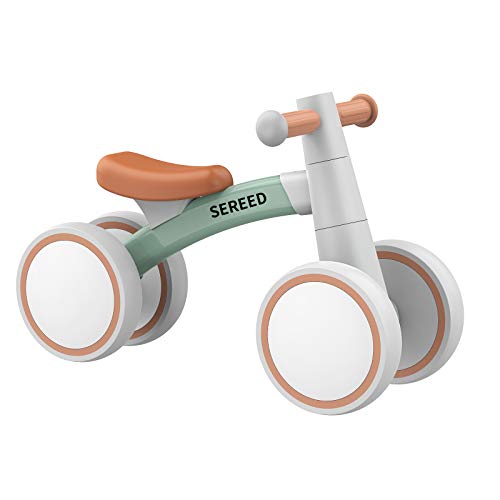
- Best for very young riders: SEREED Baby Balance Bike for 1 Year Old Boy Girl has four enclosed wheels and a turning limit, but it is a ride-on rather than a conventional two-wheel balance bike.
- Best for varied outdoor surfaces: Ridego 14 Inch Balance Bike for Kids 3-6 Year uses air-filled tires described for pavement, grass, and gravel, with more tire upkeep than airless designs.

Pros
- Lightweight 6.7 lb frame
- Adjustable seat and handlebars
- Never-flat foam tires
- Tools included for assembly
Cons
- Foam tires, not air-filled
- Maximum rider weight of 60 lb
- Fit limited to 12 to 18-inch inseams

Pros
- Tool-free seat adjustment
- Tool-free handlebar adjustment
- 7.8-pound weight
- Airless EVA tires
- Personalization plate and stickers
Cons
- No brake details provided
- No rider height range listed
Pros
- Four-wheel design
- No pedals
- 135-degree turning limit
- Non-slip TPU handle
- Listed weight of 3.5 lb
Cons
- Limited to ages 12 to 24 months
- 55 lb maximum weight capacity
- No review details provided

Pros
- Air-filled rubber tires
- Adjustable 14.2- to 18.3-inch seat
- Footrest included
- Non-slip handlebars
Cons
- No brake specification listed
- 14-inch wheel size may not fit every child aged 3 to 6

Pros
- Adjustable seat and handlebars
- Puncture-resistant tires
- Quick-release adjustment hardware
- 6.6 lb listed weight
- Customizable removable plate
Cons
- Brake details not listed
- Tire size not specified
- Adjustment ranges not listed

Pros
- Multiple riding configurations
- Adjustable seat and handlebars
- Parent push handle
- 12-inch puncture-proof rubber wheels
- Folding frame
Cons
- Bike weight not listed
- Maximum rider weight not listed
- No stated wheel-tire replacement details

Pros
- Inflatable rubber tires
- 8.5-pound listed weight
- Adjustable seat and handlebar
- Coasting footrest
- Tools included
Cons
- Brake details not provided
- Air tires require inflation
- Blue color only listed
Side-by-Side Comparison
| Product | Age guidance | Seat height | Tire or wheel type | Weight | Notable detail |
|---|---|---|---|---|---|
| Strider 12 Sport, No Pedal Balance Bike for Kids | 1 to 4 years | 11 to 17 in. | Foam rubber, never flat | 6.7 lb | 12 to 18 in. inseam fit |
| SEREED Toddler Balance Bike 2 Year Old | Not listed | 12.6 to 17.1 in. | EVA foam, airless | 7.8 lb | Tool-free adjustments |
| SEREED Baby Balance Bike for 1 Year Old Boy Girl | 12 to 24 months | Not listed | Four enclosed wheels | 3.6 lb | 135-degree turning limit |
| Ridego 14 Inch Balance Bike for Kids 3-6 Year | 3 to 6 years | 14.2 to 18.3 in. | Air-filled rubber | 8.16 lb | Glass-reinforced nylon frame |
| KRIDDO Toddler Balance Bike 2 Year Old | 2 to 5 years | Not listed | Puncture-resistant | Not listed | Adjustable seat and handlebar |
| JMMD 6 in 1 Toddler Bike with Push Handle for Kids | 18 to 60 months | Not listed | 12 in. puncture-proof rubber | Not listed | Convertible design with push handle |
| bicystar 14 Inch Balance Bike for Kids 3-5 | 3 to 5 years | 13 to 21 in. | Air-filled rubber | 8.5 lb | 13.5 to 22 in. inseam fit |
Fit information is the most useful difference in this comparison because age guidance alone cannot tell you whether a child can reach the ground. Strider and bicystar publish inseam ranges, while several other products list seat adjustments without an inseam range.
Common Mistakes to Avoid
Choosing by age alone can leave a child unable to sit comfortably or place both feet on the ground. Measure inseam and compare it with the maker’s stated range; if a product does not publish a useful fit measurement, ask the manufacturer before ordering.
Buying a larger bike for future growth can make starting, steering, and stopping more difficult today. A 14-inch wheel does not establish a suitable fit by itself, so check seat height, handlebar reach, and whether the child can sit with both feet grounded.
Assuming all tires feel and perform alike can lead to a poor match for your family’s routes. Air-filled tires need pressure checks and can puncture, while foam or EVA designs avoid inflation; follow the maker’s surface guidance rather than assuming any tire suits every path.
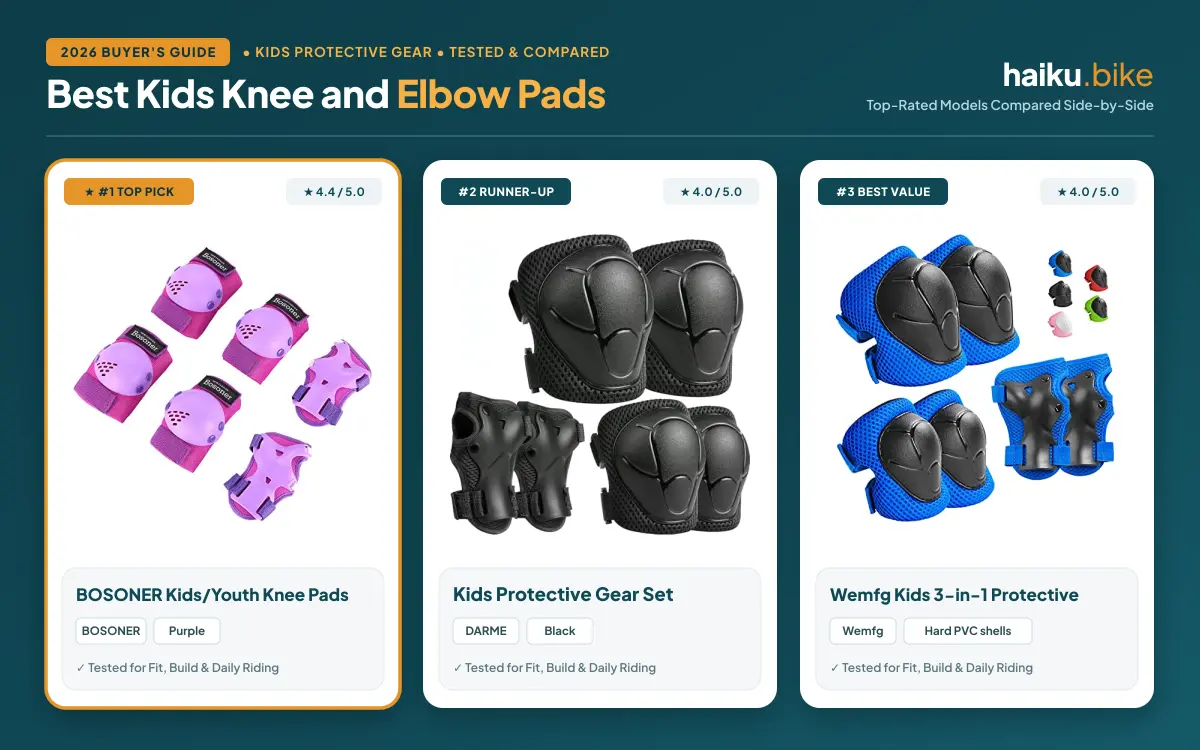
Skipping a helmet, supervision, or assembly checks creates avoidable risks for young riders. Choose a properly fitted helmet certified to the CPSC bicycle helmet standard, follow the bike and helmet manufacturers’ instructions, and supervise children in an appropriate riding area.
Best Balance Bike Buying Guide
Fit, Inseam, and Seat Height
Fit matters most because a child needs to push off, steer, and stop with control. Measure your child’s inseam and compare it with the maker’s stated inseam or seat-height range instead of relying on age guidance alone.
A child should sit on the saddle with both feet reaching the ground and knees slightly bent. Strider lists an 11 to 17 in. seat range and a 12 to 18 in. inseam fit, while bicystar lists a 13 to 21 in. seat range and a 13.5 to 22 in. inseam fit.
SEREED lists a 12.6 to 17.1 in. seat range, and Ridego lists 14.2 to 18.3 in.; neither figure replaces checking the child’s reach. Handlebar position matters too, because a rider should be able to steer without stretching or losing a comfortable seated posture.
Rider Readiness and Bike Design
Bike design should match the child’s current ability, since an early ride-on and a two-wheel balance bike serve different stages. The SEREED baby bike is listed for ages 12 to 24 months and uses four enclosed wheels, unlike a conventional balance bike.
The JMMD converts among several configurations and includes pedals, training wheels, and a parent push handle. That flexibility may appeal to families seeking guided and independent modes, but the extra setup choices create more to configure than a simple no-pedal bike.
Age ranges are guidance, not proof that a particular child is ready or that the bike will fit. Review the maker’s age and weight limits, steering design, and warnings; the Balance Bikes & Training Wheels category offers related buying guidance.
Tire Type and Riding Surface
Tire construction affects upkeep and ride feel, so consider where your child will ride most often. Ridego and bicystar use air-filled rubber tires, which their makers describe for surfaces including grass and gravel; pneumatic tires also require pressure checks and may puncture.
Airless tires avoid inflation and can simplify routine care. Strider lists never-flat foam rubber tires, while SEREED lists EVA foam tires; these materials differ from pneumatic tires, so compare manufacturer guidance instead of assuming identical grip or cushioning.
A route’s surface helps narrow the choice, but no tire description guarantees traction on every path. Inspect wheels before riding and follow the maker’s care instructions, especially after outdoor use; smooth indoor floors and rough outdoor trails call for different considerations.
Weight, Frame, and Carrying
Bike weight affects how easily a young rider may maneuver and how much an adult must carry. Strider lists a weight of 6.7 lb, SEREED lists 7.8 lb, Ridego lists 8.16 lb, and bicystar lists 8.5 lb.
Frame descriptions and weight limits can help you compare construction, but material names alone do not establish durability. Ridego describes a glass-reinforced nylon frame and a 110 lb capacity; Strider lists a 60 lb maximum rider weight, so check each bike’s specific guidance.
Families carrying a bike to parks or loading it into a vehicle may value a lower listed weight. Still, a lighter bike cannot compensate for poor fit, so weigh carrying needs alongside the child’s inseam, reach, and the manufacturer’s stated limits.
Adjustments and Everyday Controls
Adjustable seats and handlebars can help a bike accommodate a growing child, but the available range must match the rider. SEREED describes quick-release adjustments, and KRIDDO says its seat and handlebar adjust; compare measurements where available rather than treating “adjustable” as proof of fit.
Check how each adjustment locks and whether an adult can secure it correctly. The JMMD adds a hand brake, steering limiter, folding frame, and parent handle, which means more components to assemble and configure than a basic balance bike.
Extra features can suit families who want a convertible setup, but they can also add complexity. Review the included components and assembly directions, then confirm that an adult can set up the chosen configuration and that any listed controls work as described.
Safety, Supervision, and Intended Use
A balance bike does not replace a helmet, attentive supervision, or an appropriate riding area. Check that a bicycle helmet is certified to CPSC 16 CFR Part 1203 and follow the helmet maker’s fitting instructions; do not assume a bike’s product description establishes helmet certification.
Review each bike’s weight limit, age guidance, steering design, and warnings before purchase. The SEREED baby bike lists a 55 lb maximum and a 135-degree turning limit, and its maker says not to leave a child unattended.
Choose a clear area away from traffic and supervise the child according to the maker’s guidance. Before each ride, confirm the bike is assembled as directed and adjustable parts are secure; follow local rules for the places where your family rides.
How We Chose
We assess these bikes with the Haiku Ride Score: core performance accounts for 30%, build and weather resistance for 20%, ease of use for 20%, compatibility and fit for 15%, and value for 15%. For balance bikes, compatibility and fit means frame size, published rider range, wheel details, and adjustments that suit a child.
We evaluate manufacturer specifications, fit information, and long-term owner feedback when available. We research and draft our guides with software tools, including AI, then run automated checks on product fit, sourcing, and our editorial rules. Our editor spot-checks guides rather than reading each one before publication. Our how we review page explains our approach.
Price and Value: What Each Budget Gets You
Budget
At the entry level, balance bikes tend to focus on straightforward riding, simple construction, and fewer setup choices. The SEREED baby bike is a lightweight four-wheel ride-on for early practice, but it does not offer the same two-wheel balance experience or fit details as a conventional balance bike.
Mid-Range
Mid-range designs can add adjustable contact points, airless tires, or a conventional two-wheel layout. The SEREED toddler bike provides tool-free seat and handlebar adjustments, while KRIDDO lists adjustable components and puncture-resistant tires. The trade-off is that published fit ranges vary, so you may need to confirm measurements before choosing.
Premium
Higher-tier options may provide more specific fit guidance, a lower listed weight, or multiple riding configurations. Strider publishes an inseam range and a 6.7 lb weight, while JMMD combines several modes with a parent push handle. More features can add setup complexity, and a higher-tier design may not fit every child.
Choosing Something Else
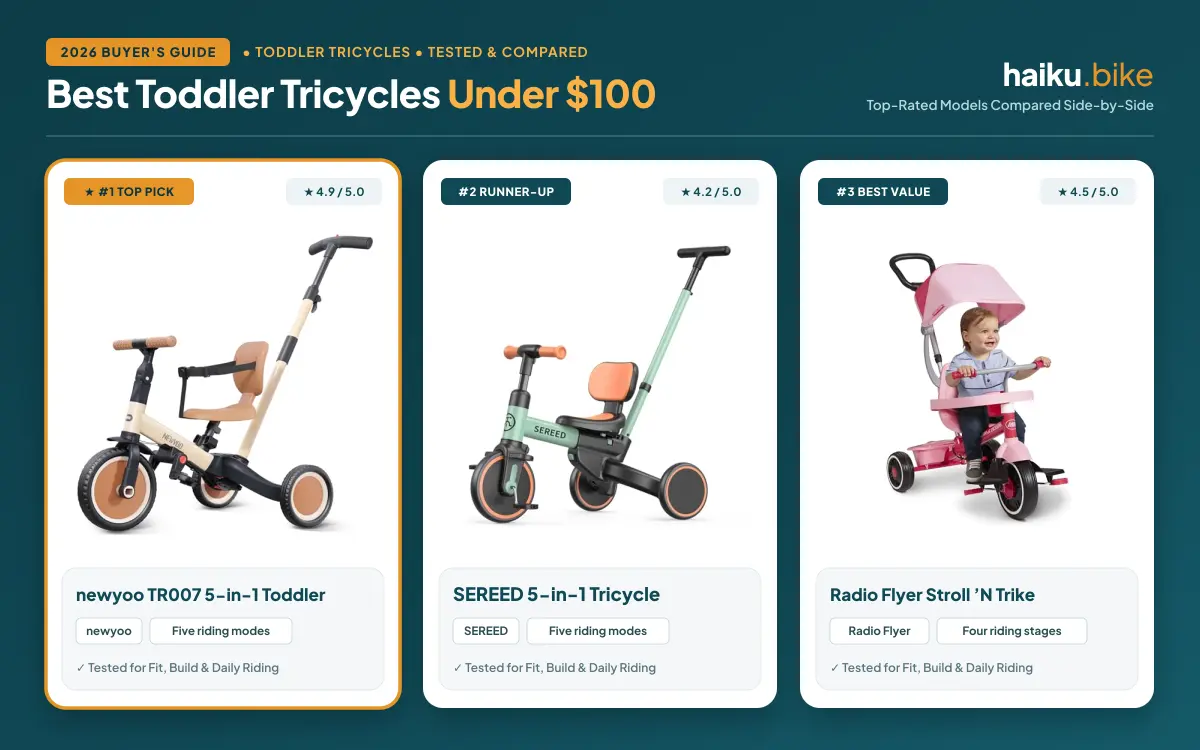
A child who is not ready to steer or coast on two wheels may suit a stable ride-on designed for early practice. A parent-guided tricycle may also fit families seeking supported configurations, while a child already riding confidently could be ready for a properly fitted pedal bike. Choose for present ability rather than promised future use.
Final Thoughts
Families seeking a conventional balance bike with a lower listed weight and airless tires can consider the Strider 12 Sport, No Pedal Balance Bike for Kids. Its published inseam guidance helps with sizing, but its stated maximum rider weight is lower than some alternatives. Check that its fit range suits your child before choosing it.
For tool-free seat and handlebar adjustment, compare the SEREED Toddler Balance Bike 2 Year Old and KRIDDO Toddler Balance Bike 2 Year Old. Riders whose routes include varied outdoor surfaces may prefer the air-filled tires on Ridego 14 Inch Balance Bike for Kids 3-6 Year, while accepting the need to maintain pneumatic tires.
Very young riders may be better suited to the four-wheel SEREED Baby Balance Bike for 1 Year Old Boy Girl, provided they meet its age and weight guidance. Families wanting several riding configurations can compare the JMMD 6 in 1 Toddler Bike with Push Handle for Kids, though it involves more setup than a basic balance bike.
Skip a balance bike if your child cannot reach the ground comfortably, is not ready to ride under supervision, or needs a different mobility or learning setup. Choose for present fit and ability rather than future growth, and browse child bike seat guidance if your family is considering other cycling equipment.
FAQs
How do I choose the right size balance bike?
The right balance bike size lets a child sit on the saddle and place both feet on the ground with knees slightly bent. Measure your child’s inseam and compare it with the maker’s seat or inseam range rather than relying on age alone. Check handlebar reach as well, and ask the manufacturer when useful measurements are missing.
Are balance bikes suitable for one-year-olds?
Some balance-style ride-ons are designed for one-year-olds, but suitability depends on the child’s readiness and the manufacturer’s instructions. The SEREED Baby Balance Bike for 1 Year Old Boy Girl is listed for ages 12 to 24 months and has four wheels. Follow its weight guidance and supervise the child throughout use.
Are air-filled or foam tires better on a balance bike?
Air-filled balance bike tires need pressure checks and can puncture, while foam or EVA tires avoid inflation. Ridego and bicystar list air-filled rubber tires, and Strider and SEREED list airless options. Choose according to your child’s routes, the maker’s surface guidance, and how much tire maintenance your family wants to handle.
Does a child need a helmet on a balance bike?
A child riding a balance bike should wear a properly fitted helmet certified to the CPSC bicycle helmet standard under 16 CFR Part 1203. Follow the helmet maker’s fitting and use directions, and supervise the child according to the bike maker’s instructions. Check local rules for the riding area before setting out.
Can a balance bike be used indoors?
A balance bike may be used indoors when the manufacturer permits it and the space is clear, level, and suitable for supervised riding. SEREED describes the baby bike’s wheels as non-destructive to floors, but that does not guarantee suitability for every surface. Remove hazards and follow the product instructions.
What should I check before a child rides a balance bike?
Before a child rides a balance bike, check that an adult assembled it according to the maker’s instructions and secured adjustable parts. Confirm that the child can sit comfortably and place both feet down, then check the helmet fit and the riding area. Follow the manufacturer’s warnings and local rules.
When should a child move from a balance bike to pedals?
A child may be ready for pedals after learning to steer, coast, and stop confidently on a properly fitted balance bike. Readiness varies, so age alone does not determine the transition. Choose a pedal bike that fits the child now, and follow its assembly, adjustment, and supervision instructions.
Write Your Review
No reviews yet. Be the first to share your experience!