
Parents shopping for a kids bike helmet under $30 need a secure fit and clear bicycle safety information, not only a design children like. We compared 6 options in November 2026, including adjustable helmets, LED details, and sets with protective pads.
Safety note: Children’s bicycles sold in the United States must meet CPSC bicycle requirements under 16 CFR Part 1512, and every rider should wear a helmet certified to CPSC bicycle helmet standard 16 CFR Part 1203. An adult or bike shop should confirm fit, assembly, and brakes; follow manufacturer instructions and local laws.
At a Glance: Which One Fits You
These helmets differ in size guidance, fit adjustments, and included extras, so match features to the child rather than choosing by age or appearance. Check the current product listing for certification details before buying.
- Best overall: Retrospec Scout Kids Bike Helmet, Skateboard offers an adjustment dial, washable padding, 14 vents, and an integrated visor.
- Best value: Toddler Helmet, Bienbee Kids Bike Helmet comes in three size options and uses an ABS shell with EPS foam.
- Best for added visibility: Raskullz Bolt LED Bike Helmet , Black/Red, Child has five LED lights in its 3D fin and adjustable straps.
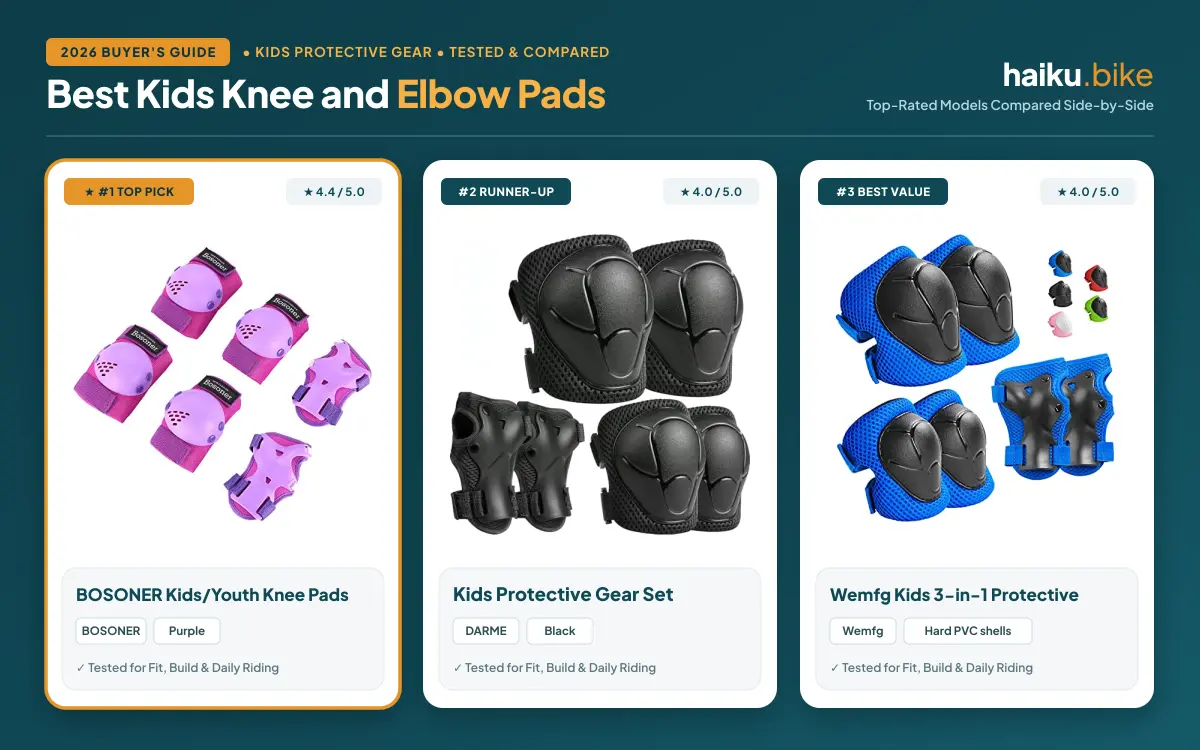
- Best for a helmet-and-pads bundle: Kids Bike Helmet Set, Adjustable Helmet for Ages includes wrist, knee, and elbow guards, plus a storage bag.


Pros
- ABS shell and thick EPS foam
- Listed weight of 13.2 oz
- Designed for multiple sports
- Breathable interior foam
Cons
- Small-size age guidance conflicts with general size chart
- No safety certification listed
- Who should skip it: families needing confirmed certification or clear sizing

Pros
- Adjustable dial and straps
- 11 ventilation openings
- ABS shell and EPS foam
- CPSC standard compliance stated
- Multi-sport use
Cons
- Listed age ranges differ
- No fit system beyond dial and straps

Pros
- Helmet plus knee, elbow, and wrist protection
- Adjustable helmet knobs and straps
- Removable, washable liner
- Storage bag included
Cons
- Listed size is small, 18.9 to 21.3 inches
- Age ranges conflict across listing details
- Who should skip it: riders needing a larger listed size

Pros
- CPSC-compliant helmet
- Helmet plus six protective pads
- Adjustable dial and chin strap
- Detachable, washable padding
- Reflective markings on sides and back
Cons
- Small size listed for ages 2 to 8
- No fit range beyond 18 to 22 inches
- Who should skip it: children outside listed fit range

Pros
- Five-LED light-up fin
- Automatic LED shutoff
- Adjustable straps
- Cooling vents
- CPSC-compliant for ages 5 and older
Cons
- Fits only 50-54 cm heads
- Battery runtime not stated
- Who should skip it: riders outside the fit range
Side-by-Side Comparison
| Helmet | Listed head size | Fit and comfort | Construction and features | Safety information |
|---|---|---|---|---|
| Retrospec Scout Kids Bike Helmet, Skateboard | Toddler size: 45-49 cm; other ranges not listed | Adjustment dial; washable padding | 14 vents; visor; reflective description | Certification not listed |
| Toddler Helmet, Bienbee Kids Bike Helmet | Three sizes; specific circumferences not listed | Size options; breathable foam | ABS shell; EPS foam | Certification not listed |
| BURSUN Kids Bike Helmet Ventilation & Adjustable | 48-54 cm | Adjustment dial and adjustable straps | ABS shell; EPS foam; 11 vents | Listing states CPSC bicycle helmet standard compliance |
| Kids Bike Helmet Set, Adjustable Helmet for Ages | 48-54 cm or 54-57 cm | Adjustment knobs and straps; removable liner | ABS shell; EPS core; 11 vents; pads and bag | Listing states CPC and CPSIA standards |
| Kids Bike Helmet Set,CPSC Certified with Knee | 46-55 cm | Adjustment dial and straps; washable padding | 19 vents; reflective markings; protective pads | Listing states CPSC compliance |
| Raskullz Bolt LED Bike Helmet , Black/Red, Child | 50-54 cm | Adjustable straps | Five LED lights; cooling vents | Listing states CPSC compliance for ages five and older |
Head circumference and stated certification matter most because neither a broad age range nor added accessories establish a safe bicycle fit. Measure the child, compare the exact size chart, and verify CPSC certification for the specific helmet.
Common Mistakes to Avoid
Choosing by age alone can leave a helmet loose or uncomfortable, since children of the same age can have different head sizes. Measure circumference as the manufacturer directs, then compare the result with the helmet’s size range and adjustment system.
Assuming a multi-sport label proves bicycle certification can lead to a poor safety choice. Check the helmet label and current listing for CPSC bicycle helmet standard information, and do not treat CPC or CPSIA claims as a substitute for that specific standard.
Buying a bundle for its pads can distract from whether its helmet fits and suits bicycle riding. A helmet-and-pad set may provide convenient extras, but the guards do not replace a correctly sized helmet or confirm its certification.
Expecting every listed feature to appear on every version can also cause confusion. Confirm the selected size and color, then check whether features such as lights, reflective markings, a visor, and washable padding apply to that exact option.
Best Kids Bike Helmet Under $30 Buying Guide
CPSC Certification for Bicycle Riding
CPSC certification is the first requirement to verify when choosing a bicycle helmet for a child in the United States. The helmet should meet CPSC bicycle helmet standard 16 CFR Part 1203, so check both the product listing and helmet label for clear confirmation.
The BURSUN helmet, farbzauber set, and Raskullz Bolt listing state CPSC compliance, while the other product descriptions do not state that certification. Treat an unstated claim as unconfirmed and contact the manufacturer if the label or listing leaves you unsure. A multi-sport description alone does not establish bicycle certification.
Head Circumference and Fit Range
Head circumference determines whether a helmet can sit securely, so measure before selecting a size. Use the maker’s instructions and compare the measurement with the exact size chart, rather than relying on age guidance or a claim that one helmet grows with a child.
The listed ranges vary: the farbzauber set covers 46-55 cm, BURSUN covers 48-54 cm, and Raskullz Bolt covers 50-54 cm. Retrospec lists a toddler range of 45-49 cm, while Bienbee gives age-based size options without circumference figures. Check the chosen size because one model’s range may not cover every option.
Adjustment System and Strap Setup
An adjustment system helps secure a helmet that already matches the child’s head measurement. The Retrospec, BURSUN, farbzauber, and DARME descriptions mention dial or knob adjustment, while the Raskullz description specifies adjustable straps.
Follow the manufacturer’s fitting instructions and check that the helmet stays in position without relying on an overly tight chin strap. Ask an adult or bike shop to assess fit if the helmet shifts, presses uncomfortably, or cannot be adjusted as directed. Recheck fit as the child grows.
Ventilation, Padding, and Cleaning
Ventilation and padding affect comfort, especially when a child wears a helmet for longer rides or play. Retrospec lists 14 vents and washable padding; BURSUN and DARME list 11 vents, while the farbzauber set lists 19 vents and detachable, washable padding.
Compare padding, ventilation, and care instructions rather than assuming that a larger vent count guarantees a better fit or comfort. The Raskullz description mentions cooling vents but gives no count. Choose a helmet the child will wear comfortably, and clean it only as the manufacturer directs.
Visibility Features and Extras
Visibility features and bundled guards can add convenience, but they do not replace CPSC certification or a secure fit. Raskullz describes five LED lights, and the farbzauber set lists reflective markings; Retrospec lists a visor and a reflective feature.
Check whether the selected version includes the feature you want, since product options may differ. The farbzauber and DARME bundles include wrist, knee, and elbow guards, while DARME also lists a storage bag. Families who need a specific light or reflective detail should verify it on the exact listing.
Materials and Intended Activities
Shell and liner descriptions help you compare construction, while intended-use statements show which activities the maker names. BURSUN and Bienbee list ABS shells with EPS foam; DARME lists an ABS shell and EPS core, and Raskullz describes a PVC shell with EPS foam.
Several makers describe use for biking, scooters, or skating, but activity labels do not establish suitability for every sport. Check certification for bicycle riding and follow the maker’s activity guidance. For more helmet context, read our guide to MIPS and non-MIPS helmets and browse kids bike helmets.
How We Chose
We assess each option with the Haiku Ride Score: core performance 30%, build and weather resistance 20%, ease of use 20%, compatibility and fit 15%, and value 15%. For children’s helmets, compatibility and fit means head-size range, adjustment, strap setup, and suitability for the stated activity.
We compare manufacturer specifications, certification statements, fit information, and long-term owner feedback when available. We research and draft our guides with software tools, including AI, then run automated checks on product fit, sourcing, and our editorial rules. Our editor spot-checks guides rather than reading each one before publication. Learn about how we review.
Price and Value: What Each Budget Gets You
Budget
Lower-cost options in this guide focus on a basic helmet with adjustable straps or a simple size range, and some include protective pads. Bienbee lists an ABS shell and EPS foam, while its size guidance is not expressed as head circumference. Buyers may give up clear adjustment details or listed extras, so confirm fit and certification before choosing.
Mid-Range
Options in the middle of this guide add more specific fit or comfort details, such as an adjustment dial, washable padding, or a visor. Retrospec lists those features and 14 vents, while the farbzauber bundle adds guards and reflective markings. The trade-off is that feature-rich descriptions still do not replace a confirmed size match or clear CPSC information.
Premium
At the upper end of this guide, BURSUN lists an ABS shell, EPS foam, an adjustment dial, straps, and 11 vents. More detail can help families compare construction and fit features, but it does not establish that a helmet suits every child or activity. Verify the size, label, care instructions, and certification before deciding.
Choosing Something Else
If none of these helmets fits the child’s measured head or has certification you can verify, keep looking rather than settling for a poor match. A properly fitting helmet from another category or retailer is a better choice than a bundle whose extras do not solve the fit problem. Ask a local bike shop to help assess fit.
Final Thoughts
Families who want a dial fit, washable padding, ventilation details, and visor may prefer Retrospec Scout Kids Bike Helmet, Skateboard. Its toddler size is listed as 45-49 cm, but certification is not stated in the product description, so confirm that point before bicycle use.
For an LED detail, Raskullz Bolt LED Bike Helmet , Black/Red, Child lists five lights and a 50-54 cm fit range. Families seeking a helmet with guards can compare Kids Bike Helmet Set, Adjustable Helmet for Ages, which lists two size ranges and removable padding, though its stated CPC and CPSIA claims do not establish CPSC bicycle helmet certification.
Skip any option whose size range does not include the child’s measurement, whose fit cannot be adjusted securely, or whose bicycle certification you cannot verify. Bundled pads, lights, and ventilation features should come after fit and certification in your decision. See our bike helmet guide with turn signals for a different helmet category.
FAQs
What certification should a kids bike helmet have in the United States?
A kids bike helmet for bicycle riding in the United States should be certified to the CPSC bicycle helmet standard, 16 CFR Part 1203. Check the helmet label and product listing for that specific certification. A general multi-sport claim, or a different standards claim, does not confirm CPSC bicycle helmet certification.
How do I measure a child for a bike helmet?
Measure a child’s head circumference as the helmet manufacturer directs, then compare the measurement with the exact size chart. Do not choose by age alone, because children of the same age can have different head sizes. An adult or bike shop should help confirm that the selected helmet sits securely and adjusts as intended.
Are adjustable kids bike helmets one size fits all?
Adjustable kids bike helmets are not automatically one size fits all. An adjustment dial or strap can refine fit only within the manufacturer’s stated size range. Measure the child’s head before ordering, select the corresponding size, and check that the helmet stays stable without excessive strap tightening.
Are multi-sport helmets suitable for riding a bicycle?
A multi-sport helmet is suitable for bicycle riding only when its bicycle certification and fit are appropriate. Check for the CPSC bicycle helmet standard, 16 CFR Part 1203, on the product listing and helmet label. Then follow the manufacturer’s activity guidance, since a skateboarding claim alone does not confirm bicycle certification.
Do kids bike helmets with LED lights need batteries?
The Raskullz Bolt LED Bike Helmet , Black/Red, Child lists five LED lights and an automatic shutoff feature, but its description does not state battery type or runtime. Check the current product details for power requirements before buying. Treat the helmet’s lights as an added feature, not a replacement for required bicycle safety equipment.
Can kids bike helmet padding be washed?
Some kids bike helmet padding is described as removable and washable, but care instructions vary by helmet. Retrospec lists washable interior padding, and the farbzauber set describes detachable, washable padding. Follow the maker’s cleaning directions, and do not use unapproved products that could affect the helmet’s materials.
When should I replace a child’s bike helmet?
Replace a child’s bike helmet according to the manufacturer’s instructions, including after an impact if the maker directs. Inspect the helmet for damage and check whether it still fits as the child grows. If its history, condition, or continued use is unclear, ask the manufacturer or choose a helmet whose condition you can verify.
Are reflective details or helmet lights enough for visibility?
Reflective details and helmet lights are visibility features, not proof that a rider is visible in every condition. Confirm which features appear on the exact helmet option, then follow local laws and use other appropriate visibility measures. Our Helmets & Safety category covers more cycling safety equipment.
Write Your Review
No reviews yet. Be the first to share your experience!