Young riders learning to pedal need support while they practice starting, stopping, and steering. Training wheels can provide side support, but a matching wheel-size claim does not guarantee that brackets will fit a child’s bike.
We compare 6 options from HUWAY, PRUNUS, Tayizoo and more for November 2026, focusing on compatibility, adjustment, construction, and setup. Compare training wheels with other learning approaches in our Balance Bikes & Training Wheels guide.
Safety note: Children’s bicycles sold in the United States must meet CPSC bicycle requirements under 16 CFR Part 1512, and every rider should wear a helmet certified to the CPSC bicycle helmet standard under 16 CFR Part 1203. An adult or bike shop should confirm fit, assembly, and brakes. Follow the manufacturer’s instructions and local laws.
At a Glance: Which One Fits You
- Best overall: Tayizoo Bike Training Wheels for 12-20 Inch Kids offers five bracket positions and includes a wrench, manual, and bell, but fits single-speed bikes only.
- Best value: HUWAY training wheels flash mute wheel bicycle covers several stated bike sizes and supports riders up to 100 lb, although some short axles will not fit.
- Best for adjustable setup: Takelablaze Bike Training Wheels Mute Flash Wheels has five height positions and included mounting hardware, but is limited to single-speed bikes.
- Best for wider wheels: Training Wheels, Wider Flash Kids Bike Training lists 5.3-inch-diameter, 1.2-inch-wide wheels, though its instructions require careful placement of the limit block.

Pros
- Light-up wheels
- Double high-carbon-steel bearings
- Two wrenches included
- Thick brackets
Cons
- Single-speed bikes only
- Fits 14- to 20-inch bikes only
- Rear axle studs need at least 0.4 inches of visible length

Pros
- Flashing lights need no batteries
- Five height adjustment holes
- Fits many 12- to 20-inch bikes
- Installation hardware and wrench included
- Bike bell included
Cons
- Not for multi-speed bikes
- Requires standard rear axle
- May not fit some Huffy and Schwinn 20-inch models

Pros
- Fits five listed wheel sizes
- Installation hardware included
- Two installation tools included
- Bell and decorations included
- Recommended setup height provided
Cons
- Requires at least 0.4 inches of visible rear axle studs
- Weight limit under 80 lb
- Who should skip it: riders whose bikes lack enough axle stud length

Pros
- Fits listed 12 to 20-inch bike sizes
- Adjustable mounting height
- Installation hardware and instructions included
- Lightweight, quiet wheel design
Cons
- Single-speed bikes only
- Some axles under 0.8 inches may not fit
- Who should skip it: riders with derailleurs

Pros
- Fits five listed wheel sizes
- Five height adjustment holes
- Mute wheel design
- Mounting hardware and wrench included
- Rated for riders up to 100 lb
Cons
- Single-speed bikes only
- Who should skip it: riders with multi-speed bikes
- Check fit and fasteners before each ride

Pros
- Fits five listed bike sizes
- Steel support arms
- 1.2-inch-wide wheel edges
- Multi-hole adjustment
- Axle extensions included
Cons
- Listed for single-speed bikes only
- Installation requires careful bilateral adjustment
Side-by-Side Comparison
| Product | Stated bike fit | Drivetrain | Axle requirement | Rider limit | Notable feature |
|---|---|---|---|---|---|
| PRUNUS Flash BIKE Training Wheels for 12 14 16 18 | 14 to 20 inches | Single-speed | At least 0.4 inch visible | Not listed | Double bearings; flashing wheels |
| Tayizoo Bike Training Wheels for 12-20 Inch Kids | 12 to 20 inches, exclusions apply | Single-speed | Standard rear axle; short axles excluded | No more than 100 lb | Five bracket holes |
| DDJKCZ Training Wheels,Compatible for Bikes of 12 | 12 to 20 inches | Not listed | At least 0.4 inch visible | Less than 80 lb | Bell and installation tools |
| HUWAY training wheels flash mute wheel bicycle | 12 to 20 inches | Single-speed | Some axles under 0.8 inch will not fit | Up to 100 lb | Adjustable height; flashing wheels |
| Takelablaze Bike Training Wheels Mute Flash Wheels | 12 to 20 inches | Single-speed | Not listed | Up to 100 lb | Five height positions |
| Training Wheels, Wider Flash Kids Bike Training | 12 to 20 inches | Not listed | Not listed | Not listed | 5.3-inch diameter; 1.2-inch width |
Axle and drivetrain compatibility can matter more than a broad wheel-size range because a bracket must attach without conflicting with the bike. Measure exposed axle on both sides, identify whether the bike has gears, and compare those details with the exact maker instructions.
Common Mistakes to Avoid
Choosing by tire size alone can leave too little axle exposed for secure attachment. PRUNUS and DDJKCZ specify at least 0.4 inch of visible axle studs, while HUWAY warns that some axles under 0.8 inch will not fit. Those measurements describe different requirements, so use the instructions for the exact set.
Assuming a set fits a geared bike can lead to an incompatible purchase. PRUNUS, Tayizoo, HUWAY, and Takelablaze specify single-speed use, and HUWAY says its set cannot install on bikes with derailleurs. Check the bike’s gearing, chain guard, frame, and rear axle before ordering.
Setting both support wheels at an uneven or unsuitable height can change how they contact the ground. PRUNUS and DDJKCZ recommend about 0.5 inch of clearance with the bike upright, while Training Wheels, Wider Flash Kids Bike Training gives different guidance. Follow the specific product instructions, position both sides evenly, and tighten fasteners before riding.
Ignoring rider limits and installation details creates avoidable safety concerns. DDJKCZ specifies less than 80 lb, while HUWAY and Takelablaze list support up to 100 lb. Training Wheels, Wider Flash Kids Bike Training also requires correct placement of its limit block, so an adult should follow its instructions and supervise riding.
Best Training Wheels for Kids Bike: Buying Guide
Confirm Bike Size and Axle Fit
Bike size and rear-axle fit determine whether training-wheel brackets can attach as intended. Read the size marking on the tire, then compare it with the product’s stated range and exclusions. A set advertising broad compatibility may still omit a particular frame, axle, or bike configuration.
Measure the exposed rear axle on both sides before choosing a set. PRUNUS and DDJKCZ require at least 0.4 inch of visible studs, while HUWAY warns that some axles under 0.8 inch will not fit. These are product-specific conditions, not interchangeable measurements; contact the maker if your axle falls near a stated limit.
Some listings state a size range without detailing every frame restriction. Tayizoo excludes short rear axles, full chain guards, and some Huffy and Schwinn 20-inch models. If your bike has unusual rear hardware, compare the exact frame and axle against the maker’s fit guidance before purchase.
Check Drivetrain and Frame Clearance
Drivetrain compatibility matters because training-wheel brackets need clear space around the rear axle and nearby components. Several products in this guide specify single-speed bikes, so wheel-size compatibility does not establish that a geared bike will accept the brackets.
PRUNUS, Tayizoo, HUWAY, and Takelablaze specify single-speed use. HUWAY explicitly excludes bikes with derailleurs, and Tayizoo also lists full chain guards among its exclusions. Check for gears, a derailleur, chain guards, and frame features that could obstruct the bracket.
When a listing does not state whether a frame configuration fits, ask the manufacturer rather than assuming. The Kids & Family Cycling category includes other equipment for young riders, while our balance bike and training-wheel guide compares different learning approaches.
Compare Wheel Design and Support
Wheel design and bracket layout shape the type of support a training-wheel set provides. Conventional sets place small wheels beside the rear tire, while their dimensions and materials vary. Compare those details with the intended bike and the maker’s instructions rather than treating a wider wheel as proof of better fit.
Training Wheels, Wider Flash Kids Bike Training lists 5.3-inch-diameter wheels with a 1.2-inch width. HUWAY and Takelablaze list 4.33-inch wheels, while Tayizoo lists 4.5-inch wheels. These measurements describe different designs, but do not establish identical handling or suitability for every rider.
Flashing wheels appear on several options, including PRUNUS, HUWAY, Takelablaze, Tayizoo, and Training Wheels, Wider Flash Kids Bike Training. Treat lights as an extra feature, not a replacement for required bicycle lighting or adult supervision. Check the product description for how its wheel lights operate.
Assess Brackets, Fasteners, and Adjustment
Bracket construction and adjustment features affect how a set attaches and can be positioned. Compare the included arms, washers, nuts, and adjustment points, then check whether the package includes tools. A stated feature does not replace careful assembly according to the maker’s directions.
Tayizoo and Takelablaze each list five bracket or height positions, which gives caregivers several setup choices. PRUNUS describes a thicker bracket, double bearings, and an enlarged washer. Training Wheels, Wider Flash Kids Bike Training lists steel support arms and a limit block that must sit correctly in the frame.
Included tools can help with installation, but package details differ. DDJKCZ includes installation tools and a bell, while Tayizoo includes a wrench and manual. Check that all listed components are present, follow the instructions for both sides, and recheck fasteners before each ride.
Follow Clearance and Setup Instructions
Ground clearance should follow the instructions for the specific training-wheel set because bracket designs and recommendations differ. PRUNUS and DDJKCZ recommend about 0.5 inch of clearance with the bike upright, while Training Wheels, Wider Flash Kids Bike Training describes about 0.2 inch.
Do not transfer one product’s measurement to another set. Place the bike upright on a level surface when following the maker’s setup method, and check that both support wheels sit evenly. Training Wheels, Wider Flash Kids Bike Training also directs installers to seat its limit block correctly.
Read the full instructions before attaching brackets, then tighten all hardware as directed. An adult should check installation and brakes before the child rides, and supervise riding. A bike shop can help confirm fit and assembly when the frame or axle arrangement is unclear.
Check Rider Limits and Included Features
A published rider limit is a key boundary when selecting training wheels. DDJKCZ specifies less than 80 lb, while HUWAY and Takelablaze list support up to 100 lb and Tayizoo says rider weight should not exceed 100 lb. Other sets in this comparison do not list a rider limit.
Do not infer a rider limit from a claim about sturdy materials or a bracket’s appearance. Compare the child’s weight with the stated limit for the exact product, and ask the manufacturer when no limit is listed or the wording is unclear.
Extra features can help distinguish otherwise similar sets, but they do not establish compatibility. DDJKCZ includes a bell, and Tayizoo includes a bell and wrench. HUWAY describes quiet, lightweight wheels, while Takelablaze lists mute flash wheels. Choose extras only after confirming bike fit, drivetrain, axle, and rider-limit requirements.
How We Chose
We score products with the Haiku Ride Score: core performance counts for 30%, build and weather resistance for 20%, ease of use for 20%, compatibility and fit for 15%, and value for 15%. For training wheels, compatibility and fit means stated bike sizes, axle requirements, drivetrain restrictions, rider limits, and setup details.
We research manufacturer specifications, compatibility information, and long-term owner feedback where available, then compare construction, adjustment, and included hardware. We research and draft our guides with software tools, including AI, then run automated checks on product fit, sourcing, and our editorial rules. Our editor spot-checks guides rather than reading each one before publication. Read about how we review.
Price and Value: What Each Budget Gets You
Budget
Lower-cost sets generally focus on conventional side support, basic adjustment, and included mounting hardware. Takelablaze lists five height positions, a wrench, and locking nuts, while HUWAY includes installation instructions and adjustable height. Buyers may give up more detailed construction descriptions, so confirm axle fit, drivetrain compatibility, and rider limits before choosing.
Mid-Range
Options in the middle of this range add practical extras or more specified setup details. DDJKCZ includes a bell and installation tools, while Tayizoo offers five bracket positions and a manual. Those additions do not remove bike restrictions, and DDJKCZ has a lower stated rider limit than some alternatives. Prioritize fit over accessories.
Premium
Higher-positioned options in this comparison emphasize construction details or larger wheel dimensions. PRUNUS lists double bearings and a thicker bracket, while Training Wheels, Wider Flash Kids Bike Training specifies wider wheels and steel support arms. These features may appeal to caregivers comparing design details, but neither set lists a rider limit, so confirm suitability before purchase.
Choosing Something Else
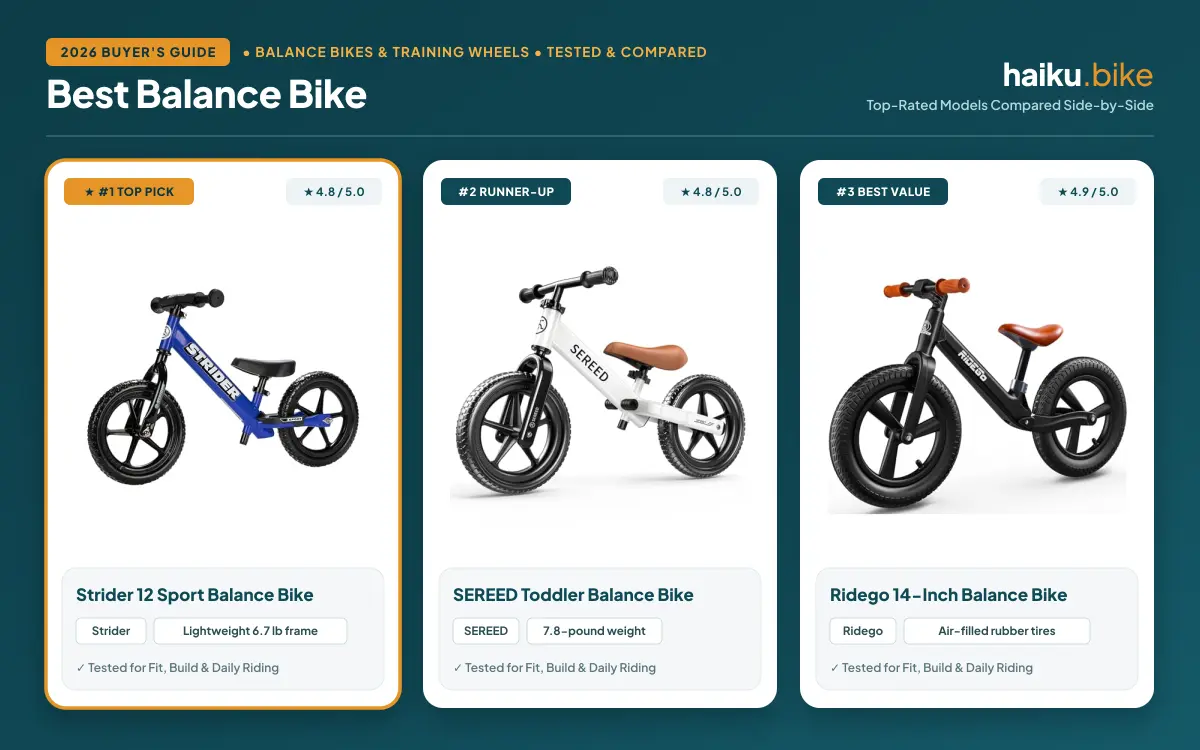
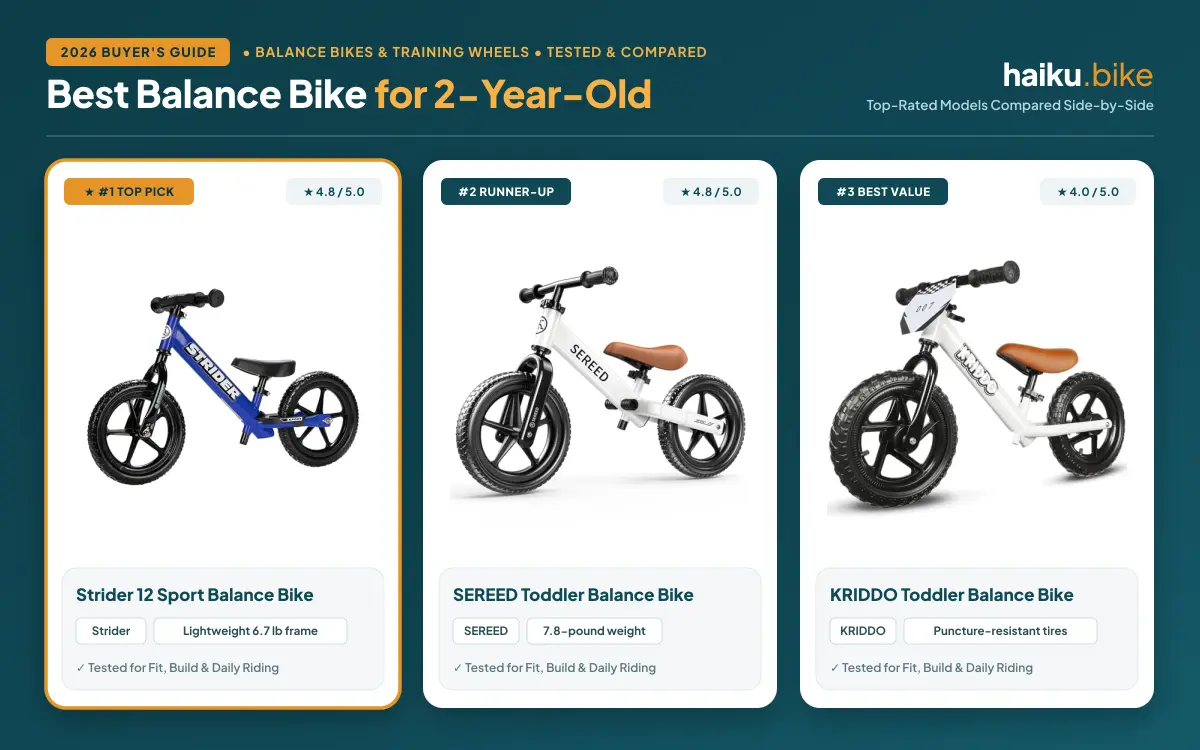
A balance bike may suit a child who is ready to practice steering and balance without pedals or side wheels. That option requires a bike that fits the child and may not suit every learner or family. Compare balance bikes with pedal-bike support in our Balance Bikes & Training Wheels guide before choosing a learning setup.
Final Thoughts
Caregivers wanting several height positions and included setup materials can consider Tayizoo Bike Training Wheels for 12-20 Inch Kids. Its five bracket holes, wrench, and manual make adjustment details clear, but the set is for single-speed bikes and excludes some frames, short axles, and full chain guards.
Families looking for a stated rider capacity and a broad listed size range can compare HUWAY training wheels flash mute wheel bicycle. HUWAY lists support up to 100 lb and adjustable height, but warns that some short axles will not fit and excludes bikes with derailleurs. Measure the axle before ordering.
Caregivers prioritizing detailed wheel dimensions can review Training Wheels, Wider Flash Kids Bike Training, which lists 5.3-inch-diameter, 1.2-inch-wide wheels. Its setup requires correct limit-block placement, and its rider limit and axle requirement are not listed. Check with the maker if those missing details affect your decision.
Skip these products when the bike has gears, an incompatible axle, or a frame excluded by the manufacturer. A balance bike may better suit a child learning balance before pedaling, while a bike shop can help assess fit, assembly, and brakes. Explore our child bike seat category for a different kind of family cycling equipment.
FAQs
Will training wheels fit any 12- to 20-inch kids bike?
Training wheels will not necessarily fit every 12- to 20-inch kids bike because axle length, drivetrain, frame details, and product exclusions also matter. Check the exact set’s size range and measure exposed rear axle on both sides. PRUNUS, for example, lists a 14- to 20-inch range, while Tayizoo excludes some bike configurations.
How much exposed axle do kids’ training wheels need?
Exposed axle requirements vary by training-wheel set, so follow the exact manufacturer’s minimum. PRUNUS and DDJKCZ specify at least 0.4 inch of visible studs, while HUWAY warns that some axles under 0.8 inch will not fit. Measure both sides and ask the maker if your bike falls short.
Can training wheels go on a geared bike?
Some training wheels are designed for single-speed bikes, so a geared bike may not be compatible. PRUNUS, Tayizoo, HUWAY, and Takelablaze specify single-speed use, and HUWAY excludes bikes with derailleurs. Check the exact product instructions for gears, chain guards, and frame clearance before ordering.
How high should training wheels sit above the ground?
Training-wheel ground clearance should follow the instructions for the specific set and bike. PRUNUS and DDJKCZ recommend about 0.5 inch with the bike upright, while Training Wheels, Wider Flash Kids Bike Training describes about 0.2 inch. Set both sides evenly, tighten hardware as directed, and have an adult supervise.
Do flashing training wheels need batteries?
Battery requirements depend on the specific flashing-wheel design, and the products compared here do not all state how their lights are powered. Check the maker’s description for the exact set before buying. Wheel lights do not replace a suitable bicycle light when riding conditions or local laws call for one.
What weight limit should I check for kids’ training wheels?
Check the stated rider limit for the exact training-wheel set, because limits differ and some products do not publish one. DDJKCZ specifies less than 80 lb, while HUWAY and Takelablaze list support up to 100 lb. Do not infer capacity from materials, and ask the manufacturer when the limit is missing.
What safety rules apply when a child rides with training wheels?
Children’s bicycles sold in the United States must meet CPSC bicycle requirements under 16 CFR Part 1512, and each rider should wear a helmet certified to 16 CFR Part 1203. An adult or bike shop should confirm fit, assembly, and brakes. Follow the product instructions and local laws, and supervise the child while riding.
Should I choose a balance bike instead of training wheels?
A balance bike may suit a child who is ready to learn steering and balance without pedals, while training wheels support practice on a pedal bike. The right choice depends on the child and a properly fitting bike. Compare both approaches in our Balance Bikes & Training Wheels guide.
Write Your Review
No reviews yet. Be the first to share your experience!