

Our guide to Best Cycling Tights for Winter compares 4 options in November 2026, from brands including Souke Sports, qualidyne, CEROTIPOLAR and more. Follow each manufacturer’s care and fit instructions, and check local rules for riding in low light; our cycling shorts and bibs category covers related apparel.
At a Glance: Which One Fits You
- Best overall: CEROTIPOLAR Thermal Fleece Cycling Bib Tights pair fleece warmth and long-distance chamois padding with multiple storage pockets, though the extensive pocket layout may not suit riders seeking a minimal fit.
- Best value: Bikewa Men’s Thermal Cycling Bib Tights 4D combine fleece lining, water resistance, five pockets, and a restroom opening, while bib straps may not suit every rider.
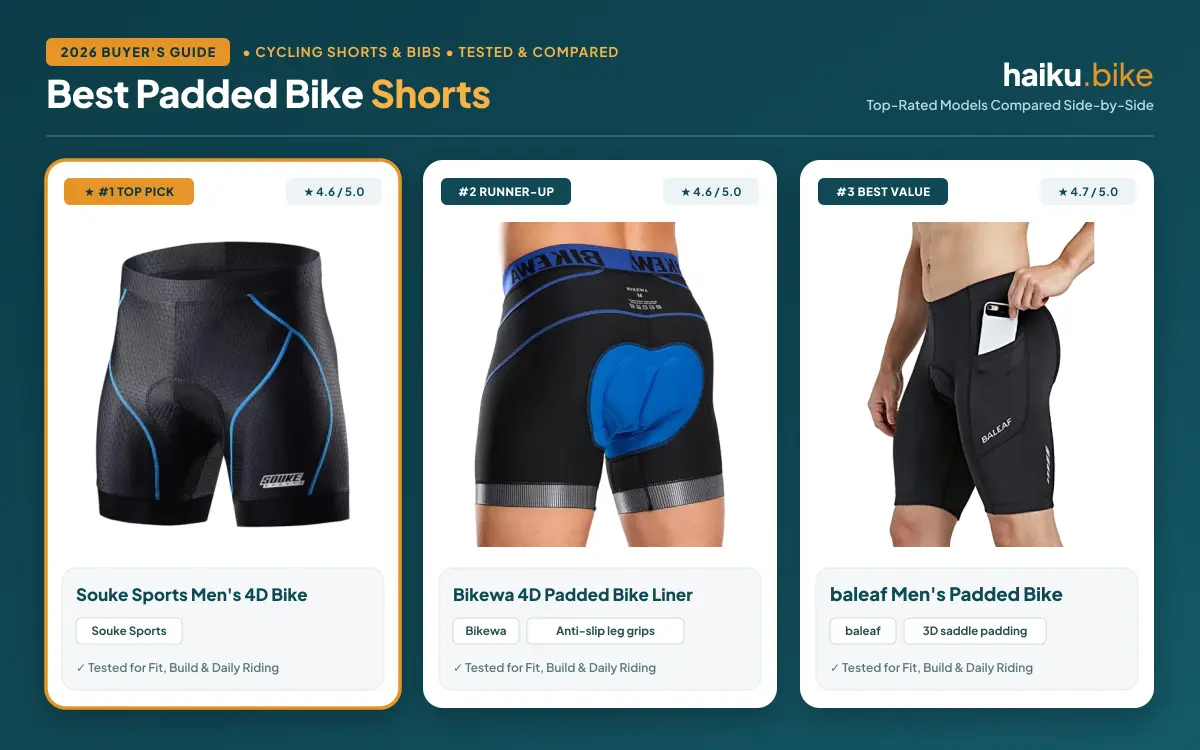
- Best for cool-weather rides: Souke Sports Cycling Pants for Men Padded Bike offer a 4D pad, quick-drying fabric, and ankle zippers, but lack listed fleece lining.
- Best for a simple bib fit: qualidyne Men’s Thermal Cycling Bib Tights Padded bring fleece warmth, mesh straps, and a 3D chamois, though pocket details are not listed.


Pros
- 4D multi-density chamois
- Moisture-wicking, quick-drying fabric
- Four-way stretch with flat seams
- Ankle zippers for easier changes
- Reflective details around legs
Cons
- Full-length coverage may feel warm in hot weather
- No stated pocket details
- Who should skip it: riders seeking cycling shorts

Pros
- Fleece lining for cool-weather rides
- 4D chamois cushioning
- Five storage pockets
- Overlapping restroom opening
- Reflective details and ankle zippers
Cons
- Water resistance covers only light moisture
- Who should skip it: riders needing waterproof tights

Side-by-Side Comparison
| Product | Warmth and weather | Padding | Storage | Ride details |
|---|---|---|---|---|
| CEROTIPOLAR Thermal Fleece Cycling Bib Tights | Thermal fleece, moisture-wicking | 120g/m² Agis Shield open-cell foam | Side and rear pockets, zip pocket | Reflective details, flatlock seams |
| Souke Sports Cycling Pants for Men Padded Bike | Lightweight, quick-drying | 4D multi-density pad | Not listed | Ankle zippers, reflective details |
| Bikewa Men’s Thermal Cycling Bib Tights 4D | Fleece-lined, water-resistant outer layer | 4D pad | Five pockets, including zip pocket | Restroom opening, reflective ankle zippers |
| qualidyne Men’s Thermal Cycling Bib Tights Padded | Fleece-lined, moisture-wicking | 3D ergonomic chamois | Not listed | Mesh straps, ankle zippers, visibility details |
Padding and weather protection are the clearest decision points in this comparison. Bikewa specifies a water-resistant outer layer, while CEROTIPOLAR gives a named foam construction and Souke Sports describes a lightweight option for cool rides; choose based on route conditions and saddle time.
Common Mistakes to Avoid
One common mistake is assuming every full-length cycling tight provides the same insulation. Souke Sports describes lightweight, quick-drying fabric for cool spring and fall rides, while CEROTIPOLAR, Bikewa, and qualidyne specifically describe fleece lining. Match the garment’s stated warmth to your weather and effort instead of treating all long tights as winter insulation.
Another mistake is buying by pad label alone. Souke Sports specifies a 4D multi-density pad, Bikewa lists a 4D pad, CEROTIPOLAR names open-cell foam, and qualidyne describes a 3D ergonomic chamois. Pad labels do not establish personal comfort, so check fit guidance and consider how long you usually remain in the saddle.
Shoppers can also mistake a water-resistant description for full rain protection. Bikewa states that its outer layer helps block cold wind and light moisture, but the other product descriptions do not establish equivalent protection. Check the maker’s wording closely and use suitable outerwear when a ride calls for protection beyond the garment’s stated features.
Finally, do not overlook bib construction, pockets, or access. Bib straps and a restroom opening may make Bikewa more convenient for some riders, while Souke Sports uses a waistband and ankle zippers. Check pocket locations and garment style against your layers and routine before choosing.
Best Cycling Tights for Winter: Buying Guide
Warmth and Weather Protection
Warmth and weather protection determine whether cycling tights suit a cold, exposed route or a milder ride. Fleece lining adds insulation, but it does not automatically mean a garment blocks wind or rain. Bikewa specifically describes a water-resistant outer layer for cold wind and light moisture, while other products emphasize fleece or moisture management.
Read the maker’s description for separate claims about insulation, wind resistance, and water resistance. Consider your pace and route exposure, since hard efforts can produce heat even in cold conditions. If the listing does not state a temperature range, avoid assuming one; select layers that can adapt to changing weather.
Chamois and Saddle Comfort
A chamois is a padded insert intended to cushion contact between rider and saddle. All four options describe padding, but their constructions differ: Souke Sports and Bikewa specify 4D pads, CEROTIPOLAR names 120g/m² Agis Shield open-cell foam, and qualidyne describes a 3D ergonomic chamois.
Use those descriptions to compare design, not to assume one pad will suit every body or saddle. Check whether the tights’ cut and pad placement match your riding position and usual ride duration. Riders who already prefer padded shorts should consider whether a bib tight’s built-in chamois fits their layering routine.
Fit, Bib Straps, and Movement
Fit matters because fabric and straps must move with your legs without shifting or restricting pedal strokes. Souke Sports describes a four-way stretch fabric and 14-panel design; qualidyne lists a supportive compression fit and breathable mesh bib straps. Bikewa also specifies stretch mesh straps, while CEROTIPOLAR describes a high-waist design.
Check each maker’s size chart and garment measurements before ordering, especially if you sit between sizes. Compare waistband or strap construction with the layers you wear underneath. A close fit should support movement, but compression descriptions alone do not confirm comfort for every rider or body shape.
Fabric, Seams, and Sweat Management
Fabric and seam construction affect comfort as effort rises and sweat builds beneath winter layers. Souke Sports describes moisture-wicking, quick-drying fabric and flat seams. CEROTIPOLAR lists moisture-wicking fleece and flatlock stitching, while Bikewa and qualidyne also describe moisture-wicking materials.
Look for specific information about stretch, seam placement, and breathability rather than relying on broad comfort language. Riders who climb hard may value moisture management, while an easier commute may call for more insulation. Follow the garment’s care label because washing instructions can vary across stretch fabrics and fleece constructions.
Pockets, Access, and Visibility
Pockets and access features shape how practical tights feel on commutes and longer rides. CEROTIPOLAR describes side and rear pockets, including a zip pocket, while Bikewa lists five pockets and an overlapping restroom opening. Souke Sports specifies ankle zippers and reflective details; qualidyne also lists ankle zippers and low-light visibility details.
Check whether pocket placement suits your riding position and whether closures are specified for valuables. Reflective details can help make a rider more noticeable, but they do not replace appropriate lights in low-light conditions. For related apparel, compare our cycling gloves guide when assembling clothing for cold rides.
Layering and Intended Riding
Layering determines how cycling tights work with padded shorts, base layers, and weather protection. Souke Sports describes road riding, mountain biking, and indoor spinning, while the bib tights are described for road, gravel, and mountain biking. Those uses help compare intended riding, but do not establish identical fit or weather coverage.
Decide whether you want a bib design or a waistband before comparing details such as pockets and ankle zippers. Check how the garment fits over or alongside your usual layers, then review the maker’s care guidance. Riders comparing other apparel can browse our cycling apparel and shoes category.
How We Chose
We score products with the Haiku Ride Score: core performance counts for 30%, build and weather resistance for 20%, ease of use for 20%, compatibility and fit for 15%, and value for 15%. For cycling tights, compatibility and fit means garment construction, stated padding, layering, and features such as bib straps or ankle zippers.
We research and compare manufacturer specifications, compatibility information, and long-term owner feedback where available, then evaluate how clearly each product addresses warmth, comfort, and intended riding. We research and draft our guides with software tools, including AI, then run automated checks on product fit, sourcing, and our editorial rules. Our editor spot-checks guides rather than reading each one before publication. Our how we review page explains our method.
Price and Value: What Each Budget Gets You
Budget
At the budget end, riders can prioritize useful cycling construction over extensive storage or specialized weather features. Souke Sports combines a padded design, stretch fabric, quick-drying claims, and ankle zippers, but its description does not specify fleece lining or water resistance. This approach suits cool rides and riders who value a lightweight feel over stated winter protection.
Mid-Range
Mid-range tights can bring together warmth, padding, and practical details without requiring a highly specific feature set. qualidyne describes fleece lining, mesh bib straps, and a 3D chamois, while Bikewa adds a water-resistant outer layer, five pockets, and a restroom opening. Riders should still compare fit and weather claims because feature lists do not guarantee a personal match.
Premium
At the upper end, more detailed construction and storage may matter to riders spending longer in the saddle. CEROTIPOLAR describes open-cell foam padding, a high-waist design, flatlock seams, reflective details, and several pockets. Its extensive features may appeal to riders carrying essentials, though those who prefer a simple, low-profile garment may not need the added storage.
Choosing Something Else
Some riders may prefer thermal knee or leg warmers over full-length tights when temperatures vary during a short commute. Warmers can pair with cycling shorts already in your rotation, while padded shorts handle saddle contact. This alternative suits riders who want adjustable leg coverage, but it may provide less integrated insulation and weather protection than winter tights.
Final Thoughts
Riders seeking a feature-rich bib tight for longer cold-weather outings should consider CEROTIPOLAR Thermal Fleece Cycling Bib Tights. Its stated foam chamois, fleece, reflective details, and multiple pockets cover several practical needs, though riders who prefer simpler storage or a less specific fit should compare alternatives.
Bikewa Men’s Thermal Cycling Bib Tights 4D suit riders who value fleece, a water-resistant outer layer, pocket options, and a restroom opening. The bib design may not work for everyone, and water resistance is described for light moisture rather than as full waterproof protection.
For cool-weather rides where a lightweight feel matters, Souke Sports Cycling Pants for Men Padded Bike offer a 4D pad, quick-drying fabric, and ankle zippers, but not listed fleece insulation. Riders seeking a fleece-lined bib with mesh straps can compare qualidyne Men’s Thermal Cycling Bib Tights Padded, while accepting that pocket details are not listed.
Skip these options if you need a clearly specified temperature range, substantial rain protection, or a garment whose fit you cannot confirm from the maker’s size guidance. Riders can also compare other apparel through our cycling shoes guide when planning a broader cold-weather kit.
FAQs
Do winter cycling tights come with padding?
Winter cycling tights may include a chamois, but riders should confirm padding in the product description. All four options here list a pad or chamois, with different descriptions including 4D padding, open-cell foam, and a 3D ergonomic design. Compare fit and intended ride duration because padding labels alone cannot predict individual saddle comfort.
Are fleece-lined cycling tights waterproof?
Fleece lining provides insulation, but it does not establish waterproof protection. Bikewa describes a water-resistant outer layer intended to help block cold wind and light moisture; the other products emphasize fleece or moisture management. Check the manufacturer’s wording for explicit weather claims, and choose separate outerwear when your route calls for stronger rain protection.
Should winter cycling tights fit tightly?
Winter cycling tights should fit securely while allowing your knees and hips to move freely through each pedal stroke. Bib straps, compression fabric, and stretch panels differ between products, so check the maker’s size chart and garment guidance before ordering. A close fit should not bunch uncomfortably or restrict your riding position.
Are bib tights warmer than waist tights?
Bib construction alone does not prove that tights are warmer than waist-style cycling pants. Warmth depends on insulation and fabric, and the products here describe fleece lining separately from strap or waistband design. Choose bib tights if their support and coverage suit your layers, then compare the maker’s actual warmth and weather descriptions.
Can I wear cycling tights for mountain biking?
Some cycling tights are described for mountain biking as well as road use. CEROTIPOLAR lists mountain biking among its intended activities, and Souke Sports describes mountain biking alongside road riding and indoor spinning. Check fit, padding, and pocket placement against your riding position, because intended use does not guarantee that every cut suits every trail rider.
Do cycling tights have useful pockets?
Some cycling tights include pockets, but placement and closure details vary. CEROTIPOLAR describes side and rear storage, including a zip pocket, while Bikewa lists five pockets with a zippered rear pocket. Check the maker’s pocket description against what you carry, and use a jersey pocket or bag if storage does not seem secure for your route.
How should I care for fleece cycling tights?
Care for fleece cycling tights according to the garment label and manufacturer’s instructions. The products’ feature descriptions do not establish one shared washing method, and stretch fabrics or padded inserts may have specific care needs. Check the label before cleaning, and avoid assuming that every fleece-lined garment can be washed or dried in the same way.
What should I wear under winter cycling tights?
What to wear under winter cycling tights depends on whether the tights include a chamois and how they fit. Padded tights may be worn as the primary cycling layer, while unpadded garments can pair with padded shorts. Check the manufacturer’s guidance and your comfort, then browse our cycling shorts and bibs category for related options.

Write Your Review
No reviews yet. Be the first to share your experience!