
Commuters and evening riders need clear visibility when traffic, shadows, and changing light make it harder to communicate. Smart bike helmets add features such as integrated lights, turn signals, or Bluetooth audio, but those electronics do not replace protective standards or a secure fit.
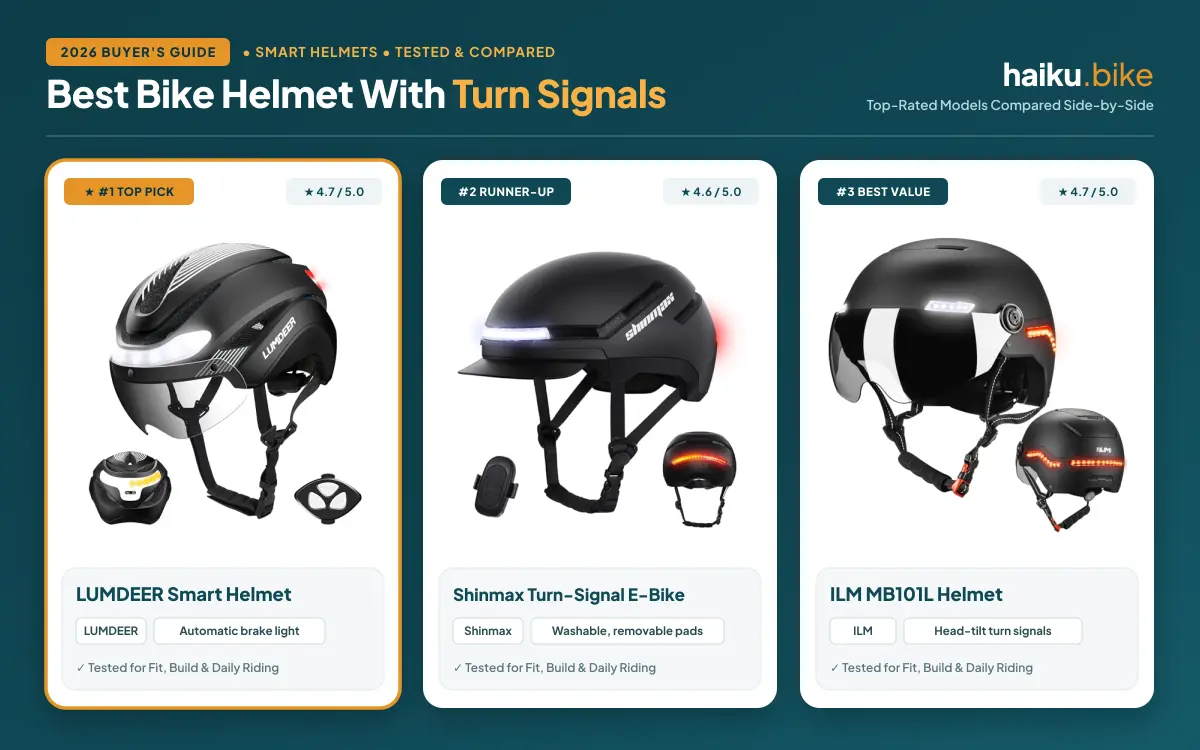
We compared 6 smart helmets in November 2026, including models from Lumos, ASIEVIE, JDBMAOYE and more. Bicycle helmets sold in the United States should meet CPSC 16 CFR Part 1203; check the helmet label and product listing for certification. Follow manufacturer instructions and local laws, and see our guide to bike helmets with turn signals for another signal-focused comparison.
At a Glance: Which One Fits You
- Best overall: ILM Smart Adult Bike Helmet Front Side Rear LED combines listed CPSC and NTA-8776 standards with front, side, and rear lights and automatic turn signals.
- Best value: JDBMAOYE Smart Bike Helmet Adult Men Women Teens offers a stated CPSC standard, adjustable fit, customizable display, and more than 12 hours of battery life.
- Best for Bluetooth audio: ASIEVIE Smart Bike Helmet for Adults Men Women pairs a built-in Bluetooth audio function with a headlight and automatic brake alert.
- Best for MIPS: Lumos Ultra E-Bike Smart Helmet lists MIPS, CPSC compliance, app features, and a published fit range.

Pros
- Turn signals and STOP display
- Wireless mode-control remote
- More than 100 customizable patterns
- Adjustable dial-fit system
- Eight ventilation vents
Cons
- Battery runtime not specified
- No CPSC certification listed
- Fit range limited to 22.8 to 24 inches

Pros
- Automatic brake-flash alert
- Built-in 80-lumen headlight
- Bluetooth 5.3 speakers
- 0.8 lb listed weight
- 19 ventilation holes
Cons
- No intercom function
- Music runtime varies from 3 to 18 hours
- Who should skip it: riders who need intercom communication
Pros
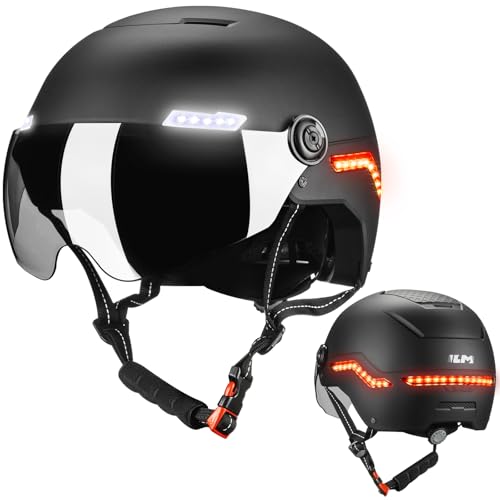
- Front, side, and rear LED lights
- Head-tilt turn signals
- Brake warning light
- Adjustable dial fit system
- Detachable tinted visor
Cons
- Large-X-Large size only
- Battery life and charging details not provided
- Who should skip it: riders who need a smaller size

Pros
- Front and rear turn signals
- Automatic brake light
- Photochromic magnetic visor
- 12-hour stated light runtime
- 0.86 lb listed weight
Cons
- Only size L listed
- No charging-port type stated
- No water-resistance rating stated

Pros
- Front and rear LED lights
- Handlebar-mounted turn-signal remote
- App-controlled lighting
- MIPS protection system
- Retractable face shield
Cons
- Listed weight: 1.96 lb
- Fit limited to 21.2 to 24 inches
- Who should skip it: riders prioritizing low helmet weight

Pros
- Remote-controlled turn and stop signals
- Customizable LED display
- Maker-rated 12-hour-plus runtime
- USB Type-C charging
- Eight ventilation openings
Cons
- Fit limited to 22.8 to 24 inches
- No water-resistance rating listed
- Skip if seeking a conventional, unlit helmet
Side-by-Side Comparison
| Helmet | Listed certification | Lighting and controls | Fit details | Battery or audio details |
|---|---|---|---|---|
| JDBMAOYE Smart Bike Helmet Adult Men Women Teens | CPSC, ROHS, ASTM | Remote signals, customizable LED display | 22.8 to 24 inches | More than 12 hours; USB Type-C |
| ILM Smart Adult Bike Helmet Front Side Rear LED | NTA-8776, CPSC, CE, ASTM | Front, side, rear lights; gravity-sensing signals | Adjustable dial; range not listed | Not listed |
| ASIEVIE Smart Bike Helmet for Adults Men Women | EN1078, ROSH, IC, CPC, FCC | 80-lumen headlight, brake alert | Not listed | Bluetooth audio; 3 to 18 hours of music |
| Bike Helmet, Bicycle Helmet with Light | Not listed | LED display, remote, app | 22.8 to 24 inches | Not listed |
| Lumos Ultra E-Bike Smart Helmet | U.S. CPSC | Integrated lights, handlebar remote, app | 21-1/4 to 24 inches | Not listed |
| LUMDEER E-Bike Smart Helmet NTA 8776 Certified LED | NTA-8776, U.S. CPSC, EU EN 1078 | Front and rear lights, remote, automatic brake light | Adjustable; range not listed | USB rechargeable; 12-hour runtime |
Certification and fit are the most consequential differences in this comparison. Several helmets list U.S. CPSC compliance, while the asteron helmet does not name a certification standard; fit ranges also vary or remain unpublished.
Common Mistakes to Avoid
Buyers can mistake integrated lights for proof of impact protection. Lights and signals improve visibility, but they do not establish compliance with CPSC 16 CFR Part 1203. Check the helmet label and product listing, and ask the seller for clarification when certification details are unclear.
Fit claims also deserve careful attention. JDBMAOYE and the asteron helmet list a range of 22.8 to 24 inches, while Lumos Ultra lists 21-1/4 to 24 inches; ILM and LUMDEER describe adjustment without a numerical range. Measure your head and confirm the maker’s sizing before ordering.
Some riders focus on signal features without checking how they operate. ILM uses gravity-sensing turn signals, while several other helmets use a remote or app. Learn the controls before riding, and do not configure displays or reach for a remote when traffic needs your attention.
Finally, do not assume electronics work in every weather condition or replace ordinary signaling. Check the maker’s charging and care instructions, and confirm water guidance where relevant. Helmet lights supplement suitable bike lights and reflective clothing; they cannot guarantee that drivers will see you.
Best Smart Bike Helmet Buying Guide
CPSC Certification and Intended Use
CPSC certification matters because electronic features do not establish a helmet’s compliance with the U.S. bicycle helmet standard. Check for CPSC 16 CFR Part 1203 on the helmet label and in the current product listing before buying.
JDBMAOYE, ILM, Lumos Ultra, and LUMDEER list CPSC compliance or certification. ASIEVIE lists other standards but does not name CPSC in its product details, and the asteron helmet names no certification standard. Ask the manufacturer or seller for clear confirmation when the listing leaves this point uncertain.
Intended use matters for riders on faster electric bikes. ILM lists NTA-8776 and describes suitability for speeds up to 28 mph; LUMDEER also lists NTA-8776 and states compatibility with Class 3 e-bikes. Those claims do not establish suitability for every rider or location, so confirm the helmet’s intended use and local requirements.
Fit, Adjustment, and Coverage
Fit determines whether a helmet stays correctly positioned, so compare your measured head circumference with the manufacturer’s stated range. JDBMAOYE and the asteron helmet list 22.8 to 24 inches, while Lumos Ultra lists 21-1/4 to 24 inches.
ILM and LUMDEER describe adjustable fit systems but do not publish numerical ranges. Contact the maker or check the current listing if your measurement is near a size boundary. An adjustment dial does not guarantee a suitable fit for every head shape.
After selecting a size, follow the maker’s fitting directions. The helmet should sit level and feel secure without shifting easily; straps should hold it in place without requiring uncomfortable tension. Check that added visors, liners, or electronics do not interfere with fit or coverage.
Lighting, Signals, and Visibility
Lighting design matters because traffic needs to recognize your position and intended movement. ILM lists front, side, and rear LEDs, plus gravity-sensing turn signals and a brake light. LUMDEER lists front and rear lights, remote-controlled signals, and an automatic brake light.
JDBMAOYE and the asteron helmet use customizable LED displays, with remote controls and app features described for both. ASIEVIE lists an 80-lumen headlight and automatic brake flash alert. Lumos Ultra offers integrated lights, a handlebar remote, and app control, but the product details do not state lumen output.
Compare light direction, control method, and visibility from the angles relevant to your route. Do not treat a maker’s visibility claim as a guarantee in every setting. Helmet lights supplement bike-mounted lights and reflective gear, and clear hand signals may still be appropriate under local rules.
Controls, Apps, and Audio
Controls affect whether you can use signals without looking away from traffic. JDBMAOYE and the asteron helmet list wireless remotes and app customization; Lumos Ultra lists a wireless handlebar remote and app features. ILM instead describes turn signals activated by a gentle head tilt.
ASIEVIE includes Bluetooth audio, but its product details say the Bluetooth function is for earphones and does not support intercom. Consider whether audio suits your riding habits and local rules. Review app compatibility, pairing steps, and account requirements with the maker before relying on connected features.
Choose controls you can understand before a ride. Practice operating remotes while stationary, and avoid changing app settings or display patterns while moving. A simpler control system may better suit riders who want basic signals, while app-based displays may appeal to riders who value customization.
Battery, Charging, and Weather
Battery information helps riders decide whether a helmet fits their commute and charging routine. JDBMAOYE lists more than 12 hours of continuous use and USB Type-C charging; LUMDEER lists a 12-hour runtime and USB-rechargeable lights.
ASIEVIE lists 3 to 18 hours of music playback and up to 120 days of standby, according to its specifications. ILM, the asteron helmet, and Lumos Ultra do not list battery runtime in these product details. Check the current listing for runtime by mode and charging instructions.
LUMDEER describes its helmet as water-resistant, but that claim does not define performance in every downpour. Confirm weather limits, charging-port care, and cleaning instructions with each maker. Store and charge electronics as directed, and do not modify the shell, straps, or integrated lights.
Comfort, Ventilation, and Added Features
Ventilation and added equipment affect comfort during regular rides. ASIEVIE lists 19 ventilation holes and a weight of 365 grams; ILM lists 10 vents, while JDBMAOYE and the asteron helmet each list 8 vents. These figures describe different features, not a direct comfort guarantee.
Visors, speakers, and removable liners can suit particular routes, but they add details worth checking. ILM includes a detachable tinted visor, and LUMDEER lists a removable magnetic photochromic visor. ASIEVIE adds Bluetooth audio, while Lumos Ultra lists MIPS, a rotational impact management system.
Consider your route, temperature, and preferred equipment before prioritizing extras. Riders comparing rotational impact systems can read our MIPS versus non-MIPS helmet guide. Follow the maker’s care instructions and replace a helmet according to its guidance after an impact or visible damage.
How We Chose
We score each option with the Haiku Ride Score: core performance 30%, build and weather resistance 20%, ease of use 20%, compatibility and fit 15%, and value 15%. For smart helmets, compatibility and fit include published head-size ranges, control and app details, charging information, and stated battery life.
Our evaluation compares manufacturer specifications, compatibility information, and long-term owner feedback when available. We research and draft our guides with software tools, including AI, then run automated checks on product fit, sourcing, and our editorial rules. Our editor spot-checks guides rather than reading each one before publication. See our how we review methodology.
Price and Value: What Each Budget Gets You
Budget
Lower-cost smart helmets in this group focus on visible displays, remote controls, or basic integrated lighting. JDBMAOYE combines a stated CPSC standard, adjustable fit, customizable display, and published battery life; the asteron helmet emphasizes app patterns and signals. Trade-offs include limited published certification detail for asteron and less extensive connected or comfort information than some alternatives.
Mid-Range
Mid-range options add more specialized functions, such as automatic signals, broader listed standards, or Bluetooth audio. ILM lists front, side, and rear LEDs with gravity-sensing signals; ASIEVIE adds audio and a headlight; LUMDEER lists an e-bike focus and photochromic visor. Riders may give up a published fit range or complete battery details, depending on the helmet.
Premium
Premium smart helmets can combine recognized safety features, app support, and wider fit information. Lumos Ultra lists MIPS, CPSC compliance, app features, a wireless handlebar remote, and a stated fit range. Its product details do not specify battery runtime or light output, so riders should weigh those missing details against the features they value.
Choosing Something Else
A conventional CPSC-compliant helmet paired with separate bike lights and reflective clothing suits riders who prefer simpler equipment. Separate lights can be positioned on the bike, and reflective gear adds visibility without app setup or helmet charging. This arrangement does not provide helmet-mounted turn signals, so choose it only if those integrated features are not a priority.
Final Thoughts
Commuters who want broad lighting coverage and automatic signals should consider ILM Smart Adult Bike Helmet Front Side Rear LED. It lists CPSC and NTA-8776 standards, but its product details do not publish a numerical fit range or battery runtime. Riders who want a stated fit range and customizable display can compare JDBMAOYE Smart Bike Helmet Adult Men Women Teens, while noting that its features may be more than a rider needs.
Riders who want audio alongside helmet lighting may prefer ASIEVIE Smart Bike Helmet for Adults Men Women, but should note that its Bluetooth function does not support intercom. Lumos Ultra E-Bike Smart Helmet suits buyers who value MIPS and a published fit range, though its listed details omit battery runtime.
For e-bike commuters seeking a visor and listed CPSC and NTA-8776 standards, LUMDEER E-Bike Smart Helmet NTA 8776 Certified LED offers a distinct feature set. The Bike Helmet, Bicycle Helmet with Light adds app patterns and a defined fit range, but its product details do not name a certification standard. Confirm fit and certification before choosing either helmet.
Skip smart helmets if you cannot confirm suitable certification or fit, or if you prefer fewer electronics. A conventional helmet with separate lights may suit those riders better. Compare signal-focused options in our turn-signal helmet guide, or browse the road and commuter helmet category.
FAQs
What certification should a bike helmet have in the United States?
A bike helmet sold for use in the United States should meet CPSC 16 CFR Part 1203. Check the helmet label and product listing for certification rather than relying on lighting or impact-protection claims. JDBMAOYE, ILM, Lumos Ultra, and LUMDEER list CPSC compliance or certification; ask the maker when details are unclear.
How do I choose the right smart helmet size?
Choosing a smart helmet size starts with measuring your head circumference and comparing it with the maker’s range. JDBMAOYE and the asteron helmet list 22.8 to 24 inches, while Lumos Ultra lists 21-1/4 to 24 inches. Follow fitting directions and confirm that the helmet sits level and secure before riding.
Are smart helmet turn signals legal?
Smart helmet turn signals may add a visible cue, but riders should follow local laws and manufacturer instructions. Do not assume an electronic signal replaces required hand signals or other actions. Learn the remote or gesture controls before riding, and keep your attention on traffic when signaling or checking whether lights are operating.
How long does a smart bike helmet battery last?
Smart bike helmet battery life depends on the model and the features in use. JDBMAOYE lists more than 12 hours of continuous use, while LUMDEER lists a 12-hour runtime. ASIEVIE lists 3 to 18 hours of music playback. Check each maker’s current instructions for charging and runtime by mode.
Can I use a smart helmet in the rain?
Rain use depends on the helmet’s stated weather guidance and care instructions. LUMDEER describes its helmet as water-resistant, but that claim does not specify performance in every condition. Check the maker’s current information before riding in wet weather, and protect charging connections as directed. Do not infer a rating when none is stated.
Do smart bike helmets replace bike lights?
Smart bike helmets add helmet-mounted lighting, but they do not automatically replace a suitable bike light setup. Light direction, controls, and visibility vary by helmet, and no light can guarantee that another road user will notice you. Consider separate bike lights and reflective clothing for added visibility, and follow local requirements.
Can I listen to music through a smart bike helmet?
Some smart bike helmets include audio features, but functions differ by product. ASIEVIE lists Bluetooth audio for earphones and states that intercom is not supported. Check the maker’s operating instructions and local rules before using audio while riding. Choose a setup that lets you remain alert to traffic and other sounds around you.
How should I maintain a smart bike helmet?
Maintain a smart bike helmet according to the manufacturer’s care, charging, and storage instructions. Avoid unapproved cleaners and modifications to the shell, straps, lights, or electronics. Inspect the helmet for visible damage and consult the maker’s replacement guidance after an impact. For more helmet comparisons, browse our helmets and safety category.
Write Your Review
No reviews yet. Be the first to share your experience!