

MIPS helmets include a low-friction layer designed to help manage rotational motion in certain impacts. Non-MIPS helmets do not include that system. Both types can meet bicycle helmet safety standards, so compare fit, certification, condition, and features alongside the technology rather than treating the label as a complete safety measure.
This choice matters if you are replacing a road or commuter helmet, comparing similar designs, or deciding whether an added system suits your budget. Follow the helmet maker’s instructions, and ask a bike shop to check fit or equipment questions you are unsure about.
The Short Answer
- Choose a MIPS helmet if you want a helmet with a system designed to help manage rotational motion in certain impacts.
- Choose a non-MIPS helmet if it fits securely, meets the applicable bicycle helmet standard, and better suits your budget or preferences.
- Choose either type only if the helmet sits level and stays secure when adjusted according to its instructions.
- Choose a new helmet rather than one with uncertain history, visible damage, or a fit that cannot be corrected.
Side-by-Side Comparison
MIPS and non-MIPS helmets can share many features, but differ in whether they include a rotational-motion management system. The exact construction and fit vary by helmet model, so review each maker’s details before choosing.
| Characteristic | MIPS helmet | Non-MIPS helmet |
|---|---|---|
| How it works | Includes a low-friction layer intended to allow relative movement during certain angled impacts, helping manage rotational motion. | Uses its helmet shell and impact-absorbing liner without a MIPS layer. |
| Setup | Needs correct sizing and adjustment; the added system should not change how you follow the maker’s fitting instructions. | Needs correct sizing and adjustment according to the maker’s instructions. |
| Maintenance | Requires inspection and care as specified by the helmet maker, including care around the internal system. | Requires inspection and care as specified by the helmet maker. |
| Compatibility | Features and fit depend on the model. Check eyewear, lights, and other accessories against the helmet’s design. | Features and fit depend on the model. Check eyewear, lights, and other accessories against the helmet’s design. |
| Weight or bulk | The system adds components, but overall weight and feel vary by model; compare maker specifications and try the fit when possible. | Has no MIPS layer, but overall weight and feel still vary by model. |
| Cost | May cost more than a comparable non-MIPS model, though prices vary across designs and features. | May offer a less costly choice when comparable models differ mainly by inclusion of the system. |
| Typical rider | Rider who wants this additional design feature and finds a suitable fit and model. | Rider who prioritizes fit, certification, comfort, and other features without the MIPS system. |
When a MIPS Helmet Makes Sense
A MIPS helmet makes sense if you value a system specifically designed to help manage rotational motion during certain impacts. It offers an additional design feature, not a promise that a rider will avoid injury or that every impact will be managed the same way.
Compare the actual helmet, not only its MIPS label. Check whether the shape suits your head, whether the retention system adjusts securely, and whether the straps can be set as the maker directs. A helmet with extra technology is a poor choice if you cannot get a stable, comfortable fit.
Road and commuter riders may also weigh ventilation, visor or eyewear compatibility, visibility accessories, and how easily they can adjust the fit. The Road & Commuter Helmets category covers helmets intended for these riding styles, while the Smart Helmets category covers designs with electronic features.
When a Non-MIPS Helmet Makes Sense
A non-MIPS helmet makes sense if it meets the applicable bicycle helmet standard, fits your head correctly, and offers the features you need without the added system. You may prefer its feel, ventilation, adjustment, or cost compared with a MIPS model.
Do not assume that every non-MIPS helmet is inferior or that every MIPS helmet is a good choice. Helmet design, certification, condition, and correct use all matter. Compare complete models and follow the maker’s instructions for sizing, adjustment, use, and replacement.
If you are considering a helmet with a rear light or turn signals, treat visibility features as separate from impact-management systems. Read our guide to bike helmets with turn signals and compare those features with the helmet’s fit and certification.
Switching From One to the Other
Switching between helmet types usually means choosing a complete replacement helmet, not adding or removing a MIPS layer yourself. The system is part of a helmet’s design; do not modify the shell, liner, or internal components to change its type.
Before buying, check the helmet’s certification label, size range, adjustment instructions, and compatibility with accessories you use. Try the helmet on if possible. It should sit level, feel secure when adjusted, and remain stable without relying on an excessively tight fit.
Replace a helmet if it has damage, has been involved in an impact, or has an unknown history. Follow the maker’s guidance for inspection and replacement, since appearance alone may not establish whether a helmet remains suitable for use.
Gear That Helps
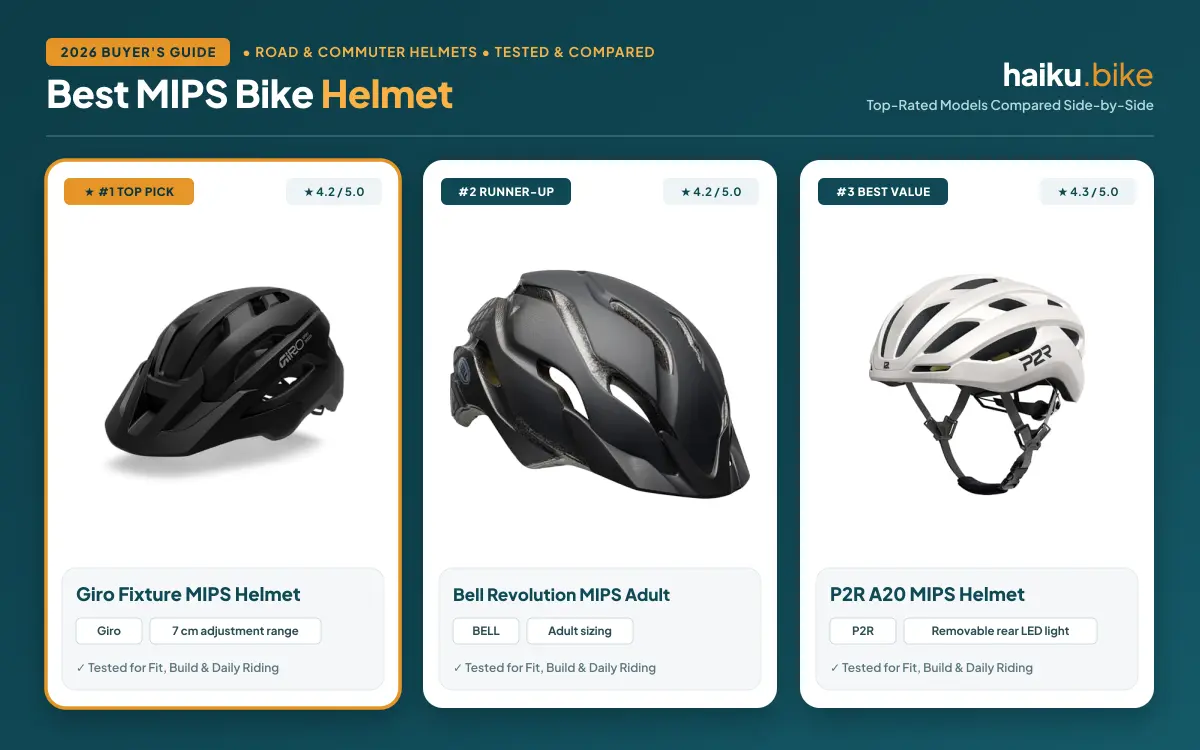
These helmets illustrate different road and commuting features. Compare their fit, intended use, and maker instructions before deciding whether a particular design suits your rides.

Pros
- MIPS rotational-force design
- One-hand fit adjustment
- Adjustable fore-aft tilt
- Vents with internal exhaust channels
Cons
- Only Small size listed
- No safety certification listed

Pros
- Magnetic light compatibility
- Integrated MIPS system
- Fourteen ventilation channels
- Built-in sunglass dock
- Approx. 12.3 oz
Cons
- Only listed in size L
- Light runtime not specified
- No certification listed

Pros
- MIPS system
- 27 ventilation channels
- Removable, washable liner
- Goggle-strap channel
- Pivoting visor
Cons
- No safety certification listed
- Only Large size listed

Pros
- MIPS rotational-impact technology
- Meets U.S. CPSC bicycle helmet requirements
- Included rear light
- Ventilated design
- Adjustable straps and removable padding
Cons
- Only Medium size listed
- Rear light runtime not specified
- Light charging details not specified
FAQs
Does MIPS make a helmet safer?
MIPS adds a system designed to help manage rotational motion in certain impacts, but it does not guarantee a safer outcome in every crash. A suitable, correctly adjusted helmet that meets the applicable bicycle helmet standard remains important. Compare the full helmet design and follow the maker’s instructions rather than relying on one feature alone.
Can a non-MIPS helmet still protect you?
A non-MIPS helmet can meet bicycle helmet safety standards without including a MIPS system. The label alone does not determine whether a helmet is appropriate for you. Check its certification, condition, fit, and maker guidance, then choose a design you can wear and adjust correctly for your riding.
Does MIPS change how a helmet should fit?
MIPS does not replace the helmet maker’s fitting instructions. Adjust the retention system and straps as directed, and confirm that the helmet sits level and remains stable. If the system feels loose, rubs, or prevents a secure fit, ask the maker or a bike shop for help before riding in that helmet.
Can you add MIPS to a helmet?
You should not add a MIPS layer to a helmet that was not designed for it. Helmet shells, liners, and internal systems are developed as a complete design, and modifying them can conflict with maker instructions. If you want that feature, choose a helmet made with an integrated system instead.
Should you replace a helmet after a crash?
Follow the helmet maker’s instructions after any impact, since damage may not be obvious from the outside. Replace a helmet with visible damage or uncertain impact history rather than assuming it remains suitable. Ask the maker or a bike shop if you need help interpreting inspection or replacement guidance.
Is MIPS worth paying more for?
MIPS may be worth considering if you want its rotational-motion management feature and can find a model that fits well within your budget. A non-MIPS helmet can be a reasonable choice when it meets the standard, fits securely, and better matches your needs. Compare complete helmets, not price or technology alone.

Write Your Review
No reviews yet. Be the first to share your experience!