

Commuters caught in passing showers and recreational riders facing wet, windy routes need a shell that balances rain protection with ventilation. The jackets in this guide vary in stated waterproof construction, vents, reflective details, fit adjustments, and packability.
Our Best Cycling Rain Jacket guide compares 6 options for November 2026, including styles from COOFANDY, Bikewa, SWISSWELL and more. For more wet-weather clothing, see our rain gear and shoe covers guide.
At a Glance: Which One Fits You
- Best overall: baleaf Men’s Cycling Rain Jackets Waterproof earns this spot because its stated 10,000mm waterproof protection pairs with underarm ventilation and rear-pocket storage.
- Best value: UIQUR Mens Waterproof Cycling Jacket Lightweight suits occasional wet rides with adjustable hood and hem, elastic cuffs, and an included storage bag.
- Best for ventilation: KEMIMOTO Men’s Packable Lightweight Rain Jacket combines underarm zippers with a rear air vent to release heat.
- Best for reflective coverage: Bikewa Men’s Cycling Rain Jackets Waterproof places reflective details on its front, back, and hood.

Pros
- Packs into its own rear pocket
- 10,000 mm waterproof rating
- Underarm ventilation
- Reflective prints for low-light visibility
- Zippered and inner pockets
Cons
- No stated weight
- No stated fit or sizing details
- No stated seam-sealing details

Pros
- Lightweight, packable design
- Adjustable hood and hem
- Elastic cuffs
- Two large side pockets
- Suitable for several outdoor activities
Cons
- Hand wash only
- No waterproof rating listed
- No breathability information listed
Pros
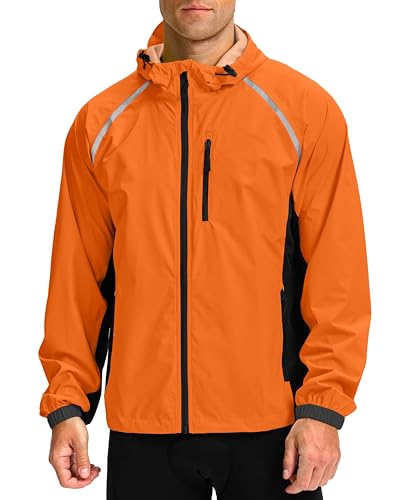
- Underarm zips and back vents
- Reflective details on front, back, and hood
- Six pockets, including three waterproof-zip pockets
- Rear pocket doubles as storage pouch
- Adjustable hem drawcord
Cons
- No hood adjustment details provided
- No sizing or fit guidance provided

Pros
- Packs into a compact size
- 10,000 mm hydrostatic-head rating
- Underarm zippers and rear vent
- Front and rear reflective strips
- Rotatable hood
Cons
- No cycling-specific fit details listed
- No pocket details listed

Pros
- 5,000 mm waterproof rating
- Fully taped seams
- Front and back reflectors
- Six storage pockets
- Adjustable hood, cuffs, and hem
Cons
- No jacket weight listed
- No breathability rating provided
- Only X-Large listed

Pros
- Packs into its own back pocket
- Listed weight: 0.4 lb
- Sealed seams
- Adjustable drawstring hood
- Elastic cuffs and hem
Cons
- No waterproof rating listed
- No cycling-specific fit details
- No visibility or reflective details listed
Side-by-Side Comparison
| Jacket | Waterproof construction | Ventilation | Packability | Reflective details |
|---|---|---|---|---|
| SWISSWELL Men’s Ultra Light Rain Jacket Breathable | 5000mm rating; fully taped seams | Back air vents | Storage method not listed | Front and back |
| baleaf Men’s Cycling Rain Jackets Waterproof | 10,000mm protection; 5,000g breathability | Underarm ventilation | Folds into rear pocket | Large multi-angle prints |
| KEMIMOTO Men’s Packable Lightweight Rain Jacket | 10,000mm rating; storm flaps and waterproof zippers | Underarm zippers and rear vent | Self-folding design | Front and rear strips |
| COOFANDY Mens Cycling Rain Jacket Packable | Waterproof coating; sealed seams | Not listed | Folds into back pocket | Not listed |
| Bikewa Men’s Cycling Rain Jackets Waterproof | 5000mm rating; TPU membrane | Underarm zips and back vents | Rear pocket serves as storage pouch | Front, back, and hood |
| UIQUR Mens Waterproof Cycling Jacket Lightweight | Rating not listed | Not listed | Includes storage bag | Not listed |
Waterproof details and ventilation create the clearest differences among these jackets. Riders facing sustained rain can compare stated ratings, seam treatment, and zipper construction, while riders who climb or commute quickly may favor vents that help release heat.
Common Mistakes to Avoid
Choosing a jacket by its waterproof rating alone can overlook heat buildup during a fast ride. Compare vents and breathability claims alongside rain protection, since underarm zippers and rear vents offer different routes for releasing warmth.
Ignoring fit and hood shape can reduce coverage or distract you when checking traffic. Consult the maker’s size chart, allow room for layers, and consider whether the hood moves comfortably with your helmet and head.
Reflective trim does not replace bicycle lights because reflective material helps when light reaches it. Check where reflective sections sit, then avoid covering them with a backpack and use lighting appropriate for your route.
Assuming every pocket and zipper keeps water out can put essentials at risk. Confirm which closures have waterproof or water-resistant construction, and carry items that must stay dry in a separate protective pouch.
Best Cycling Rain Jacket Buying Guide
Waterproof Construction and Seams
Waterproof construction and seam treatment matter because rain can enter through fabric, stitching, or closures. Compare a maker’s stated rating with seam details and zipper design rather than treating a general waterproof label as a complete specification.
SWISSWELL lists a 5000mm rating and fully taped seams, while KEMIMOTO lists a 10,000mm rating, double storm flaps, and waterproof zippers. COOFANDY describes a waterproof coating and sealed seams but does not list a rating.
Those specifications offer useful comparison points, but they do not establish identical performance across different fabrics or weather. UIQUR describes waterproof fabric without a rating, so riders expecting prolonged rain may prefer a jacket with more specific construction information.
Breathability and Vent Placement
Breathability and vent placement matter because cycling creates heat and moisture beneath a rain shell. Look for published breathability information and consider whether vents can release warmth without leaving coverage inconvenient for your route.
KEMIMOTO lists an 8,000g/m²/26h water vapor transmission rate, underarm zippers, and a rear vent. Baleaf lists 5,000g breathability and underarm ventilation, while SWISSWELL describes back air vents.
Ventilation needs depend on effort, pace, and weather, not just garment claims. A short, easy ride may suit a simpler shell, while climbing or riding quickly can make adjustable airflow more valuable.
Fit, Coverage, and Hood
Fit determines whether a rain jacket covers you while you reach the handlebars and move on the bike. Check each maker’s size chart, sleeve length, cuffs, hem, and hood, especially if you plan to wear insulating layers underneath.
UIQUR and SWISSWELL describe adjustable hoods and hems, while Bikewa lists an adjustable hem. These features help tailor coverage, but they do not replace checking garment measurements or confirming sleeves stay long enough in a forward riding position.
Helmet compatibility depends on hood shape and your preferred fit, and product descriptions do not establish a shared hood design. Check whether a hood sits comfortably over or under your helmet and preserves head movement when you look for traffic.
Packability and Storage
Packability matters when you carry a shell for showers that may not arrive. Check whether a jacket folds into its own pocket, includes a separate bag, or has no stated storage method, then consider where it will ride.
Baleaf and COOFANDY describe jackets that fold into a rear pocket, while UIQUR includes a storage bag. KEMIMOTO describes a self-folding design, and Bikewa says its rear pocket can serve as a storage pouch.
A compact jacket still needs a secure place in a bag or on your bicycle after you take it off. Consider pocket access and storage convenience if you expect to change layers, and browse cycling apparel and shoes for other clothing options.
Visibility and Reflective Details
Reflective details can help drivers notice a rider when their lights illuminate the material. Compare placement because front, back, and hood coverage serve different viewing angles, especially when traffic approaches from more than one direction.
Bikewa lists reflective details on the front, back, and hood, while SWISSWELL lists front and back elements. Baleaf describes large multi-angle reflective prints, and KEMIMOTO lists reflective strips on the front and rear.
Reflective material does not replace bicycle lights or a broader visibility plan. Check whether a backpack or another layer could cover reflective areas, and choose lights suited to your route and riding conditions.
Pockets, Closures, and Care
Pockets, closures, and care instructions affect daily use and maintenance. Compare pocket placement, zipper descriptions, adjustable cuffs, and washing directions before choosing a shell for commuting or recreational rides.
SWISSWELL lists six pockets and waterproof outer zippers, while Bikewa describes three front waterproof-zipper pockets, two inner pockets, and a rear zipper pocket. UIQUR lists two large side-entry pockets but does not state a waterproof rating.
Care directions differ, so follow the specific garment’s instructions instead of assuming every shell can go in a washing machine. SWISSWELL advises cold-water washing and says not to iron; UIQUR says hand wash only and advises against machine washing, ironing, and bleaching.
How We Chose
We score these jackets with the Haiku Ride Score: core performance 30%, build and weather resistance 20%, ease of use 20%, compatibility and battery 15%, and value 15%. Battery does not directly apply to rain jackets, but we retain the published scoring framework across our guides.
We compare manufacturer specifications, compatibility information, and long-term owner feedback when available. We research and draft our guides with software tools, including AI, then run automated checks on product fit, sourcing, and our editorial rules. Our editor spot-checks guides rather than reading each one before publication. Our how we review page explains the method.
Price and Value: What Each Budget Gets You
Budget
At the lower end of this group, riders can find adjustable coverage, basic storage, and fabric described as waterproof or windproof. UIQUR includes a carry bag, adjustable hood and hem, and elastic cuffs, but its maker does not list a waterproof rating or reflective details. This tier can suit occasional rides and showers, though riders facing persistent rain may want clearer construction specifications.
Mid-Range
Mid-range options add more specific seam, pocket, and packability details. COOFANDY describes sealed seams, a waterproof coating, and a pocket that stores the jacket, while SWISSWELL lists taped seams, a 5000mm rating, reflective elements, and multiple pockets. Riders gain useful construction information and storage features, but should still compare ventilation and fit because those details vary by jacket.
Premium
At the upper end of this group, jackets specify more rain and ventilation features, including published ratings and multiple ways to release heat. Baleaf lists 10,000mm protection, underarm ventilation, and rear-pocket storage; KEMIMOTO lists a 10,000mm rating, waterproof zippers, and a rear vent. These details aid comparison, but do not guarantee a particular result in every storm or riding effort.
Choosing Something Else
A lightweight wind shell can make more sense for riders who face only brief, light showers and can safely stop when conditions worsen. Riders who continue through sustained rain should choose dedicated rain protection with construction details suited to their weather. For related clothing, our rain gear and shoe covers category covers additional ways to manage wet rides.
Final Thoughts
Commuters seeking a balance of stated rain protection, ventilation, and storage should compare baleaf Men’s Cycling Rain Jackets Waterproof. Its listed 10,000mm protection, underarm ventilation, rear-pocket storage, and reflective prints make it a feature-rich option, though riders should check the size chart before ordering.
Riders prioritizing airflow and detailed weather specifications may prefer KEMIMOTO Men’s Packable Lightweight Rain Jacket, which lists a 10,000mm rating, underarm zippers, and a rear vent. For reflective details that extend to the hood, Bikewa Men’s Cycling Rain Jackets Waterproof offers a different feature mix, though its stated waterproof rating is lower.
Occasional riders wanting adjustable coverage and a separate carry bag can consider UIQUR Mens Waterproof Cycling Jacket Lightweight. Its maker does not list a waterproof rating or reflective details, so riders facing persistent rain or low-light commutes may prefer an option with more specific features.
Skip these general-purpose shells if you need a close-fitting race jacket with a cycling-specific cut that product descriptions do not establish. Compare size charts carefully, and explore cycling apparel and shoes or rain gear and shoe covers for other wet-weather options.
FAQs
What should a cycling rain jacket include?
A cycling rain jacket should match your typical weather, riding pace, and fit needs. Compare a stated waterproof rating, seam treatment, and zipper construction, then consider ventilation and pocket design. Reflective details can support visibility but do not replace bicycle lights. Check the maker’s size chart and care directions before buying, since features and maintenance requirements differ among jackets.
Are packable cycling rain jackets suitable for commuting?
Packable cycling rain jackets can suit commuting when their weather protection matches your route. Compact storage does not establish waterproof performance, so compare ratings, seams, and zipper details. Baleaf and KEMIMOTO describe specific waterproof construction, while UIQUR does not list a rating. Consider how easily you can carry the jacket after rain stops.
How should I choose a cycling rain jacket size?
Choose a cycling rain jacket size by checking the maker’s chart and allowing room for layers you plan to wear. Compare sleeve and hem coverage, then consider whether the cut lets you reach the handlebars comfortably. These jackets do not share published garment measurements, so use each brand’s own chart and review its fit guidance before ordering.
Do cycling rain jackets need vents?
Cycling rain jackets can benefit from vents because riding creates warmth and moisture beneath a shell. KEMIMOTO lists underarm zippers and a rear vent, while baleaf lists underarm ventilation. Riders on short, easy trips may prioritize coverage and storage, while riders climbing or moving quickly may value more ways to release heat.
Are reflective cycling rain jackets enough for night riding?
Reflective cycling rain jackets are not enough by themselves for night riding. Reflective material works when light reaches it, and placement varies: Bikewa lists details on the front, back, and hood, while SWISSWELL lists front and back elements. Pair reflective clothing with suitable bicycle lights and keep reflective areas clear of bags where possible.
How should I care for a cycling rain jacket?
Care for a cycling rain jacket according to its maker’s instructions because washing and heat can affect its coating. SWISSWELL advises cold-water washing and says not to iron, while UIQUR says hand wash only and advises against machine washing, ironing, and bleaching. Check the garment label before cleaning and follow its drying directions.
Which Best Cycling Rain Jacket features matter most in 2026?
The most useful Best Cycling Rain Jacket features in 2026 depend on your route, effort, and typical weather. Compare waterproof construction and seam details, then consider whether ventilation, packable storage, and reflective placement suit your ride. Our rain gear and shoe covers category covers related wet-weather clothing.
Write Your Review
No reviews yet. Be the first to share your experience!