
Commuters and city riders need a lock that can reach a fixed object and suit the theft risk where they park. Chain locks offer flexible routing, but link thickness, lock mechanism, length, and carrying weight vary.
We compare 6 options from Kryptonite, Sportneer, Titanker and more for riders considering the Best Bike Chain Lock in November 2026. Follow each manufacturer’s instructions and local laws, and compare chain locks with our U-lock versus chain lock guide before choosing a format.
At a Glance: Which One Fits You
- Best overall: Kryptonite Keeper 785 Bike Chain Lock combines 7 mm manganese steel links, a disc-style cylinder, and a protective sleeve, though its reach is limited to 33.5 inches in circumference.
- Best value: Sportneer Bike Lock: 5 Digit Combination offers keyless access, a resettable five-digit combination, and a fabric cover, but its lock head needs adequate clearance.
- Best for keyed access: Bike Chain Lock, Heavy Duty Anti-Theft Bicycle snaps shut without a key and includes three keys, though its links are 4 mm thick.
- Best for longer reach: GRIFEMA Keyed Bike Chain Lock pairs a 4-foot chain with 7 mm hardened alloy steel links, but the maker does not list its weight.

Pros
- Three keys included
- Keyless snap-to-lock closure
- Protective fabric chain cover
- Listed for bikes and other gear
Cons
- No security certification listed
- 2.72-foot length limits reach
- Skip it if you need a documented security rating

Pros
- 4-foot chain
- 7mm hardened alloy steel
- Nylon protective sleeve
- Two keys included
- Key-free locking
Cons
- Weighs about 1.75 lb
- No security certification listed

Pros
- Five-digit keyless combination
- 6 mm manganese steel links
- Resettable combination
- Fabric chain cover
- Dust cap for lock opening
Cons
- 3.2-foot length
- 1.41 lb weight
- 1.3-inch lock head may not fit narrow gaps

Pros
- 3-foot chain
- Protective cloth sleeve
- Keyhole dust cover
- Locks without a key
- Two keys included
Cons
- 1.4 lb weight
- Maker advises against long outdoor lockups
- Maker warns against use in high-crime areas

Pros
- 7 mm hardened steel links
- Disc-style cylinder resists picking and drilling
- Protective nylon sleeve and rubber coating
- Two keys included
- Limited lifetime warranty
Cons
- Moderate 5/10 security rating
- 33.5-inch circumference limits reach
- No high-security certification listed

Pros
- Keyless five-digit combination
- Resettable code
- Fabric chain covering
- 3.2-foot reach
Cons
- Weighs about 1.45 lb
- Shorter than listed 4.27- and 5-foot versions
- No security certification listed
Side-by-Side Comparison
| Product | Chain details | Length | Access | Weight | Protection details |
|---|---|---|---|---|---|
| Bike Chain Lock, Heavy Duty Anti-Theft Bicycle | 4 mm alloy steel | 2.72 ft | Keyed, three keys | Not listed | Fabric cover; hardened zinc alloy cylinder |
| GRIFEMA Keyed Bike Chain Lock | 7 mm hardened alloy steel | 4 ft | Keyed, two keys | Not listed | Nylon sleeve; sliding lock cover |
| Sportneer Bike Lock: 5 Digit Combination | 6 mm manganese steel | 3.2 ft option | Resettable five-digit combination | Not listed | Fabric cover; dustproof cap |
| Titanker Heavy Duty Bicycle Lock Chain with Keys | 6 mm steel | 3 ft | Keyed, two keys | 1.4 lb | Cloth sleeve; dust cover |
| Kryptonite Keeper 785 Bike Chain Lock | 7 mm manganese steel, four-sided links | 33.5 in circumference | Keyed, two keys | 3.50 lb | Disc-style cylinder; protective nylon sleeve |
| NDakter Bike Chain Lock, 5 Digit Combination Heavy | 0.24 in alloy steel | 3.2 ft | Resettable five-digit combination | About 1.45 lb | Fabric cover; zinc alloy cylinder |
Chain thickness and usable reach are the most consequential differences in this comparison. Riders who need a longer route to a rack can consider GRIFEMA, while riders prioritizing a stated weight may prefer Titanker or NDakter; neither figure alone guarantees theft resistance.
Common Mistakes to Avoid
Buying without measuring your regular rack can leave too little chain to secure the frame. Compare the stated length with the rack and locking route you use, and remember that circumference and chain length may describe different measurements.
Choosing by link thickness alone can overlook the lock head, cylinder, and access method. Check the full construction and any stated security rating; these product descriptions do not provide independent certification for the listed locks.
Ignoring carrying burden can make a chain inconvenient on everyday rides. Titanker lists a weight of 1.4 lb, while Kryptonite lists 3.50 lb for the Keeper 785; other makers do not list weight here, so check current specifications if portability matters.
Assuming a chain head will pass through a wheel opening can prevent a usable fit. Sportneer lists a 1.3-inch lock-head diameter, and NDakter lists about 1.25 inches; when the opening is too narrow, route the chain around the frame instead.
Best Bike Chain Lock: What to Consider Before Buying
Security Construction and Ratings
Chain material, link shape, thickness, and lock-cylinder design all affect how a chain lock is constructed. Compare those details on the product listing, and look for an independently stated security certification when one is available.
The Kryptonite Keeper 785 uses 7 mm manganese steel links and a disc-style cylinder, while GRIFEMA lists 7 mm hardened alloy steel. Sportneer lists 6 mm manganese steel, and the Weogine chain lists 4 mm alloy steel. These specifications help describe construction, but do not establish identical resistance or guarantee that a bike cannot be stolen.
None of the six product descriptions here states a Sold Secure or ART certification. Riders parking valuable bikes in higher-risk places should check current maker information for independent ratings and consider a second lock or a different security format.
Length and Locking Reach
Usable chain length determines whether you can secure the frame to your usual rack or post. Measure the fixture and consider whether your preferred route includes a wheel before ordering.
GRIFEMA lists a 4-foot chain, while the Weogine option measures 2.72 feet and Titanker measures about 3 feet. Sportneer and NDakter list 3.2-foot versions. Kryptonite describes the Keeper 785 as extending to 33.5 inches in circumference, so compare its measurement carefully with ordinary chain-length figures.
Extra reach can make a chain easier to position around larger fixtures, but loose excess chain is not a substitute for a sound locking route. Secure the frame to a fixed object and include a wheel when the chain reaches without making the setup awkward.
Weight and Carrying
Weight affects whether a chain lock fits comfortably into your daily riding routine. Check the stated weight and decide whether you can carry the chain in a bag or another suitable way.
Titanker lists its chain at 1.4 lb, and NDakter lists about 1.45 lb. Kryptonite lists the Keeper 785 at 3.50 lb, while the other products do not state a weight in their descriptions here. A missing weight figure is a reason to check the maker’s current specifications, not to assume the lock is light.
A lock left at home cannot secure a bike at its destination. If carrying weight is a concern, compare chain locks with a U-lock or another format, while considering how the alternative fits your frame and parking fixtures. Our U-lock category covers that alternative.
Keyed or Combination Access
Access method determines whether you carry keys or rely on remembering a code. Choose the method that suits your routine, and check how many keys are included or whether the combination can be reset.
Sportneer and NDakter use resettable five-digit combinations. The Weogine lock, GRIFEMA, Titanker, and Keeper 785 use keys; their descriptions list three, two, two, and two keys respectively.
A combination can remove the need to carry a key, but a forgotten code can prevent access. A keyed mechanism avoids memorizing a code, but spare-key storage matters. Follow the maker’s instructions when setting a combination, and keep a spare key separately from the locked bike.
Fit, Lock Head, and Frame Contact
Lock-head dimensions matter when the head must pass through a wheel or frame opening. Check the listed diameter against the opening you plan to use before buying.
Sportneer lists a 1.3-inch lock-head diameter, while NDakter lists about 1.25 inches. If the head will not pass through a wheel gap, check whether the chain can wrap around the frame and reach a fixed object instead.
A fabric or nylon sleeve can help limit chain contact with paint, while a dust cover can shield a lock opening. Weogine, GRIFEMA, Sportneer, Titanker, Kryptonite, and NDakter each describe a protective covering or sleeve. Check that the covering is intact and follow the manufacturer’s care guidance.
Weather Protection and Maintenance
Protective covers can reduce exposure to moisture, grit, and frame scratches, but they do not remove the need for routine care. Compare the sleeve and lock-opening cover described by the maker.
GRIFEMA describes a sliding cover over its lock, and Sportneer lists a dustproof cap. Titanker also describes a dust cover, while other options include fabric or nylon chain sleeves. These features can help shield parts of a lock, but they do not establish that the entire lock is waterproof.
Wipe moisture and grit from the chain and check that the lock opens and closes normally. Titanker advises regular lubrication of the lock hole and keyhole; follow the relevant maker’s instructions for other mechanisms instead of applying products without guidance.
How We Chose
We assess each option with the Haiku Ride Score: core performance counts for 30%, build and weather resistance for 20%, ease of use for 20%, compatibility and fit for 15%, and value for 15%. For chain locks, compatibility and fit means usable reach, lock-head clearance, and how the chain fits common parking fixtures.
We compare manufacturer specifications, compatibility information, and long-term owner feedback, then evaluate how each lock fits common riding needs. We research and draft our guides with software tools, including AI, then run automated checks on product fit, sourcing, and our editorial rules. Our editor spot-checks guides rather than reading each one before publication. Our how we review page explains the methodology.
Price and Value: What Each Budget Gets You
Budget
Lower-cost chain locks typically emphasize basic keyed or combination access, a protective sleeve, and practical everyday deterrence. The Weogine lock has 4 mm alloy steel links, while Sportneer offers 6 mm manganese steel and keyless access. Riders gain flexible chain routing without a heavier construction, but should not treat a thicker-link description as proof of independent security certification.
Mid-Range
Mid-range options can balance useful reach, protective covers, and accessible locking mechanisms. GRIFEMA pairs a 4-foot chain with 7 mm hardened alloy steel links, while Titanker lists 6 mm links and a 1.4 lb weight. Buyers gain clearly described everyday features, but should check for independent security credentials and confirm that the length suits their rack.
Premium
Higher-cost chain locks may offer more detailed cylinder construction, a named steel type, or a longer maker history, but the stated features still need to match your parking needs. The Kryptonite Keeper 785 lists 7 mm manganese steel links, a disc-style cylinder, and a protective sleeve. Its 3.50 lb weight and 33.5-inch circumference can be drawbacks for riders needing low carrying weight or more reach.
Choosing Something Else
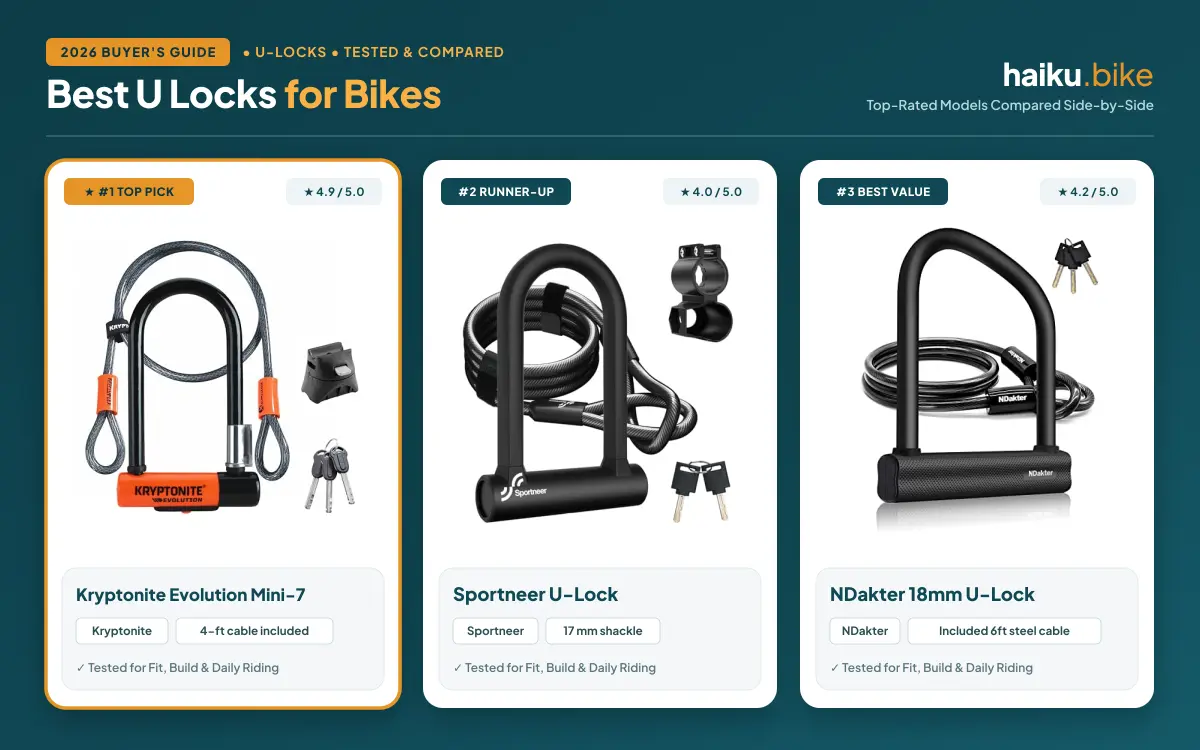
A U-lock can suit riders whose frame and rack clearances work with a rigid shape. A cable may offer flexible reach for brief, lower-risk stops, but the products here do not establish cable-level security as equivalent to a substantial chain. Compare the setup with our guide to securing a bike to a rack before deciding which format fits your parking routine.
Final Thoughts
The Kryptonite Keeper 785 Bike Chain Lock suits riders who want 7 mm manganese steel links, a disc-style cylinder, and a protective sleeve. Its listed 3.50 lb weight and 33.5-inch circumference limit portability and reach, and the maker describes its scale rating as moderate security. Riders needing more reach or a lighter carry should compare other options.
The Sportneer Bike Lock: 5 Digit Combination suits riders who prefer keyless access and a resettable code. Its 6 mm manganese steel chain has a fabric cover, but the 1.3-inch lock head may not pass through every wheel or frame opening. The GRIFEMA Keyed Bike Chain Lock offers 4-foot reach and 7 mm links, though its weight is not listed.
The Titanker Heavy Duty Bicycle Lock Chain with Keys is a practical option for riders who value its listed 1.4 lb weight, 3-foot length, and keyed access. The NDakter Bike Chain Lock, 5 Digit Combination Heavy offers keyless access and a listed weight of about 1.45 lb, but its maker advises against leaving a bike unattended for long periods in high-crime areas.
Riders who need a stated independent certification, longer unattended parking security, or a substantially different carrying format should consider other options rather than relying on these descriptions alone. Compare our Locks & Security category and bike lock guide to weigh other formats against your parking conditions.
FAQs
How long should a bike chain lock be?
A bike chain lock should reach around your frame and the fixed object where you park, with enough room to position the lock securely. Measure your usual rack or post before choosing. Product lengths here range from 2.72 feet to 4 feet, while Kryptonite gives the Keeper 785 circumference as 33.5 inches.
Are thicker bike chain links more secure?
Thicker links describe one part of a chain lock’s construction, but thickness alone does not establish overall security. Link material, shape, lock head, cylinder, and any independent rating also matter. Compare the complete specification, and do not assume that any lock prevents theft in every location or circumstance.
Are combination bike chain locks as secure as keyed locks?
Combination access and keyed access describe how you open a lock, not its complete resistance to theft. Sportneer and NDakter use resettable five-digit combinations, while other options use keys. Compare chain and cylinder construction as well, and choose the access method you can use consistently without losing a key or forgetting a code.
Will a bike chain lock fit through my wheel?
A bike chain lock fits through a wheel only when its lock head and chain suit the available opening. Sportneer lists a 1.3-inch lock-head diameter, and NDakter lists about 1.25 inches. Measure the opening first; if the head cannot pass through, check whether the chain can wrap around the frame and reach a fixed object.
Can I leave a bike chain lock outside in the rain?
A covered chain lock may have features that shield parts from moisture and debris, but a sleeve does not prove the entire lock is waterproof. GRIFEMA describes a sliding lock cover, while Sportneer and Titanker list dust covers. Follow the manufacturer’s care instructions, wipe away moisture, and check that the mechanism works normally.
How do I maintain a bike chain lock?
Maintain a bike chain lock by removing moisture and grit, checking its sleeve for damage, and keeping the locking mechanism clear. Titanker recommends regular lubrication of the lock hole and keyhole. For other products, follow the maker’s care instructions, and do not force a mechanism that sticks or fails to open normally.
Can a chain lock secure an e-bike?
A chain lock can be routed around an e-bike frame and a fixed object when its length and lock-head clearance suit the setup. Some product descriptions list e-bikes among intended uses, but riders should confirm the current listing and measure their frame openings. Lock the frame to a fixed object, and include a wheel when reach allows.
How should I lock a bike to a rack?
Secure the frame to a fixed rack, and include a wheel if the lock reaches without compromising the setup. Choose a rack that cannot be easily lifted or removed, and keep the chain route close enough to limit excess slack. Our bike-locking guide explains common frame-and-wheel approaches.
Write Your Review
No reviews yet. Be the first to share your experience!