

When weather, daylight, or a crowded schedule keeps you off the road, bike rollers let you ride your own bicycle indoors. Unlike a trainer that holds the bike upright, rollers leave you responsible for balance, so wheel fit, floor space, and a steady setup matter.
Our guide compares 4 bike rollers from Garmin, ROCKBROS, Tilt Industries and more for fit, roller design, storage, and training needs. Follow each manufacturer’s instructions and applicable local laws, and explore our indoor training category if you are weighing other ways to ride inside.
At a Glance: Which One Fits You
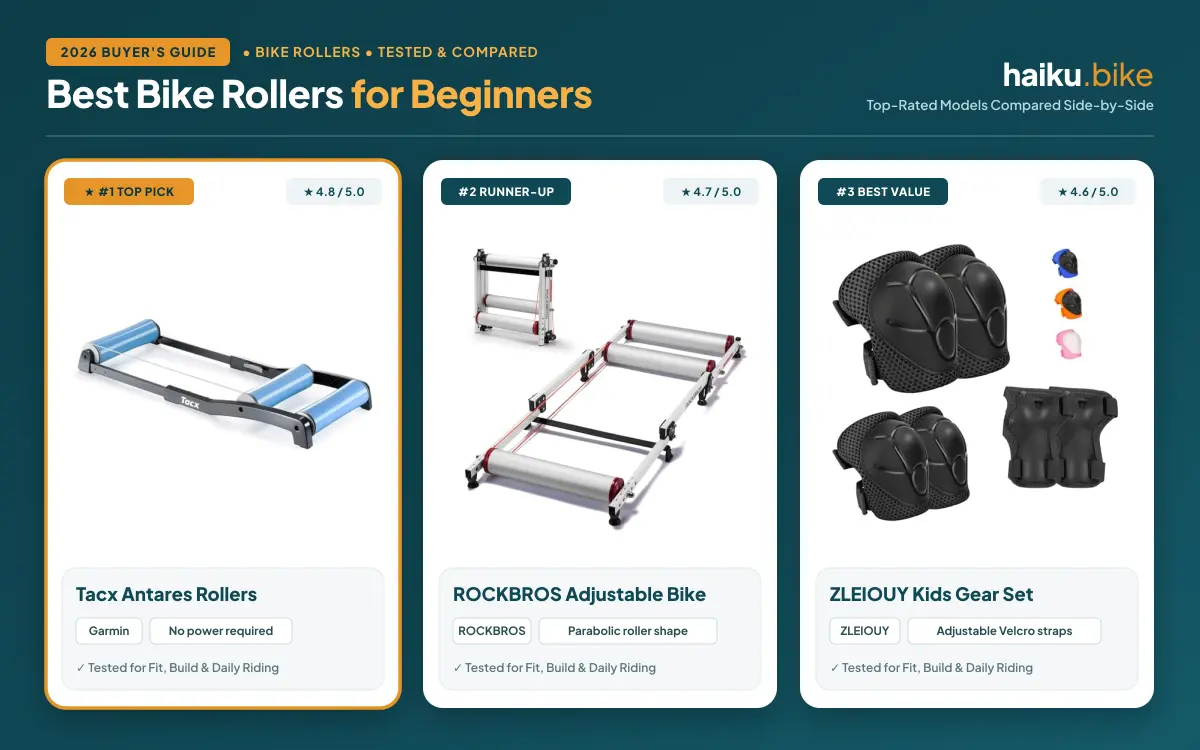
- Best overall: TacX Antares Indoor Retractable Bicycle Rollers uses tapered rollers to help center wheels and folds to a compact listed size, but fits only 26- to 29-inch wheels.
- Best value: ROCKBROS Bike Rollers Adjustable Bike Trainer combines a foldable aluminum-alloy frame and parabolic rollers with a stated 16- to 29-inch wheel range, though resistance controls are not specified.
- Best for road, mountain, and BMX riders: Roller Trainer, Indoor Cycling Training for Road uses a separate front-wheel balance trainer and rear roller, but requires the balance trainer, which is not included.
- Best for adjustable alignment: Generic Detachable Cycling Training Platform has a seven-stage adjustable axle and stated fit for 24- to 28-inch wheels, but other specifications are limited.

Pros
- Tapered rollers help center wheels
- No power required
- Maintenance free
- Folds for storage
Cons
- Fits only 26- to 29-inch wheels
- Folded size still measures 31.5 x 18.5 x 5.31 inches

Pros
- Parabolic roller profile
- Foldable aluminum frame
- Sealed bearings
- Fits 16- to 29-inch wheels
- Listed for MTB and 700c road bikes
Cons
- No stated resistance adjustment
- No stated app or connectivity support

Pros
- No tire removal required
- Leveling feet for uneven surfaces
- Parabolic polymer rollers
- Canvas storage bag included
Cons
- Balance trainer required, not included
- Road and BMX bikes need spacers
- Who should skip it: riders without a balance trainer

Pros
- Quiet PP rollers
- Tapered, centering roller design
- Seven-stage axle adjustment
- Adjustable side belts
- Foldable platform
Cons
- Fits 24 to 28-inch wheels only
- No stated resistance adjustment
- Who should skip it: riders with other wheel sizes
Side-by-Side Comparison
| Feature | TacX Antares | ROCKBROS | Tilt Industries | Generic platform |
|---|---|---|---|---|
| Stated wheel fit | 26 to 29 inches | 16 to 29 inches | Road, mountain, and BMX bikes; spacers noted for road and BMX | 24 to 28 inches |
| Roller or platform design | Tapered rollers | Parabolic rollers | Front balance trainer and rear roller | Tapered, symmetrical rollers |
| Resistance or power | No power required; roller friction | Resistance included; adjustment not listed | Not listed | Road-like resistance described; controls not listed |
| Storage or portability | Folds; dimensions listed | Folds flat; lightweight design | Portable design and canvas storage bag | Foldable; dimensions not listed |
| Stated additional feature | Maintenance-free | Sealed bearings | Leveling feet | Adjustable side belts |
Wheel compatibility is the most important difference if your bike has small wheels or a specialized setup. ROCKBROS states the broadest wheel range, while TacX Antares and the Generic platform give narrower ranges; Tilt Industries describes bike types but does not state a wheel-size range.
Common Mistakes to Avoid
Wheel-size assumptions can leave a roller trainer poorly matched to a bicycle. Compare your wheel diameter with the manufacturer’s stated range, and do not treat a frame’s adjustment feature as proof that every wheel fits. ROCKBROS lists 16 to 29 inches, TacX Antares lists 26 to 29 inches, and the Generic platform lists 24 to 28 inches.
Bike-type descriptions do not always settle fit, especially when a setup needs spacers or specific alignment. Tilt Industries notes spacers for road and BMX bikes, so check whether your bicycle needs them and whether they are included before ordering. Confirm the complete setup requirements with the manufacturer when the product description leaves a compatibility detail unclear.
Resistance claims can sound more precise than the available information supports. ROCKBROS includes resistance but does not specify its adjustment method, while the Generic platform describes road-like resistance without listing control details. If your workouts require deliberate resistance changes, confirm how the system works rather than assuming it offers electronic adjustment.
Riders can also underestimate balance practice and the space needed to mount and dismount. Place rollers on a level surface, keep the surrounding area clear, and use nearby stable support while learning. The Tilt Industries design includes leveling feet, but no roller design removes the need to control the bicycle while riding.
Best Bike Rollers Under $200 Buying Guide
Wheel Compatibility and Alignment
Wheel compatibility determines whether a bike can sit correctly on a roller system. Start with the wheel diameter listed for your bicycle, then compare it with the manufacturer’s stated range, including any notes about wheel type or spacers.
ROCKBROS lists a 16- to 29-inch range and identifies folding bikes, mountain bikes, and 700c road bikes. TacX Antares specifies 26- to 29-inch wheels, while the Generic platform specifies 24 to 28 inches and a seven-stage adjustable axle. Tilt Industries describes road, mountain, and BMX use, with spacers noted for road and BMX bikes, but does not state wheel diameters. Check fit details for your exact bicycle before choosing.
Roller Shape and Balance Support
Roller shape affects how the system guides the wheels, but it does not hold the bicycle upright. Tapered and parabolic designs are intended to help keep wheels centered, while the rider still steers and balances throughout each session.
TacX Antares uses tapered rollers, and the Generic platform describes a tapered, symmetrical design. ROCKBROS uses parabolic rollers, and Tilt Industries describes parabolic polymer rollers that keep the tire centered. Compare those stated designs, but do not assume that one removes the learning curve. A separate front balance trainer is part of the Tilt Industries setup, and it is not included.
Resistance and Training Needs
Resistance affects how a roller session feels and whether the setup suits your planned effort. Some systems rely on the rollers themselves, while others describe added resistance without fully explaining how riders control it.
TacX Antares needs no power and uses roller friction. ROCKBROS includes resistance, but its adjustment method is not listed; the Generic platform describes resistance that simulates road conditions without naming a control system. Tilt Industries does not specify resistance details. If you want structured workouts with repeatable resistance changes, verify the controls and range before buying, or compare options in our smart trainers category.
Frame Design, Setup, and Stability
Frame design determines how the rollers sit on the floor and how much setup the rider must manage. Check whether the system uses an adjustable frame, leveling features, or a separate front support, then consider your floor and bicycle arrangement.
Tilt Industries describes leveling feet for uneven surfaces and a setup that places the front tire in a balance trainer and the rear tire on a roller. ROCKBROS has an adjustable frame, while the Generic platform offers axle adjustment and side belts. These features address different setup needs, so identify which parts are included and how the complete system aligns with your bicycle.
Storage and Portability
Storage matters when indoor training equipment must share floor space or travel with you. Compare folded dimensions, carrying features, and the space the trainer occupies while in use, rather than relying on a general claim that a frame folds.
TacX Antares lists folded dimensions of 31.5 by 18.5 by 5.31 inches and a maximum footprint of 53 by 18.5 inches. ROCKBROS folds flat and lists a weight of 6.5 kilograms per pair. Tilt Industries describes a portable design with a canvas storage bag, while the Generic platform is foldable but has no dimensions listed. Measure your storage area and leave clear room for safe mounting.
Noise, Materials, and Care
Noise and construction can affect where you ride indoors and how you maintain the equipment. Look for specific material, bearing, and noise claims, then check the maker’s care instructions instead of inferring durability from broad marketing language.
ROCKBROS lists an aluminum-alloy frame and sealed bearings. Tilt Industries describes polymer rollers intended to reduce noise and tire wear, while the Generic platform describes quiet PP rollers. TacX Antares is described as maintenance-free. These statements do not establish a service schedule or guarantee a particular noise level in your room, so keep the rollers clean and follow the manufacturer’s maintenance guidance.
How We Chose
We score each product with the Haiku Ride Score: core performance accounts for 30%, build and weather resistance for 20%, ease of use for 20%, compatibility and fit for 15%, and value for 15%. For bike rollers, compatibility and fit means published wheel range, bike-type guidance, alignment features, and setup requirements.
We evaluate manufacturer specifications, compatibility information, and long-term owner feedback where available. We research and draft our guides with software tools, including AI, then run automated checks on product fit, sourcing, and our editorial rules. Our editor spot-checks guides rather than reading each one before publication. Read more about our approach in how we review.
Price and Value: What Each Budget Gets You
Budget
At the lower end of this guide, the Generic Detachable Cycling Training Platform offers tapered rollers, adjustable axle alignment, and a stated 24- to 28-inch wheel range. Its quiet PP rollers and side belts may suit riders who value a contained platform, but its dimensions, detailed resistance controls, and broader compatibility guidance are not listed. Confirm those details if your setup depends on them.
Mid-Range
Mid-range options add different forms of adjustability or portability rather than one shared feature set. ROCKBROS combines a foldable aluminum-alloy frame, sealed bearings, parabolic rollers, and a stated broad wheel range. The Generic platform emphasizes a tapered design and adjustable axle instead. Neither description establishes electronic resistance control, so riders planning structured sessions should verify how resistance changes before choosing.
Premium
At the upper end, TacX Antares provides specified folded dimensions, a stated 26- to 29-inch fit, and no-power operation. Tilt Industries takes a different approach with a front balance trainer, rear roller, leveling feet, and a storage bag, but the separate balance trainer is not included. Riders pay for distinct designs and features, not guaranteed smart controls or a universal fit.
Choosing Something Else
A basic bike trainer may suit riders who want the bicycle held in place instead of balancing on moving rollers. That arrangement can feel more approachable for new indoor riders or people following workouts that need a stable bike. Compare the options in our basic bike trainers category, and check fit and resistance details before selecting a different trainer type.
Final Thoughts
Choose TacX Antares Indoor Retractable Bicycle Rollers if your bike has 26- to 29-inch wheels and you want tapered rollers, no-power operation, and stated folded dimensions. The narrower wheel range limits its fit, and it does not offer listed electronic resistance controls. Riders with smaller wheels should compare compatibility before considering it.
Choose ROCKBROS Bike Rollers Adjustable Bike Trainer if a broad stated wheel range, folding frame, and sealed bearings matter most. Its resistance adjustment method is not specified, so riders who need precise workout control should confirm the details first. Roller Trainer, Indoor Cycling Training for Road may suit riders who want its front balance trainer and rear roller arrangement, but the required balance trainer is not included.
Generic Detachable Cycling Training Platform may fit riders whose wheels fall within its stated range and who value axle adjustment and side belts. Its limited published specifications make it a less clear choice if you need documented dimensions or resistance controls. Review our bike trainer guide if a stationary setup may better fit your training routine.
Skip rollers if you do not want to balance the bicycle, cannot create a clear practice area, or need documented electronic resistance and connectivity. A stationary trainer may be a better fit, though its own compatibility and setup requirements still need checking. Whatever you choose, follow the manufacturer’s instructions and stop riding if the equipment shifts or feels unstable.
FAQs
Are bike rollers compatible with small wheels?
Some bike rollers support smaller wheels, but compatibility varies by model. ROCKBROS lists a range from 16 to 29 inches and identifies folding bikes; the Generic platform lists 24 to 28 inches, while TacX Antares lists 26 to 29 inches. Check your bicycle’s wheel diameter and the manufacturer’s fit guidance before ordering, especially for folding bikes.
Are bike rollers hard for beginners to use?
Bike rollers require balance because they do not hold the bicycle upright. Tapered or parabolic rollers are designed to guide wheels toward the center, but riders still control the bike. Begin in a clear area near stable support, use a level setup, and build confidence gradually while following the manufacturer’s instructions.
Do bike rollers need electricity?
Some bike rollers operate without power, while other products may have different resistance systems. Garmin describes TacX Antares as requiring no power and using roller friction. The ROCKBROS listing includes resistance but does not specify its adjustment method. Check the manufacturer’s current information if you need powered controls or electronic features.
Can I use bike rollers with a mountain bike?
Bike roller compatibility with a mountain bike depends on wheel size and the manufacturer’s guidance. ROCKBROS identifies mountain bikes and lists a 16- to 29-inch range, while Tilt Industries describes mountain-bike use without stating a wheel range. Compare your wheel size with the stated fit details, and check whether your setup requires additional parts.
How much room do bike rollers need?
Bike rollers need floor space for the equipment plus a clear area for mounting, dismounting, and practice. TacX Antares lists a maximum footprint of 53 by 18.5 inches and folded dimensions of 31.5 by 18.5 by 5.31 inches. Other products do not list complete dimensions here, so check their measurements against your room.
Do bike rollers provide adjustable resistance?
Adjustable resistance is not confirmed for every bike roller in this guide. ROCKBROS includes resistance but does not specify the adjustment method, and the Generic platform describes road-like resistance without listing controls. TacX Antares relies on roller friction and requires no power. Confirm the control method and range if your workouts need deliberate resistance changes.
How should I care for bike rollers?
Bike roller care should follow the manufacturer’s instructions for the specific frame, bearings, and rollers. ROCKBROS lists sealed bearings, and Garmin describes TacX Antares as maintenance-free, but those descriptions do not replace routine checks. Keep the equipment clean, inspect it as directed, and stop using it if a part appears damaged or the frame shifts.
Should I choose rollers or a stationary bike trainer?
Bike rollers suit riders who want the bicycle to move freely beneath them and are comfortable managing balance. A stationary trainer holds the bike in place and may better suit beginners or riders who prioritize a stable setup. Trainer types differ in fit and resistance features, so compare your needs with our bike rollers category and other indoor options.

Write Your Review
No reviews yet. Be the first to share your experience!