
Cyclists who want to pace climbs, intervals, or indoor sessions can add heart rate data without replacing a bike computer. A compatible monitor can send readings to a computer, watch, or fitness app, but comfort and pairing matter as much as connectivity.
In November 2026, this guide compares 3 options from CooSpo, POWR LABS, Scosche, all within the guide’s $50 budget. Riders still choosing a display can compare bike computers under $50 alongside their sensor needs.
At a Glance: Which One Fits You
- Best overall: Scosche Rhythm+ 2.0 Heart Rate Monitor Armband earns this spot because its adjustable arm placement offers an alternative to a chest strap, with Bluetooth and ANT+ connectivity.
- Best value: COOSPO Bluetooth Heart Rate Monitor Chest Strap earns this spot because it supports Bluetooth and ANT+ and names Zwift among compatible apps.
- Best for long sessions: POWR LABS Bluetooth ANT+ Heart Rate Monitor Chest earns this spot because its maker lists 400+ hours of battery life and an adjustable 24-61-inch fit.

Pros
- Bluetooth and ANT+ connectivity
- Up to 24 hours of battery life
- Adjustable fit for three arm positions
- RR interval data for HRV apps
- IP68 water resistance
Cons
- Requires a compatible Bluetooth or ANT+ device
- Charging method not specified
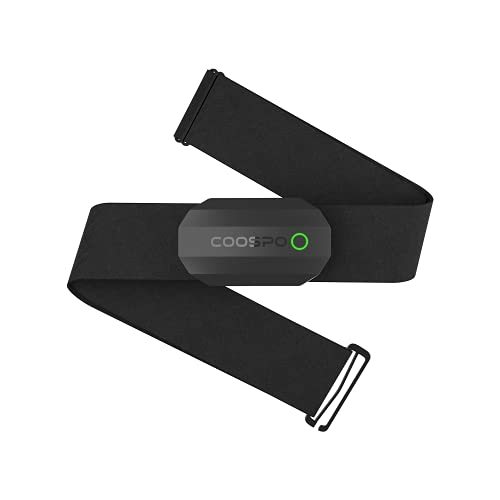
Pros
- ANT+ and Bluetooth connectivity
- Compatible with Zwift and Strava
- Maker-rated ±1 BPM accuracy
- IP67 water-resistance rating
- LED and beep status indicators
Cons
- Electrode zones need moistening before use
- Pair through the app, not phone Bluetooth
- Strap replacement recommended every six months or 300 washes
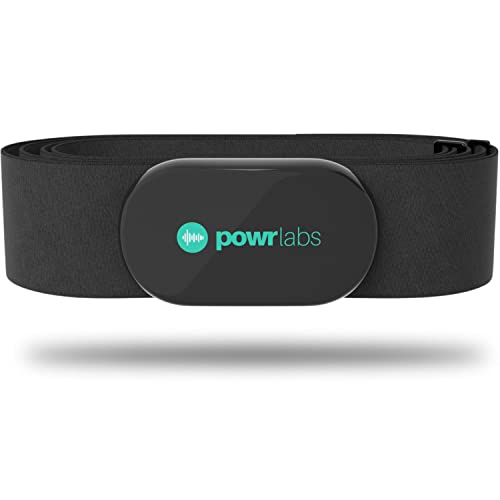
Pros
- ANT+ and Bluetooth connectivity
- 400+ hour stated battery life
- Replaceable battery included
- IPX67 water resistance
- 24 to 61-inch adjustable strap
Cons
- Must be worn before pairing
- Chest strap required for readings
Side-by-Side Comparison
| Feature | Scosche Rhythm+ 2.0 | COOSPO H808S | POWR LABS |
|---|---|---|---|
| Wear style | Armband | Chest strap | Chest strap |
| Connections | Bluetooth, ANT+ | Bluetooth, ANT+ | Bluetooth, ANT+ |
| Battery life | Up to 24 hours | Not listed | 400+ hours |
| Water resistance | IP68 | IP67 | IPX67 |
| Fit detail | Forearm, bicep, or tricep | Not listed | 24-61 inches |
Wear style is the clearest choice point for riders who find chest straps uncomfortable: Scosche offers arm placement, while COOSPO and POWR LABS use chest straps. Battery information also differs, with POWR LABS listing 400+ hours and Scosche listing up to 24 hours; COOSPO does not list a runtime.
Common Mistakes to Avoid
Pairing a monitor through the wrong menu can make a compatible sensor appear unavailable. COOSPO advises connecting the H808S inside the fitness app rather than the phone’s Bluetooth settings, while POWR LABS says to wear its monitor before pairing.
Choosing by wireless connection alone can leave you with a sensor that does not suit your preferred fit. All three list Bluetooth and ANT+, but the Scosche armband sits on the arm while the other options use chest straps.
Skipping fitting and care directions can affect comfort, contact, or strap life. COOSPO advises moistening the plastic electrode zones before use and recommends replacing its strap every six months or 300 washes; follow each maker’s instructions for cleaning and storage.
Best Heart Rate Monitor Under $50: Buying Guide
Wear Style and Fit
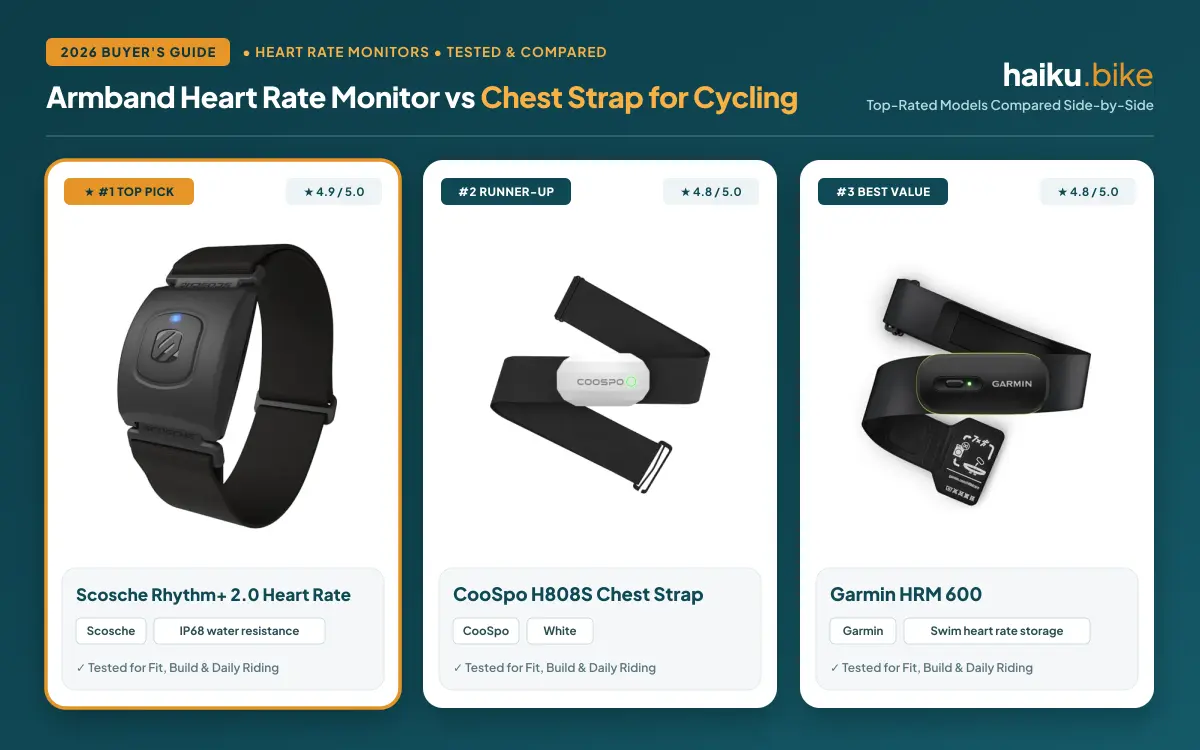
Wear style matters because a heart rate monitor helps only when you can position it comfortably and securely throughout a ride. Chest straps sit around the torso with electrode areas against the skin, while the Scosche Rhythm+ 2.0 can be worn on the forearm, bicep, or tricep.
Check the maker’s fitting directions and any stated adjustment range before choosing a strap. POWR LABS lists a 24-61-inch fit, while comparable range information is not listed for the other options. Riders who dislike torso straps may prefer an armband, but should confirm its placement instructions.
Fit can change with clothing, body movement, and ride duration, so consider how you will wear the sensor during your usual sessions. A chest strap should stay in position without becoming uncomfortable, and an armband should feel secure at its recommended location.
Connectivity and Device Support
Connectivity determines whether a monitor can send heart rate data to your bike computer, watch, phone app, or indoor training platform. All three options list Bluetooth and ANT+, two common connection methods, but the receiving device and software must also support the chosen connection.
Check the sensor and receiving device compatibility information before buying, especially if you rely on a specific training app. COOSPO names Zwift, Wahoo, Polar Beat, and other apps; Scosche names platforms including Strava, Peloton, and Wahoo. POWR LABS names Garmin, Wahoo, Polar, Peloton, and fitness apps.
Pairing steps can differ even when two devices both use Bluetooth. COOSPO recommends pairing the H808S inside the fitness app, while POWR LABS says to wear its sensor before pairing. If a monitor does not appear, confirm that the app supports it and follow the maker’s setup instructions.
Riders comparing a sensor with a display can also consult our bike computer guide for gravel riding. A computer’s connection support affects which heart rate data it can receive, so check both product listings rather than assuming Bluetooth or ANT+ guarantees compatibility.
Battery Life and Replacement
Battery information helps riders estimate how often a sensor needs charging or a battery change. Scosche lists up to 24 hours of continuous use, and POWR LABS lists 400+ hours with a replaceable battery. COOSPO does not list a runtime in its product details.
Choose a battery setup that matches how often you ride and how you prefer to manage charging or replacements. POWR LABS may suit frequent sessions because its maker lists a long runtime, while Scosche’s stated continuous runtime is shorter. Confirm current battery instructions before purchase.
Published runtime figures do not guarantee the same result in every use pattern, and these makers do not describe a shared measurement method. Check the product information for battery type, replacement steps, and care requirements. For COOSPO, follow its advice to check battery and strap working condition.
Water Resistance and Durability
Water-resistance ratings describe how makers classify protection from water, but they do not replace product-specific care directions. Scosche lists IP68, COOSPO lists IP67, and POWR LABS lists IPX67. Keep each rating attached to its exact product rather than treating the labels as identical.
Consider whether your rides involve sweat, rain, or indoor training, then check the maker’s guidance for those conditions. A rating alone does not explain every cleaning limit or permitted water exposure. Do not assume a monitor is suitable for swimming unless its maker explicitly says so.
Durability also includes the material that contacts your skin and the care it needs. COOSPO recommends replacing its strap every six months or 300 washes; that guidance does not automatically apply to an armband or another chest strap. Follow each maker’s cleaning and replacement directions.
Accuracy and Training Features
Accuracy claims and extra data features matter most when you use heart rate to guide structured training. COOSPO and POWR LABS each state ±1 BPM accuracy in their product information. Scosche describes real-time tracking and lists heart rate variability (HRV) and RR interval (RRi) data support.
Match those features to the information you actually use rather than assuming that more data improves every ride. Scosche says its RRi data can stream to apps including HRV4Training, Morpheus Training, and Welltory. Riders who need only heart rate on a bike computer may not need those app features.
A sensor supplies information, but the receiving device and software determine which data appear and how they are displayed. Before buying, confirm that your chosen app supports the feature you want. If a stated accuracy figure matters to your training, read the maker’s explanation of that claim.
Setup, Care, and Everyday Use
Setup and routine care affect whether a monitor connects reliably and remains comfortable across repeated rides. COOSPO advises wetting the H808S plastic electrode zones before use, disconnecting the sensor after exercise, and pairing through the app. These steps are specific to its chest strap.
POWR LABS says its monitor must be worn before pairing, so put it on before searching for the sensor in a compatible device. For any monitor, check that the strap or armband is fitted as directed and that the receiver is using a supported connection method.
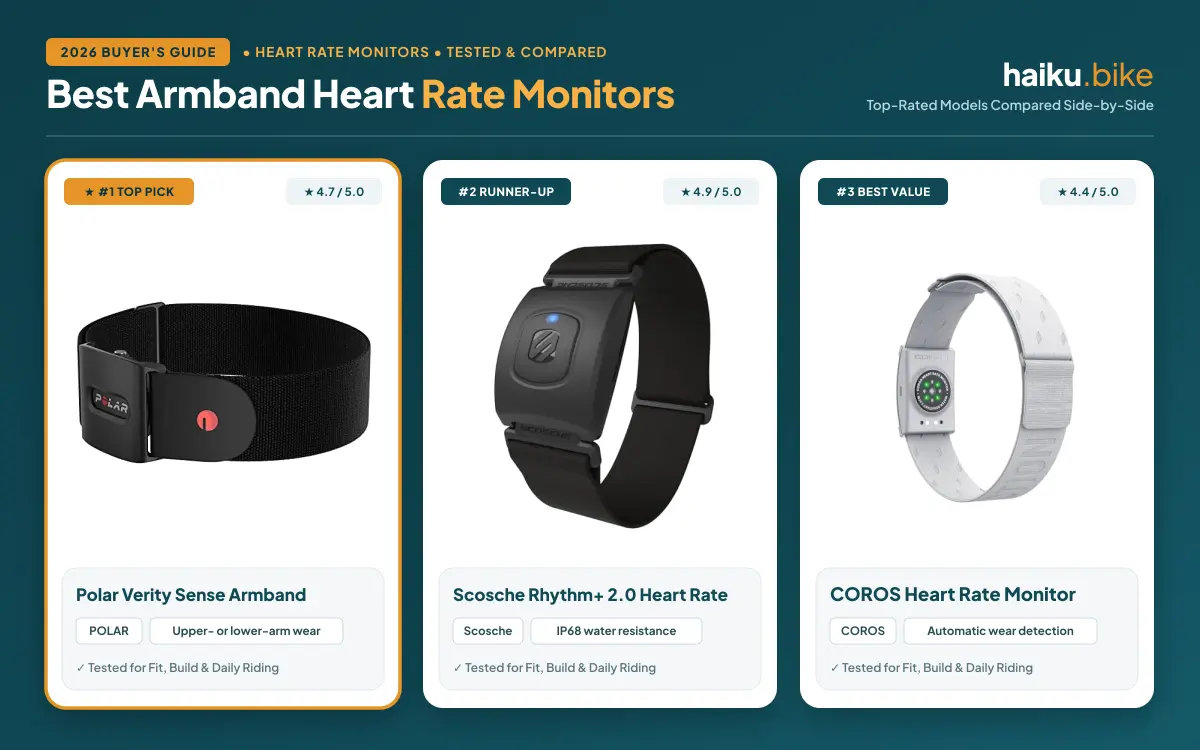
Care instructions can differ between chest straps and optical armbands, so avoid applying one product’s routine to another. Review cleaning, storage, and battery guidance before regular use. Riders who want a broader selection of arm-worn devices can compare our armband heart rate monitor guide.
How We Chose
We score heart rate monitors with the Haiku Ride Score: core performance 30%, build and weather resistance 20%, ease of use 20%, compatibility and battery 15%, and value 15%. Our comparison considers manufacturer specifications, connection information, fit details, and long-term owner feedback when available.
We research and draft our guides with software tools, including AI, then run automated checks on product fit, sourcing, and our editorial rules. Our editor spot-checks guides rather than reading each one before publication. Our editorial process evaluates listed features and explains trade-offs without claiming personal product use. See how we review for details about our method.
Price and Value: What Each Budget Gets You
Budget
At the lower end of this guide’s budget, a rider can find a dual-connection chest strap with essential heart rate tracking. The COOSPO Bluetooth Heart Rate Monitor Chest Strap lists Bluetooth and ANT+, plus an LED indicator and beep. Its product information does not list battery runtime, so riders who prioritize published battery life may want another option.
Mid-Range
In the middle of this guide’s budget, the POWR LABS Bluetooth ANT+ Heart Rate Monitor Chest adds a stated 400+ hour battery life and an adjustable 24-61-inch fit. Its chest-strap format may not suit riders who dislike torso bands, and the product information does not name a comparable armband placement option.
Premium
At the top of this guide’s budget, the Scosche Rhythm+ 2.0 Heart Rate Monitor Armband trades chest-strap fit for adjustable placement on the forearm, bicep, or tricep. It adds listed HRV and RRi support, but its maker states up to 24 hours of continuous battery life, less than POWR LABS’ listed runtime.
Choosing Something Else
Riders who do not use heart rate to guide training may not need a separate sensor. A compatible watch may already record heart rate, while riders focused on route, speed, or distance can use a bike computer without adding a monitor. Check what your current device records before buying another piece of cycling equipment.
Final Thoughts
Choose the Scosche Rhythm+ 2.0 Heart Rate Monitor Armband if chest straps feel restrictive and you want adjustable arm placement. Its Bluetooth and ANT+ connections support compatible devices, and its maker lists HRV and RRi features. The trade-off is its listed continuous battery life of up to 24 hours.
The COOSPO Bluetooth Heart Rate Monitor Chest Strap suits riders seeking a straightforward chest strap with Bluetooth, ANT+, and named support for apps including Zwift. Follow its electrode-moistening and in-app pairing directions. The POWR LABS Bluetooth ANT+ Heart Rate Monitor Chest better suits riders who value its listed 400+ hour battery life and adjustable fit.
Skip these monitors if you will not use heart rate data or if neither arm nor chest placement feels comfortable. A watch you already own may cover your needs, while riders shopping for a display can compare heart rate monitors and cycling computer categories before building a setup.
FAQs
Which Best Heart Rate Monitor Under $50 connects to Garmin?
The POWR LABS Bluetooth ANT+ Heart Rate Monitor Chest names Garmin among compatible devices, and all three monitors list Bluetooth and ANT+. Compatibility still depends on the receiving Garmin device and its supported connection. Check Garmin’s device information and follow the monitor’s pairing instructions before relying on a connection during a ride.
Can these heart rate monitors connect to Zwift?
The COOSPO Bluetooth Heart Rate Monitor Chest Strap names Zwift among compatible apps, while all three options list Bluetooth and ANT+. Your phone, computer, or indoor training setup must also support the connection method. Confirm compatibility for the receiving device, then pair the sensor through the appropriate app or device menu.
How long do these heart rate monitor batteries last?
POWR LABS lists 400+ hours of battery life, and Scosche lists up to 24 hours of continuous use. COOSPO does not list a runtime in its product information. Actual battery life can vary with use, so check each maker’s instructions for battery type, replacement, charging, and care before regular training.
Are these heart rate monitors suitable for rain?
Scosche lists IP68, COOSPO lists IP67, and POWR LABS lists IPX67 for its monitor. Those ratings help describe water resistance but do not replace product-specific care directions. Check the maker’s guidance for wet-weather use and cleaning, and do not assume any monitor is suitable for swimming unless its maker says so.
How should I fit a chest strap heart rate monitor?
A chest strap should sit securely with its electrode areas positioned as its maker directs. COOSPO advises moistening the H808S plastic electrode zones before use, and POWR LABS lists an adjustable 24-61-inch fit. Check the specific strap’s placement and adjustment instructions because designs and fit ranges can differ.
Should I pair a heart rate monitor through phone settings?
COOSPO advises pairing the H808S inside the fitness app rather than through the phone’s Bluetooth settings. POWR LABS says to wear its monitor before pairing. Follow the instructions for your specific sensor and receiving app, and confirm the app supports the monitor if it does not appear.
When should I replace a heart rate monitor strap?
COOSPO recommends replacing its H808S strap every six months or 300 washes. The product information does not give an equivalent interval for Scosche or POWR LABS, so follow those makers’ care directions instead. Inspect straps regularly and replace them if they no longer fit or function as intended.
Which Best Heart Rate Monitor Under $50 works without a chest strap?
The Scosche Rhythm+ 2.0 Heart Rate Monitor Armband is the arm-worn option in this guide. Its adjustable strap can be worn on the forearm, bicep, or tricep, according to Scosche. Check the maker’s fit directions and confirm that your receiving device supports Bluetooth or ANT+ before choosing it.
Write Your Review
No reviews yet. Be the first to share your experience!