

Toddlers riding balance bikes, tricycles, or family routes need helmets that match their head size and intended use. This guide compares 5 helmets from brands including OUWOER, Glaf, Retrospec and more, with attention to fit, adjustment, ventilation, and the safety information each maker provides.
For other helmet features, our guide to MIPS and non-MIPS helmets explains a separate part of helmet selection. Follow the manufacturer’s instructions and local laws when choosing, fitting, and using any helmet.
Safety note: Children’s bicycles sold in the United States must meet CPSC bicycle requirements, 16 CFR Part 1512. Every rider should wear a helmet certified to the CPSC bicycle helmet standard, 16 CFR Part 1203, and an adult or bike shop should confirm fit, assembly, and brakes.
At a Glance: Which One Fits You
- Best overall: Kids Bike Helmet, Adjustable Helmets from lists CPSC compliance, two size ranges, a rear dial, and adjustable straps.
- Best for the youngest listed age: GLAF Baby Bike Helmet Toddler Helmets for 1+ Years offers three sizes and states CPSC compliance for persons age one and older.
- Best for small heads: Toddler Bike Helmet-with 12 Vents-Adjustable Dial lists an XS range of 45 to 49 cm and two pad thicknesses.
- Best for airflow: Retrospec Scout Kids Bike Helmet, Skateboard has 14 vents, an adjustable dial, and removable washable padding.
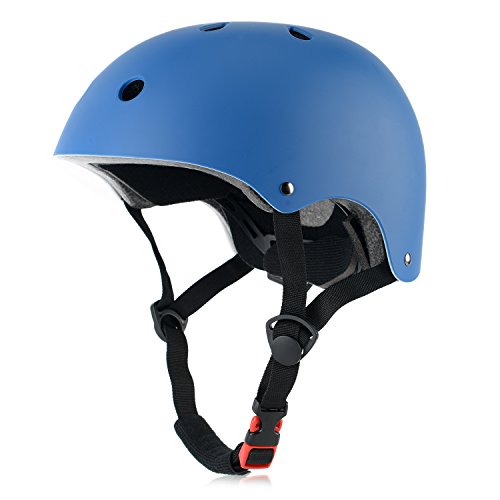

Pros
- Adjustable rear dial
- Adjustable chin straps
- Fourteen ventilation openings
- Multiple listed sport uses
- Lightweight at 0.53 lb
Cons
- Only XS size details provided
- Who should skip it: children outside XS head range
- Measure head circumference before choosing a size


Pros
- Rear fit adjustment dial
- Twelve ventilation openings
- Two pad thicknesses included
- Listed CPSC 1203 and ASTM 1447 compliance
Cons
- XS size only
- No fit range beyond 19.3 inches listed
- Who should skip it: riders needing larger sizing

Pros
- Adjustable rear fit dial
- Removable, washable pads
- Eleven vents
- Bike and scooter use
Cons
- Only Small size specified
- Measure head before purchase
- Who should skip it: riders outside 50-54 cm
Side-by-Side Comparison
| Helmet | Listed size range | Fit features | Safety information | Vents |
|---|---|---|---|---|
| Kids Bike Helmet, Adjustable Helmets from | XS: 46 to 50 cm; S: 50 to 54 cm | Rear dial, adjustable side straps | Maker states CPSC 16 CFR Part 1203 and ASTM F1447 | 11 |
| GLAF Baby Bike Helmet Toddler Helmets for 1+ Years | XXS: 17.32 to 18.9 inches; XS: 18.11 to 20.08 inches; S: 20.47 to 22.05 inches | Rear dial, adjustable straps | Maker states CPSC compliance for persons age one and older | 14 |
| Retrospec Scout Kids Bike Helmet, Skateboard | Toddler: 45 to 49 cm | Adjustable dial, chin strap | Not listed | 14 |
| Toddler Bike Helmet-with 12 Vents-Adjustable Dial | XS: 45 to 49 cm; S: 48 to 54 cm | Rear dial, two pad thicknesses | Maker states CPSC 1203 and ASTM 1447 | 12 |
| Kids Bike Helmet, 3 Sizes from Toddler to Youth | Small: 18.9 to 21.3 inches; Medium: 21.3 to 22.4 inches; Large: 22.4 to 24 inches | Crank dial, two pad sets, adjustable chin straps | Maker states CPSC compliance for persons age five and older | 11 |
Fit range and age-specific safety information matter more than vent count when choosing a toddler helmet. Measure your child’s head, compare the result with the maker’s range, then confirm that the helmet’s stated certification covers the intended rider and activity.
Common Mistakes to Avoid
Choosing by age alone can leave a helmet loose because children of the same age have different head circumferences. Measure above the eyebrows as directed by the maker, then compare that measurement with the exact size range. When a measurement falls near overlapping ranges, ask the manufacturer which size to select.
Assuming every multi-sport description proves suitability is another avoidable mistake. The Bimalsic and Glaf descriptions mention activities beyond cycling, but parents should check the helmet’s label and instructions for each intended activity. Ventilation, shell material, or an age suggestion does not establish certification on its own.
Buying a helmet for future growth can compromise its fit today. Select a size that matches the child’s current measurement, adjust its retention system according to the maker’s directions, and check stability before each ride. Replace or stop using a helmet when the manufacturer directs or when its condition is uncertain.
Overlooking gaps in safety information can lead to an unsuitable purchase. Retrospec Scout lists fit and comfort features, but its published description does not identify a certification standard. Check the product label and listing, and contact the manufacturer if certification or age suitability remains unclear.
Best Toddler Bike Helmet: Buying Guide
CPSC Certification and Age Suitability
CPSC certification and age suitability come first because a helmet must meet the applicable bicycle helmet standard for its intended rider. In the United States, check for the CPSC bicycle helmet standard, 16 CFR Part 1203, on the product label and in the manufacturer’s information.
Some makers in this comparison state CPSC compliance, but their age language differs. MOUNTALK states compliance with CPSC 16 CFR Part 1203 and suggests separate ages for its size ranges. OUWOER states compliance for persons age five and older, despite listing its small size for children ages two to eight.
Those differences make it important to check both the certification scope and the child’s age. Do not treat an age recommendation as proof that a helmet meets the standard for every child in that range. If the label or maker’s wording is unclear, contact the manufacturer before purchase.
Head Measurement and Size Range
Head measurement determines whether the helmet’s shell and adjustment system can sit securely. Use a flexible tape around the widest part of the head, following the manufacturer’s instructions, then compare the result with the listed range rather than relying on age or clothing size.
The Glaf helmet lists three ranges in inches, while several other helmets list ranges in centimeters or both units. The Bimalsic XS and S ranges overlap at 48 to 49 cm, so a measurement in that area calls for careful comparison with the maker’s size guidance.
A helmet should fit the child now, not leave room for growth that makes it unstable. Recheck measurements as the child grows and whenever the helmet seems tight or shifts. If the measurement sits exactly at a size boundary, ask the manufacturer rather than guessing.
Retention System, Straps, and Padding
A retention system helps keep a correctly sized helmet level and stable, but it cannot make an unsuitable shell size fit. MOUNTALK, Glaf, Bimalsic, Retrospec, and OUWOER list adjustment dials or adjustable straps, while Bimalsic and OUWOER also list alternate padding.
After selecting a size, follow the manufacturer’s fitting directions and check whether the helmet stays in place when the child moves their head. Set the straps and buckle as directed. A helmet that still shifts substantially or causes discomfort may need another size or a different model.
Use only supplied pads and components approved by the maker because extra padding can change how the helmet sits. MOUNTALK lists removable washable pads, and Retrospec lists removable washable interior padding. Check the maker’s care instructions before cleaning any helmet or adjusting its components.
Shell, Liner, and Intended Activity
Shell and liner details describe construction, but they do not replace certification or fit checks. Glaf lists a polycarbonate shell and EPS foam, MOUNTALK lists a durable outer shell and EPS liner, and OUWOER lists an ABS shell with EPS foam.
Match the helmet to the activity the child will do, then check the label and manufacturer’s instructions for that use. Several descriptions mention scooters or skateboarding, but broad activity language alone does not confirm that a helmet meets every activity’s requirements.
Inspect the shell, liner, straps, and adjustment parts before rides, and follow the manufacturer’s guidance after an impact. Do not modify the helmet or assume that hidden damage is harmless. For broader helmet context, our bike helmet guide with turn signals covers a different category.
Ventilation and Everyday Comfort
Ventilation and comfort can help a child tolerate a helmet, but they come after certification and secure fit. Product descriptions list 11 vents for MOUNTALK and OUWOER, 12 for Bimalsic, and 14 for Glaf and Retrospec Scout.
Vent count does not establish how comfortable a particular child will find a helmet. Consider whether the child can wear the adjusted helmet without pressure points and whether the listed padding suits the fit. Retrospec Scout also lists an integrated visor, while MOUNTALK describes internal cooling channels.
Have an adult supervise a brief fit check before riding and look for movement or discomfort. If the helmet feels uncomfortable after correct adjustment, do not compensate by tightening straps excessively. Compare another suitable size or helmet instead.
Care, Inspection, and Replacement
Regular inspection helps caregivers notice loose straps, damaged components, or a helmet that no longer fits. Check the shell, liner, buckle, and adjustment system before rides, and remeasure the child as they grow. Follow the manufacturer’s directions if the helmet has been involved in an impact.
Cleaning and replacement instructions vary by manufacturer, so use the product documentation instead of assuming that a particular cleaner or schedule is suitable. Retrospec Scout and MOUNTALK list removable washable padding, but that does not establish how to wash the entire helmet.
Stop using a helmet if its condition is uncertain, or when the manufacturer directs replacement. Do not modify the shell, foam, straps, or buckle. If care instructions are missing, contact the maker before relying on the helmet for a child’s ride.
How We Chose
We compare toddler helmets with the Haiku Ride Score: core performance 30%, build and weather resistance 20%, ease of use 20%, compatibility and fit 15%, and value 15%. For this category, compatibility and fit focus on published head ranges, age guidance, adjustment systems, and the clarity of safety information.
Our evaluation uses manufacturer specifications, fit information, and long-term owner feedback when available. We research and draft our guides with software tools, including AI, then run automated checks on product fit, sourcing, and our editorial rules. Our editor spot-checks guides rather than reading each one before publication. See how we review products and explain our editorial process.
Price and Value: What Each Budget Gets You
Budget
At the budget end, a toddler helmet may offer a basic dial, adjustable straps, and a limited number of size ranges. The MOUNTALK and Bimalsic descriptions include adjustment features and multiple sizes, while MOUNTALK also states CPSC and ASTM compliance. Buyers should still verify the label, confirm age suitability, and make sure the range matches the child’s measured head.
Mid-Range
Mid-range choices may add washable padding, a visor, or more ventilation without changing the need for correct sizing. Retrospec Scout lists removable washable padding, an integrated visor, and 14 vents, but its description does not list a certification standard. Choose it only after checking certification and confirming that its toddler size fits.
Premium
At the upper end, product descriptions may offer broader size coverage or more fit adjustments, rather than a guarantee of better fit. OUWOER lists three size ranges, two pad sets, and adjustable chin straps, but its stated CPSC age scope begins at five. Parents of younger toddlers should choose a helmet with clearly applicable certification instead.
Choosing Something Else
A child carrier or bicycle trailer may suit families whose toddler is not ready to ride a balance bike or tricycle independently. Choose equipment designed for carrying children, follow its instructions, and check the applicable safety information. A carrier or trailer does not remove the need to consider a properly fitted helmet when appropriate.
Final Thoughts
For caregivers prioritizing explicit safety and adjustment information, Kids Bike Helmet, Adjustable Helmets from lists CPSC compliance, two size ranges, a rear dial, and adjustable straps. Its trade-off is that the listed ranges begin at 46 cm, so it may not fit a smaller toddler.
Families seeking a helmet with a stated age scope starting at one can consider GLAF Baby Bike Helmet Toddler Helmets for 1+ Years. Glaf lists three sizes and CPSC compliance for persons age one and older, but the listed size ranges overlap and leave a gap, so measure carefully and confirm the correct size.
For a small head, Toddler Bike Helmet-with 12 Vents-Adjustable Dial lists an XS range starting at 45 cm and two pad thicknesses. Retrospec Scout Kids Bike Helmet, Skateboard adds washable padding and a visor, but its description does not identify certification. Confirm the label before choosing either.
Skip any helmet whose size does not match the child, whose certification cannot be confirmed, or whose age guidance leaves suitability unresolved. OUWOER’s stated CPSC age scope begins at five, which makes it a poor choice for younger toddlers unless the manufacturer confirms suitability. Explore more options in Kids Bike Helmets and the broader Helmets and Safety category.
FAQs
How do I measure a toddler for a bike helmet?
Measure a toddler’s head with a flexible tape around its widest part, following the helmet maker’s instructions. Compare the measurement with the exact size range, rather than choosing by age alone. If the result sits at a boundary or within overlapping ranges, ask the manufacturer which size to select before buying.
What safety standard should a toddler bike helmet meet?
A toddler bicycle helmet should be certified to the U.S. CPSC bicycle helmet standard, 16 CFR Part 1203, for its intended rider. Check the helmet label and product information for certification. Do not infer certification from shell materials, ventilation, age recommendations, or a general claim that the helmet offers protection.
Can a one-year-old wear a bike helmet?
A one-year-old should wear a helmet only when the helmet’s certification, age guidance, and fit suit that child. Glaf states CPSC compliance for persons age one and older, but caregivers must still choose the correct size and confirm fit. Ask the manufacturer if the label or age scope is unclear.
How snug should a toddler bike helmet fit?
A toddler bike helmet should sit level and stay in place when adjusted according to its maker’s instructions. Set the rear dial, straps, and buckle as directed, then check for substantial movement or discomfort. If the helmet still shifts, choose another size or model rather than tightening the straps excessively.
Can a toddler bike helmet be used for scooters or skateboarding?
A toddler helmet is suitable for scooters or skateboarding only when its certification and manufacturer instructions cover that activity. Some product descriptions mention multiple sports, but that wording does not confirm compliance with every activity’s requirements. Check the helmet label and contact the manufacturer if its intended use is unclear.
How often should I check my toddler’s helmet fit?
Check a toddler’s helmet fit before rides and remeasure as the child grows. Inspect the shell, liner, straps, buckle, and adjustment system for damage or looseness, and follow the manufacturer’s directions after an impact. Replace or stop using the helmet when the maker directs or its condition is uncertain.
Are more vents better on a toddler bike helmet?
More vents can support airflow, but vent count does not prove that a helmet fits well or meets the right safety standard. Choose a helmet that matches the child’s measured head and intended use first. Then consider comfort features such as ventilation and padding, while following the maker’s fitting and care instructions.
Where can I compare other kids’ helmets?
Compare kids’ helmets by checking CPSC certification, age suitability, size range, adjustment features, and manufacturer instructions. The Kids Bike Helmets category covers more options, while our MIPS guide explains a separate helmet feature. Confirm that any alternative suits the child’s intended activity and measured head.
Write Your Review
No reviews yet. Be the first to share your experience!