
Riders on unfamiliar roads need directions and ride data they can check from the handlebar, without stopping to pull out a phone. GPS bike computers vary in map detail, rerouting, sensor support, battery life, and screen controls, so the right choice depends on how you ride.
In November 2026, we compare 5 computers from O-Synce, MEILAN, Bryton and more for riders seeking the Best GPS Bike Computers Under $150. Follow each manufacturer’s instructions and local laws, and see our bike phone mount guide if you are weighing a phone-based setup.
At a Glance: Which One Fits You
- Best overall: iGPSPORT BSC500 GPS Bike Computer combines dual-band positioning, voice prompts, and automatic rerouting, though its battery runtime is not listed.
- Best value: MEILAN Navihood L1 GPS Bike Computer offers offline waypoint navigation, dynamic route planning, IPX7 protection, and Bluetooth and ANT+ sensor support.
- Best for long rides: Bryton Rider 650 2.8 Inch Color LCD Touchscreen lists 33-hour battery life and preloaded USA maps, but riders should confirm which radar features work with their setup.
- Best for power training: O-Synce Navi2Coach GPS + Power Cycling Computer supports ANT+ power sensors and GPX turn guidance, while its display is less modern than touchscreen options.

Pros
- Touchscreen and button controls
- Up to 12 data fields per page
- Strava and Komoot route imports
- Automatic off-course rerouting
- Voice navigation alerts
Cons
- Battery life not listed
- Water-resistance rating not listed
- Wireless connectivity details not listed

Pros
- Maker-rated 33-hour battery life
- 2.8-inch color touchscreen
- Preloaded USA maps
- ANT+ sensor and radar support
- Bluetooth ride sync to Strava, TrainingPeaks, and Komoot
Cons
- Water-resistance rating not specified
- Mount type not specified
- Who should skip it: riders needing a stated water-resistance rating

Pros
- ANT+ support for sensors from any brand
- SRM, Quarq, and Rotor power profiles
- GPX turn-by-turn guidance
- Four user and bike profiles
- Up to eight values per screen
Cons
- No stated battery life or weather rating
- Bluetooth compatibility not specified
- Who should skip it: riders who need confirmed Bluetooth support

Pros
- Offline waypoint navigation
- ANT+ and Bluetooth sensor support
- Strava, komoot, and TrainingPeaks sync
- Customizable data screens
- IPX7 water resistance
Cons
- Battery runtime not stated
- Mount compatibility details not stated
- Who should skip it: riders who need published battery runtime or mount-fit details
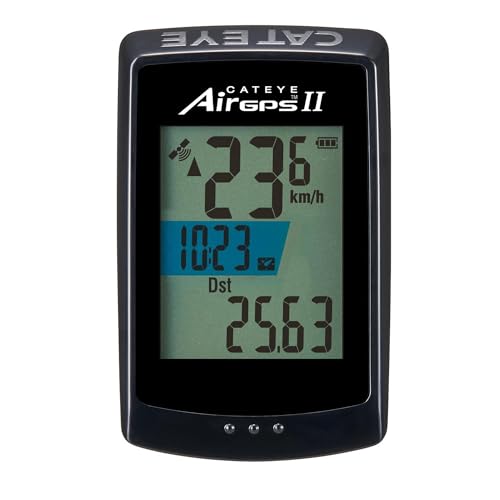
Pros
- Core functions without a sensor
- Setup through CATEYE Cycling app
- Customizable display
- Optional cadence measurement
- Optional pulse measurement
Cons
- 10-hour stated runtime
- Cadence and pulse measurement are optional
- Who should skip it: riders needing longer runtime
Side-by-Side Comparison
| Computer | Screen and controls | Navigation | Battery and protection | Connections and sensors |
|---|---|---|---|---|
| iGPSPORT BSC500 GPS Bike Computer | 3.3-inch touchscreen and buttons | Smart maps, voice cues, automatic rerouting | Not listed | Satellite systems GPS, BeiDou, GLONASS, Galileo, QZSS; app and route imports |
| Bryton Rider 650 2.8 Inch Color LCD Touchscreen | 2.8-inch color touchscreen, ambient light sensor | Preloaded USA maps, turn-by-turn guidance | 33-hour battery; waterproof claim | ANT+ sensors; Bluetooth app syncing; radar support listed |
| O-Synce Navi2Coach GPS + Power Cycling Computer | Six display screens, up to 8 values per screen | GPX tracks with turn-by-turn instructions | Not listed | ANT+ sensors, including power meters |
| MEILAN Navihood L1 GPS Bike Computer | 2.6-inch anti-glare screen, auto backlight | Offline waypoint navigation and dynamic route planning | 1700mAh battery; IPX7 | Bluetooth and ANT+; sensors, Di2, and listed CATEYE taillight compatibility |
| CATEYE Air GPS Bicycle Computer, Black, One Size | Customizable display; setup through CATEYE Cycling app | Not listed | 10-hour runtime | Optional cadence and pulse measurement |
Navigation and power support create the biggest differences across this group. Riders who need maps and rerouting can compare the iGPSPORT and Bryton, while power-focused riders may prefer the O-Synce’s ANT+ sensor support.
Common Mistakes to Avoid
Assuming every GPS computer offers full maps can lead to a poor fit for unfamiliar routes. The iGPSPORT BSC500 and Bryton Rider 650 list map features, while the O-Synce specifies GPX track guidance; check route preparation and transfer steps before buying.
Ignoring sensor protocols can leave an existing heart-rate monitor, cadence sensor, or power meter unpaired. The MEILAN Navihood L1 and Bryton Rider 650 list ANT+ and Bluetooth support, while the O-Synce describes ANT+ compatibility; confirm the exact protocol used by each accessory.
Comparing battery claims without checking navigation and screen use can overstate likely ride time. Bryton lists 33 hours and CATEYE lists 10 hours, while other runtimes are not listed here; consult manufacturer guidance and consider how often you use backlighting and navigation.
Overlooking controls and mount fit can make a capable computer awkward on your bike. Compare touchscreens, buttons, and display layout with your glove use and cockpit space, then confirm the included mount and handlebar fit before ordering.
Best GPS Bike Computers Under $150 Buying Guide
Navigation, Maps, and Rerouting
Navigation determines how much help a computer provides when you follow a route or miss a turn. Turn prompts give advance direction, breadcrumb guidance shows progress along a course, and rerouting can calculate a new path after you leave the planned route.
The iGPSPORT BSC500 lists smart maps, voice alerts, and automatic route planning after a wrong turn. Bryton lists preloaded USA maps and turn-by-turn guidance, while MEILAN supports offline waypoints and dynamic planning; check how routes transfer and whether setup requires an app.
The O-Synce follows GPX tracks with turn instructions, while CATEYE does not list navigation details here. Riders following familiar roads may need only recorded ride data, but route explorers should confirm map coverage, offline access, and rerouting behavior before choosing.
GPS Positioning and Satellite Support
Satellite support affects how a computer establishes location for speed, distance, and route position. The iGPSPORT BSC500 specifies dual-band reception and five satellite systems, and MEILAN names GPS, GLONASS, Galileo, BeiDou, and QZSS.
More named systems do not guarantee better results in every setting, because buildings, terrain, and device placement also matter. Compare the frequency and satellite details the manufacturer states, then consider whether your regular rides pass through dense streets, wooded routes, or open roads.
The Bryton, O-Synce, and CATEYE descriptions identify GPS functionality but do not give comparable satellite-system detail. Riders prioritizing positioning specifications should check current manufacturer information, while riders focused on training data may value sensor and display features more.
Battery Life and Weather Protection
Battery life determines charging frequency, while a water-resistance rating helps you assess wet-weather suitability. Bryton lists a 33-hour battery, MEILAN lists a 1700mAh battery and IPX7 protection, and CATEYE lists 10 hours of runtime.
Battery capacity and runtime are different measures, so MEILAN’s capacity does not establish how many hours a charge lasts. Runtime and a water-resistance rating are not listed for the iGPSPORT BSC500 or O-Synce Navi2Coach; check manufacturer guidance if long rides or rain shape your choice.
Screen brightness, navigation, and backlight settings can affect power use, so published runtime may vary with configuration. Compare manufacturer charging guidance with your longest regular ride, and follow care instructions for ports and mounts after wet or dusty trips.
Sensor Support and Data Connections
Sensor support determines whether a computer can display data from accessories such as heart-rate monitors, cadence sensors, and power meters. MEILAN lists Bluetooth and ANT+ support for several sensor types, and Bryton lists ANT+ sensors and Bluetooth syncing through its app.
The O-Synce Navi2Coach supports ANT+ sensors, including power meters, while CATEYE describes optional cadence and pulse measurement. The iGPSPORT product details emphasize its app and route services; verify sensor protocols for your exact accessories rather than treating app connectivity as proof of sensor compatibility.
App ecosystems matter when you want to transfer routes or share ride records. Bryton names Strava, TrainingPeaks, and Komoot syncing through Bryton Active, while MEILAN names several services through its app; compare supported functions with your preferred platform before purchase.
Screen Readability and Controls
Screen size, contrast, and controls affect how quickly you can read data without losing attention to the road. The iGPSPORT BSC500 has a 3.3-inch touchscreen and buttons, Bryton has a 2.8-inch color touchscreen, and MEILAN has a 2.6-inch anti-glare display.
The O-Synce uses six display screens with up to eight values per screen, while CATEYE allows display customization. Think about which information you need visible at once, whether touch input suits your gloves, and whether buttons are easier to operate in changing weather.
A larger screen can make maps easier to read but can occupy more handlebar space. Check your existing lights, bags, and mounts, then consider whether auto backlighting or an ambient light sensor fits the conditions where you ride.
Training Features and Setup
Training features matter most when you want structured metrics or compatibility with specialized sensors. O-Synce lists power, cadence, heart rate, altitude, temperature, and training plans, while Bryton lists climb challenges, electronic shifting support, and live tracking.
MEILAN lists training goals, automatic page turning, and seven riding modes, while the iGPSPORT BSC500 supports up to twelve data fields per page. Compare the functions you will use with the setup effort and app requirements, rather than treating a longer feature list as automatically better.
Before buying, check what the package includes and how the computer mounts to your handlebar. Confirm app availability, route transfer steps, and compatibility with your sensors; our gravel bike computer guide covers a different route-focused use case.
How We Chose
We compare each computer with the Haiku Ride Score: core performance counts for 30%, build and weather resistance for 20%, ease of use for 20%, compatibility and fit for 15%, and value for 15%. For bike computers, compatibility and fit cover sensor and app support, charging, published battery life, and handlebar mounting considerations.
Our evaluation draws on manufacturer specifications, compatibility information, and long-term owner feedback when available. We research and draft our guides with software tools, including AI, then run automated checks on product fit, sourcing, and our editorial rules. Our editor spot-checks guides rather than reading each one before publication. Our how we review page explains the method.
Price and Value: What Each Budget Gets You
Budget
At the lower end of this guide, CATEYE Air GPS Bicycle Computer, Black, One Size focuses on core GPS functions, app setup, and a customizable display. CATEYE lists 10 hours of runtime and optional cadence and pulse measurement, but does not list map guidance here. Riders who need offline maps, rerouting, or broader sensor details should compare other options.
Mid-Range
MEILAN Navihood L1 GPS Bike Computer adds offline waypoint navigation, dynamic route planning, an anti-glare screen, and IPX7 protection. O-Synce Navi2Coach GPS + Power Cycling Computer suits riders who prioritize ANT+ power and training data instead of touch controls. These options offer distinct strengths, but buyers should check which app functions, route tools, and display controls match their routine.
Premium
At the upper end, iGPSPORT BSC500 GPS Bike Computer adds dual-band positioning, voice navigation, and automatic rerouting. Bryton Rider 650 2.8 Inch Color LCD Touchscreen lists preloaded USA maps, turn-by-turn guidance, and 33-hour battery life. These advanced features suit route-heavy or long-distance rides, but published details for weather protection and some compatibility needs still deserve a close check.
Choosing Something Else
A smartphone with a secure handlebar mount can suit riders who need occasional directions and already carry a phone. This approach may avoid a dedicated computer, but phone battery use, weather exposure, and screen visibility can matter on longer rides. Riders who want always-on cycling data, dedicated controls, or a separate navigation device may prefer a bike computer.
Final Thoughts
Riders who want voice cues and automatic rerouting should consider the iGPSPORT BSC500 GPS Bike Computer. Its large screen and dual-band positioning suit unfamiliar routes, but its runtime and water-resistance rating are not listed. Choose another computer if those specifications are essential to your ride planning.
For preloaded maps and a stated long runtime, the Bryton Rider 650 2.8 Inch Color LCD Touchscreen combines color navigation with ANT+ sensor support. Riders focused on power meters and customizable training data may prefer the O-Synce Navi2Coach GPS + Power Cycling Computer, though its runtime and weather protection are not listed.
The MEILAN Navihood L1 GPS Bike Computer suits riders seeking offline waypoints, dynamic route planning, and a listed IPX7 rating. The CATEYE Air GPS Bicycle Computer, Black, One Size is a simpler option for riders who value app setup and a customizable display, but its listed runtime is shorter than Bryton’s.
Skip dedicated GPS computers if you only need occasional directions and are comfortable managing navigation on a phone. Riders comparing alternatives can read our bike phone mount guide or browse our GPS bike computer category.
FAQs
Which GPS bike computers in this guide have offline maps?
The MEILAN Navihood L1 GPS Bike Computer supports offline waypoint navigation, and the Bryton Rider 650 lists preloaded USA maps. The iGPSPORT BSC500 provides smart map navigation, but its description does not specify offline map availability. Check route preparation and map access instructions before relying on a computer in areas with limited phone service.
Which bike computer has the longest listed battery life?
The Bryton Rider 650 2.8 Inch Color LCD Touchscreen lists 33 hours of battery life, while CATEYE Air GPS Bicycle Computer, Black, One Size lists 10 hours. MEILAN lists battery capacity rather than runtime, and runtime is not listed for several other computers. Settings and navigation use can affect actual endurance.
Can these GPS bike computers connect to ANT+ sensors?
Several computers in this guide list ANT+ support, including the Bryton Rider 650, O-Synce Navi2Coach, and MEILAN Navihood L1. MEILAN also lists Bluetooth sensor support, and CATEYE describes optional cadence and pulse measurement. Check manufacturer compatibility information for your specific sensor before buying, because protocols and supported functions vary.
Can a bike computer reroute after a wrong turn?
The iGPSPORT BSC500 GPS Bike Computer lists automatic route planning after you leave course, and MEILAN describes dynamic road planning. Bryton lists turn-by-turn guidance but does not specify automatic rerouting in its product details. Riders who depend on rerouting should confirm when the feature works and whether route setup requires a phone app.
Which GPS bike computers list water protection?
The MEILAN Navihood L1 GPS Bike Computer lists IPX7 protection, and Bryton describes the Rider 650 as waterproof without giving a rating here. Water-resistance details are not listed for several other computers. Check each manufacturer’s care guidance before riding in rain, and do not assume that a mount or charging port has identical protection.
Do I need a phone to use a GPS bike computer?
Phone requirements depend on route setup, app functions, and data syncing. The iGPSPORT BSC500 and MEILAN Navihood L1 describe routes prepared or shared through their apps, while the O-Synce follows GPX tracks. Check the setup instructions to learn which features work directly on the computer and which require a phone connection.
Can a bike computer work with a rear-view radar?
The Bryton Rider 650 product details list rear-view radar support, but they do not identify every compatible radar unit. MEILAN lists compatibility with a CATEYE taillight for navigation-based turn signals, which is a different function. Confirm the exact accessory and computer pairing with the manufacturer before buying, and use lights and radar as aids rather than substitutes for attention.
Is a phone mount a reasonable alternative to a GPS bike computer?
A phone mount can work for riders who need occasional directions and already carry a phone, but it may use phone battery and expose the device to weather. A dedicated computer can provide cycling data and controls without using the phone screen for every ride. Compare your route needs with our bike phone mount guide before choosing.






Write Your Review
No reviews yet. Be the first to share your experience!