

When rain, cold weather, or limited daylight interrupts outdoor rides, a smart trainer can help you keep workouts on schedule at home. The options here range from direct-drive designs to a wheel-on trainer, with different resistance controls and compatibility requirements.
Our Best Smart Trainer Under $300 guide compares 4 models from Saris, ThinkRider, VEVOR and more using published specifications and practical buying criteria. Read our smart trainer setup guide before choosing a trainer, and follow its manufacturer’s instructions and local laws when riding indoors.
At a Glance: Which One Fits You
- Best overall: COOSPO T10 Belt-Driven Direct Drive Indoor Bike combines stated ±2% power accuracy, ERG mode, and 15% grade simulation.
- Best value: Saris M2 Smart Indoor Bike Trainer connects through Bluetooth and ANT+ FE-C and includes a quick-release skewer for common road and mountain bike frames.
- Best for climbing simulation: ThinkRider X2Max Smart Bike lists 18% simulated slope and ± 2% power measurement error.
- Best for wheel-size flexibility: VEVOR Bike Trainer, 1-13 Level supports listed wheel sizes from 26 to 29 inches and 700c, with an 8- to 11-speed cassette.

Pros
- ANT+ and BLE connectivity
- Zwift compatibility
- Up to 2,000 watts
- Grade simulation up to 18%
- Maker-rated power error of ±2%
Cons
- Drivetrain compatibility not specified
- Cassette details not specified
- Heavy at 35.2 lb

Pros
- Belt-driven direct-drive system
- Automatic ERG resistance control
- Bluetooth FTMS and ANT+ FE-C
- Compatible with several indoor cycling apps
- Wide I-shaped base
Cons
- Cassette not included
- Micro Spline not directly compatible
- SRAM XDR 12-speed needs separate freehub body
Pros
- Bluetooth 4.0 and ANT+ connectivity
- Compatible with five named training apps
- Thirteen resistance levels
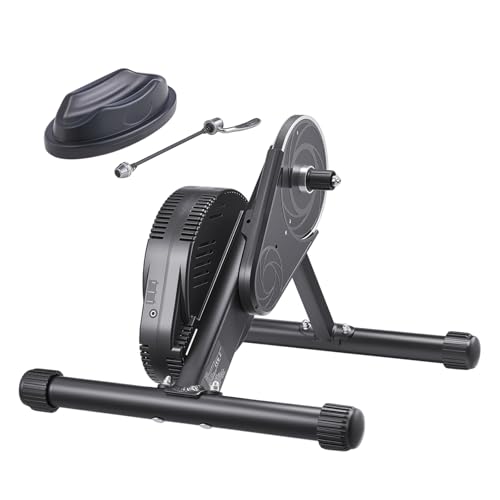
- Fits 26 to 29 inch and 700c wheels
- Front wheel riser block included
Cons
- Cassette not included
- Heavy at 36.38 lb
- Who should skip it: riders without a compatible cassette

Pros
- Zwift certified
- ANT+ FE-C and Bluetooth
- Wheel-on setup
- Electromagnetic resistance
- Steel quick-release skewer included
Cons
- Power accuracy rated at ±5%
- Noise rated at 69 dB at 20 mph
Side-by-Side Comparison
| Trainer | Power or resistance | Grade or levels | Connectivity | Bike setup | Noise information |
|---|---|---|---|---|---|
| COOSPO T10 Belt-Driven Direct Drive Indoor Bike | Up to 2200W; ±2% accuracy | 15%; ERG mode | Bluetooth FTMS; ANT+ FE-C | Direct drive; cassette details not listed | Not listed |
| Saris M2 Smart Indoor Bike Trainer | ±5% accuracy; electromagnetic resistance | Not listed | Bluetooth; ANT+ FE-C | Wheel-on; quick-release skewer included | 69 dB at 20 mph |
| ThinkRider X2Max Smart Bike | Up to 2000W; ± 2% error | 18% simulated slope | BLE; ANT+ | Axle and cassette details not listed | About 58 dB at 30 km/h |
| VEVOR Bike Trainer, 1-13 Level | 13 virtual resistance levels | 1-13 levels | Bluetooth 4.0; ANT+ | 26-29-inch and 700c wheels; 8-11-speed cassette | Not listed |
The largest buying differences are trainer design, fit requirements, and resistance control. The COOSPO and ThinkRider list power accuracy and simulated grades, while the Saris uses a wheel-on setup and the VEVOR publishes wheel and cassette compatibility.
Common Mistakes to Avoid
Smart trainer buyers can overlook bike fit because axle standards, cassette needs, and mounting hardware vary across designs. The VEVOR listing specifies wheel sizes and cassette speeds, but its cassette is not included; check whether your drivetrain matches before ordering.
Direct-drive buyers should confirm cassette requirements and axle compatibility instead of assuming a trainer fits every bicycle. The COOSPO and ThinkRider details do not list those standards, so check the current product information or ask the seller when fit is uncertain.
App compatibility does not guarantee that every device and feature will work together. Match the trainer’s wireless protocols with your phone, tablet, computer, and chosen cycling platform, then confirm which apps support resistance control and workout data.
Buyers can also treat grade simulation or a noise figure as a complete description of indoor riding. Software, setup, room acoustics, floor construction, and bicycle condition affect the experience, so compare published details with your actual training space.
Best Smart Trainer Under $300: Buying Guide
Trainer Design and Bike Fit
Trainer design determines how your bicycle attaches and which fit details you must verify before purchase. Direct-drive trainers connect through the drivetrain, while wheel-on trainers hold the rear wheel against a resistance unit.
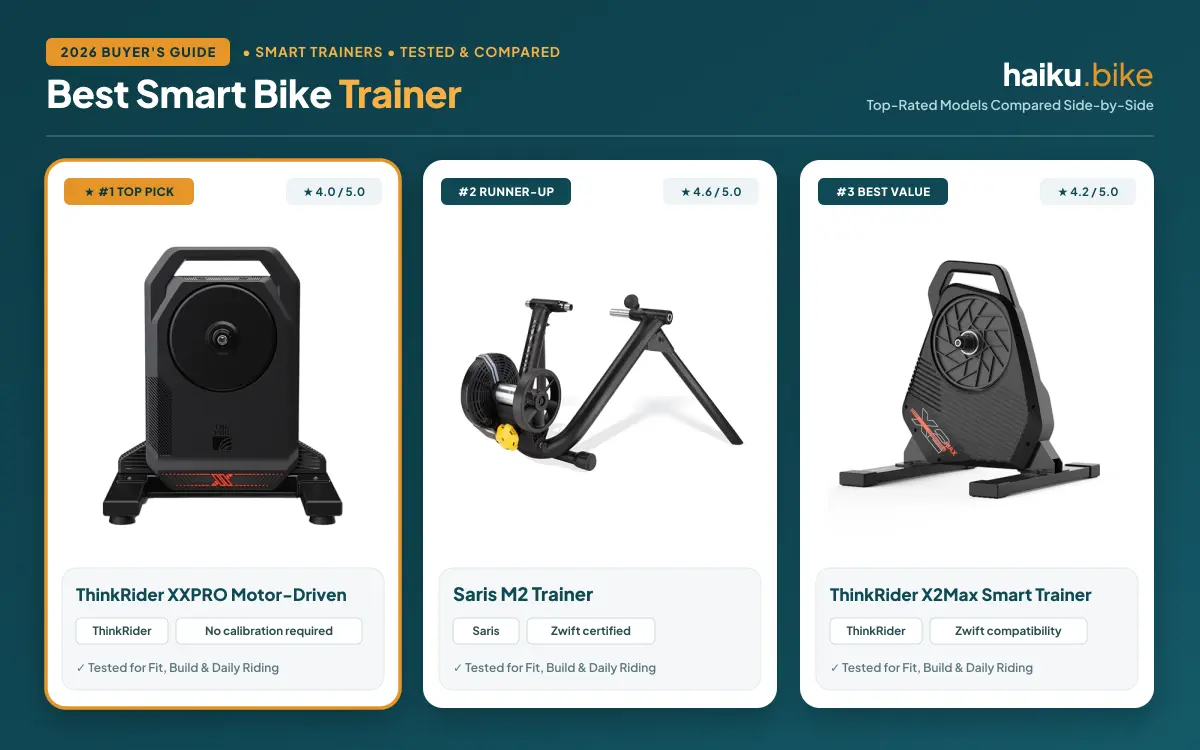
The Saris M2 is a wheel-on trainer, so its setup avoids removing the rear wheel and includes a steel quick-release skewer for common road and mountain bike frames. The COOSPO T10 and ThinkRider X2Max are direct-drive models, but their listed details do not specify axle standards or cassette requirements.
The VEVOR lists compatibility with 26- to 29-inch and 700c wheels and 8- to 11-speed cassettes; its cassette is not included. Check your rear axle, wheel, drivetrain, and any required adapters against current manufacturer information. Our bike trainer comparison covers other indoor trainer designs.
Power Accuracy and Training Data
Power accuracy describes how closely a trainer’s reported power is intended to match the rider’s output. It matters most to riders following power-based workouts, comparing sessions, or trying to keep indoor readings consistent with another power source.
COOSPO lists ±2% accuracy and power up to 2200W for the T10, while ThinkRider lists ± 2% error and power up to 2000W for the X2Max. Saris lists ±5% accuracy for the M2. The VEVOR lists resistance levels but does not state power accuracy.
Maximum power figures do not establish how a trainer will feel during every session or whether its data matches another device. Check the maker’s calibration instructions and decide whether stated accuracy supports your workouts. COOSPO says its supported app provides calibration and firmware updates.
Resistance Control and Climbing
Resistance control determines how a smart trainer changes effort during virtual routes and structured workouts. Grade simulation can make route changes affect resistance, while ERG mode adjusts resistance to help maintain a selected power target.
COOSPO lists 15% grade simulation and automatic ERG mode, and ThinkRider lists simulated slope up to 18%. VEVOR offers 1-13 virtual resistance levels adjusted by remote control. Saris lists electromagnetic resistance but does not state a grade figure.
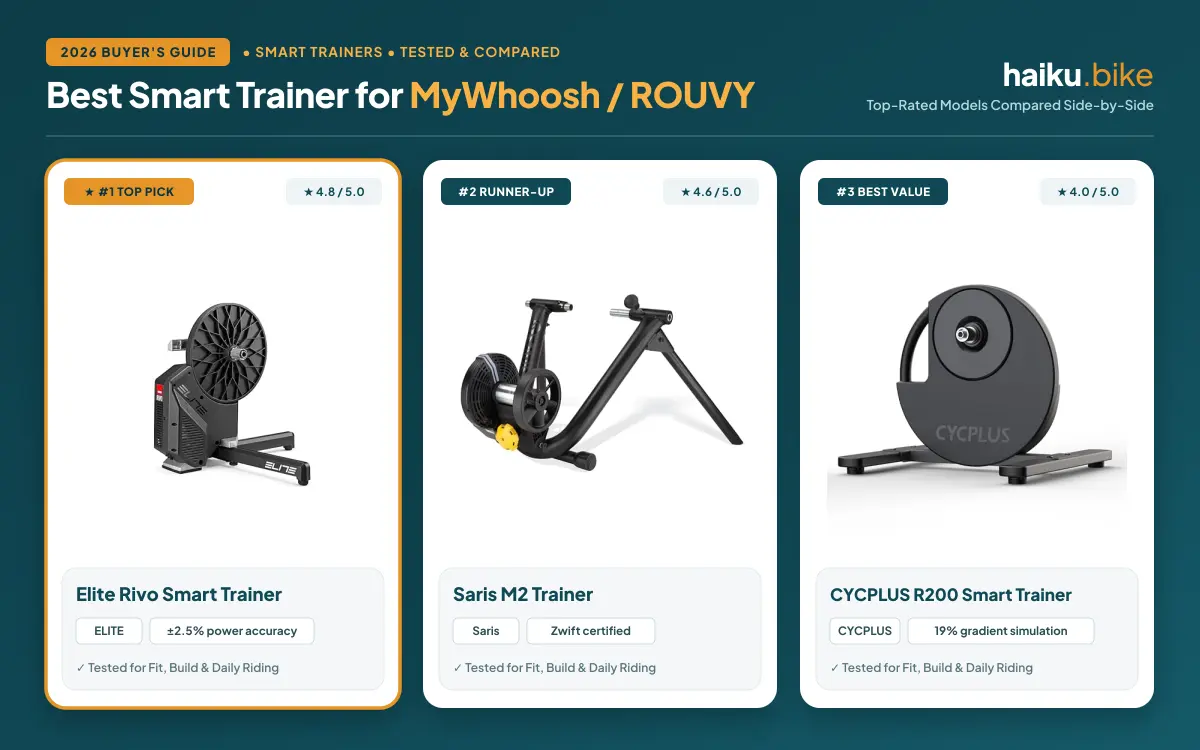
Check whether your preferred cycling app supports the control features you want, because protocol support alone does not confirm every function. Riders focused on interval targets may value ERG mode, while route riders should compare grade simulation and platform support. The MyWhoosh and ROUVY trainer guide offers related platform context.
Connectivity and App Support
Connectivity lets a trainer exchange workout data and receive resistance commands from compatible devices and software. Bluetooth and ANT+ are common connection options, but the exact protocol version and supported functions can differ by trainer.
COOSPO lists Bluetooth FTMS and ANT+ FE-C and names Zwift, Onelap, Rouvy, TrainerRoad, Wahoo SYSTM, and MyWhoosh as compatible platforms. Saris lists Bluetooth and ANT+ FE-C and says the M2 is Zwift certified. ThinkRider lists BLE and ANT+, while VEVOR lists Bluetooth 4.0 and ANT+.
Before buying, check that your device supports the trainer’s connection method and that your chosen app supports the functions you need. App availability, subscriptions, and features may vary by platform. Pairing plans also depend on where you will place your screen and whether your devices can remain charged during longer sessions.
Noise and Home Setup
Noise matters when indoor rides share walls, floors, or quiet hours with other people. Published figures can help compare models, but they describe only the conditions stated by the manufacturer and cannot predict every room.
Saris lists 69 dB at 20 mph, while ThinkRider lists about 58 dB at 30 km/h for the X2Max. COOSPO describes its belt-driven direct-drive system as helping reduce operating noise, but does not list a sound figure. VEVOR also provides no stated sound measurement.
Room acoustics, floor construction, drivetrain condition, and trainer placement can change the sound heard indoors. Place the trainer on a stable surface and follow its setup guidance. If sound is a priority, compare figures only when their stated conditions are clear and relevant to your expected riding.
Maintenance and Resistance Technology
Trainer design affects routine setup and the components involved in resistance delivery. A belt-driven direct-drive system can reduce mechanical wear and routine maintenance according to COOSPO, while a wheel-on trainer keeps the bicycle’s rear wheel in place.
The COOSPO T10 supports calibration, available device settings, and firmware updates through the COOSPO Tools app. That support may suit riders who want device management through an app, though it adds a setup step compared with using a trainer without those listed tools.
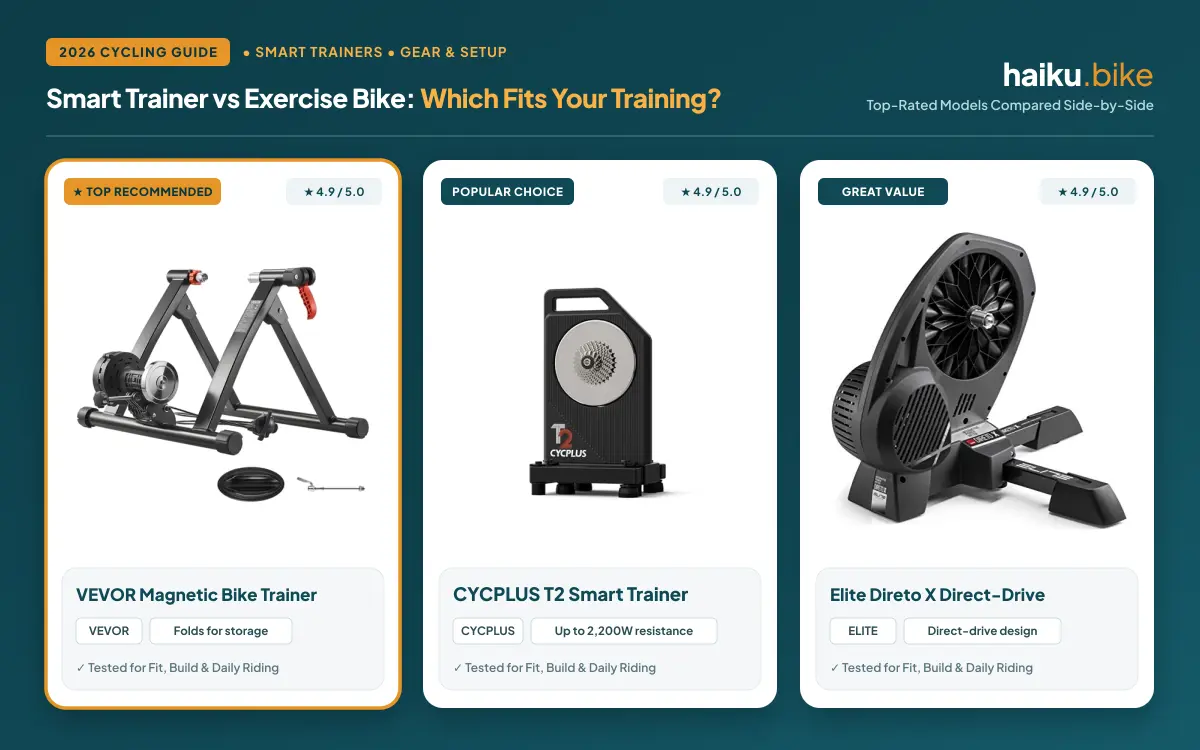
Check the manufacturer’s care instructions for your trainer and bicycle, and inspect the mounting setup before each ride. Do not assume a resistance design needs no upkeep or that a product description guarantees durability. Riders comparing a trainer with a stationary exercise bike can consult our smart trainer versus exercise bike guide.
How We Chose
We score products with the Haiku Ride Score: core performance 30%, build and weather resistance 20%, ease of use 20%, compatibility and fit 15%, and value 15%. For smart trainers, compatibility and fit mean published bike standards, cassette requirements, wireless protocols, and app support.
We research manufacturer specifications, compatibility information, and long-term owner feedback when available, then compare how each trainer serves different indoor riding needs. We research and draft our guides with software tools, including AI, then run automated checks on product fit, sourcing, and our editorial rules. Our editor spot-checks guides rather than reading each one before publication. Our how we review page explains the method.
Price and Value: What Each Budget Gets You
Budget
At the lower end of this guide, the Saris M2 provides wheel-on convenience, electromagnetic resistance, and Bluetooth and ANT+ FE-C connections. Its stated power accuracy is ±5%, and its wheel-on design differs from direct-drive options that remove the rear wheel. Riders who want a direct-drive setup, a stated climbing simulation, or tighter listed power accuracy should compare other models here.
Mid-Range
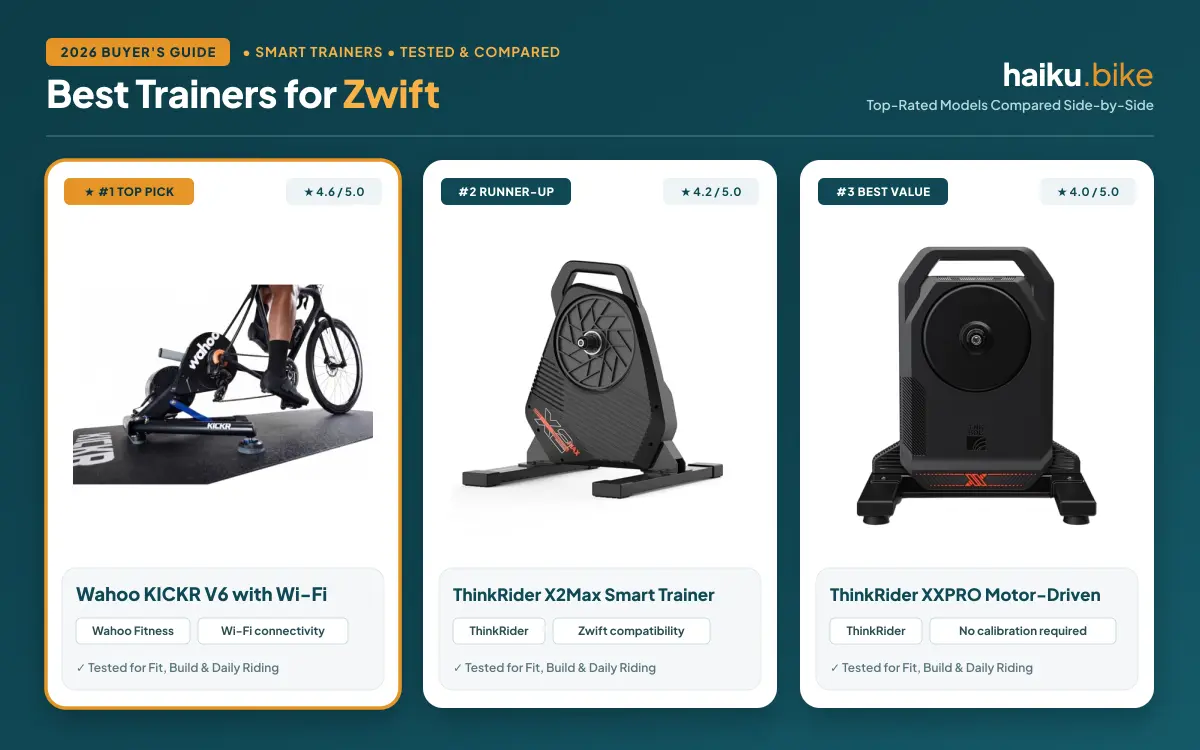
The ThinkRider X2Max and VEVOR trainer offer different paths for riders who want connected indoor sessions. ThinkRider lists ± 2% power measurement error and 18% simulated slope, while VEVOR publishes wheel-size and cassette compatibility plus remote-controlled resistance levels. The trade-off is that buyers must still confirm their own setup, and the VEVOR cassette is not included.
Premium
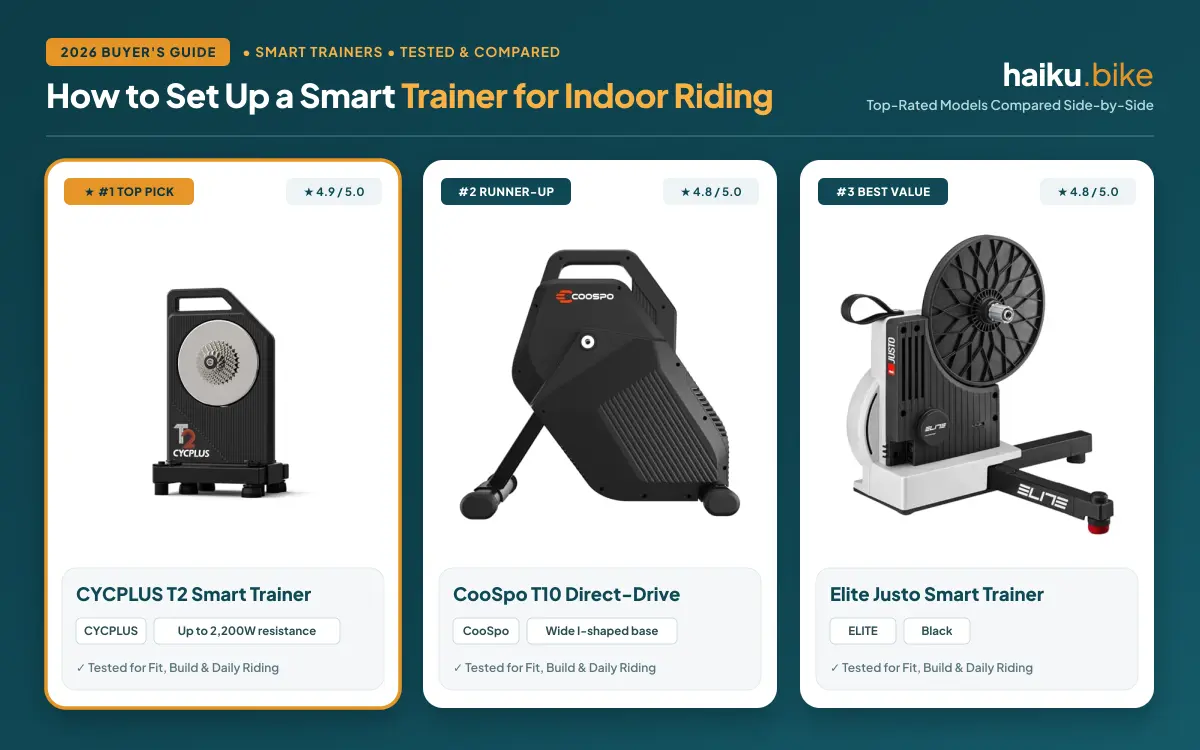
The COOSPO T10 sits at the upper end of this guide and combines direct-drive design, listed ±2% accuracy, ERG mode, and 15% grade simulation. Its Bluetooth FTMS and ANT+ FE-C support several named cycling platforms. Buyers should still verify cassette and axle fit, since those requirements are not listed here, and decide whether its extra control features suit their workouts.
Choosing Something Else
A basic indoor trainer may suit riders who want steady pedaling without app-controlled resistance, wireless workout data, or virtual routes. That simpler category gives up connected features but may fit riders who only need a place to ride indoors. Compare options in our basic bike trainer category if those smart features would go unused.
Final Thoughts
Riders seeking direct-drive performance, ERG control, and broad named app support should consider the COOSPO T10 Belt-Driven Direct Drive Indoor Bike. Its listed accuracy and grade simulation suit structured sessions, but buyers should confirm cassette and axle requirements before ordering.
The Saris M2 Smart Indoor Bike Trainer suits riders who prefer a wheel-on setup and do not want to remove the rear wheel. Its stated accuracy is less precise than the direct-drive figures in this guide, and its listed noise figure may matter in a shared home.
Route-focused riders may prefer the ThinkRider X2Max Smart Bike for its listed 18% simulated slope and ± 2% error. Riders who need stated wheel and cassette fit details may favor the VEVOR Bike Trainer, 1-13 Level, while accounting for its cassette not being included.
Skip smart trainers if you do not need connected data or changing resistance, or choose another model if its bike-fit details remain unclear. Compare setup needs with our smart trainer category and consider whether an exercise bike better suits your available space and routine.
FAQs
Will these smart trainers fit my bike?
Smart trainer fit depends on your bicycle’s axle, wheel, and drivetrain standards, plus the trainer’s mounting design. VEVOR lists 26- to 29-inch and 700c wheels and 8- to 11-speed cassettes, with the cassette sold separately. Check current manufacturer fit information for other models, and ask the seller if your setup needs an adapter.
What is the difference between direct-drive and wheel-on trainers?
Direct-drive trainers connect to the bicycle’s drivetrain after the rear wheel is removed, while wheel-on trainers use the bicycle’s rear wheel. The Saris M2 is wheel-on and includes a quick-release skewer for common road and mountain bike frames. Direct-drive buyers should confirm cassette and axle needs before ordering, because those requirements vary by model.
Which smart trainer has ERG mode?
The COOSPO T10 lists ERG mode, which automatically adjusts resistance to help maintain a selected power target as cadence changes. This feature can suit structured intervals where riders want the trainer to manage resistance. Check that your chosen app and device support the workout controls you plan to use before buying.
Can these smart trainers connect to Zwift?
The product details name Zwift compatibility for the COOSPO T10, Saris M2, ThinkRider X2Max, and VEVOR trainer. The Saris M2 is also described as Zwift certified. Device compatibility and supported features can depend on your setup, so confirm current app requirements and connection protocols before pairing a trainer.
Which smart trainer is quietest?
ThinkRider lists about 58 dB at 30 km/h for the X2Max, while Saris lists 69 dB at 20 mph for the M2. Those figures use different stated speeds, so they do not establish a direct comparison under identical conditions. Room acoustics, floor construction, bicycle condition, and setup also affect indoor sound.
Do smart trainers need calibration or maintenance?
Smart trainer care depends on the model and its manufacturer’s instructions. COOSPO says its Tools app supports calibration, device settings, and firmware updates for the T10. Follow the applicable setup and care guidance, keep the bicycle drivetrain maintained, and check that the bicycle is mounted correctly before riding.
Can I use a smart trainer without a subscription?
A smart trainer can connect to compatible devices and cycling software, but subscription needs depend on the platform and features you choose. COOSPO lists compatibility with several apps and notes that subscriptions and functions may vary. Check your preferred platform’s current terms, then read our trainer and exercise bike comparison if you are weighing alternatives.

Write Your Review
No reviews yet. Be the first to share your experience!