

Commuters riding through traffic need a helmet that stays secure and helps them stay visible, while road riders may prioritize fit, airflow, and eyewear compatibility. This guide compares 5 options from SMITH, ILM, Fox Racing and more for riders weighing those practical needs against a budget below $100.
We compared these helmets in November 2026, including conventional designs, helmets with integrated lights, and a mountain bike option. Follow the manufacturer’s instructions and local laws, and check the exact helmet listing and label for compliance with CPSC 16 CFR Part 1203; see our guide to MIPS and non-MIPS helmets for more on rotational-impact systems.
Safety note: Bicycle helmets sold for use in the United States must meet CPSC 16 CFR Part 1203. Check the product listing and helmet label for certification, and follow the manufacturer’s fit, use, care, and replacement instructions.
At a Glance: Which One Fits You
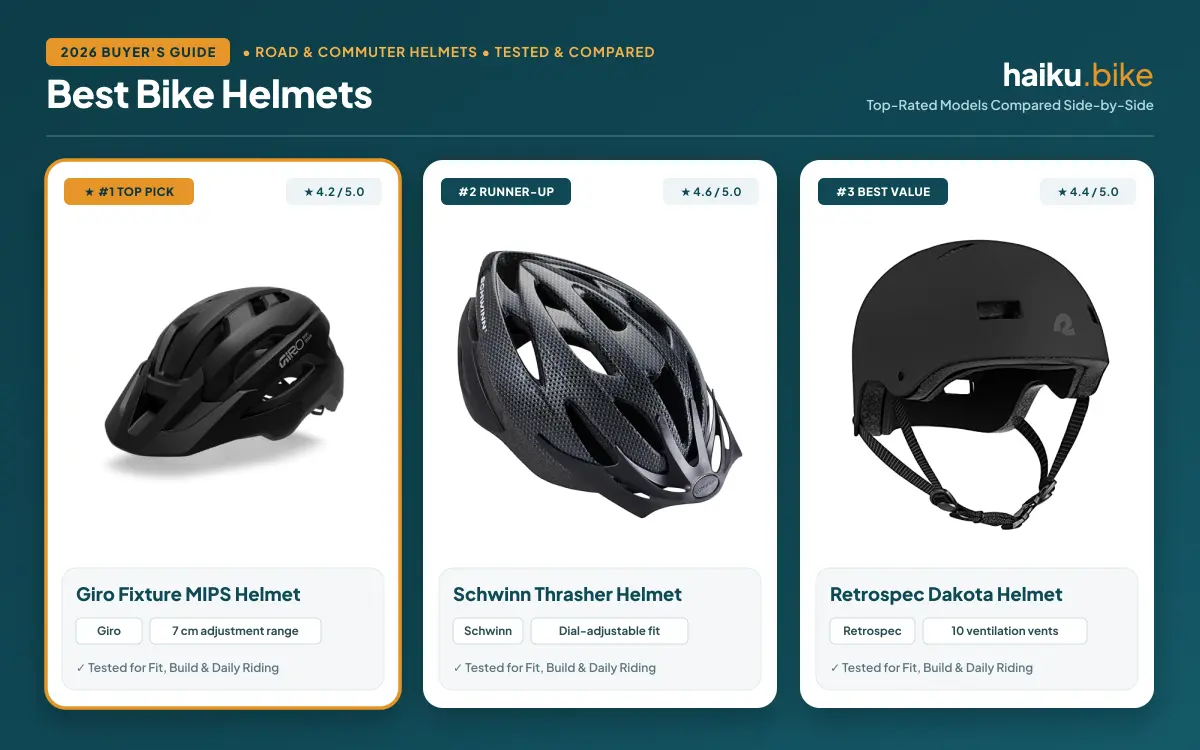
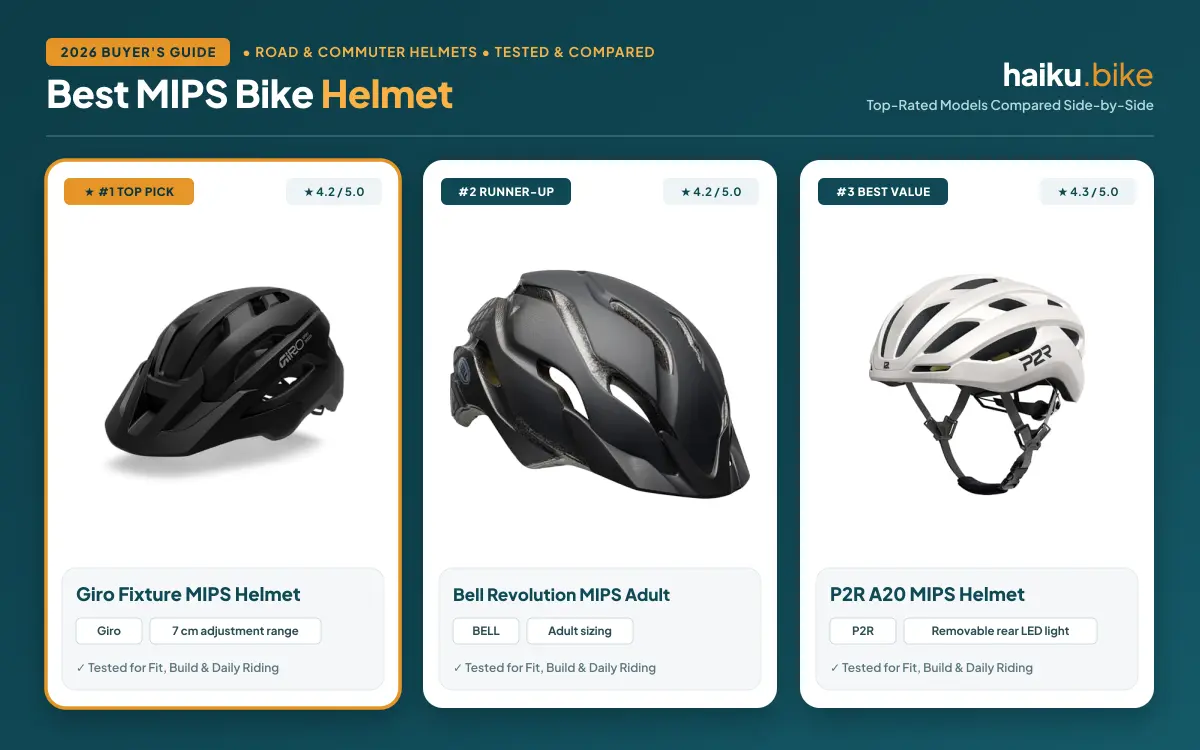
- Best overall: Giro Fixture MIPS Bike Helmet – Matte Black/Grey combines an integrated MIPS system, one-handed fit adjustment, and reflective details.
- Best value: ILM Adult Bike Helmet with LED Front Back Light pairs rechargeable front and rear lights with an adjustable fit system and removable tinted lens.
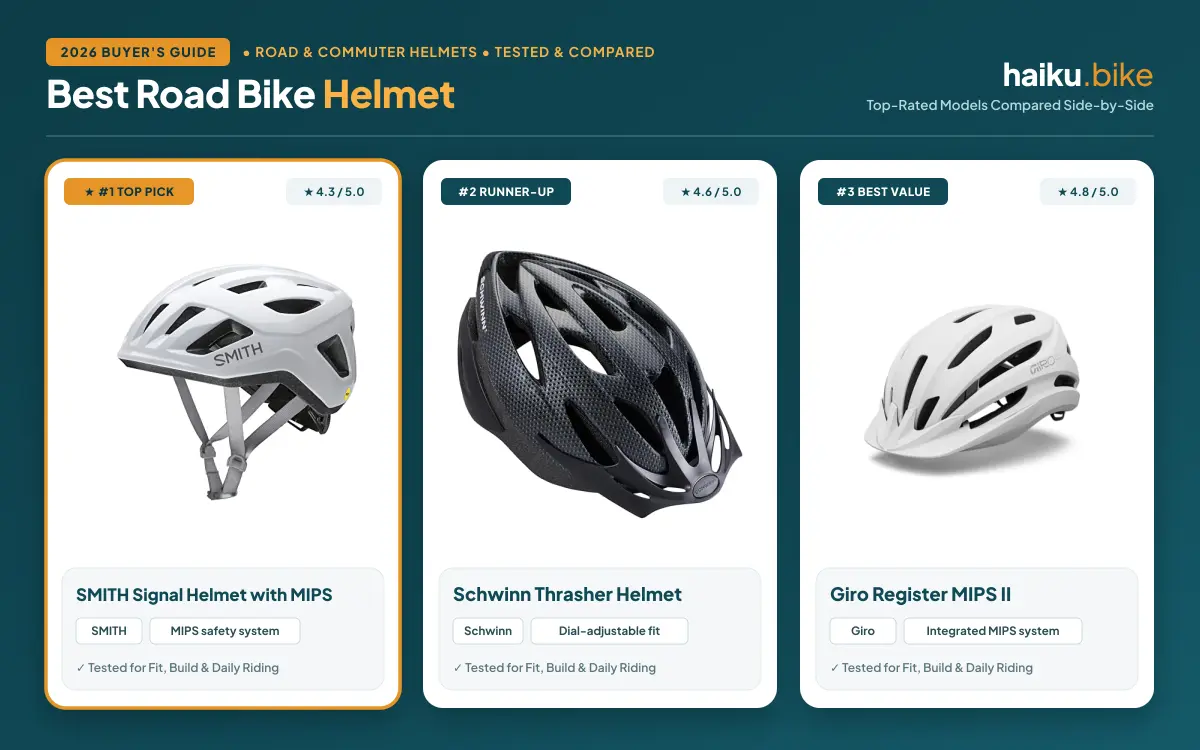
- Best for eyewear: SMITH Signal Cycling Helmet, White, Large offers AirEvac integration with Smith eyewear, 21 fixed vents, MIPS, and VaporFit adjustment.
- Best for e-bike visibility: LUMDEER E-Bike Smart Helmet NTA 8776 Certified LED adds front and rear lights, turn signals, an automatic brake light, and a removable photochromic visor.

Pros
- Integrated MIPS slip plane
- One-handed fit adjustment
- 7 cm adjustment range
- Reflective details
- Ponytail-compatible fit system
Cons
- Fit range limited to 54 to 61 cm
- Safety certification not specified

Pros
- MIPS safety system
- Zonal Koroyd coverage
- 21 fixed vents
- 270-degree dial fit adjustment
- AirEvac eyewear integration
Cons
- Fixed, non-adjustable vents
- Listed in White, Large

Pros
- Front and rear turn signals
- Automatic brake light
- Photochromic magnetic visor
- 12-hour stated light runtime
- 0.86 lb listed weight
Cons
- Only size L listed
- No charging-port type stated
- No water-resistance rating stated

Pros
- Front and rear lights built in
- Three lighting modes
- Ten ventilation openings
- Detachable tinted lens
- Removable, washable lining
Cons
- Large/Extra Large size only
- Light runtime not stated
- Who should skip it: riders needing stated light runtime

Pros
- Mips-equipped protection system
- Adjustable 360° fit system
- One-hand-adjustable visor
- Removable, washable liner
- Sunglass-specific storage
Cons
- No safety certification listed
- Large size only in published product data
- Skip it if you require documented certification
Side-by-Side Comparison
| Helmet | Protection and certifications listed | Fit and sizing | Visibility or eyewear features | Ventilation |
|---|---|---|---|---|
| Giro Fixture MIPS Bike Helmet – Matte Black/Grey | Integrated MIPS; certification not listed in product details | Universal adult, 54-61 cm; Roc Loc Sport, 7 cm adjustment | Reflective details | Airflow-focused construction |
| SMITH Signal Cycling Helmet, White, Large | MIPS; U.S. CPSC, CE EN 1078, AS/NZS 2063 listed | Large; VaporFit, 270-degree adjustment | AirEvac eyewear integration | 21 fixed vents; zonal Koroyd |
| LUMDEER E-Bike Smart Helmet NTA 8776 Certified LED | NTA-8776, U.S. CPSC, EU EN 1078 listed | Not listed | Front and rear LEDs, turn signals, automatic brake light, photochromic visor | 10 vents |
| ILM Adult Bike Helmet with LED Front Back Light | ASTM, CPSC, CE, EN 1078 listed | Large/X-Large; adjustable system | Rechargeable front and rear lights; removable tinted lens | 10 vents |
| Fox Racing Unisex Speedframe Mountain Bike Helmet | MIPS | Large; 360-degree fit system | Adjustable visor; sunglass and goggle storage | Channeled, in-molded EPS venting |
Fit information and lighting create the clearest differences in this comparison. Giro and SMITH list adjustment systems, while ILM and LUMDEER add rechargeable lights; confirm fit and the exact helmet’s certification before considering convenience features.
Common Mistakes to Avoid
Choosing features before checking fit can leave a helmet uncomfortable or unstable. Measure your head and compare the result with the maker’s size guidance, then adjust the retention system and straps as directed; the Giro lists a 54-61 cm universal adult range, while the SMITH and Fox products here are Large.
Assuming that every helmet has the same certification can lead to a poor match for your needs. The product information lists U.S. CPSC compliance for SMITH, LUMDEER, and ILM, but does not list it for Giro or Fox; confirm the exact helmet’s label and listing before purchase.
Relying on helmet reflectivity or integrated lighting as your only visibility measure overlooks other parts of a safe setup. Giro’s reflective details need an external light source, and rechargeable helmet lights need charging; consider dedicated bike lights and route conditions as well.
Overlooking intended use can lead to a helmet that does not suit your riding. Fox describes the Speedframe as a mountain bike helmet, while LUMDEER describes its model for e-bike and outdoor riding; check the maker’s intended use and applicable local requirements.
Best Bike Helmet Under $100 Buying Guide
Fit, Sizing, and Adjustment
Fit matters most because a helmet must sit securely in its intended position to suit its design. Measure around the widest part of your head and compare that measurement with the manufacturer’s size range, rather than assuming a universal or adjustable label will fit.
The Giro lists universal adult sizing of 54-61 cm and a Roc Loc Sport system with a 7 cm adjustment range. SMITH lists a Large Signal with 270-degree VaporFit adjustment, while the ILM listing specifies Large/X-Large and an adjustable system.
After adjustment, the helmet should sit level and should not rock excessively when you move your head. Follow the maker’s instructions for the straps and retention system, and choose another size or design if you cannot secure it comfortably.
CPSC Certification and Protection Features
CPSC certification is a core buying criterion for bicycle helmets sold for use in the United States. Check the exact product listing and helmet label for compliance with CPSC 16 CFR Part 1203 instead of relying on a general description of safety features.
SMITH, LUMDEER, and ILM list U.S. CPSC compliance in their product details. Giro describes integrated MIPS, and Fox lists MIPS, but their listing information does not state CPSC compliance; verify the specific model before buying.
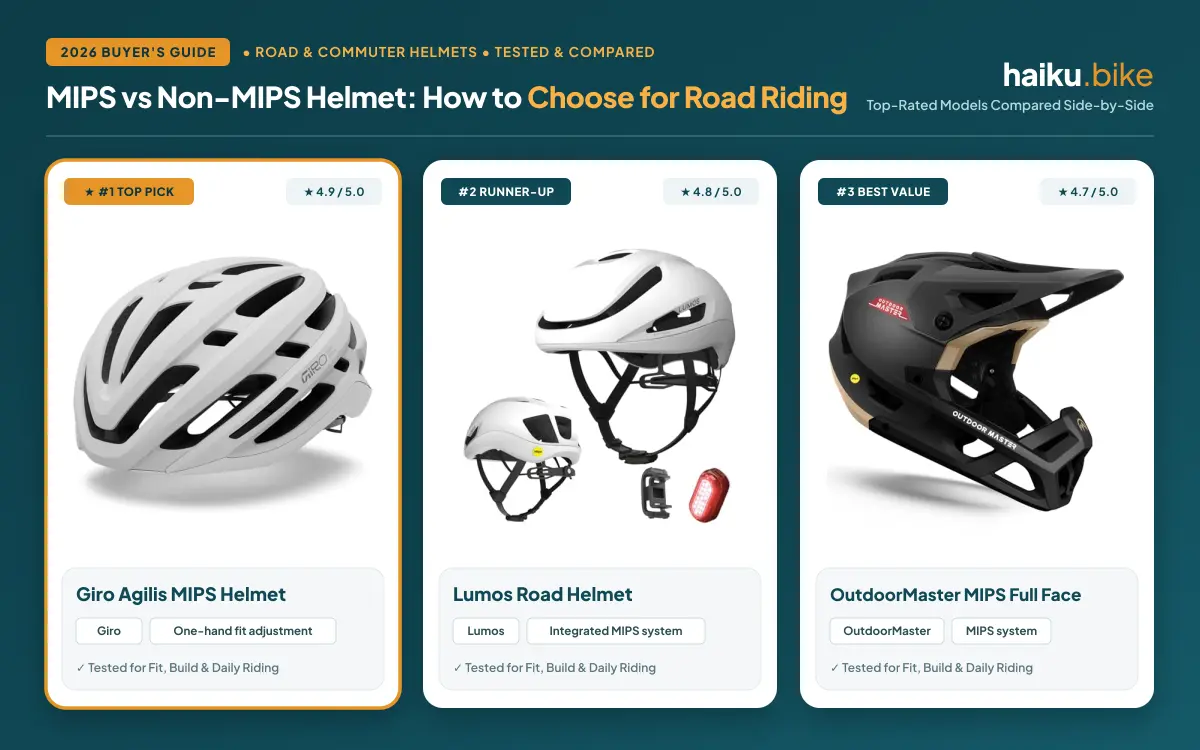
MIPS is a rotational-impact system, not a substitute for fit or a guarantee against injury. For a closer explanation of this feature, read our MIPS versus non-MIPS helmet guide, then weigh it only after confirming the helmet’s fit and certification.
Riding Style and Helmet Category
Riding style helps determine whether a road, commuter, e-bike, or mountain bike helmet belongs on your shortlist. The Fox Speedframe is described as a mountain bike helmet, while LUMDEER describes its smart helmet for e-bike and outdoor riding.
ILM describes its helmet for urban commuting, cycling, and skateboarding, and SMITH describes the Signal for road riding and commuting. These descriptions do not replace the maker’s instructions; check intended use and relevant local rules for your bicycle and route.
Riders comparing electronic features can also browse our smart helmets category. Choose a conventional design if you prefer fewer electronic components, or consider a mountain bike category helmet when its stated use better matches your riding.
Ventilation and Eyewear Compatibility
Ventilation and eyewear compatibility shape comfort on regular rides, especially when you wear glasses. SMITH lists 21 fixed vents and an AirEvac system designed to integrate with Smith eyewear and help reduce fogging.
LUMDEER and ILM each list 10 vents, while Fox describes channeled, in-molded EPS venting. Those details do not establish a direct comfort ranking, so compare the helmet’s design with your climate, pace, and eyewear.
Try your glasses with the helmet adjusted, since eyewear should not interfere with secure positioning. Check how the arms sit beneath the straps and whether a visor or eyewear storage feature suits your routine.
Visibility, Lights, and Charging
Visibility features differ in how they work and what they require from the rider. Giro lists reflective details that return light toward its source, while ILM lists USB-rechargeable front and rear lights with three lighting modes.
LUMDEER adds front and rear LEDs, handlebar-remote turn signals, and an automatic brake light, with a maker-listed 12-hour lighting runtime. Its removable magnetic photochromic visor adjusts tint according to ultraviolet intensity, as described by the maker.
Integrated lights add charging and operating steps, and reflective details need an external light source. Check the maker’s charging directions and light controls before riding, and do not treat helmet features as a replacement for appropriate bike lights.
Maintenance and Replacement
Maintenance starts with the helmet maker’s directions for cleaning, storage, and inspection. Check the shell, foam, straps, and fit system for visible damage, and avoid cleaners or solvents unless the manufacturer says they are suitable.
For ILM and LUMDEER, include the lights and controls in routine checks and follow the charging instructions. Fox lists a removable, washable moisture-wicking liner, which may suit riders who want a liner they can remove for cleaning.
Replace a helmet after an impact when the manufacturer directs, even if damage is not obvious. Follow the maker’s replacement guidance and contact the manufacturer if you cannot determine whether a helmet remains suitable.
How We Chose
We compare helmets with the Haiku Ride Score: core performance 30%, build and weather resistance 20%, ease of use 20%, compatibility and fit 15%, and value 15%. For helmets, compatibility and fit include the published sizing, adjustment features, intended riding category, and practical visibility details.
Our evaluation draws on manufacturer specifications, compatibility information, and long-term owner feedback when available. We research and draft our guides with software tools, including AI, then run automated checks on product fit, sourcing, and our editorial rules. Our editor spot-checks guides rather than reading each one before publication. Our how we review page explains our approach.
Price and Value: What Each Budget Gets You
Budget
At the lower end of this guide’s budget, ILM combines an adjustable fit system, 10 vents, a removable tinted lens, and rechargeable front and rear lights. That feature set may suit commuters seeking visibility options in one helmet. Riders give up the more specific fit range published for Giro and the eyewear integration listed by SMITH, so check sizing and comfort priorities carefully.
Mid-Range
In the middle of this budget, Giro adds integrated MIPS, a one-handed Roc Loc Sport adjustment system, and reflective details, while LUMDEER adds e-bike-oriented certification claims, signals, and an automatic brake light. These options serve different needs rather than forming a simple upgrade ladder. Giro requires separate lighting, while LUMDEER’s electronics bring charging and control steps.
Premium
At the upper end, SMITH emphasizes MIPS, zonal Koroyd, eyewear integration, and VaporFit adjustment; Fox offers MIPS, a 360-degree fit system, and an adjustable visor for mountain bike riding. Riders give up integrated lighting, and the SMITH option is listed in Large. Confirm that sizing and category suit your needs before choosing either design.
Choosing Something Else
A conventional helmet paired with dedicated bike lights and reflective clothing suits riders who want to position or replace visibility equipment separately. This setup also avoids charging helmet electronics, though it does not provide built-in turn signals or an automatic brake light. Choose a helmet that fits securely and meets the relevant standard, then follow each product’s instructions.
Final Thoughts
The Giro Fixture MIPS Bike Helmet – Matte Black/Grey suits riders who want integrated MIPS, reflective details, and a clearly stated adult size range. Its Roc Loc Sport system offers one-handed adjustment, but the universal fit still needs to match your head comfortably. Verify the exact helmet’s certification before buying.
Commuters who prioritize built-in lights can compare the ILM Adult Bike Helmet with LED Front Back Light and the LUMDEER E-Bike Smart Helmet NTA 8776 Certified LED. ILM has front and rear lighting, while LUMDEER adds turn signals and an automatic brake light; both bring charging and electronic controls to helmet care.
Eyewear users may prefer the SMITH Signal Cycling Helmet, White, Large for AirEvac integration, ventilation, and VaporFit adjustment. Mountain bike riders can consider the Fox Racing Unisex Speedframe Mountain Bike Helmet, which lists MIPS, a 360-degree fit system, and an adjustable visor; both are Large, so confirm fit.
Skip these options if none fits securely, if the stated riding category does not suit your use, or if the exact model’s certification cannot be confirmed. Riders focused on electronic signaling can compare our bike helmets with turn signals guide and browse the road and commuter helmet category for related guidance.
FAQs
Do bicycle helmets sold in the United States need CPSC compliance?
Bicycle helmets sold for use in the United States must meet CPSC 16 CFR Part 1203. Check the label on the exact helmet and its current product listing instead of assuming every model has the same certification. SMITH, LUMDEER, and ILM list U.S. CPSC compliance in their product details.
How should a bike helmet fit?
A bike helmet should sit level and feel secure without painful pressure or excessive movement. Measure your head and compare it with the manufacturer’s size guidance, then adjust the retention system and straps as instructed. Giro lists universal adult sizing of 54-61 cm, while SMITH and Fox list Large versions in this guide.
Do all helmets in this guide have MIPS?
Not all helmets in this guide list MIPS. Giro describes an integrated MIPS system, and SMITH and Fox list MIPS; the ILM and LUMDEER product details do not list it. Check the exact model’s features if rotational-impact technology matters, and remember that MIPS does not replace secure fit or CPSC compliance.
Which bike helmets have built-in lights?
The ILM and LUMDEER helmets list integrated front and rear lights. LUMDEER also lists turn signals operated by a wireless handlebar remote and an automatic brake light, while ILM lists three lighting modes. Both designs require attention to charging and operating instructions, and helmet lights do not replace suitable bike lights for every route.
Can I wear glasses with a bike helmet?
Glasses compatibility depends on your eyewear shape, helmet fit, and strap position. SMITH lists AirEvac integration designed to work with Smith eyewear and help reduce fogging, but individual comfort can differ. Adjust the helmet first, then confirm your glasses sit comfortably without interfering with secure positioning or the straps.
Are smart bike helmets waterproof?
The LUMDEER product details describe its helmet as water-resistant for daily use, but they do not establish a waterproof rating. The ILM, SMITH, Giro, and Fox details here do not state a weather-resistance rating. Check the current manufacturer instructions before riding in wet conditions, especially when a helmet includes rechargeable electronics.
How should I maintain a bike helmet with lights?
A bike helmet with lights needs care according to the helmet maker’s cleaning, storage, and charging instructions. Check the shell, foam, straps, and fit system for visible damage, and confirm that lights and controls work before riding. Avoid cleaners or solvents unless the manufacturer says they are suitable for the helmet materials.
When should I replace a bicycle helmet?
Replace a bicycle helmet after an impact when the manufacturer directs, even if visible damage is not obvious. Inspect the shell, foam, straps, and fit system regularly, and follow the maker’s replacement guidance. If you cannot determine whether the helmet remains suitable, contact the manufacturer rather than relying on appearance alone.
Write Your Review
No reviews yet. Be the first to share your experience!