Riders who want to track pedal rhythm need a cadence sensor that can send readings to a bike computer, phone, smartwatch, or indoor cycling app. The best cadence sensor under $50 depends on which devices you use and whether you want cadence alone, speed too, or heart-rate data alongside cadence.
In November 2026, this guide compares 5 options from CATEYE, CooSpo, iGPSPORT and more across connectivity, mounting, and maker-published features. Follow each manufacturer’s instructions and local laws when installing and using cycling equipment. For display options, see our bike computer guide.
At a Glance: Which One Fits You
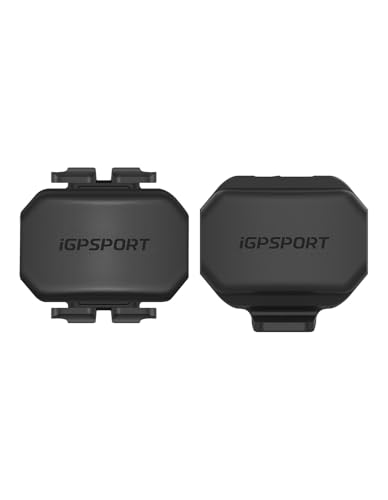
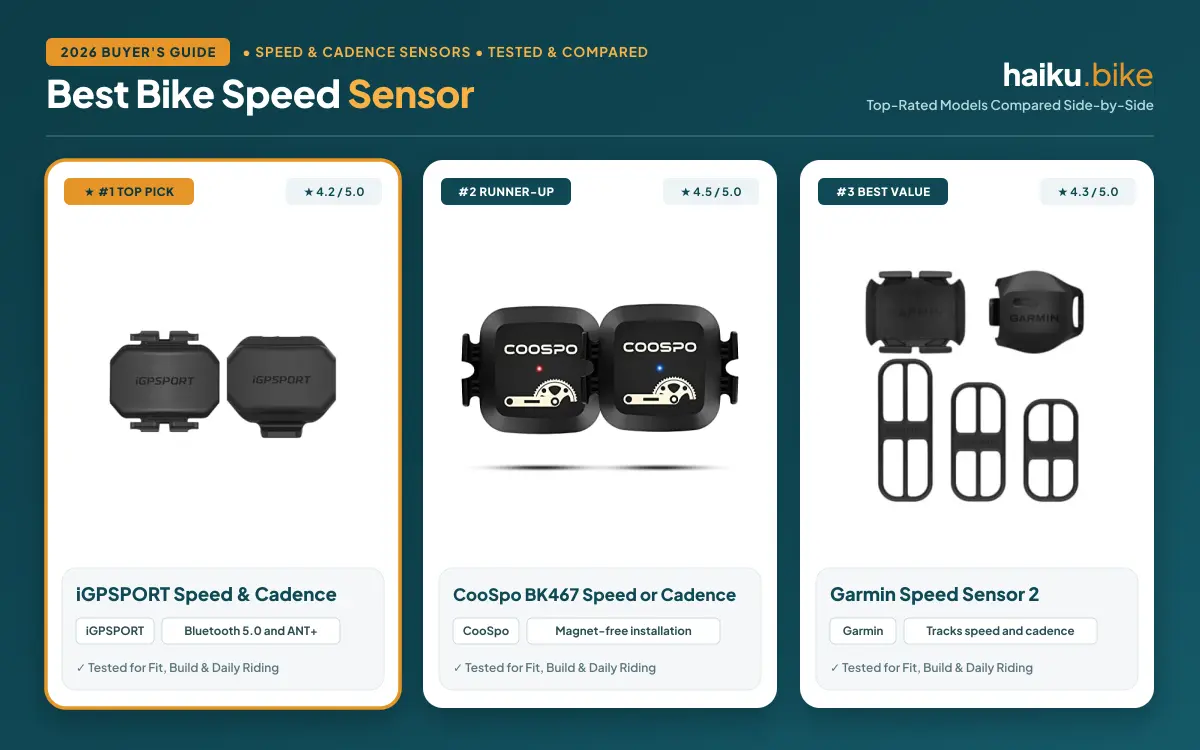
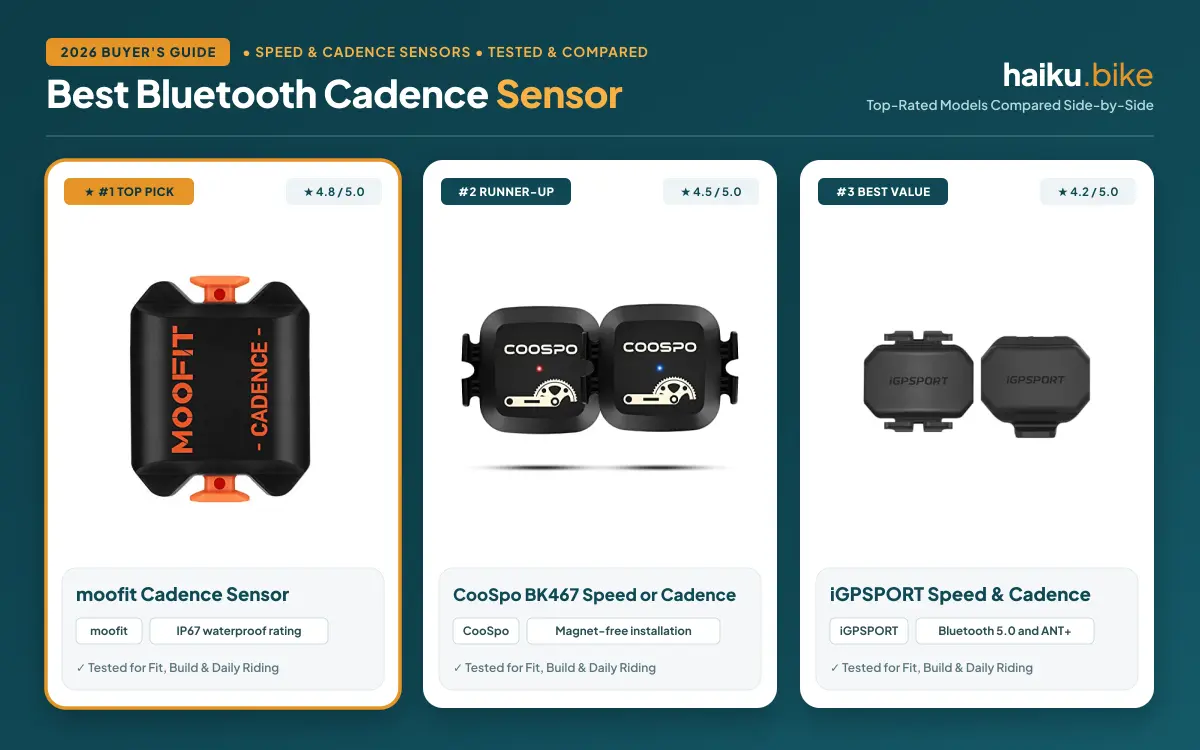
- Best overall: iGPSPORT Speed & Cadence Sensor Set includes separate speed and cadence sensors, Bluetooth 5.0, ANT+, and a maker-listed IPX7 rating.
- Best value: COOSPO BK467 Bike Speed & Cadence Sensor switches between speed and cadence modes and supports Bluetooth and ANT+.
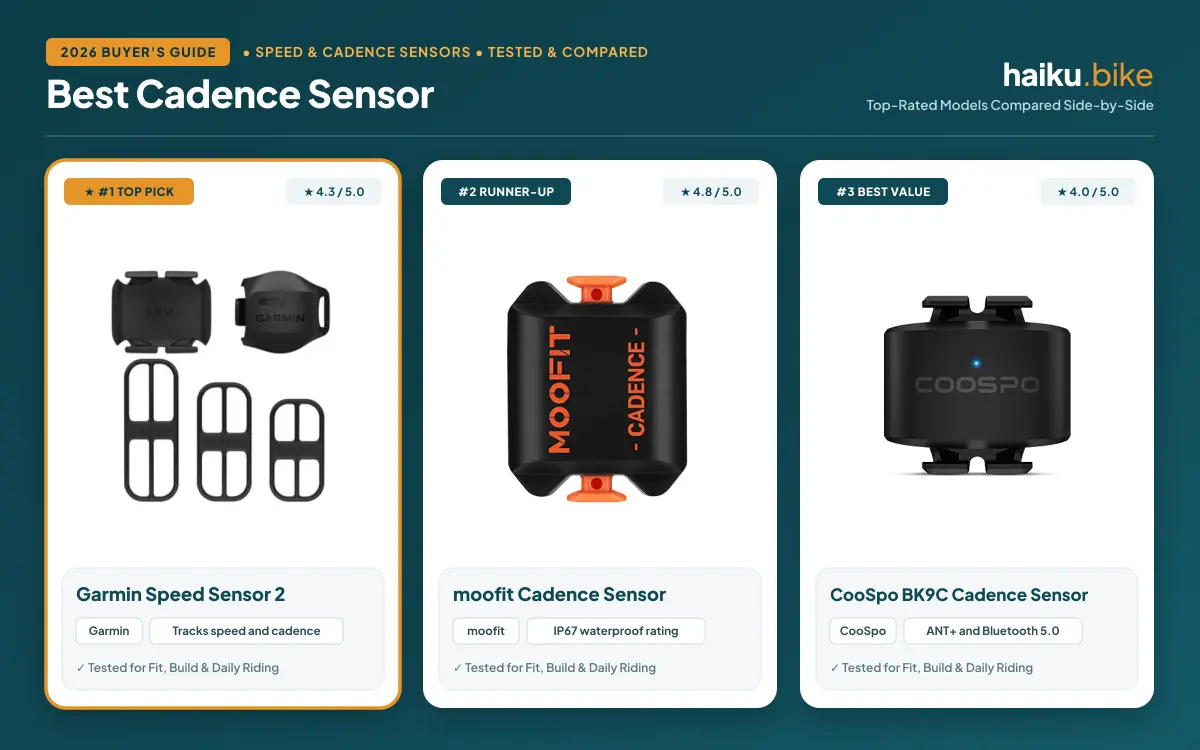
- Best for Bluetooth-only setups: COROS Bike Cadence Sensor, Track RPMs pairs by Bluetooth and lists a replaceable CR2032 battery rated for up to 12 months at one hour of daily use.
- Best for combined workout data: Bundle of Heart Rate Monitor Chest & Cadence is described as tracking heart rate and cadence simultaneously.

Pros
- Bluetooth and ANT+ connectivity
- Works with named cycling apps
- Magnet-free installation
- Replaceable CR2032 battery
- Up to 300 hours of battery life
Cons
- Tracks only speed or cadence at once
- Two sensors needed to track both
- Bluetooth connects to one device at a time
Pros
- Bluetooth 5.0 and ANT+
- Speed and cadence tracking
- Maker-rated 300-hour battery life
- IPX7 water resistance
- Slim sensor design
Cons
- Specific app support not listed
- Installation details not provided

Pros
- Bluetooth pairing with most bike computers
- Works with most spin bikes
- Up to 12-month CR2032 battery life
- IP67 water rating
- 11 g weight
Cons
- No ANT+ compatibility
- CR2032 battery requires replacement
- Who should skip it: riders using ANT+ devices

Pros
- Magnetless cadence tracking
- ANT+ and Bluetooth connectivity
- Works with listed cycling apps
- Rubber strap included
- Optional zip-tie mounting
Cons
- Mounts to crank arm, not wheel
- Battery-life details not provided
- Who should skip it: Riders seeking a wheel-mounted speed sensor

Pros
- Heart rate and cadence tracking
- Chest heart rate monitor included
- Cadence sensor included
- Cycling app and device integration
Cons
- Connectivity protocols not specified
- Battery details not provided
- Skip if you need confirmed app compatibility
Side-by-Side Comparison
| Product | Connectivity | Tracking | Mounting | Battery or weather details |
|---|---|---|---|---|
| COROS Bike Cadence Sensor, Track RPMs | Bluetooth; not compatible with ANT+ | Cadence | Crank arm | CR2032, up to 12 months at one hour daily; IP67 |
| Bundle of Heart Rate Monitor Chest & Cadence | Smart connectivity; protocol not listed | Heart rate and cadence | Not listed | Not listed |
| COOSPO BK467 Bike Speed & Cadence Sensor | Bluetooth and ANT+ | Speed or cadence per sensor | Crank arm for cadence; wheel hub for speed | Not listed |
| iGPSPORT Speed & Cadence Sensor Set | Bluetooth 5.0 and ANT+ | Speed and cadence sensors in set | Parts included; ultra-thin design | 300-hour battery life; IPX7 |
| CATEYE Magnetless Speed/Cadence Sensors | ANT+ and Bluetooth | Cadence sensor; speed details not listed | Crank arm, rubber strap and optional zip ties | Not listed |
The most important difference is whether you need both speed and cadence or only pedal-rate data. The iGPSPORT set includes separate sensors, while one COOSPO BK467 measures one mode at a time; COROS is cadence-focused and cannot connect to ANT+ devices.
Common Mistakes to Avoid
Buying a single COOSPO BK467 for simultaneous speed and cadence is a common mismatch. Each unit records one mode at a time, so riders who want both readings need two sensors; check the selected package configuration before ordering.
Choosing a sensor by brand name alone can also lead to pairing problems. COROS works through Bluetooth but is not compatible with ANT+ devices, while the COOSPO BK467, iGPSPORT set, and CATEYE sensor list both connection types.
Mounting a sensor in the wrong place can prevent it from reading the intended movement. CooSpo specifies the crank arm for cadence and the wheel hub for speed, while COROS and CATEYE describe crank-arm cadence mounting.
Assuming every app supports every sensor can waste time during setup. Confirm that your receiving device accepts the sensor’s protocol and cadence data, and check the selected product’s mounting instructions before attaching it.
Best Cadence Sensor Under $50: Buying Guide
Choose the Data You Want to Record
Tracking needs determine whether you should choose a cadence-only sensor, a speed-and-cadence setup, or a bundle with heart-rate data. Cadence measures pedaling rate, while speed sensors record wheel movement; these readings answer different training questions.
The COROS Bike Cadence Sensor, Track RPMs focuses on cadence, and the Magene bundle is described as recording heart rate and cadence together. The iGPSPORT Speed & Cadence Sensor Set includes separate sensors for speed and cadence.
The COOSPO BK467 offers either speed or cadence in each sensor, not both at once. Decide which readings your computer or app needs, then confirm that the package contains the right number and type of units.
Check Bluetooth and ANT+ Support
Connectivity determines whether a sensor can send data to your bike computer, phone, smartwatch, or training app. Check both the sensor’s supported protocols and the receiver’s sensor support, because a shared brand name does not guarantee pairing.
The COROS sensor uses Bluetooth and is not compatible with ANT+ devices. The COOSPO BK467 and CATEYE sensor support Bluetooth and ANT+, while iGPSPORT specifies Bluetooth 5.0 and ANT+.
CooSpo says Bluetooth connects the BK467 to one app or device at a time, while ANT+ can transmit to multiple compatible devices simultaneously. If your setup uses several receivers, confirm which connection method each device accepts.
Confirm App and Indoor Equipment Compatibility
App support matters when you want cadence data on a phone or indoor cycling platform. CooSpo lists Zwift, Rouvy, Peloton, Ride with GPS, Cyclemeter, OpenRider, and CooSporide as compatible apps for the BK467.
COROS describes its sensor as compatible with most bike computers, smartwatches, smartphones, and training apps through Bluetooth. iGPSPORT says its set connects with most bike computers and spin bikes, but your specific equipment still needs to support the connection.
CATEYE says the CDC-30 pairs with its Cycling app and lists compatibility with Rouvy, Zwift, Peloton, and Wahoo in its product title. Review the app’s sensor pairing instructions before buying, especially if you plan to use indoor equipment.
Match Mounting Position to Sensor Mode
Mounting position determines which movement a sensor records, so follow the maker’s instructions for the selected measurement. CooSpo specifies crank-arm mounting for cadence and wheel-hub mounting for speed, with magnet-free installation.
COROS describes a compact crank-arm mount, and CATEYE says its cadence sensor attaches to the crank arm with an included rubber strap and optional zip ties. Check clearance around the crank and frame before securing either sensor.
The iGPSPORT set includes parts for setup and uses an ultra-thin design, according to its maker. Confirm that the parts suit your bike and that the mounted sensor stays clear of moving components.
Compare Battery and Weather Information
Published battery and weather details help riders plan maintenance and judge suitability for wet conditions. COROS lists a CR2032 battery rated for up to 12 months when used one hour each day, plus an IP67 water rating.
iGPSPORT lists 300 hours of battery life and an IPX7 waterproof rating for its sensor set. The maker says the battery is replaceable, but riders should follow the product instructions when changing it and closing the sensor.
Battery life and weather ratings are not listed for every option here. CooSpo, Magene, and CATEYE do not provide those specifications in their stated features, so riders who need published figures should check the current product listing.
Weigh Convenience Against Compatibility
Convenience depends on how much setup your riding routine requires and which devices you already own. A sensor with the right protocol and a straightforward mount can reduce pairing friction, but extra features matter only when your equipment can use them.
The COROS sensor has a compact crank-arm design and stated Bluetooth compatibility, but it excludes ANT+ devices. CATEYE uses a rubber strap with optional zip ties, while the COOSPO BK467 avoids magnets and complicated alignment.
Riders comparing display equipment can also read our bike computer versus phone guide. Choose a sensor only after checking your preferred display, app, mounting location, and required data type.
How We Chose
We score each option with the Haiku Ride Score: core performance counts for 30%, build and weather resistance for 20%, ease of use for 20%, compatibility and fit for 15%, and value for 15%. For cadence sensors, compatibility and fit cover sensor protocols, app and device support, mounting, and published battery details where available.
We compare manufacturer specifications, compatibility information, and long-term owner feedback when available. We research and draft our guides with software tools, including AI, then run automated checks on product fit, sourcing, and our editorial rules. Our editor spot-checks guides rather than reading each one before publication. Read our how we review methodology.
Price and Value: What Each Budget Gets You
Budget
The lower end of this guide’s range includes options that focus on a core reading or flexible mode selection. The COOSPO BK467 can serve as a speed or cadence sensor, with Bluetooth and ANT+ support. Its trade-off is that one unit cannot record both measurements at once, and the maker does not list battery or weather details.
Mid-Range
Mid-range options add convenience through dual-protocol connectivity, bundled sensors, or broader stated app support. The CATEYE Magnetless Speed/Cadence Sensors use Bluetooth and ANT+ and mount with a strap, while the COROS sensor adds published battery and water-resistance details. Check device compatibility carefully, since COROS does not support ANT+ receivers.
Premium
At the top of this guide’s range, buyers can prioritize bundled functions and more detailed maker-published specifications rather than additional training metrics. The iGPSPORT set includes separate speed and cadence sensors, with stated battery life and an IPX7 rating. The Magene bundle adds heart-rate tracking, but its protocol and battery details are not listed.
Choosing Something Else
Riders who only want occasional ride summaries may prefer a phone app and a secure phone mount instead of adding a dedicated cadence sensor. That approach suits casual outings where exact pedal-rate data is not part of the goal. It will not provide sensor-based cadence readings, so structured indoor workouts may call for a compatible sensor.
Final Thoughts
Riders who want separate speed and cadence data in one package should consider the iGPSPORT Speed & Cadence Sensor Set. Its Bluetooth 5.0 and ANT+ support, stated battery life, and IPX7 rating make its specifications clear. The trade-off is that a set may be more than cadence-only riders need.
For a single sensor that can switch roles, the COOSPO BK467 Bike Speed & Cadence Sensor suits riders willing to choose speed or cadence per unit. The COROS Bike Cadence Sensor, Track RPMs is a stronger fit for Bluetooth-only riders who value published battery and water details, but ANT+ users should skip it.
The Bundle of Heart Rate Monitor Chest & Cadence suits riders who want those two data types together, though its connection protocol is not specified. The CATEYE Magnetless Speed/Cadence Sensors may appeal to riders who want a crank-arm strap mount and dual-band connectivity.
Skip dedicated cadence sensors if you do not use pedal-rate data or your devices cannot receive the sensor’s signal. Before choosing any option, confirm app support, protocol, and mounting requirements. Browse the speed and cadence sensor category for related gear.
FAQs
Can a cadence sensor connect to a phone?
A cadence sensor can connect to a phone when both the sensor and cycling app support the same connection method. COROS lists Bluetooth pairing with smartphones, and CooSpo names several compatible cycling apps for the BK467. Check your phone’s app settings and the sensor’s protocol before buying, since ANT+ support varies by device.
Does the COOSPO BK467 measure speed and cadence together?
The COOSPO BK467 measures speed or cadence, but one sensor does not record both at once. CooSpo says riders need two sensors for simultaneous speed and cadence readings. Mount one on the crank arm for cadence and another on the wheel hub for speed, following the maker’s setup instructions.
Do cadence sensors need ANT+?
Cadence sensors do not all need ANT+, but the sensor and receiver must share a supported connection method. COROS uses Bluetooth and is not compatible with ANT+ devices, while the COOSPO BK467, iGPSPORT set, and CATEYE sensor list both protocols. Check your computer or app specifications before choosing.
Where should I mount a cadence sensor?
A cadence sensor usually mounts on the crank arm when the maker specifies crank-arm placement. CooSpo identifies the crank arm for cadence mode and the wheel hub for speed mode; COROS and CATEYE also describe crank-arm cadence mounting. Follow the product instructions and check that the sensor clears moving parts.
How long does a cadence sensor battery last?
Battery life depends on the sensor, and makers do not publish a figure for every option in this guide. COROS lists up to 12 months from a CR2032 battery when used one hour daily, while iGPSPORT lists 300 hours. Follow the maker’s battery replacement and care instructions for your specific sensor.
Can cadence sensors be used on indoor bikes?
Cadence sensors can work for indoor cycling when the bike, app, and sensor support compatible pairing. COROS says its sensor works with most spin bikes, and iGPSPORT describes compatibility with most spin bikes and bike computers. Confirm the exact equipment accepts Bluetooth or ANT+ cadence data before purchase.
Are cadence sensors waterproof?
Water resistance varies by cadence sensor, so riders should check the maker’s stated rating rather than assume all sensors suit wet rides. COROS lists an IP67 water rating, and iGPSPORT lists IPX7 for its set. Follow each product’s care guidance after riding in rain or cleaning the bike.
Where can I compare more cadence sensors?
The speed and cadence sensors category provides a starting point for comparing related devices. Check each sensor’s supported protocol, mounting method, data type, and published battery or weather details. Your bike computer or app must also accept cadence data for the sensor to be useful.
Write Your Review
No reviews yet. Be the first to share your experience!