

Riders hauling groceries, camping gear, or bulky supplies can use a cargo bike trailer when panniers and a rear rack run out of room. The right trailer depends on load capacity, bicycle and hitch compatibility, cargo protection, and whether you have space to store it.
We compared 5 options in November 2026, including complete trailers and a separate hitch connector. Follow the manufacturer’s instructions and local laws, and check bicycle and hitch compatibility before loading cargo. A trailer is not automatically suitable for passengers; compare purpose-built designs in our bike trailers category.
At a Glance: Which One Fits You
- Best overall: Burley Flatbed | Bike Cargo Trailer with Aluminum pairs an aluminum frame and two-wheel chassis with a compact fold, but its open platform leaves cargo exposed.
- Best value: VEVOR Bike Cargo Trailer, 160 lbs Load Capacity lists a 160 lb cargo capacity and foldable steel frame, though no cover is listed.
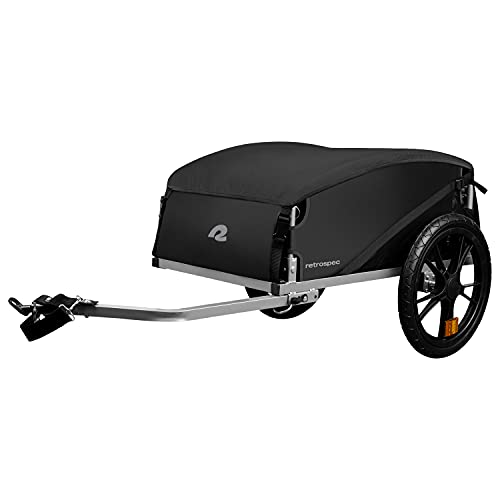
- Best for covered cargo: Retrospec Rover Hauler Bike Cargo Trailer combines all-weather fabric with four D-ring anchors, but its listed capacity is 80 lb.
- Best for bike-to-pushcart use: VEVOR Bike Cargo Trailer 100 lbs 2-in-1 Pushcart converts to a pushcart and includes a waterproof cover, with less stated capacity than VEVOR’s other trailer.

Pros
- 160 lb maker-rated cargo capacity
- Foldable for compact storage
- Powder-coated steel frame
- Quick-release universal hitch
- Gold-colored spoke reflectors
Cons
- Not suitable for children or pets
- 28.66 lb trailer weight
- Compatibility listed only for 22- to 28-inch wheels

Pros
- 100 lb load capacity
- Converts into a pushcart
- Waterproof cover included
- Fits 22- to 28-inch bike wheels
- Reflectors included
Cons
- Not suitable for children or pets
- Weighs 23.59 lb
- No tire width compatibility listed

Pros
- 100 lb load capacity
- Lightweight aluminum frame
- Open-air cargo flexibility
- Push-button wheels
- Folds flat
Cons
- Open cargo is exposed to weather
- One size only
Pros
- 80 lb cargo capacity
- Weather-resistant fabric
- Four D-ring anchor points
- Quick-fold frame
- Quick-release hitch included
Cons
- Trailer weighs about 25.9 lb
- Fit limited to adult bikes with 20 to 29-inch wheels
Pros
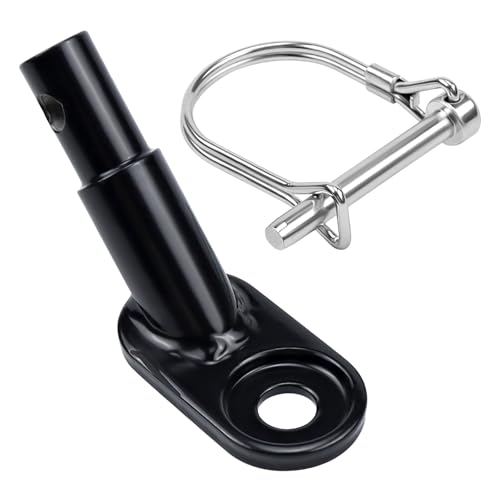
- Steel construction
- Black enamel coating
- Connecting pin included
- Fits listed Schwinn and InStep trailers
Cons
- Requires 0.59-inch shaft diameter
- Compatibility details limited outside named brands
Side-by-Side Comparison
| Product | Capacity or fit | Frame | Wheels | Cover or storage |
|---|---|---|---|---|
| VEVOR Bike Cargo Trailer, 160 lbs Load Capacity | 160 lb; fits 22 to 28-inch bike wheels | Powder-coated steel | 16 x 1.75-inch tires | Foldable; cover not listed |
| VEVOR Bike Cargo Trailer 100 lbs 2-in-1 Pushcart | 100 lb; fits 22 to 28-inch bike wheels | Alloy steel | 7-inch front; 16-inch rear | Waterproof cover; pushcart conversion |
| Burley Flatbed | Bike Cargo Trailer with Aluminum | 100 lb | Aluminum | Not listed | Compact fold; open-air design |
| Retrospec Rover Hauler Bike Cargo Trailer | 80 lb; fits most adult bikes with 20 to 29-inch wheels | Not listed | Not listed | All-weather fabric; quick fold |
| Bike Trailer Hitch Connector Coupler Bicycle | 0.59-inch shaft diameter | Steel with enamel coating | Not applicable | Not applicable |
Capacity and cargo protection create the clearest differences among these options. Riders hauling heavy, uncovered loads may favor VEVOR’s higher listed capacity, while covered-load commuters can compare Retrospec and the VEVOR pushcart; wheel size alone does not confirm hitch or axle fit.
Common Mistakes to Avoid
Choosing by capacity alone can leave you with a trailer whose hitch does not fit your bicycle. Compare the hitch connection with your rear axle or wheel attachment, and check the complete compatibility guidance before ordering. The Cenipar connector lists a 0.59-inch shaft diameter, so verify that measurement against both connection points.
Assuming a cargo trailer can carry children or pets creates a serious safety mismatch. Both VEVOR cargo trailer descriptions say their products are unsuitable for passengers, so choose a purpose-built child or pet trailer instead. Follow that product’s instructions and applicable local requirements, and never treat cargo capacity as passenger approval.
Leaving cargo unsecured can let bags shift, particularly on uneven routes. Retrospec lists four D-ring anchors, while Burley’s open platform requires a suitable restraint plan and does not shield belongings from rain. Arrange straps so they hold cargo without obstructing wheels, visibility, or trailer movement.
Buying a hitch accessory when you need a carrier is another avoidable mismatch. The Cenipar connector is an adapter, not a trailer, and its stated dimensions do not establish compatibility with every bicycle or trailer. Confirm connection style and fit at both ends before relying on an adapter.
Best Cargo Bike Trailer Buying Guide
Capacity and Load Stability
Capacity is the manufacturer’s stated cargo limit, while stability depends on how the load sits and stays secured. Compare that limit with your heaviest realistic trip, including bags and supplies, rather than choosing a trailer by its maximum figure alone. Your bicycle, hitch, and route also affect the complete setup.
VEVOR lists 160 lb for its steel-frame trailer, while Burley lists 100 lb for the Flatbed and Retrospec lists 80 lb for the Rover Hauler. These figures describe individual trailer specifications, not a guarantee that your bicycle or hitch can safely manage the same load.
Keep cargo balanced between the wheels and secure each item against movement during turns or braking. Check the maker’s loading instructions and consider bulky shapes as well as total weight. An uneven load may handle differently from compact groceries even when both stay below the stated limit.
Hitch Compatibility and Bicycle Fit
Hitch compatibility determines whether a trailer connects securely to your bicycle. Before buying, compare the included hitch with your rear axle or wheel attachment, especially if your bicycle uses a nonstandard setup or quick-release system. Ask the manufacturer about fit when the connection details are unclear.
VEVOR lists compatibility with 22 to 28-inch bicycle wheels for both cargo trailers. Retrospec says its quick-release hitch connects to most adult bicycles with 20 to 29-inch wheels, but wheel diameter alone does not confirm axle compatibility. Check both details rather than treating a wheel range as a universal fit guarantee.
The Cenipar connector lists a 0.59-inch shaft diameter and compatibility with various bicycles and Schwinn and InStep trailers. Treat it as a separate adapter, then confirm its measurements and connection style match your bicycle and trailer. Riders comparing other family cycling equipment can browse child bike seats.
Frame and Intended Use
Frame and platform design affect how a trailer handles different cargo shapes and storage needs. Burley describes the Flatbed as an aluminum-frame, open-air trailer, while VEVOR describes its cargo trailers as steel-frame designs. Consider the materials alongside capacity, cargo restraint, and the maker’s intended use.
VEVOR says its 160 lb trailer has a powder-coated steel frame intended to resist rust. Burley’s open platform can accommodate varied cargo shapes, but it does not cover belongings. Choose a design around what you carry, how you will secure it, and where you will store the trailer.
Material alone does not establish how a trailer will hold up under every use or storage condition. Follow the maker’s care instructions and inspect the frame and hitch before carrying cargo. A covered design may suit exposed bags, while an open platform can suit bulky items that need flexible placement.
Weather Protection and Cargo Restraint
A cover can shield cargo from weather, while anchors or straps help keep it in place. Retrospec lists all-weather fabric and four D-ring anchors; the VEVOR 100 lb pushcart model includes a waterproof cover made from 600D Oxford fabric. Check how each design secures bags and other items.
The VEVOR 160 lb trailer and Burley Flatbed do not list a cargo cover, so riders should not assume those designs protect belongings from rain. An open platform can suit bulky objects, but it calls for a secure restraint plan and separate weather protection when conditions require it.
A cover does not replace tie-downs, because fabric cannot stop unsecured bags from shifting. Check that straps hold the load without interfering with the trailer’s movement or visibility. For a covered ride, also confirm that the cargo fits beneath the cover without forcing it open or blocking access to attachment points.
Wheels and Route Conditions
Wheel configuration is one factor to consider when matching a trailer to paved roads, gravel, or other routes. VEVOR lists 16-inch tires on its 160 lb trailer and a 7-inch front wheel with 16-inch rear wheels on its pushcart model. Use those details as specifications, not proof of suitability for every surface.
VEVOR specifies 16 x 1.75-inch tires for its higher-capacity trailer and describes the pushcart model’s tires as dual-ply. Retrospec and Burley do not list wheel dimensions here, so check their product details if wheel size matters to your route or storage plans.
Riders on rough surfaces should consider tire design, cargo balance, and route conditions together. A listed wheel detail does not guarantee performance on every surface. Follow the manufacturer’s guidance and avoid assuming a cargo trailer suits terrain beyond its stated use.
Folding, Storage, and Conversion
Folding and conversion features matter when a trailer must fit a garage, apartment, vehicle, or shared storage area. Burley says the Flatbed folds compactly and lies flat, while Retrospec describes its frame as quick-folding. Check the product’s storage dimensions and folding instructions against your available space.
The VEVOR 100 lb model converts from bicycle trailer to pushcart, which can help move cargo after parking. That extra mode may suit market trips or other errands, but it may not matter if you haul everything by bicycle. Compare the conversion process with your usual routine.
Do not assume that every trailer described as foldable stores in the same way. Confirm how the wheels and frame fold and whether the process suits your storage area. Riders comparing compact bicycle formats can also read our folding electric bike guide.
How We Chose
We score cargo bike trailers with the Haiku Ride Score: core performance counts for 30%, build and weather resistance for 20%, ease of use for 20%, compatibility and fit for 15%, and value for 15%. For trailers, compatibility and fit covers hitch, axle, and bicycle fit information; battery criteria do not apply to these unpowered products.
We evaluate manufacturer specifications, compatibility information, and long-term owner feedback to compare relevant strengths and limitations. We research and draft our guides with software tools, including AI, then run automated checks on product fit, sourcing, and our editorial rules. Our editor spot-checks guides rather than reading each one before publication. Read our how we review methodology.
Price and Value: What Each Budget Gets You
Budget
At the entry level, a buyer may find a hitch accessory rather than a complete cargo trailer. The Cenipar connector is a steel adapter with an enamel coating, but it does not provide a frame, wheels, cargo platform, or cover. It may suit a rider replacing or adding a compatible connector, not someone who needs a standalone hauling setup.
Mid-Range
Mid-range cargo trailers can add practical features such as weather protection, tie-down points, folding storage, or pushcart conversion. Retrospec combines all-weather fabric with four D-ring anchors, while the VEVOR 100 lb model adds a waterproof cover and cart mode. Riders may give up the higher stated capacity listed for VEVOR’s separate 160 lb trailer.
Premium
At the premium end, a trailer may emphasize frame material, tracking design, and compact transport instead of an included cover. The Burley Flatbed pairs an aluminum frame with a two-wheel chassis, Burley hitch system, and compact fold. Its open platform leaves cargo exposed, so riders must weigh those design features against their need for weather protection and tie-down points.
Choosing Something Else
A rear rack with panniers can suit riders carrying groceries or commuting essentials who have limited room to store a trailer. That setup keeps the bicycle narrower and avoids a separate two-wheel carrier, but it offers less room for bulky cargo. Choose a trailer when the load’s size or shape exceeds what your rack and bags can reasonably handle.
Final Thoughts
Riders who want an open platform, aluminum frame, and compact fold should consider the Burley Flatbed | Bike Cargo Trailer with Aluminum. Burley lists a 100 lb capacity and a two-wheel chassis for varied cargo. The trade-off is its open-air design, which leaves belongings exposed and requires a secure restraint plan.
For a higher listed load limit, the VEVOR Bike Cargo Trailer, 160 lbs Load Capacity lists 160 lb capacity and 16-inch tires, but no cover is listed. Riders who value covered cargo and post-ride cart use may prefer the VEVOR Bike Cargo Trailer 100 lbs 2-in-1 Pushcart, accepting its lower stated capacity.
Riders prioritizing covered, restrained cargo can compare the Retrospec Rover Hauler Bike Cargo Trailer, which lists all-weather fabric and D-ring anchors. Its trade-off is a lower stated capacity than the VEVOR cargo trailers. The Bike Trailer Hitch Connector Coupler Bicycle is an adapter, not a trailer, and suits only setups that match its shaft and connection.
Skip these cargo options if you need to carry children or pets, because both VEVOR cargo trailer descriptions rule out that use. Choose a purpose-built passenger trailer instead, follow its instructions, and check local requirements. Riders comparing family transport options can browse the child bike seat guide.
FAQs
Which bicycle wheels fit these cargo trailers?
Bicycle wheel compatibility varies by cargo trailer, and a listed wheel range does not confirm that every axle will fit. VEVOR lists 22 to 28-inch wheels for both cargo trailers, while Retrospec lists most adult bicycles with 20 to 29-inch wheels. Check hitch and axle details with the manufacturer before ordering, especially for nonstandard setups.
How much weight can a cargo bike trailer carry?
Cargo bike trailer capacity depends on the specific model and its manufacturer’s stated limit. VEVOR lists 160 lb for its steel-frame trailer and 100 lb for its pushcart version; Burley lists 100 lb, and Retrospec lists 80 lb. Keep cargo balanced and secured, and follow the maker’s loading instructions.
Can cargo bike trailers carry children or pets?
Cargo bike trailers are not automatically passenger carriers, and both VEVOR cargo trailer descriptions say their products are unsuitable for children or pets. Do not infer passenger approval from a trailer’s cargo capacity or hitch. Choose a purpose-built child or pet trailer, follow its manufacturer’s instructions, and check applicable local laws before riding.
Which cargo bike trailers include weather protection?
Weather protection varies among cargo bike trailers in this guide. The VEVOR 100 lb pushcart model includes a waterproof 600D Oxford fabric cover, while Retrospec lists all-weather fabric. Burley’s Flatbed has an open-air design, and VEVOR’s 160 lb trailer does not list a cover. Secure cargo separately and confirm coverage details before buying.
Do cargo bike trailers fold for storage?
Some cargo bike trailers in this guide include folding features, but their storage designs differ. Burley says the Flatbed folds compactly and lies flat, while Retrospec describes a quick-fold frame and VEVOR lists foldable storage for its 160 lb model. Check each product’s dimensions and folding instructions if your storage space is limited.
Is the Cenipar bike trailer hitch a complete trailer?
The Bike Trailer Hitch Connector Coupler Bicycle is an adapter, not a complete cargo trailer. Cenipar lists a 0.59-inch shaft diameter and compatibility with various bicycles and Schwinn and InStep trailers, but buyers should confirm both connection points match. Riders comparing complete trailer designs can browse the bike trailers category.
Are cargo bike trailers suitable for gravel roads?
Cargo bike trailer suitability for gravel depends on the trailer, load, route, and manufacturer guidance. VEVOR describes its wheel designs for movement across several surfaces, but that does not establish suitability for every road or trail. Balance and secure cargo, check the maker’s instructions, and avoid routes beyond the product’s stated use.
How should I maintain a cargo bike trailer?
Cargo bike trailer care starts with following the manufacturer’s instructions and checking the hitch, frame, wheels, and restraints before use. Clean fabric covers as directed, and confirm connectors and fasteners remain secure. Contact the manufacturer about service when a component is damaged or does not operate correctly, rather than relying on an improvised repair.
Write Your Review
No reviews yet. Be the first to share your experience!