

Trail riders need helmets that stay secure over rough ground, manage heat on climbs and suit the way they ride. This guide compares 6 mountain bike helmets from O’NEAL, BELL, Lixada and more for November 2026, with attention to fit, construction, ventilation and listed safety information.
Bicycle helmets sold for use in the United States must meet the CPSC bicycle helmet standard, 16 CFR Part 1203, so check the specific product listing and helmet label for certification. Follow the manufacturer’s instructions and local laws, and browse our mountain bike helmet category for more options.
At a Glance: Which One Fits You
- Best overall: SMITH Engage MTB Cycling Helmet combines stated CPSC compliance, MIPS, Koroyd coverage and an adjustable dial fit system.
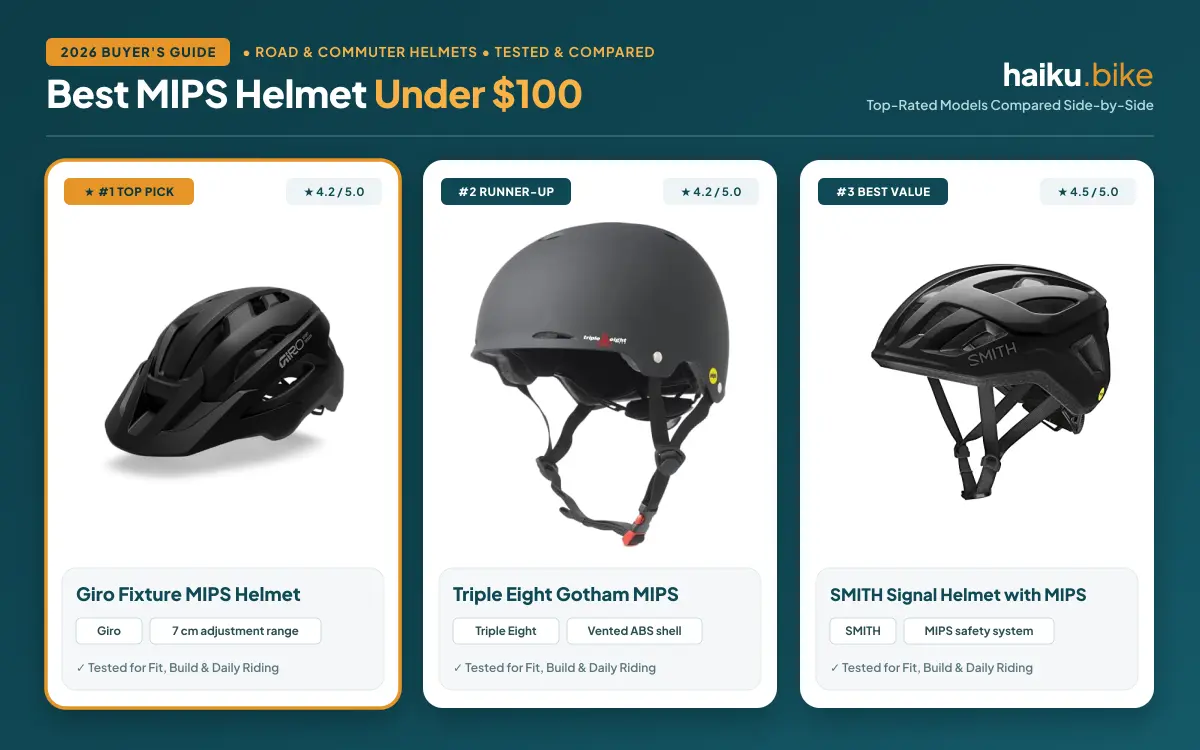
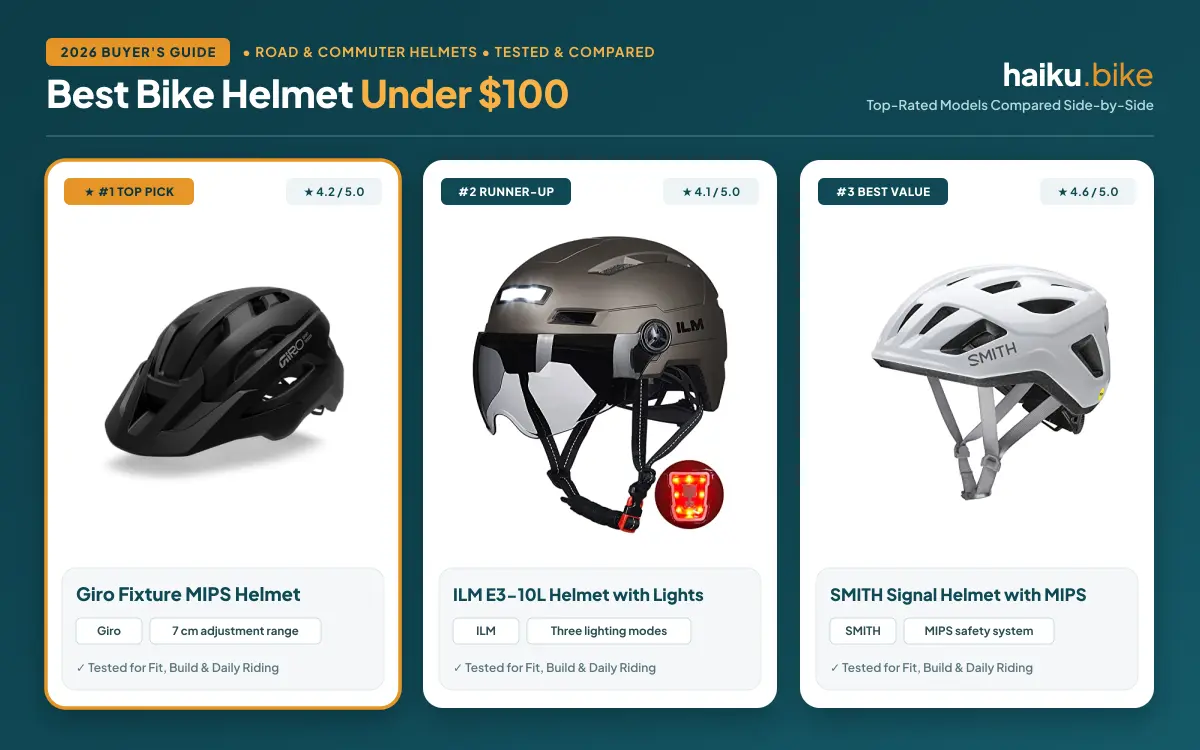
- Best value: Giro Fixture II MIPS Mountain Bike Helmet for Men lists MIPS, 18 vents and universal-fit sizing.
- Best for eyewear integration: Fox Racing Unisex Speedframe Mountain Bike Helmet has sunglass-specific storage and a visor compatible with sunglasses and goggles.
- Best for full-face versatility: Lixada Cycling Helmet for Adults Full Face Bike has a removable chin guard and visor, with an adjustable fit listed for 54-61 cm.

Pros
- Integrated MIPS
- 18 vents with internal channeling
- In-molding construction
- 58 to 65 cm size range
Cons
- Only one listed size
- No certification listed
- Who should skip it: riders outside the 58 to 65 cm range

Pros
- MIPS and zonal Koroyd coverage
- CPSC, CE EN 1078, and AS/NZS 2063 standards
- Adjustable dial fit system
- Twenty-one vents with AirEvac ventilation
- SMITH sunglasses and goggle integration
Cons
- Listed in Large only
- Fixed vents
- Who should skip it: Riders needing another size

Pros
- Mips-equipped protection system
- Adjustable 360° fit system
- One-hand-adjustable visor
- Removable, washable liner
- Sunglass-specific storage
Cons
- No safety certification listed
- Large size only in published product data
- Skip it if you require documented certification

Pros
- Detachable chin guard and visor
- Switches between full and half helmet
- 18 ventilation ports
- Adjustable 54 to 61 cm fit
- Camera and glasses ports
Cons
- Safety certification not listed
- One size only
- Who should skip it: riders needing documented certification
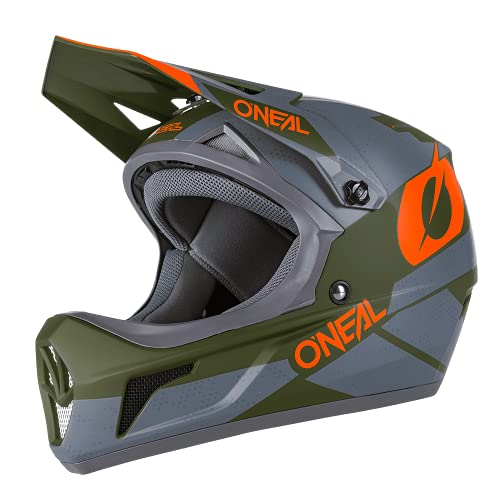
Pros
- One-handed magnetic buckle
- Multiple ventilation openings
- Removable, washable liner
- Exceeds EN1078
Cons
- Only Large size listed
- No CPSC certification listed
- Who should skip it: riders requiring stated CPSC certification

Pros
- Integrated MIPS
- Three-way fit adjustment
- 26 vents and dual-flow ventilation
- Four-position adjustable visor
- Integrated breakaway camera mount
Cons
- Large size fits 58 to 62 cm only
- Listed weight is 1.9 lb
- Who should skip it: riders whose head measurement falls outside its size range
Side-by-Side Comparison
| Helmet | Impact features | Fit information | Ventilation | Safety information |
|---|---|---|---|---|
| Giro Fixture II MIPS Mountain Bike Helmet for Men | Integrated MIPS | Universal-fit sizing; range not listed | 18 Wind Tunnel vents with internal channeling | CPSC status not listed |
| SMITH Engage MTB Cycling Helmet | MIPS and zonal Koroyd coverage | Adjustable dial fit system; size range not listed | 21 fixed vents with AirEvac ventilation | States compliance with U.S. CPSC, CE EN 1078 and AS/NZS 2063 |
| Fox Racing Unisex Speedframe Mountain Bike Helmet | MIPS | 360° Fit System; size range not listed | Optimized venting with channeled, in-molded EPS | CPSC status not listed |
| Lixada Cycling Helmet for Adults Full Face Bike | Polycarbonate shell and EPS liner | Dial adjustment, 54-61 cm | 18 vents | CPSC status not listed |
| O’Neal Sonus Deft Mountain Bike Helmet | ABS shell | Large; range not listed | Multiple vents | States it exceeds EN1078; CPSC status not listed |
| BELL Sixer MIPS Adult Mountain Bike Helmet | MIPS and progressive layering | Large, 58-62 cm | 26 vents and 4 brow ports | CPSC status not listed |
Fit and certification details create the most important differences in this comparison. SMITH states CPSC compliance, while other entries do not state that certification here, so verify each helmet’s label and exact listing before purchase.
Common Mistakes to Avoid
Choosing by color or impact technology before checking fit can leave a helmet loose, uncomfortable or unsuitable. Measure your head using the manufacturer’s directions, compare it with the stated size range, and adjust the retention system and straps as instructed.
Assuming MIPS, Koroyd or a shell material proves CPSC compliance is another avoidable mistake. Those terms describe design features, while the CPSC standard is a separate requirement; check the exact helmet label and product listing for certification information.
Buyers can also mistake a removable chin guard or visor for proof of suitability for every trail or riding discipline. Confirm the helmet’s intended use, fit and instructions, and do not assume a feature replaces appropriate protective equipment or safe riding decisions.
Best Mountain Bike Helmets Under $100 Buying Guide
CPSC Certification and Intended Use
CPSC certification is a key buying criterion because bicycle helmets sold for use in the United States must meet 16 CFR Part 1203. Check the certification statement on the exact product listing and look for the required information on the helmet itself.
SMITH states that the Engage meets the U.S. CPSC standard, as well as CE EN 1078 and AS/NZS 2063. O’Neal says the Sonus Deft exceeds EN1078, but that claim does not establish CPSC compliance. The other product descriptions do not specify CPSC status, so confirm before buying.
Certification does not tell you whether a helmet fits or suits your riding. Consider coverage, retention, visor design and the manufacturer’s intended use together. For a broader comparison of rotational-impact features, see our guide to MIPS and non-MIPS helmets.
Fit and Retention
A secure fit matters because a helmet should remain level and stable while you move on the bike. Measure your head where the helmet rests, compare that measurement with the maker’s sizing directions and adjust the retention system as instructed.
The BELL Sixer lists a large size of 58-62 cm, while the Lixada lists a dial-adjustable range of 54-61 cm. Giro describes universal-fit sizing without giving a range here. SMITH and Fox list adjustable fit systems, but their descriptions do not state a head-measurement range.
Head shape can affect comfort even when a measurement falls within a stated range. Check that the helmet sits level, does not shift easily and avoids uncomfortable pressure. If adjustment cannot produce a stable fit, choose another size or model rather than relying on the brand name.
Rotational-Impact Features
MIPS is a design feature intended to address rotational forces associated with certain impacts, not a substitute for fit or certification. Giro, SMITH, Fox and BELL list MIPS in their product descriptions; the Lixada and O’Neal descriptions do not list it.
SMITH also lists zonal Koroyd coverage, while BELL describes progressive layering with variable EPS foam densities. These are distinct construction details, so compare the exact version rather than assuming every helmet in a brand family uses the same design.
No impact feature makes a helmet impact-proof or removes the need to follow the maker’s instructions. Weigh the listed construction alongside fit, intended use and verified CPSC information. Do not infer a helmet’s certification from MIPS, Koroyd or a similar product name.
Ventilation and Heat Management
Ventilation affects comfort on warm rides and climbs, but vent count alone cannot predict how airflow will feel. Giro lists 18 Wind Tunnel vents with internal channeling, SMITH lists 21 fixed vents, and BELL specifies 26 vents and 4 brow ports.
Lixada lists 18 vents, while O’Neal describes multiple air vents without giving a count. Fox describes optimized venting with channeled, in-molded EPS. Consider these maker descriptions alongside helmet fit, your typical pace and local weather rather than treating a higher count as a guarantee of cooler riding.
Padding and eyewear can also affect comfort. BELL lists a Sweat Guide pad designed to move moisture away from the brow and eyewear, while Fox lists a removable, washable moisture-wicking liner. Follow each manufacturer’s care directions to maintain helmet materials.
Visors, Eyewear and Trail Features
Visors and eyewear features matter when they suit your riding position and equipment. Fox lists a one-hand-adjustable visor compatible with sunglasses and goggles, and its description also names sunglass-specific storage. SMITH describes integration with compatible SMITH sunglasses and goggles.
BELL lists a four-position adjustable visor and an integrated breakaway camera mount. The maker describes that mount as designed to break away upon impact. Lixada lists a removable visor, camera port and glasses port, but its description does not establish compatibility with every camera or eyewear model.
Check whether a visor clears your glasses or goggles and whether its adjustment works for your riding position. A camera port or mount does not confirm that every camera will fit. Riders comparing other helmet features can also browse our guide to bike helmets with turn signals.
Construction, Buckles and Care
Shell construction, buckle design and removable padding affect daily use, but they do not replace certification checks. Giro lists in-molding construction, BELL describes a fused polycarbonate shell and EPS liner, and O’Neal lists an ABS shell with a removable, washable inner liner.
O’Neal specifies a Fidlock magnetic buckle for one-handed fastening and release. BELL lists no-twist tri-glides, while Fox describes a removable and washable liner. Check whether these features suit your preferences, and follow the manufacturer’s directions for cleaning, storage and inspection.
Inspect the shell, straps, buckle and retention adjustment regularly, and follow the maker’s guidance after an impact. Do not modify the shell or padding. Replace or retire a helmet according to its manufacturer’s instructions rather than relying only on visible damage.
How We Chose
We compare mountain bike helmets with the Haiku Ride Score: core performance 30%, build and weather resistance 20%, ease of use 20%, compatibility and fit 15%, and value 15%. For helmets, compatibility and fit means published sizing, retention adjustment, visor and eyewear details, and whether the maker states certification.
Our evaluation uses manufacturer specifications, compatibility information and long-term owner feedback where available. We research and draft our guides with software tools, including AI, then run automated checks on product fit, sourcing, and our editorial rules. Our editor spot-checks guides rather than reading each one before publication. Our how we review page explains the method.
Price and Value: What Each Budget Gets You
Budget
At the lower end of this guide, the Giro Fixture II MIPS offers an integrated rotational-impact feature, 18 vents and universal-fit sizing. Those specifications cover several practical priorities without detailing a head-measurement range or CPSC status. Buyers should verify the exact fit and certification before deciding that the feature list suits their needs.
Mid-Range
Options in the middle of this guide include Fox’s 360° Fit System and removable, washable liner, along with BELL’s MIPS, adjustable visor and specified size range. These features offer more detail about adjustment or care, but fit ranges and CPSC status are not stated for every model. Confirm those details for the helmet you select.
Premium
At the upper end of this guide, SMITH adds stated CPSC compliance, MIPS, Koroyd coverage, 21 vents and eyewear integration. O’Neal offers an ABS shell, magnetic buckle and washable liner, while Lixada adds a removable chin guard. These specialized features do not guarantee a better fit, so check sizing and intended use first.
Choosing Something Else
Riders who mostly use paved roads may prefer a helmet from the road and commuter category, especially if its shape and features better suit that riding position. A different category is not a reason to skip certification or fit checks. Compare the road and commuter helmet category if trail-specific features are not priorities.
Final Thoughts
Riders who want a helmet with clearly stated U.S. safety compliance should consider the SMITH Engage MTB Cycling Helmet. It lists MIPS, Koroyd coverage, 21 vents and an adjustable dial fit system. Its description does not state a head-measurement range, so confirm that the available size suits you before choosing it.
The Giro Fixture II MIPS Mountain Bike Helmet for Men suits riders who value integrated MIPS, internal vent channeling and universal-fit sizing. The missing sizing range and CPSC statement are meaningful limits, so verify both on the exact helmet and product listing. Riders who prioritize eyewear storage and visor compatibility can compare the Fox Racing Unisex Speedframe Mountain Bike Helmet.
The Lixada Cycling Helmet for Adults Full Face Bike may suit riders who want a removable chin guard and a stated 54-61 cm adjustment range. BELL Sixer MIPS Adult Mountain Bike Helmet lists MIPS, a 58-62 cm large size and multiple ventilation details. O’Neal Sonus Deft Mountain Bike Helmet adds a magnetic buckle and washable liner, but its listed EN1078 claim does not establish CPSC compliance.
Skip any helmet that cannot achieve a stable, comfortable fit or whose certification you cannot verify. Riders who do not need trail-oriented coverage can compare our Helmets & Safety category and choose a suitable style for their riding.
FAQs
What safety standard should a mountain bike helmet meet in the United States?
A mountain bike helmet sold for use in the United States must meet the CPSC bicycle helmet standard, 16 CFR Part 1203. Check the exact product listing and helmet label for certification information, because design features such as MIPS do not prove compliance. Follow the helmet maker’s instructions for fit, use, care and replacement.
How should a mountain bike helmet fit?
A mountain bike helmet should sit level and stay stable without uncomfortable pressure. Measure your head according to the manufacturer’s directions, compare the result with the helmet’s stated sizing and adjust its retention system and straps. If the helmet shifts or cannot be adjusted securely, try another size or model rather than relying on a loose fit.
Does MIPS mean a helmet is CPSC certified?
MIPS does not mean that a helmet is CPSC certified. MIPS describes a rotational-impact design feature, while CPSC 16 CFR Part 1203 is the U.S. bicycle helmet standard. Check the specific helmet’s label and product listing for compliance. Also confirm fit and follow the manufacturer’s use and care instructions before riding.
Can I wear goggles with a mountain bike helmet?
Some mountain bike helmets list eyewear or goggle features, but compatibility depends on the helmet and your equipment. Fox describes a visor compatible with sunglasses and goggles, while SMITH describes integration with compatible SMITH eyewear. Check that your glasses or goggles sit comfortably and do not interfere with the helmet’s stable fit or your view.
Are full-face mountain bike helmets removable or convertible?
The Lixada Cycling Helmet for Adults Full Face Bike lists a removable chin guard and visor, allowing the helmet to switch between full-face and half-helmet configurations. Follow the maker’s instructions for attaching and removing components, and confirm the chosen configuration suits your intended riding. Do not assume a removable feature changes the helmet’s certification or fit.
Do more helmet vents always keep riders cooler?
More vents do not guarantee that every rider will feel cooler. Helmet fit, vent placement, riding pace and weather all affect how airflow feels. Compare the maker’s stated ventilation details, such as Giro’s internal channeling or SMITH’s fixed vents, and consider comfort alongside sizing, retention and certification.
How should I clean and maintain a mountain bike helmet?
Clean a mountain bike helmet according to its manufacturer’s instructions, including guidance on suitable cleaners and storage. Inspect the shell, straps, buckle and adjustment system for visible problems. Do not modify the helmet, and follow the maker’s advice after an impact or when deciding whether replacement is needed.
Can helmet reflectors replace bike lights?
Reflective details do not generate light and cannot replace bike lights when lights are needed. This guide’s listed helmet features do not establish that a helmet includes active lighting. Choose lights suited to your route, follow local laws and keep your view unobstructed. For another helmet feature set, compare our bike helmet guide to turn signals.


Write Your Review
No reviews yet. Be the first to share your experience!