

Trail riders need flat pedals that hold shoes securely through rough sections, while commuters may value easy foot repositioning at stops. Platform dimensions, pin layout, body material, and spindle thread all affect which pedals suit your bike and riding style.
We compare 8 options from OneUp Components, MZYRH, ROCKBROS and more in November 2026, focusing on maker specifications and practical trade-offs. Start with the crank thread, then compare shoe support and grip; our Pedals & Cleats category covers more component guidance.
At a Glance: Which One Fits You
- Best overall: OneUp Components Composite Pedals, Black earns this spot because its 115 by 105 mm platform combines ten pins per side with a subtly convex profile.
- Best value: Hapleby Premium Bike Pedals of 9/16 Inch earns this spot because it pairs an aluminum body and two sealed bearings with an included pedal wrench.
- Best for metal construction: ROCKBROS Aluminum MTB Pedals Wide Platform Flat earns this spot because its aluminum body, sealed bearings, and 101 mm platform width are specified.
- Best for replaceable pins: Road/Mountain Bike Pedals earns this spot because its aluminum platform has sixteen replaceable pins per pedal.

Pros
- Light 12.5 oz listed weight
- Broad 4.5 by 4.1-inch platform
- Ten pins per side
- Replaceable pins
- Home service without proprietary tools
Cons
- Nylon-composite platform, not metal
- One size only

Pros
- 12 non-slip pins
- Wide aluminum platform
- Dual DU bearings
- Chromoly steel axle
- Standard 9/16-inch spindle
Cons
- No stated pedal weight
- No platform dimensions listed
- Not clipless
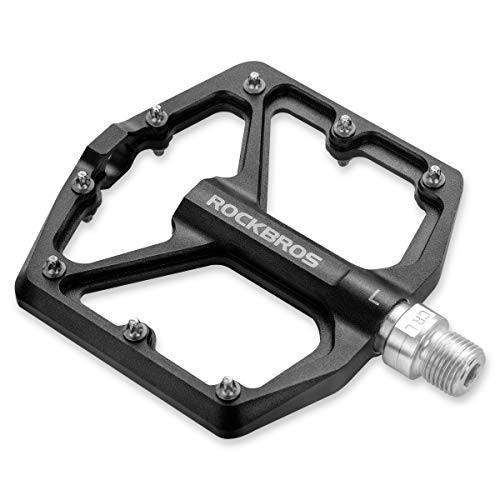
Pros
- Wide 101 mm platform
- Stainless steel anti-skid pins
- Sealed bearings
- Marked left and right pedals
- 9/16-inch threads
Cons
- Maker recommends shoes under US 12
- Warranty coverage terms not specified

Pros
- Wide platform
- Six pins per side
- Two sealed bearings per pedal
- Includes pedal wrench
- Labeled left and right
Cons
- About 0.90 lb per pair
- Flat-pedal format only

Pros
- Replaceable grip pins
- Three sealed bearings
- Sloped leading edges
- L and R installation markings
- 8mm Allen installation
Cons
- Listed weight conflicts: 332 g vs. 0.661 lb
- Platform measures 100 x 104mm

Pros
- Eight anti-skid nails
- Three sealed bearings
- Nylon platform
- Left and right markings
- Hex key included
Cons
- 9/16-inch spindle only
- No clipless compatibility specified
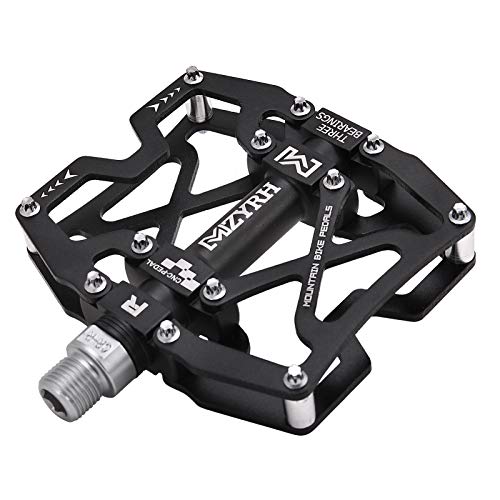
Pros
- Three sealed bearings
- Aluminum-alloy bodies
- Anti-skid pins
- Left and right markings
Cons
- No stated reflector inclusion
- No stated bearing service instructions

Pros
- Nine replaceable pins per side
- Thin 0.7-inch platform
- 12.3 oz per pair
- Sealed bearings
- Standard 9/16-inch spindle
Cons
- Flat-pedal design, no cleat attachment
- Nylon-composite body, not metal
Side-by-Side Comparison
| Pedal | Body material | Platform dimensions | Pins | Bearings | Spindle |
|---|---|---|---|---|---|
| OneUp Components Composite Pedals, Black | Nylon composite | 115 by 105 mm | 10 per side | Not listed | Compatible with most cranksets |
| YBLNTEK Road/Mountain Bike Pedals | Aluminum alloy | Not listed | 12 anti-slip pins | Dual DU bearings | 9/16 inch |
| ROCKBROS Aluminum MTB Pedals Wide Platform Flat | Aluminum alloy | 101 mm wide | Stainless steel anti-skid studs | Sealed bearings | 9/16 inch |
| Hapleby Premium Bike Pedals of 9/16 Inch | Aluminum alloy | Not listed | 6 per side | 2 sealed bearings | 9/16 inch |
| Road/Mountain Bike Pedals | Aluminum alloy | 100 by 104 mm | 16 replaceable per pedal | 3 sealed bearings | 9/16 inch |
| JETCAT Mountain Bike Pedals Flat | Nylon | Not listed | 8 anti-skid nails | 3 sealed bearings | 9/16 inch |
| MZYRH Mountain Bike Pedals | Aluminum alloy | 105 by 91 mm | Anti-skid nails | 3 sealed bearings | 9/16 inch |
| FIFTY-FIFTY Mountain Bike Pedals | Nylon composite | 106 by 104 mm | 9 replaceable per side | Sealed bearings | 9/16 inch |
Platform dimensions and pin serviceability create the clearest distinctions in this comparison. Riders who want a measured, broad platform can compare OneUp and ROCKBROS, while riders who value replaceable pins can consider Road/Mountain Bike Pedals or FIFTY-FIFTY.
Common Mistakes to Avoid
Buying pedals without checking spindle thread can leave you with a part that does not fit your crank. Most listed models specify a 9/16-inch spindle, but OneUp’s broad compatibility statement does not confirm fit for every unusual or older crank. Check your bike’s specifications and the pedal maker’s fit information before ordering.
Choosing by pin count alone can also produce a poor match because placement, shape, shoe tread, and platform profile affect foot security together. Compare pin details with your footwear, and consider whether replaceable pins matter for your riding. Road/Mountain Bike Pedals and FIFTY-FIFTY specify replaceable pins.
Assuming every wide platform will suit every shoe is another common mistake. ROCKBROS lists a 101 mm width, while OneUp lists a 115 by 105 mm platform; compare those figures with your shoe and preferred stance. When a maker omits dimensions, ask for fit information if platform size is central to your choice.
Installing pedals on the wrong sides or forcing a resistant thread can damage crank threads. Check the L and R markings and follow the maker’s directions for each side. Stop if a pedal does not turn as instructed, and confirm the required tool before starting installation.
Best Flat Pedals Buying Guide
Crank and Spindle Compatibility
Spindle compatibility matters first because the pedal thread must match the crank for correct installation. YBLNTEK, ROCKBROS, Hapleby, and the other listed models specify 9/16-inch spindles, while OneUp says its pedals fit most cranksets. Verify your crank’s thread rather than treating a general fit claim as confirmation.
Check the bike maker’s specifications or ask a shop if your crank is old, unusual, or undocumented. A product’s stated compatibility may not cover every crank design. Before installation, identify the left and right pedals and follow the maker’s threading directions to avoid damaging the crank.
Platform Size and Shoe Support
Platform size determines how much pedal surface sits under your shoe, but dimensions alone do not predict comfort. OneUp lists a 115 by 105 mm platform, FIFTY-FIFTY lists 106 by 104 mm, and Road/Mountain Bike Pedals list 100 by 104 mm. Compare stated measurements with your shoes and preferred foot position.
Shape, edge design, and shoe tread also influence how planted your foot feels. ROCKBROS says its 101 mm-wide platform suits most shoes under US size 12, which is a maker claim to compare with your own footwear. YBLNTEK and Hapleby describe wide platforms without listing dimensions.
When a maker omits measurements, do not assume its platform matches another pedal described as wide. Consider whether you need broad support for trail riding or a smaller profile for your preferred setup. Riders comparing other cockpit components can browse Handlebars, Grips & Stems.
Pin Grip and Serviceability
Pins create contact points between a flat pedal and your shoe, but count is only one part of grip. OneUp specifies ten hexagonal pins per side, YBLNTEK specifies twelve anti-slip pins, and Hapleby lists six pins per side. Pin layout, platform shape, and shoe tread also affect how securely your foot sits.
Replaceable pins provide a service option when a pin wears or gets damaged, provided replacement parts are available. Road/Mountain Bike Pedals specify sixteen replaceable pins per pedal, while FIFTY-FIFTY lists nine replaceable steel pins per side. Check the maker’s replacement and maintenance guidance before relying on serviceability.
Riding conditions can help you decide how much pin grip you want. Trail riders may prefer a more secure shoe interface, while commuters may favor a setup that works with everyday footwear. Product descriptions do not provide a standardized grip rating, so compare pin details rather than treating counts as directly equivalent.
Body Material and Pedal Profile
Body material helps describe construction, but it does not establish how durable a pedal will be in your conditions. OneUp and FIFTY-FIFTY use nylon composite, JETCAT lists nylon, and ROCKBROS, Hapleby, and MZYRH specify aluminum alloy. Choose by the platform design and features you need, not material alone.
Profile matters when trail obstacles and pedal strikes concern you. OneUp lists a height from 13.3 mm at its thinnest point to 18.5 mm at its thickest, while FIFTY-FIFTY describes a 0.7-inch-thick design. Most other products do not list profile dimensions, so compare published measurements where clearance matters.
Bearings and Weather Protection
Bearing descriptions help you compare how makers address pedal rotation and protection from dirt or moisture. ROCKBROS lists sealed bearings, Hapleby lists two sealed bearings, and Road/Mountain Bike Pedals, MZYRH, and JETCAT list three sealed bearings. YBLNTEK describes dual DU bearings and a sealed design.
FIFTY-FIFTY says its sealed bearings protect the spindles from water and dust. These descriptions are not a shared durability rating, and bearing count alone does not establish lifespan or smoothness. Check each maker’s care information and consider the weather and surfaces you commonly ride.
Installation and Maintenance
Installation details matter because correct side placement and tools help you fit pedals without forcing the threads. Hapleby includes a pedal wrench and describes left and right tightening directions. Road/Mountain Bike Pedals specify an 8 mm Allen tool, while JETCAT includes a hex key.
Check the required tool and the maker’s instructions before starting, even when a product says installation is easy. OneUp says its pedals can be serviced at home without proprietary tools. That claim may suit riders who prefer routine home maintenance, but it does not replace the maker’s service guidance.
How We Chose
We score each option with the Haiku Ride Score: core performance 30%, build and weather resistance 20%, ease of use 20%, compatibility and battery 15%, and value 15%. For flat pedals, we assess platform shape, pin design, materials, stated fit, bearings, and installation details.
Our evaluation draws on manufacturer specifications, compatibility information, and long-term owner feedback where available. We research and draft our guides with software tools, including AI, then run automated checks on product fit, sourcing, and our editorial rules. Our editor spot-checks guides rather than reading each one before publication. See how we review for details about our approach.
Price and Value: What Each Budget Gets You
Budget
Budget flat pedals can provide a metal body, basic grip features, and a standard spindle, but published platform details and service information may be limited. Hapleby specifies an aluminum body, two sealed bearings, six pins per side, and an included pedal wrench. Riders who need measured platform dimensions or documented replacement parts should compare those details before choosing.
Mid-Range
Mid-range options may add more specific construction details, replaceable pins, or a stated platform measurement. ROCKBROS lists a 101 mm-wide aluminum platform and sealed bearings, while Road/Mountain Bike Pedals specify a 100 by 104 mm platform and replaceable pins. Buyers still give up certainty when makers omit details such as platform profile or replacement-part availability.
Premium
At the upper end of this guide, buyers can find more detailed platform and profile specifications rather than a guarantee of better performance. OneUp lists a 115 by 105 mm composite platform, a subtly convex shape, and ten pins per side. Riders who prefer aluminum or want a stated bearing count may find another option better suited to their priorities.
Choosing Something Else
Clipless pedals offer a different connection by attaching compatible cycling shoes to the pedals with cleats. They may suit riders who specifically want that fixed shoe interface, but require compatible shoes and cleats. Flat pedals remain the straightforward choice for easy foot repositioning, frequent stops, or riding in everyday footwear.
Final Thoughts
OneUp Components Composite Pedals, Black suit riders who want a large composite platform, a subtly convex profile, and ten pins per side. Its listed 115 by 105 mm platform is the largest stated here. Riders who prefer an aluminum body or a published bearing count should compare other options.
Hapleby Premium Bike Pedals of 9/16 Inch may suit riders who want an aluminum body, two sealed bearings, and an included pedal wrench. For riders who prefer a stated platform width and sealed bearings, ROCKBROS Aluminum MTB Pedals Wide Platform Flat provides those specifications, but its pins are not described as replaceable.
Riders who prioritize pin replacement can compare Road/Mountain Bike Pedals and FIFTY-FIFTY Mountain Bike Pedals. The former specifies an aluminum platform and replaceable pins; the latter combines a composite body with replaceable steel pins. Check which platform size and material best match your shoes and riding.
Skip these flat pedals if you specifically want to attach cleats or if your crank thread does not match the pedal spindle. Confirm fit with your bike or pedal maker before ordering. Browse the Parts & Components category for related component guidance.
FAQs
Are flat pedals compatible with most bikes?
Flat pedal compatibility depends on matching the pedal spindle thread to your crank, not on the pedal’s flat platform. Many products in this guide specify a 9/16-inch spindle, but that does not confirm fit for every bike. Check your bike specifications and the maker’s compatibility information, especially for older or unusual cranks.
How do I choose flat pedal platform size?
Flat pedal platform size should suit your shoe and preferred foot support. Compare the maker’s listed dimensions with your footwear rather than relying on a description such as wide. Shape and shoe tread also affect how planted your foot feels. If dimensions are missing and fit is important, seek clarification before ordering.
Do more pins give flat pedals more grip?
More pins can create additional contact points, but pin count alone does not establish how much grip a flat pedal provides. Placement, shape, platform design, and shoe tread also matter. Compare those details together, and consider whether replaceable pins would help with maintenance. Product descriptions do not provide a standardized grip rating.
Which Best Flat Pedals in 2026 have replaceable pins?
Road/Mountain Bike Pedals and FIFTY-FIFTY Mountain Bike Pedals specify replaceable pins. OneUp Components Composite Pedals, Black also lists replaceable pins. Replaceability can help when a pin is damaged or worn, but confirm replacement-part availability and service instructions with the maker before relying on that feature.
Are sealed bearings necessary on flat pedals?
Sealed bearings are a feature makers use to help limit dirt or moisture reaching pedal internals, but they do not eliminate maintenance. Several pedals in this guide list sealed bearings, while YBLNTEK describes a sealed design with dual DU bearings. Follow the specific maker’s care guidance instead of assuming every pedal needs identical service.
How can I tell left and right pedals apart?
Pedal makers commonly identify left and right pedals with L and R markings, and several options here specify those labels. Check each marking and follow the maker’s threading directions before installation. Do not force a pedal that resists turning as instructed, because incorrect threading can damage crank threads.
Can flat pedals work for commuting?
Flat pedals can work for commuting when their spindle fits your crank and their platform suits your shoes. OneUp describes its composite pedals as suitable for commuting as well as mountain biking, and ROCKBROS lists commuter use among compatible applications. Browse our road bike handlebar tape guide for another component comparison.
Write Your Review
No reviews yet. Be the first to share your experience!